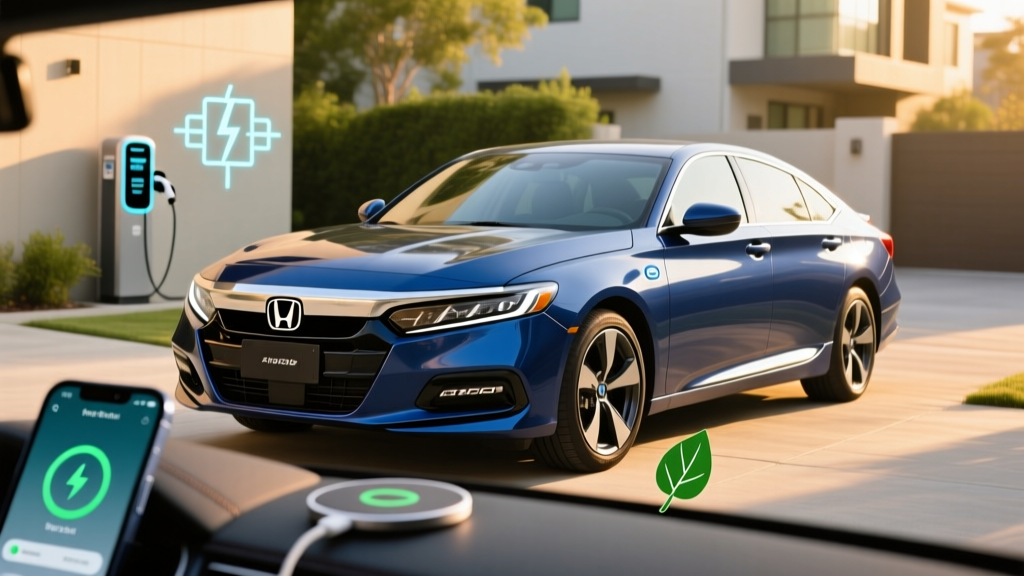
The 2020 Honda Accord Hybrid occupies a specific niche that still resonates in 2026: a midsize sedan that sips fuel without asking you to plug in, change your driving habits, or accept a subcompact cabin. With an EPA-estimated 48 MPG combined and a refined two-motor hybrid powertrain, it remains one of the most compelling used hybrids on the market. Honda discontinued the Accord Hybrid after the 2022 model year before reintroducing it for 2025, which means the 2020 model sits in a sweet spot of depreciation and proven reliability.
This guide breaks down everything a used-car buyer or current owner needs to know: exact fuel economy figures, how the Accord Hybrid's powertrain works, battery longevity and replacement costs, and whether this conventional hybrid (HEV) or a plug-in hybrid or full EV better fits your lifestyle.
Fuel Economy: EPA Ratings vs. Real-World MPG
The 2020 Accord Hybrid uses Honda's third-generation two-motor hybrid system, and the EPA numbers are impressive across all trims. Here's the official breakdown from fueleconomy.gov:
| Trim | City MPG | Highway MPG | Combined MPG |
|---|---|---|---|
| Hybrid (base) | 48 | 47 | 48 |
| Hybrid EX | 48 | 47 | 48 |
| Hybrid EX-L | 48 | 47 | 48 |
| Hybrid Touring | 48 | 47 | 48 |
Compared to the gas-only 2020 Accord 1.5T (30 city / 38 highway / 33 combined), the hybrid delivers roughly 45% better city fuel economy and a combined improvement of about 15 MPG. Over 15,000 annual miles at $3.50/gallon, that translates to approximately $525 in annual fuel savings.
Powertrain: How the Two-Motor System Works
The 2020 Accord Hybrid pairs a 2.0-liter Atkinson-cycle four-cylinder engine with two electric motors in Honda's Intelligent Multi-Mode Drive (i-MMD) system. Unlike traditional hybrid setups with a planetary gearset (like Toyota's e-CVT), Honda's system primarily uses the electric motors to drive the wheels, with the gasoline engine acting as a generator in most conditions.
| Component | Specification |
|---|---|
| Gasoline Engine | 2.0L Atkinson-cycle I-4, 143 hp / 129 lb-ft |
| Drive Motor | AC synchronous, 181 hp / 232 lb-ft |
| Generator Motor | AC synchronous (recharges battery) |
| Combined System Output | 212 hp |
| Hybrid Battery | 1.3 kWh lithium-ion (usable capacity ~0.9 kWh) |
| 0-60 MPH | ~7.0 seconds |
| Transmission | Direct-drive (single fixed gear ratio + lockup clutch) |
The system operates in three modes:
- EV Drive: Battery powers the drive motor alone (short distances at low speeds, typically under 1-2 miles)
- Hybrid Drive: Engine powers the generator motor, which feeds electricity to the drive motor. The battery supplements power during acceleration
- Engine Drive: At steady highway speeds (roughly 45-75 MPH), a lockup clutch connects the engine directly to the wheels for maximum efficiency
This architecture gives the Accord Hybrid a smooth, electric-like feel at low speeds while avoiding the drone typical of CVT-equipped hybrids. The 212 combined horsepower provides confident highway merging and passing.
HEV vs. PHEV vs. EV: Which Electrified Vehicle Fits You?
The 2020 Accord Hybrid is a conventional hybrid (HEV). It does not plug in. It has no meaningful electric-only range. The small 1.3 kWh battery recharges exclusively through regenerative braking and the gasoline engine. This distinction matters because buyers sometimes confuse conventional hybrids with plug-in hybrids.
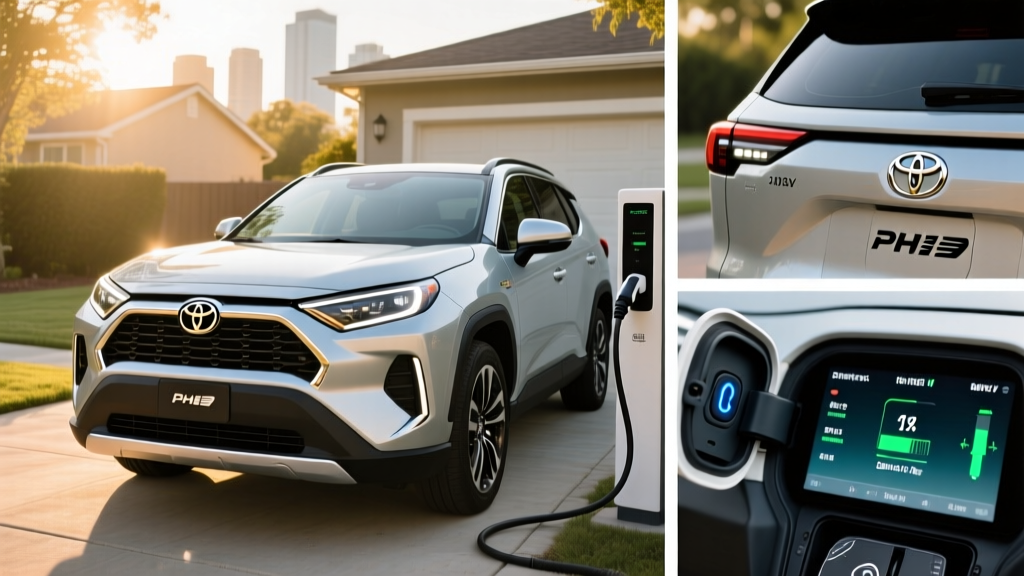
| Feature | HEV (Accord Hybrid) | PHEV (e.g., Toyota RAV4 Prime) | BEV (e.g., Tesla Model 3) |
|---|---|---|---|
| Plugs In? | No | Yes | Yes |
| Battery Size | 1.3 kWh | 18.1 kWh | 60-82 kWh |
| Electric-Only Range | ~1 mile (low speed) | 42 miles | 272-358 miles |
| Fuel / Energy | Gasoline only | Gasoline + electricity | Electricity only |
| Home Charging Needed? | No | Recommended (Level 2) | Essential (Level 2) |
| Federal Tax Credit (§30D) | Not eligible | Up to $7,500 (if eligible) | Up to $7,500 (if eligible) |
| Best For | No home charging access; want simplicity | Short commute + road trip flexibility | Home charging + low running costs |
- Choose the Accord Hybrid (HEV) if: You lack access to home or workplace charging, want a no-compromise midsize sedan with strong fuel economy, and prefer not to think about plugging in.
- Choose a PHEV if: You have a garage with a 120V or 240V outlet, your daily commute is under 40 miles, but you still want a gas engine for longer road trips.
- Choose a full EV (BEV) if: You can install a Level 2 home charger, want the lowest cost per mile, and your typical trips fall within 250 miles.
Used Pricing in 2026 and Tax Credit Eligibility
As of early 2026, the 2020 Honda Accord Hybrid trades on the used market between approximately $18,000 and $26,000, depending on mileage, condition, and trim level. Touring models with under 40,000 miles command the highest prices; base Hybrid models with higher mileage sit at the lower end.
Federal tax credit status: The 2020 Accord Hybrid does not qualify for the federal §30D New Clean Vehicle Credit. That credit applies exclusively to new plug-in vehicles (BEVs and PHEVs) meeting battery-sourcing and MSRP requirements. Because the Accord Hybrid is a conventional HEV with no plug, it was never eligible for the federal credit, even when new.
Used EV credit (§25E): The federal used clean vehicle credit of up to $4,000 applies only to used BEVs and PHEVs priced under $25,000. Since the Accord Hybrid is a conventional HEV, it does not qualify for this credit either.
Some states offer their own incentives for hybrid vehicles, though these are increasingly focused on plug-in models. Check your state's energy office or department of environmental quality for current programs.
Battery Longevity, Warranty, and Replacement Cost
The 2020 Accord Hybrid's lithium-ion battery pack is compact (1.3 kWh) and operates within a conservative state-of-charge window, which reduces degradation stress. Honda's hybrid battery track record is strong: first-generation Insight and Civic Hybrid batteries regularly exceeded 150,000 miles, and the lithium-ion packs in the 2018+ Accord Hybrid have shown even better durability.
- Standard states: 8 years / 100,000 miles (whichever comes first)
- CARB states (CA, CT, MA, ME, MD, NJ, NY, OR, RI, VT, WA, and others adopting California emissions standards): 10 years / 150,000 miles
- What's covered: Battery capacity loss below approximately 60-70% of original capacity, cell failure, and hybrid system component defects
Replacement cost: If the hybrid battery fails outside of warranty, expect to pay between $2,000 and $4,000 for a replacement pack plus labor at a Honda dealer. Independent hybrid specialists may offer refurbished packs for $1,500-$2,500 installed. Given the battery's small size and conservative management, outright failure before 200,000 miles is uncommon in the 2018-2022 generation.
The broader hybrid system — including the drive motor, generator motor, power control unit, and related electronics — carries the same 8-year/100,000-mile (or 10-year/150,000-mile in CARB states) warranty.
Reliability and Safety Record
The 2020 Accord Hybrid shares its platform and most components with the highly regarded 10th-generation Accord. Key reliability data points:
- NHTSA overall safety rating: 5 out of 5 stars (NHTSA)
- IIHS rating: Top Safety Pick+ when equipped with specific headlights (EX-L and Touring trims)
- Honda Sensing suite: Standard on all trims — includes adaptive cruise control, lane-keeping assist, forward collision warning, and automatic emergency braking
- Consumer Reports: The Accord Hybrid has consistently scored above average for reliability in the 2018-2022 generation
Common issues reported by owners at higher mileages (80,000+ miles) include:
- 12-volt auxiliary battery drain if the vehicle sits unused for extended periods (common to all hybrids)
- Infotainment system sluggishness (a software complaint, not hybrid-specific)
- Minor brake actuator noise at low speeds (normal regen blending behavior)
The hybrid-specific components (battery, motors, power control unit) have proven notably reliable. Unlike earlier Honda IMA (Integrated Motor Assist) systems from the 2000s, the i-MMD system has no major widespread failure pattern.
Ownership Costs: Maintenance and Running Expenses
One of the Accord Hybrid's strongest selling points is low maintenance cost. The hybrid system adds virtually no routine maintenance items:
- Oil changes: Same interval as the gas Accord (every 7,500-10,000 miles with synthetic oil), approximately $45-$70
- Brake pads: Last significantly longer than on the gas model (often 80,000-100,000+ miles) thanks to regenerative braking handling most deceleration
- No transmission fluid: The direct-drive system has no traditional transmission; Honda recommends checking the reduction gear fluid at 90,000 miles
- Coolant: The hybrid system has a separate coolant circuit; Honda recommends replacement at 120,000 miles
- Tires: The Hybrid uses the same tire sizes as gas Accords; expect 40,000-50,000 miles from a set
Insurance costs for the Accord Hybrid typically run 5-10% higher than the gas-only Accord 1.5T due to the higher original MSRP and hybrid-component repair costs after collisions. Get quotes from your insurer before purchasing.
Pros and Cons of the 2020 Accord Hybrid
Pros
- 48 MPG combined — among the best in the midsize sedan class
- 212 hp provides confident acceleration (7.0s 0-60)
- Spacious cabin with 16.7 cu-ft trunk (only 0.6 cu-ft less than gas model)
- Standard Honda Sensing safety suite on all trims
- No plug-in requirement — works with any lifestyle
- Strong reliability record for hybrid components
- Smooth, EV-like driving feel at city speeds
Cons
- Highway MPG (47) closer to gas Accord than city MPG advantage
- No federal tax credit eligibility (HEV, not PHEV/BEV)
- Slightly firmer ride than gas model due to added weight (~230 lbs heavier)
- Only 1-2 miles of EV-only driving at very low speeds
- Discontinued after 2022 (before 2025 reintroduction) — limited used supply
- Infotainment lacks wireless Apple CarPlay/Android Auto on lower trims
Frequently Asked Questions
How many MPG does the 2020 Accord Hybrid actually get?
The EPA rates it at 48 city / 47 highway / 48 combined. In real-world driving, expect 48-52 MPG in city traffic, 42-45 MPG on the highway, and 44-48 MPG in mixed use. Cold weather and aggressive driving can reduce these figures by 5-10%.
Does the 2020 Accord Hybrid need to be plugged in?
No. The Accord Hybrid is a conventional hybrid (HEV). Its small battery recharges through regenerative braking and the gasoline engine. You fuel it exactly like a gas car — there is no plug, no charging cable, and no electric-only commute capability beyond a mile or two at low speed.
Is the 2020 Accord Hybrid reliable?
Yes. The 10th-generation Accord Hybrid (2018-2022) has an above-average reliability record. The i-MMD hybrid system has no widespread failure patterns, and the lithium-ion battery is managed conservatively. Honda's hybrid battery warranty covers 8 years/100,000 miles (10 years/150,000 miles in CARB states).
What does a replacement hybrid battery cost?
A new OEM replacement battery at a Honda dealer typically costs $2,000-$4,000 including labor. Refurbished or aftermarket options from independent hybrid specialists run $1,500-$2,500 installed. Given the battery's small size and conservative management, most owners never need a replacement.
Does the 2020 Accord Hybrid qualify for any tax credits?
No. The federal §30D New Clean Vehicle Credit and §25E Used Clean Vehicle Credit both require a plug-in vehicle (BEV or PHEV). As a conventional hybrid, the Accord Hybrid is ineligible for federal EV tax credits. Some states may offer minor incentives for high-efficiency vehicles, but these are increasingly rare for non-plug-in models.
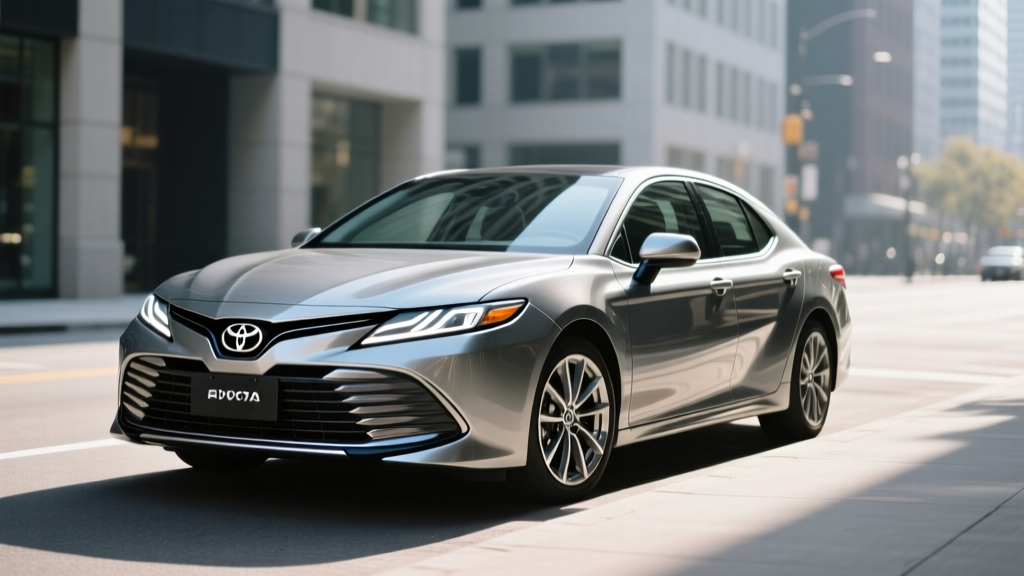
How does the Accord Hybrid compare to the Toyota Camry Hybrid?
The 2020 Camry Hybrid LE is rated at 52 city / 53 highway / 52 combined — 4 MPG better than the Accord Hybrid. However, the Accord offers more horsepower (212 vs. 208), a larger trunk (16.7 vs. 15.1 cu-ft), and a more refined driving feel. The Camry Hybrid is the efficiency pick; the Accord Hybrid is the driving-dynamics pick in this segment.
Can the 2020 Accord Hybrid run on electric power alone?
Only for very short distances (roughly 1-2 miles) at low speeds under 25 MPH, and only when the battery is sufficiently charged. In normal driving, the gasoline engine engages frequently. This is not a vehicle that can handle a meaningful electric-only commute — that capability requires a PHEV or BEV.