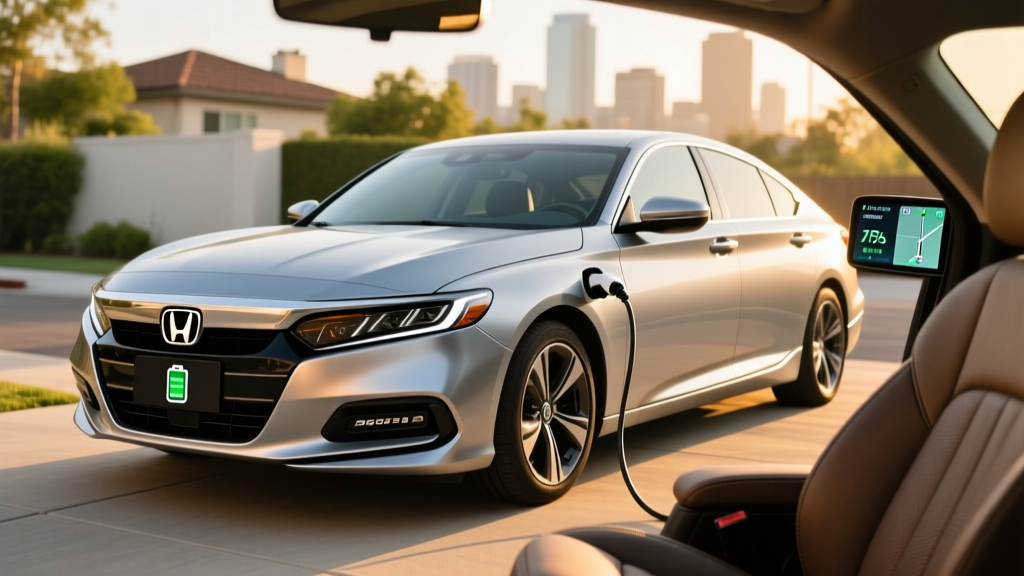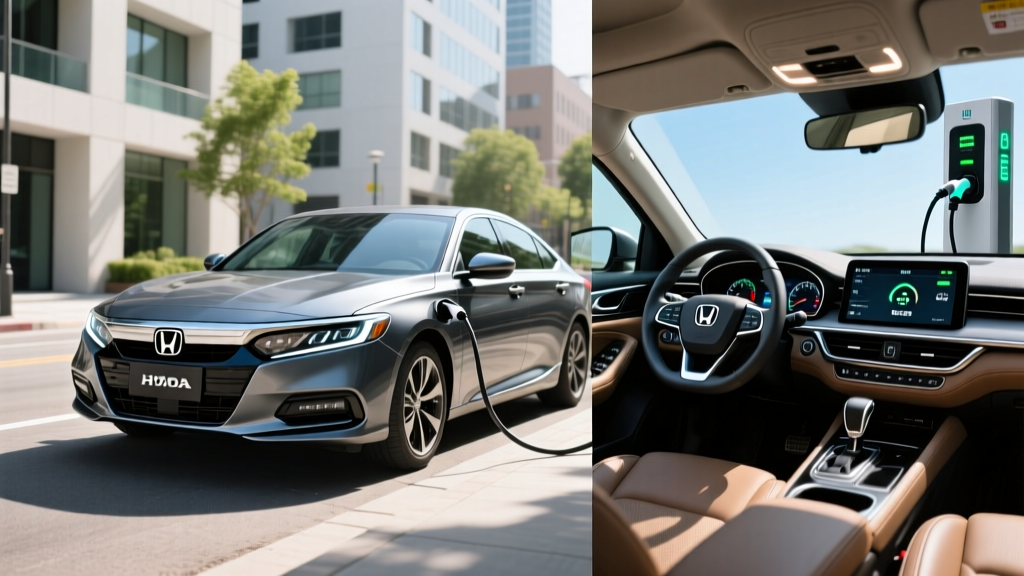
The 2020 Honda Accord Hybrid occupies a specific niche that full EVs and conventional gas sedans can't quite fill: it delivers exceptional city fuel economy without requiring a plug, a charging routine, or any change in driving habits. Now well into its life on the used market, the Accord Hybrid has proven itself as one of the most efficient midsize sedans ever sold in the US — and a compelling alternative for buyers who aren't ready to commit to a battery-electric vehicle.
In this guide, we break down the 2020 Accord Hybrid's powertrain, real-world fuel economy, battery longevity, used-market pricing, and how it stacks up against plug-in hybrids and full EVs in 2026.
HEV vs PHEV vs EV: Where the Accord Hybrid Fits
Before diving into specs, it's essential to understand what the Accord Hybrid is — and what it isn't. The 2020 Accord Hybrid is a conventional hybrid electric vehicle (HEV). It cannot be plugged in. Its small battery recharges through regenerative braking and the gasoline engine. This distinguishes it sharply from plug-in hybrids (PHEVs) and battery-electric vehicles (BEVs).
| Feature | HEV (Accord Hybrid) | PHEV (e.g., Toyota Prius Prime) | BEV (e.g., Tesla Model 3) |
|---|---|---|---|
| Plug-in charging | No — never plugs in | Yes — Level 1/2 | Yes — Level 1/2/DC fast |
| Electric-only range | ~1 mile at low speed | 25–44 miles typical | 250–360+ miles |
| Gasoline engine | Yes (primary power + generator) | Yes (backup + highway) | No |
| Battery size | 1.3 kWh (gross) | 13–18 kWh typical | 50–100 kWh typical |
| Tailpipe emissions | Low, not zero | Low when charged; gas when depleted | Zero at tailpipe |
| Federal tax credit (§30D) | Not eligible | Up to $7,500 (if eligible) | Up to $7,500 (if eligible) |
The Accord Hybrid's two-motor system uses electric motors for propulsion at most speeds while the 2.0L gasoline engine primarily acts as a generator. At highway cruising speeds, a lock-up clutch connects the engine directly to the wheels for efficiency. This is Honda's i-MMD (Intelligent Multi-Mode Drive) system — more electric-motor-dominant than Toyota's planetary-gear hybrid approach.
2020 Accord Hybrid Powertrain & Performance Specs
| Specification | 2020 Honda Accord Hybrid |
|---|---|
| Powertrain | 2.0L Atkinson-cycle I4 + two electric motors (i-MMD) |
| Combined system horsepower | 212 hp |
| Engine output | 143 hp / 129 lb-ft torque |
| Drive motor output | 181 hp / 232 lb-ft torque |
| Transmission | Electronic CVT (e-CVT, single-speed direct drive + lock-up clutch) |
| Drivetrain | Front-wheel drive |
| Battery type | Lithium-ion (1.3 kWh gross) |
| 0–60 mph | ~6.7 seconds |
| Curb weight | ~3,340 lbs |
| Fuel tank | 12.8 gallons |
| Total driving range (est.) | ~614 miles (at EPA combined) |
The 212 combined horsepower makes the Accord Hybrid genuinely quick — the electric drive motor's 232 lb-ft of torque is available instantly from a stop, giving it strong off-the-line acceleration that feels more responsive than its EPA numbers suggest. The 0–60 time of roughly 6.7 seconds puts it in the same ballpark as many turbocharged four-cylinder gas sedans.
Fuel Economy: EPA Ratings vs Real-World MPG
This is the Accord Hybrid's headline feature. According to fueleconomy.gov, the EPA rates the 2020 Accord Hybrid as follows:
| Driving Condition | EPA MPG |
|---|---|
| City | 48 MPG |
| Highway | 47 MPG |
| Combined | 48 MPG |
Note that all three numbers are nearly identical — a rarity. Most hybrids skew heavily toward city MPG due to regenerative braking, but the Accord Hybrid's efficient Atkinson-cycle engine and aerodynamic sedan body keep highway numbers close.
Real-World MPG Expectations
Owner reports and long-term testing consistently show the Accord Hybrid meeting or slightly exceeding its EPA rating in mixed driving. In city-heavy commutes, many drivers report 50–54 MPG. On sustained highway trips at 70–75 mph, expect 42–46 MPG — a slight drop from the sticker, as aerodynamic drag dominates at higher speeds.
Cold weather reduces efficiency by roughly 5–10% due to increased engine idling for cabin heat and reduced battery efficiency. In sub-30°F conditions, expect combined MPG in the low-to-mid 40s. This is still dramatically better than the gas-only Accord's 33 MPG combined.
Battery & Hybrid System Warranty
Honda covers the 2020 Accord Hybrid's IMA (Integrated Motor Assist) battery and hybrid system components for 8 years / 100,000 miles (10 years / 150,000 miles in California and states that follow CARB emissions standards). This warranty covers battery capacity loss and hybrid component failure — not routine wear items.
Battery Longevity, Reliability & Replacement Cost
The Accord Hybrid uses a compact 1.3 kWh lithium-ion pack — far smaller than a PHEV or BEV battery. Because it never deep-cycles (the system keeps it in a narrow state-of-charge window between roughly 30% and 70%), degradation is minimal. Honda's hybrid batteries from this era have proven exceptionally durable.
What Owners Report at High Mileage
Multiple owner forums and fleet data show Accord Hybrid batteries routinely lasting 150,000–200,000+ miles with minimal capacity loss. The battery management system is conservative by design — it sacrifices usable capacity for longevity. Failures before 100,000 miles are rare and typically covered under warranty.
Battery Replacement Cost
If replacement is needed out of warranty, a new OEM hybrid battery for the 2020 Accord Hybrid runs approximately $2,000–$3,000 including labor at a dealership. Refurbished or aftermarket units are available for $1,200–$1,800. This is a fraction of BEV battery replacement costs ($8,000–$20,000+) because the pack is small and accessible. Independent hybrid specialists can often perform the swap in 2–3 hours.
Overall reliability for the 2020 Accord Hybrid is strong. The 10th-generation Accord platform has few widespread issues. Some owners report occasional 12V auxiliary battery drain if the car sits unused for weeks — a common trait in hybrids with small 12V batteries. The IIHS named the 2020 Accord a Top Safety Pick+ when equipped with specific headlights, reflecting excellent crash-test performance.
Trims, Used Pricing & Tax Credit Eligibility
The 2020 Accord Hybrid was offered in four trims: Hybrid, Hybrid EX, Hybrid EX-L, and Hybrid Touring. Original MSRPs ranged from approximately $26,370 (base Hybrid) to $36,240 (Touring). In the 2026 used market, here's what to expect:
| Trim | Original MSRP | 2026 Used Market Range (60K–90K mi) |
|---|---|---|
| Hybrid (base) | $26,370 | $17,500–$20,000 |
| Hybrid EX | $29,130 | $19,500–$22,500 |
| Hybrid EX-L | $31,690 | $21,000–$24,500 |
| Hybrid Touring | $36,240 | $24,000–$28,000 |
Does the 2020 Accord Hybrid Qualify for Any Tax Credit?
No. The federal §30D Clean Vehicle Credit applies only to plug-in electric vehicles — battery-electric vehicles (BEVs) and plug-in hybrids (PHEVs) with a minimum battery capacity of 7 kWh. The Accord Hybrid's 1.3 kWh battery and lack of a plug-in port make it ineligible for the federal credit, the used-EV credit (§25E), or most state EV rebates.
However, some states and local utilities offer small incentives for any high-efficiency vehicle. Check your state's energy office or utility provider for potential rebates. The IRS §30D guidelines confirm that conventional HEVs do not qualify for federal clean vehicle credits.
Who Should Choose the Accord Hybrid vs a PHEV or EV?
Choose the 2020 Accord Hybrid if:
- You lack access to home or workplace charging (apartment, street parking, no garage)
- You want maximum fuel economy with zero behavioral change — no plugging in, no range planning
- You drive a mix of city and highway and want consistent 45+ MPG in all conditions
- Your budget is $18,000–$28,000 and you want a reliable, spacious midsize sedan
- You take frequent long road trips where EV charging infrastructure is sparse
Consider a PHEV instead if:
- You can charge at home and want 25–44 miles of electric-only commuting
- Your daily round-trip commute is under 40 miles (you'd rarely use gas)
- You want to qualify for the §30D federal tax credit on a new purchase (up to $7,500)
Consider a full EV instead if:
- You have reliable Level 2 home charging
- You want zero tailpipe emissions and minimal maintenance (no oil changes, no engine)
- Your daily driving is under 250 miles and you're comfortable with DC fast charging on road trips
- You want to maximize fuel-cost savings — electricity at $0.14/kWh costs roughly $0.04/mile vs the Accord Hybrid's ~$0.07/mile at $3.40/gallon
Pros and Cons at a Glance
Pros
- 48 MPG combined EPA — among the best of any midsize sedan ever sold
- 212 hp with instant electric torque — genuinely quick and responsive
- Spacious cabin with 16.7 cu-ft trunk (same as gas Accord)
- No plug-in required — zero lifestyle change from a gas car
- Proven hybrid reliability with low battery replacement cost (~$2,000–$3,000)
- Strong safety ratings (IIHS Top Safety Pick+)
- Excellent used value — depreciated but durable
Cons
- No electric-only driving beyond very low speeds (~1 mile)
- Not eligible for any federal tax credit
- Road noise noticeable at highway speeds (a known Accord trait)
- Infotainment system feels dated by 2026 standards (no wireless CarPlay on lower trims)
- CVT drone under hard acceleration (engine revs high while speed builds)
- Front-wheel drive only — no AWD option unlike the Toyota Camry Hybrid
Frequently Asked Questions
How many MPG does the 2020 Honda Accord Hybrid get?
The EPA rates it at 48 MPG city, 47 MPG highway, and 48 MPG combined. Real-world owners frequently report 50–54 MPG in city-heavy driving and 42–46 MPG on sustained highway trips.
Does the Accord Hybrid need to be plugged in?
No. The Accord Hybrid is a conventional hybrid (HEV). Its battery recharges automatically through regenerative braking and the gasoline engine. There is no plug, no charging cable, and no electric-only range to manage.
How far can the Accord Hybrid go on electric only?
Effectively about 1 mile at very low speeds (under 25 mph) in EV mode. This is not a plug-in hybrid — the electric motor assists the gasoline engine but cannot sustain driving on its own. If you want meaningful electric-only range, look at a PHEV like the Toyota Prius Prime (44 miles) or Hyundai Tucson PHEV (33 miles).
Is the 2020 Accord Hybrid reliable?
Yes. Honda's i-MMD hybrid system has proven durable, with hybrid batteries commonly lasting 150,000–200,000+ miles. The 10th-generation Accord platform has few systemic issues. The hybrid battery warranty covers 8 years/100,000 miles (10 years/150,000 miles in CARB states).
What does a replacement hybrid battery cost?
A new OEM battery costs approximately $2,000–$3,000 installed at a dealership. Refurbished units are available for $1,200–$1,800. This is far less than BEV battery replacement because the pack is small (1.3 kWh) and easily accessible.
Does the 2020 Accord Hybrid qualify for a federal tax credit?
No. The federal §30D Clean Vehicle Credit requires a plug-in vehicle with at least 7 kWh of battery capacity. The Accord Hybrid is a conventional HEV with a 1.3 kWh battery and no plug-in port, making it ineligible for federal and most state EV incentives.
Is the Accord Hybrid better than the gas Accord?
For most buyers, yes. The Hybrid gets 48 MPG combined vs the gas 1.5T's 33 MPG combined — a 45% improvement. It also produces more torque (232 lb-ft from the electric motor vs 192 lb-ft from the 1.5T). The trade-off is a higher purchase price (roughly $1,500–$2,000 more new) and slightly less trunk space due to the battery placement (though Honda minimized this — 16.7 cu-ft vs 16.7 cu-ft for the gas model).
Should I buy a used 2020 Accord Hybrid in 2026?
If you want a fuel-efficient midsize sedan without plugging in, it's one of the best used buys available. With 60,000–90,000 miles, most examples still have years of hybrid warranty coverage remaining. Prioritize a pre-purchase inspection that includes a hybrid battery health check, and favor EX-L or Touring trims for the best feature-to-price ratio.