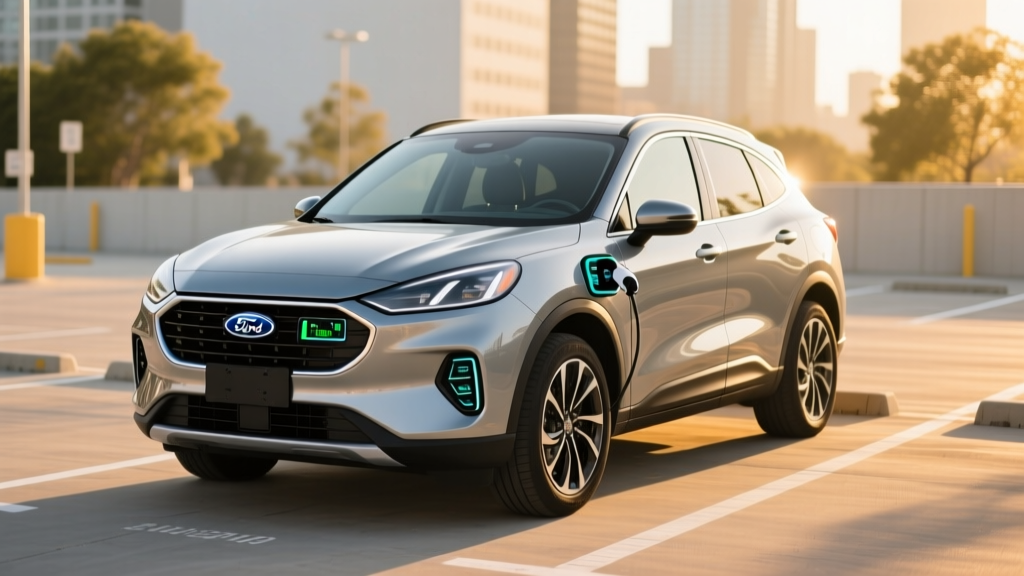
Quick Verdict: Is the 2020 Ford Escape Hybrid Still a Smart Buy?
If you're researching 2020 Ford Escape Hybrid problems before picking one up on the used market, you're asking the right question. The 2020 model year marked a full redesign for the Escape, and Ford paired its new platform with a 2.5-liter Atkinson-cycle four-cylinder and a hybrid powertrain that delivers strong EPA numbers. But like any first-year redesign, it has a track record worth examining six years later.
Here's what owners, mechanics, and NHTSA data tell us about the 2020 Escape Hybrid in 2026 — and whether its issues are deal-breakers or manageable quirks.
2020 Ford Escape Hybrid: Powertrain and Key Specs
Before dissecting the problems, let's establish what's under the hood. The 2020 Escape Hybrid is a conventional hybrid electric vehicle (HEV) — it does not plug in. It charges its battery through regenerative braking and the gasoline engine. This is fundamentally different from the Escape PHEV variant, which Ford also offered in this generation with a larger battery and a plug.
| Spec | Value |
|---|---|
| Powertrain | 2.5L Atkinson-cycle I-4 + electric motor (HEV) |
| Combined Horsepower | 200 hp (net system output) |
| Transmission | eCVT (planetary gearset, not belt-driven) |
| Drivetrain | FWD standard; AWD available |
| Hybrid Battery | ~1.1 kWh (lithium-ion, not user-chargeable via plug) |
| EPA MPG (FWD) | 44 city / 37 highway / 41 combined |
| EPA MPG (AWD) | 43 city / 37 highway / 40 combined |
| 0–60 mph | ~7.8 seconds (FWD) |
| Cargo Volume | 34.4 cu ft (behind rear seats) |
| Battery Warranty (original) | 8 years / 100,000 miles |
| Original MSRP (base FWD) | ~$28,265 |
Source: fueleconomy.gov — 2020 Ford Escape Hybrid FWD
Common 2020 Ford Escape Hybrid Problems Reported by Owners
The 2020 Escape was the first year of Ford's fourth-generation Escape platform. First-year models historically carry more teething issues, and this one is no exception. Based on NHTSA complaint databases, owner forums, and mechanic surveys, here are the most frequently cited problems:
1. eCVT and Drivetrain Hesitation
Some owners report a momentary hesitation or "lurch" when accelerating from a stop, particularly in cold weather. Ford's eCVT uses a planetary gearset (not a traditional belt CVT), which is generally robust, but the software calibration on early 2020 builds caused rough transitions between electric-only and engine-assisted modes. Many later builds received TSBs (Technical Service Bulletins) addressing this. If you're shopping, check whether the vehicle had its PCM (powertrain control module) updated.
2. 12-Volt Battery Drain Issues
This is a widespread complaint across the 2020 Escape lineup (not just the hybrid). The 12V accessory battery can drain if the vehicle sits for extended periods, sometimes requiring a jump-start. This is not the high-voltage hybrid traction battery — it's the standard 12V lead-acid battery that powers electronics. Replacing it with an AGM battery and using a trickle charger for long storage periods resolves this for most owners.
3. Infotainment and SYNC 3 Glitches
The SYNC 3 infotainment system in the 2020 Escape can freeze, reboot randomly, or fail to pair with phones. Ford issued software updates through OTA and dealer visits, but some owners still report intermittent issues. This is an annoyance rather than a safety concern.
4. Build Quality and Wind Noise
Several owners note increased wind noise around the A-pillars and doors at highway speeds, along with minor trim rattles. These are typical first-model-year build quality issues rather than mechanical failures.
5. Brake Feel and Regenerative Braking Transition
The brake pedal feel in the 2020 Escape Hybrid can feel inconsistent as the system transitions between regenerative braking (recapturing energy into the battery) and friction braking. This is common in many hybrids, but the 2020 Escape's calibration drew more complaints than some competitors. It's a drivability characteristic, not a safety failure — NHTSA has not issued recalls for braking system defects on this model.
Real-World MPG: What Owners Actually Get
The EPA rates the 2020 Escape Hybrid FWD at 44 city / 37 highway / 41 combined. But how does that translate to real driving?
| Driving Scenario | Expected MPG | Notes |
|---|---|---|
| EPA Combined (sticker) | 41 mpg | Standardized test cycle |
| City / suburban (real-world) | 40–46 mpg | Hybrids excel here — regen braking maximized |
| Highway (70–80 mph, real-world) | 33–37 mpg | Aero drag reduces hybrid advantage at speed |
| Cold weather (below 30°F) | 32–38 mpg | Engine runs more for cabin heat; battery less efficient |
| AWD model, mixed driving | 36–40 mpg | AWD adds ~1 mpg penalty vs FWD |
The key insight: like most conventional hybrids, the 2020 Escape Hybrid exceeds its EPA city rating in stop-and-go traffic, where regenerative braking recaptures the most energy. Highway efficiency drops noticeably — this is where a plug-in hybrid or full EV gains a larger advantage. If your commute is mostly city driving, this HEV shines. If it's 90% interstate, the gap between this and a efficient gas-only crossover narrows.
HEV vs. PHEV: Did Ford Offer a Plug-In Escape in 2020?
Yes — Ford offered a 2020 Escape PHEV alongside the conventional hybrid. The PHEV is a different animal entirely:
| Feature | Escape Hybrid (HEV) | Escape PHEV |
|---|---|---|
| Plugs in? | No | Yes (Level 1/Level 2) |
| Battery Size | ~1.1 kWh | 14.4 kWh (usable) |
| Electric-Only Range | N/A (EV mode very limited) | 37 miles (EPA) |
| Total Range | ~570 miles | ~520 miles (electric + gas) |
| Combined HP | 200 hp | 210 hp |
| EPA MPG (gas-only mode) | 41 combined | 40 combined (after battery depleted) |
| MPGe (with full battery) | N/A | 105 MPGe |
| DC Fast Charging | N/A | No — Level 2 max (~3.3 kW) |
| Level 2 Charge Time (0–100%) | N/A | ~3.5 hours |
| AWD Available? | Yes | No (FWD only) |
| Original MSRP | ~$28,265 | ~$33,075 |
Source: fueleconomy.gov — 2020 Ford Escape PHEV
The PHEV gives you 37 miles of electric-only driving for daily commutes — enough for most errands without burning gas. However, it sacrifices AWD availability and costs more. The HEV is simpler, lighter, and better for buyers who can't charge at home.
Hybrid Battery Replacement Cost and Longevity
This is the top concern for any used-hybrid buyer. Here's what you need to know about the 2020 Escape Hybrid's traction battery:
- Chemistry: Lithium-ion (not NiMH like older Toyota hybrids)
- Warranty: 8 years / 100,000 miles (federally mandated minimum for hybrid components). In CARB states (California and states adopting CARB rules), the warranty extends to 10 years / 150,000 miles.
- Expected Lifespan: Hybrid batteries in modern Fords typically last 150,000–200,000+ miles before significant degradation. The small 1.1 kWh battery in the HEV operates in a shallow cycle (never fully depleting or fully charging), which dramatically extends cell life.
- Replacement Cost (2026 estimate): $2,500–$4,500 for a new OEM hybrid battery pack, including labor. Third-party reconditioned packs may be available for $1,500–$2,500.
- Failure Rate: Hybrid battery failure on the 2020 Escape is uncommon. Most reported issues relate to the 12V system, not the high-voltage pack.
The shallow cycling of the HEV battery is a key advantage over PHEVs and full EVs, which use a much larger percentage of their battery capacity daily. The 2020 Escape Hybrid's battery is designed to be a background component, not the primary energy store.
Does the 2020 Ford Escape Hybrid Qualify for Tax Credits?
For used purchases in 2026, the relevant federal incentive is the §25E Used Clean Vehicle Credit, not the §30D new-vehicle credit. Here's how it works:
- Credit Amount: 30% of the sale price, up to a maximum of $4,000
- Vehicle Price Cap: The used vehicle must sell for $25,000 or less
- Buyer Income Caps: AGI must not exceed $75,000 (single), $112,500 (head of household), or $150,000 (joint)
- Vehicle Eligibility: Must be a qualified clean vehicle (hybrid, PHEV, or EV) with a model year at least 2 years older than the purchase year (so 2024 or older for 2026 purchases)
- Dealer Requirement: Must purchase from a licensed dealer (private-party sales don't qualify)
- Frequency: Once every 3 years per buyer
At typical 2026 used prices for a 2020 Escape Hybrid (~$17,000–$22,000 depending on mileage and condition), many buyers do qualify. A $20,000 purchase would yield a $4,000 credit (30% × $20,000 = $6,000, but the cap is $4,000). Always confirm current IRS rules at irs.gov and consult a tax professional, as incentive rules can change.
Note: The §30D new-vehicle credit ($7,500) does not apply here — the 2020 Escape Hybrid is no longer sold new, and conventional HEVs did not qualify for the full §30D credit even when new.
Who Should Buy the 2020 Escape Hybrid — And Who Shouldn't
Reasons to Buy
- Strong city MPG (real-world 40–46 mpg in stop-and-go)
- No plug-in charging required — works for apartment dwellers
- Remaining factory hybrid battery warranty (through 2028)
- Competent cargo space (34.4 cu ft) for a compact crossover
- Used prices well below $25K, potentially qualifying for $4,000 federal credit
- AWD availability (unlike the PHEV variant)
Reasons to Skip
- First-model-year redesign quirks (software, build quality)
- Highway MPG less impressive (33–37 real-world)
- No electric-only driving range (unlike PHEV or EV)
- SYNC 3 infotainment showing its age vs. 2024+ systems
- AWD hybrid models are harder to find on the used market
Decision Framework
Choose the 2020 Escape Hybrid if: You drive mostly in city/suburban conditions, can't charge at home, want a compact crossover with strong MPG, and can find one under $25K from a dealer to maximize the used-vehicle tax credit.
Choose a PHEV (like the Escape PHEV or Toyota RAV4 Prime) if: You have home charging access, your daily commute is under 40 miles round-trip, and you want to eliminate gas use on most days while keeping a gas engine for road trips.
Choose a full EV if: You have reliable home Level 2 charging, your daily driving is under 250 miles, and you want zero tailpipe emissions with minimal maintenance (no oil changes, no gas engine upkeep).
Frequently Asked Questions
How many MPG does the 2020 Ford Escape Hybrid get in real driving?
The EPA rates it at 44 city / 37 highway / 41 combined (FWD). In real-world city driving, many owners report 40–46 mpg. Highway driving at 70–80 mph typically yields 33–37 mpg. Cold weather can drop combined figures to 32–38 mpg.
Is the 2020 Ford Escape Hybrid reliable?
Overall reliability is average for a first-year redesign. The hybrid powertrain itself (eCVT, battery, motor) has proven durable, but owners report issues with 12V battery drain, SYNC 3 infotainment glitches, and minor build quality concerns. The hybrid-specific components are generally the least problematic part of the vehicle.
How much does it cost to replace the hybrid battery?
A new OEM replacement hybrid battery for the 2020 Escape Hybrid costs approximately $2,500–$4,500 including labor. However, battery failure is rare. The small 1.1 kWh pack uses shallow cycling that promotes longevity, and most vehicles will reach 150,000+ miles before any significant degradation. Check remaining warranty coverage (8 years/100,000 miles from original sale date) before paying out of pocket.
Does the 2020 Ford Escape Hybrid need to be plugged in?
No. The Escape Hybrid (HEV) is a conventional, self-charging hybrid. It charges its small battery through regenerative braking and the gas engine. Only the Escape PHEV variant requires plugging in to access its 37-mile electric-only range.
What's the difference between the Escape Hybrid and the Escape PHEV?
The Hybrid (HEV) cannot plug in, gets 41 mpg combined, offers AWD, and costs less. The PHEV plugs in for 37 miles of electric-only range, is FWD only, has a larger 14.4 kWh battery, and originally cost ~$5,000 more. The PHEV is ideal for short commutes with home charging; the HEV is better for drivers without charging access or who need AWD.
Can I still get a tax credit on a used 2020 Escape Hybrid?
Yes, potentially. Under the §25E Used Clean Vehicle Credit, you can receive up to $4,000 (30% of the sale price) if you buy from a dealer for $25,000 or less and meet income requirements ($75K single / $150K joint AGI cap). Verify current rules at irs.gov and consult a tax professional.
Are there any open recalls on the 2020 Ford Escape Hybrid?
Ford has issued recalls for the 2020 Escape across various trims. Check the specific VIN at nhtsa.gov/recalls to see if any open recalls apply to the vehicle you're considering. Recalls are repaired free of charge at any Ford dealer.
Bottom Line for 2026 Buyers
The 2020 Ford Escape Hybrid's problems are largely first-model-year annoyances — software glitches, 12V battery quirks, minor build quality issues — rather than fundamental powertrain failures. The hybrid system itself has aged well, and with remaining factory battery warranty on most examples still on the road, the financial risk of a catastrophic hybrid battery failure is low.
At 2026 used prices of roughly $17,000–$22,000, with the potential to stack a $4,000 federal used-EV credit, this is one of the more affordable ways to get into a fuel-efficient compact crossover without changing your fueling habits. Just verify the PCM updates have been applied, test-drive in cold weather if possible, and check the VIN for open recalls before signing.