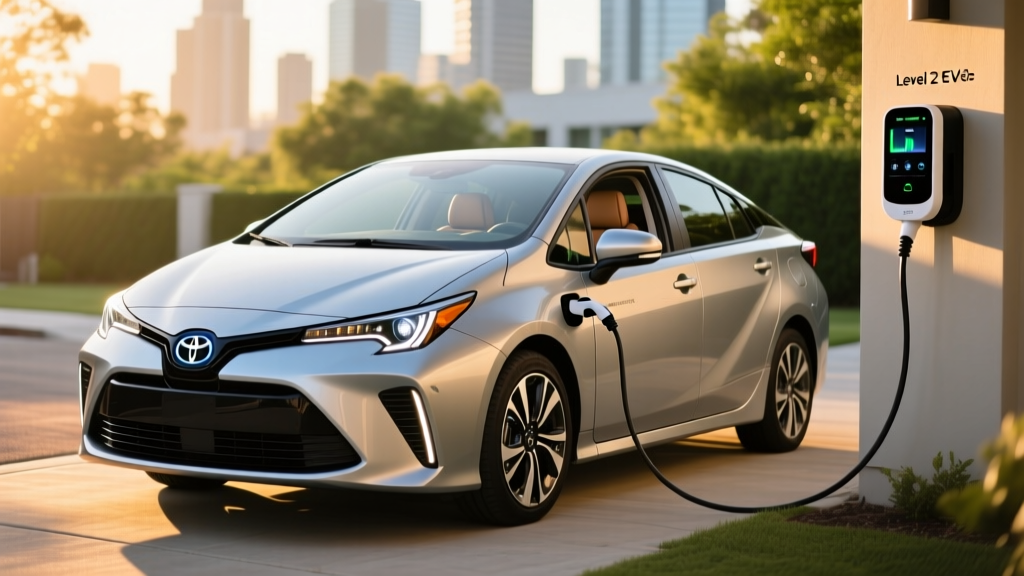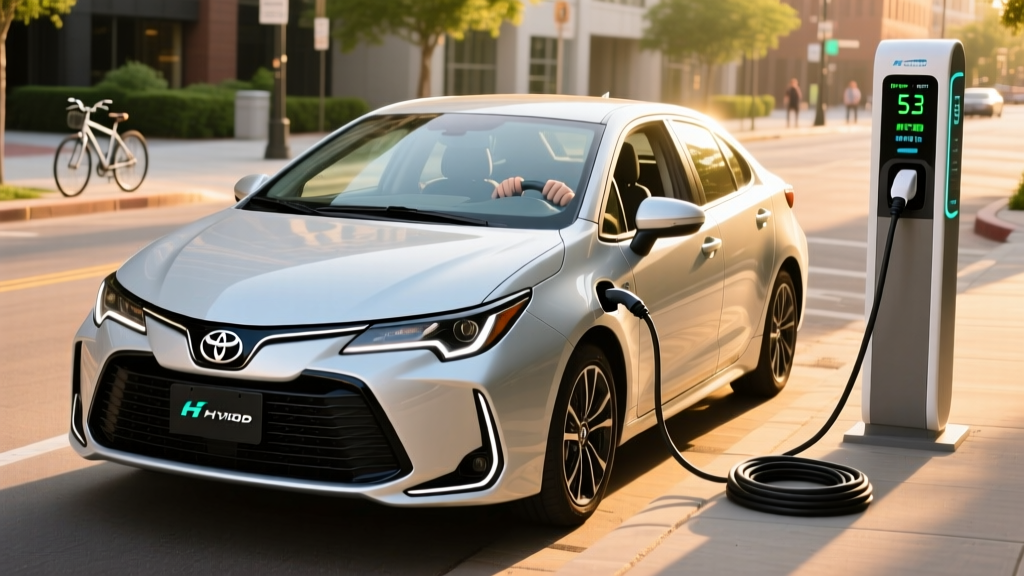
The 2020 Corolla Hybrid at a Glance
The 2020 Toyota Corolla Hybrid was Toyota's first hybrid version of its best-selling compact sedan in the United States, slotting into the lineup as a single, well-equipped LE trim. Built on the same TNGA-C platform as the Prius, it pairs a 1.8-liter Atkinson-cycle four-cylinder engine with Toyota's fourth-generation Hybrid Synergy Drive to deliver an EPA-estimated 52 MPG combined. For buyers navigating the used-EV and hybrid market in 2026, the 2020 Corolla Hybrid remains one of the most efficient non-plug-in vehicles ever sold in the U.S. — and one that requires zero change to your fueling routine.
| Spec | 2020 Corolla Hybrid LE |
|---|---|
| Powertrain | 1.8L 4-cyl + electric motor (Hybrid Synergy Drive) |
| Combined Horsepower | 121 hp (net system) |
| Engine Output | 96 hp @ 5,200 rpm / 105 lb-ft torque |
| Electric Motor Output | 71 hp (53 kW) |
| Hybrid Battery | ~1.31 kWh, Nickel-Metal Hydride (NiMH) |
| EPA MPG (City / Hwy / Combined) | 53 / 52 / 52 |
| Fuel Tank Capacity | 11.4 gallons |
| Total Range | ~593 miles |
| 0-60 mph | ~9.8 seconds |
| Drivetrain | FWD, eCVT |
| Original MSRP | $23,100 |
| 2026 Used Market Range | ~$14,000–$19,500 |
| Hybrid Battery Warranty | 10 years / 150,000 miles |
HEV vs PHEV: Where the Corolla Hybrid Fits
A common point of confusion among shoppers is the difference between a conventional hybrid (HEV) and a plug-in hybrid (PHEV). The 2020 Corolla Hybrid is an HEV — it has no plug, no electric-only driving range, and no need for home charging infrastructure. Its small NiMH battery recharges entirely through regenerative braking and the gasoline engine.
HEV (Corolla Hybrid)
- No plug required — refuel at any gas station
- Electric motor assists engine; cannot drive on electric power alone beyond low-speed creep
- ~1.3 kWh battery, charged by regen and engine
- No federal EV tax credit eligibility
- Ideal for: apartment dwellers, drivers without home charging, high-mileage commuters
PHEV (e.g., Toyota Prius Prime)
- Plugs in for ~25-44 miles of electric-only range (model-dependent)
- Larger battery (13.6-18.1 kWh); Level 1 or Level 2 charging
- May qualify for federal §30D tax credit (new) or §25E used credit
- Ideal for: drivers with home/work charging, short daily commutes under 30 miles
BEV (e.g., Tesla Model 3, Chevy Bolt)
- 100% electric — no gasoline engine
- 250-360+ mile range; requires home Level 2 or reliable public DC fast charging
- Eligible for up to $7,500 federal credit (new) or $4,000 (used, §25E)
- Ideal for: drivers with charging access, willing to plan longer road trips
The Corolla Hybrid occupies the simplest position: maximum fuel efficiency with zero lifestyle adjustment. If you can't plug in at home or work, an HEV is likely your best electrified option.
Real-World MPG: What Owners Actually See
The EPA rates the 2020 Corolla Hybrid at 53 city / 52 highway / 52 combined MPG, according to fueleconomy.gov. Unlike many hybrids where city MPG exceeds highway, the Corolla Hybrid's Atkinson-cycle engine and eCVT keep highway efficiency nearly flat with city figures — a rarity in the segment.
| Condition | Expected MPG | Notes |
|---|---|---|
| EPA Combined | 52 | Official sticker figure |
| City / Stop-and-Go | 50–56 | Regen braking shines; some owners report exceeding 53 |
| Highway (70-75 mph) | 46–52 | Aerodynamic drag reduces gains at higher speeds |
| Cold Weather (below 32°F) | 42–48 | Engine runs more often for cabin heat; battery less efficient |
| Mixed Real-World Avg | 48–54 | Owner-reported on Fuelly and forums |
Because the Corolla Hybrid's battery is small and the engine is the primary energy source, real-world variability is lower than a PHEV or BEV. You won't see the dramatic range swings that cold weather or highway driving inflict on electric vehicles. The main efficiency killer is short-trip, cold-weather driving where the engine runs continuously to heat the cabin before reaching operating temperature.
Powertrain and Driving Experience
Toyota's Hybrid Synergy Drive in the 2020 Corolla pairs a 1.8-liter Atkinson-cycle four-cylinder (96 hp, 105 lb-ft) with a 71-hp electric motor integrated into the transaxle. Net system output is 121 horsepower, routed to the front wheels through an electronically controlled continuously variable transmission (eCVT).
The eCVT is a planetary gearset, not a belt-driven CVT — it's mechanically robust and a key reason Toyota hybrids have such strong long-term reliability records. Acceleration to 60 mph takes approximately 9.8 seconds, which is adequate for merging and commuting but not brisk. This is an efficiency-first powertrain, and the driving dynamics reflect that priority.
The regenerative braking system provides moderate deceleration when lifting off the accelerator. Unlike a BEV, the Corolla Hybrid does not offer true one-pedal driving — you'll still use the brake pedal regularly, though it blends regen and friction braking seamlessly.
Hybrid Battery Longevity, Warranty, and Replacement Cost
2020 Corolla Hybrid Battery Warranty
Toyota covers the hybrid battery with a 10-year / 150,000-mile warranty (in states following California emissions standards, which is effectively nationwide for the hybrid system components). This warranty covers capacity loss or failure that causes the hybrid system to malfunction.
For a 2020 model purchased new, factory warranty coverage extends through the 2030 model year or 150,000 miles — meaning most 2020 Corolla Hybrids on the used market in 2026 still carry remaining factory hybrid battery protection.
The Corolla Hybrid uses a ~1.31 kWh nickel-metal hydride (NiMH) battery pack — a mature, well-proven chemistry that Toyota has used across millions of hybrids since the original Prius in 1997. NiMH is less energy-dense than the lithium-ion packs in PHEVs and BEVs, but it is exceptionally durable and tolerant of the shallow charge-discharge cycles that hybrid operation demands.
Battery replacement cost: If the hybrid battery fails outside warranty, expect to pay approximately $2,000–$3,500 for a new OEM replacement pack installed at a dealership. Third-party reconditioned packs are available for $1,000–$1,800. Given the NiMH chemistry's track record — many Prius taxis have surpassed 300,000 miles on original hybrid batteries — failure before 200,000 miles is uncommon.
The 12V auxiliary battery (a separate, smaller battery that powers electronics) is a standard automotive concern and typically costs $150–$250 to replace every 4-6 years.
Tax Credits and Incentives
As a conventional hybrid (HEV), the 2020 Corolla Hybrid does not qualify for the federal §30D Clean Vehicle Credit (which applies only to plug-in vehicles with ≥7 kWh battery capacity). It is also ineligible for the §25E Used Clean Vehicle Credit, which requires a plug-in hybrid or battery-electric vehicle.
Some states and local utilities offer rebates for fuel-efficient vehicles, though these programs vary widely and change frequently. Check your state's energy office or utility provider for current offerings. The IRS §30D page details current federal credit eligibility rules for plug-in vehicles if you're considering stepping up to a PHEV or BEV instead.
Pricing and Value in 2026
The 2020 Corolla Hybrid launched at an MSRP of $23,100 for the single LE trim, which included Toyota Safety Sense 2.0 (pre-collision braking, lane departure alert, automatic high beams, full-speed-range adaptive cruise control), an 8-inch touchscreen with Apple CarPlay, and LED headlights.
In the 2026 used market, well-maintained examples with 40,000–80,000 miles typically list between $14,000 and $19,500 depending on condition, mileage, and region. That positions the Corolla Hybrid as one of the most cost-effective paths to 50+ MPG ownership without the charging infrastructure requirements of a PHEV or BEV.
Pros
- 52 MPG EPA combined — among the highest of any non-plug-in vehicle
- No plug, no charging, no range anxiety
- Toyota Safety Sense 2.0 standard
- Strong hybrid battery warranty (10 yr/150k mi) with remaining coverage on most 2020 models
- Low maintenance costs — no engine oil consumption issues, proven eCVT
- Competitive used-market pricing (~$14k–$19.5k)
Cons
- Only available in LE trim — no premium options
- Modest 121 hp; 0-60 in ~9.8 seconds
- No federal tax credit eligibility
- Small trunk (13.1 cu ft) due to hybrid battery placement
- NiMH battery — older chemistry, though highly durable
- Infotainment lacks built-in navigation; no Android Auto on 2020 model
Who Should Buy the 2020 Corolla Hybrid?
Choose the Corolla Hybrid if:
- You drive 15,000+ miles per year and want to minimize fuel costs
- You live in an apartment or lack access to home/work charging
- You want maximum simplicity — no plugs, no charging apps, no range planning
- Your budget is under $20,000 and you want proven Toyota reliability
- Your commute involves heavy stop-and-go traffic where regen braking maximizes efficiency
Consider a PHEV (Prius Prime) if:
- You have Level 2 charging at home or work
- Your daily round-trip commute is under 25-40 miles
- You want electric-only driving for local errands
Consider a BEV (Bolt, Model 3) if:
- You have reliable home Level 2 charging
- You want zero tailpipe emissions and the lowest per-mile fuel cost
- You're willing to plan for road-trip DC fast charging stops
Frequently Asked Questions
How many MPG does the 2020 Corolla Hybrid actually get?
The EPA rates it at 53 city / 52 highway / 52 combined. Real-world owners report 48–54 MPG in mixed driving, with city stop-and-go sometimes exceeding the EPA estimate thanks to regenerative braking. Cold weather and sustained high-speed highway driving will pull figures into the low-to-mid 40s.
Does the Corolla Hybrid need to be plugged in?
No. The 2020 Corolla Hybrid is a conventional hybrid (HEV). Its battery charges through regenerative braking and the gasoline engine. You fuel it like any other car at a gas station — there is no plug, no charging port, and no electric-only driving range.
How far can the Corolla Hybrid drive on a full tank?
With an 11.4-gallon fuel tank and 52 MPG combined, total range is approximately 593 miles. Real-world range of 540–620 miles is typical depending on driving conditions.
Is the hybrid battery reliable, and what does replacement cost?
Toyota's NiMH hybrid batteries have an exceptional longevity record, with many lasting well beyond 200,000 miles. The factory warranty covers 10 years/150,000 miles, and most 2020 models still have remaining coverage in 2026. Out-of-pocket replacement runs $2,000–$3,500 for a new OEM pack, or $1,000–$1,800 for a reconditioned unit.
Does the 2020 Corolla Hybrid qualify for any tax credit?
No federal tax credit is available for the Corolla Hybrid because it is a conventional HEV without a plug. The federal §30D and §25E credits apply only to plug-in hybrids (PHEVs) and battery-electric vehicles (BEVs). Some state or utility programs may offer efficiency rebates — check local programs.
How does the Corolla Hybrid compare to the Prius?
Both share the same 1.8L hybrid powertrain and similar efficiency (Prius: 54-58 MPG combined depending on trim). The Corolla Hybrid offers a more conventional sedan design and slightly lower starting price, while the Prius provides a hatchback cargo area, more trim options, and marginally better fuel economy. The Prius also offers an AWD-e option that the Corolla Hybrid lacks.
What maintenance does the Corolla Hybrid require?
Standard maintenance includes oil changes every 10,000 miles (0W-16 synthetic), tire rotations, brake inspections, and cabin air filter replacement. The eCVT has no transmission fluid change interval under normal driving. Regenerative braking significantly extends brake pad life — many owners report 80,000+ miles on original brake pads.