Quick Verdict: The 2019 RAV4 Hybrid XSE as a Used Buy
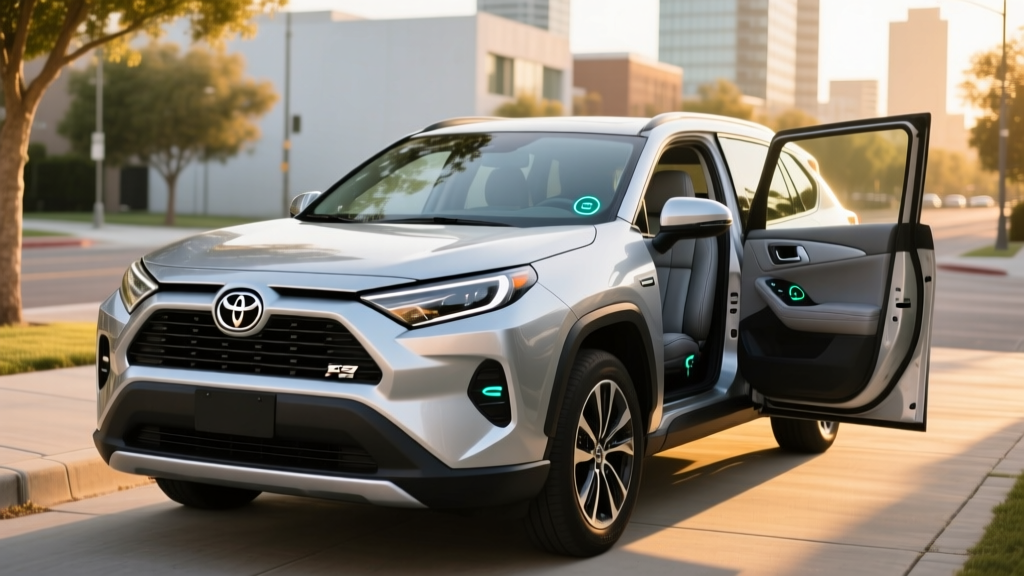
The 2019 Toyota RAV4 Hybrid XSE sits at an interesting crossroads in 2026. It was the first model year of the fifth-generation RAV4 Hybrid, and the XSE trim specifically targeted buyers who wanted the sport-tuned suspension and aggressive styling without stepping up to the full plug-in RAV4 Prime (which didn't arrive until 2021). As a used hybrid SUV, the 2019 XSE delivers a proven 219-horsepower powertrain, EPA-rated 41 MPG combined, and Toyota's hybrid battery warranty that still applies to many examples on the road today.
This is a conventional hybrid (HEV), not a plug-in. You never plug it in — the 1.6 kWh nickel-metal hydride battery recharges through regenerative braking and the gasoline engine. That distinction matters for buyers comparing it to the later RAV4 Prime PHEV or a full battery-electric vehicle.
The 2019 RAV4 Hybrid XSE is a conventional hybrid (HEV). It pairs a small battery with an electric motor and gas engine to boost fuel economy, but offers zero electric-only driving range and requires no plug. A plug-in hybrid (PHEV), like the 2021+ RAV4 Prime, carries a much larger battery (18.1 kWh), can drive 42 miles on electricity alone, and must be plugged in to realize its full efficiency benefit. The 2019 XSE predates the Prime and was never offered as a PHEV.
Fuel Economy: EPA Ratings and Real-World MPG
Fuel economy is the core reason buyers choose the RAV4 Hybrid over the gas-only model. The EPA rates the 2019 RAV4 Hybrid (all trims including XSE, with AWD-i) at:
| Metric | MPG |
|---|---|
| City | 41 MPG |
| Highway | 38 MPG |
| Combined | 40 MPG |
| Annual Fuel Cost (EPA est.) | ~$1,650 (15,000 mi/yr) |
Note: The EPA revised some 2019 RAV4 Hybrid figures after initial publication. Early window stickers showed 41 combined; later corrections brought the combined figure to 40 MPG for AWD-i models. Verify the specific VIN on fueleconomy.gov.
Real-World MPG: What Owners Actually See
Toyota's hybrid system excels in stop-and-go city driving, where the electric motor handles low-speed propulsion and regenerative braking recaptures energy. In real-world ownership, many drivers report exceeding the EPA city rating, with 42–45 MPG achievable in moderate-temperature urban commuting. Highway driving at 75+ MPH typically drops to 34–36 MPG due to the boxy SUV aerodynamics and the engine running more continuously at sustained speed.
Cold weather (below 30°F) reduces fuel economy by roughly 5–10% because the engine runs more frequently to provide cabin heat and maintain battery temperature. Expect 36–38 MPG combined in winter conditions across mixed driving.
Powertrain and Performance Specs
The 2019 RAV4 Hybrid XSE uses Toyota's fourth-generation Hybrid Synergy Drive, pairing a 2.5-liter Atkinson-cycle four-cylinder engine with front and rear electric motors for electronic all-wheel drive (AWD-i).
| Specification | Value |
|---|---|
| Engine | 2.5L inline-4 (Atkinson cycle) |
| Engine Output | 176 HP / 163 lb-ft torque |
| Front Electric Motor | 88 kW (118 HP) |
| Rear Electric Motor (AWD-i) | 40 kW (54 HP) |
| Net Combined Horsepower | 219 HP |
| Transmission | eCVT (planetary gearset) |
| 0–60 MPH | 7.5 seconds |
| Hybrid Battery | 1.6 kWh, Nickel-Metal Hydride (NiMH) |
| Drivetrain | AWD-i (electronic AWD) |
| Towing Capacity | 1,750 lbs |
The XSE trim's sport-tuned suspension lowers the ride height by 0.6 inches compared to other RAV4 Hybrid trims and uses firmer damper tuning. On the road, this translates to flatter cornering and a slightly firmer ride — a meaningful difference from the softer LE and XLE Hybrid trims. The electric motor's instant torque gives the XSE a responsive feel from a stoplight that the gas-only RAV4 (203 HP) can't match, even though the hybrid is roughly 200 pounds heavier.
HEV vs. PHEV vs. EV: Which Powertrain Fits You?
The 2019 RAV4 Hybrid XSE competes against three categories of electrified vehicles. Here's how the decision breaks down for a 2026 buyer:
- You have no home charging access
- Your budget is $20,000–$27,000 (used market)
- You want 40 MPG without behavior changes
- You drive 12,000–15,000 miles/year mixed
- You can install a Level 2 home charger
- Daily commute is under 42 miles
- You want electric-only weekday driving + gas road trips
- Budget allows $35,000+ (used Prime pricing)
- Home Level 2 charging is available
- You want zero tailpipe emissions and lowest per-mile cost
- Budget allows $25,000+ (used EV market)
- You drive under 300 miles between charge stops
The RAV4 Hybrid XSE makes the most sense for apartment dwellers, street parkers, and anyone who can't install charging equipment. You get meaningful fuel savings — roughly 40% less fuel than the gas-only RAV4 — with zero change to your refueling habits.
Battery Warranty, Lifespan, and Replacement Cost
Toyota covers the 2019 RAV4 Hybrid's NiMH battery under its Hybrid System Warranty: 8 years / 100,000 miles (whichever comes first). In California-emissions states (CA, CT, ME, MA, NJ, NY, OR, RI, VT, WA), the warranty extends to 10 years / 150,000 miles. Starting with 2020 models, Toyota extended the hybrid battery warranty to 10 years/150,000 miles nationwide — but the 2019 model year retains the original 8/100k coverage unless registered in a CARB state.
For a 2019 model evaluated in 2026, the standard 8-year/100,000-mile warranty is expiring or has expired depending on the vehicle's in-service date. CARB-state vehicles retain coverage through 2029 or 150,000 miles.
How Long Do Toyota Hybrid Batteries Last?
Toyota's NiMH hybrid batteries have an exceptionally strong longevity track record. Data from fleet operators and owner surveys show most Toyota hybrid batteries retain functional capacity well past 150,000 miles. The Prius taxi fleet famously demonstrated 200,000+ mile battery life in heavy-duty use. The RAV4 Hybrid's battery is under less stress than a PHEV or EV battery because it operates in a narrow state-of-charge window (roughly 40–80% SoC), avoiding the deep discharge cycles that accelerate degradation.
Battery Replacement Cost
If the hybrid battery does fail outside warranty, replacement costs for the 2019 RAV4 Hybrid are:
- Toyota dealership (new OEM battery): $3,000–$4,500 installed
- Refurbished/remanufactured battery: $1,500–$2,500 installed (independent hybrid specialists)
- Individual module replacement: $300–$800 (if only specific cells have degraded — a viable repair for NiMH packs)
Given the proven durability of Toyota's hybrid system, battery replacement is a low-probability event for most buyers. It's still the top concern among used hybrid shoppers, and it's worth having the hybrid battery health checked via an OBD-II scan tool (apps like Dr. Prius or a Toyota dealer's Techstream diagnostic) before purchase.
Pricing, Tax Credits, and Total Cost of Ownership
The 2019 RAV4 Hybrid XSE originally carried an MSRP of approximately $34,550 (before destination). In the 2026 used market, well-maintained examples with 60,000–90,000 miles typically sell for $22,000–$27,000 depending on condition, mileage, and region.
Tax Credit Eligibility
The 2019 RAV4 Hybrid XSE does not qualify for the federal §30D new clean vehicle tax credit — it is a conventional hybrid, not a plug-in vehicle, and the credit applies only to new BEVs and PHEVs meeting battery-sourcing requirements under current IRS rules.
As a used vehicle purchase in 2026, the RAV4 Hybrid XSE may qualify for the used clean vehicle credit (§25E) — up to $4,000 or 30% of the sale price, whichever is less — but only if it is classified as a qualified plug-in electric vehicle. Since the 2019 RAV4 Hybrid is a conventional HEV with no plug, it does not qualify for the used EV credit either. The §25E credit requires the vehicle to have a battery capacity of at least 7 kWh and be a plug-in vehicle. The RAV4 Hybrid's 1.6 kWh NiMH pack does not meet this threshold.
Some states offer their own incentives for used hybrids, but these vary widely. Check your state's energy office or DMV for current programs.
Five-Year Fuel Savings vs. Gas RAV4
Assuming 15,000 miles/year, $3.50/gallon regular unleaded, and the EPA combined ratings:
| Metric | Hybrid XSE (40 MPG) | Gas AWD (28 MPG) |
|---|---|---|
| Annual Fuel Cost | $1,313 | $1,875 |
| 5-Year Fuel Cost | $6,563 | $9,375 |
| 5-Year Savings | ~$2,813 in fuel savings with the Hybrid | |
That $2,800+ in fuel savings over five years partially offsets the hybrid's higher used-market premium over the gas-only RAV4 (typically $2,000–$4,000 more for the hybrid on the used market).
What the XSE Trim Adds (and What It Doesn't)
The XSE was positioned as the sport appearance trim for the RAV4 Hybrid in 2019. Key XSE-specific features include:
- Sport-tuned suspension (lowered 0.6 in, firmer damping)
- 18-inch black alloy wheels
- Blacked-out roof and mirror caps (two-tone paint)
- SofTex-trimmed seats with blue contrast stitching
- 8-inch touchscreen with Entune Audio Plus
- Toyota Safety Sense 2.0 (pre-collision, lane departure, full-speed adaptive cruise, lane tracing)
- Qi wireless charging pad
- LED headlights and taillights
What the XSE lacks compared to the Limited Hybrid trim: no panoramic sunroof, no heated/ventilated front seats (heated seats were a standalone option), no JBL premium audio, no bird's-eye-view camera. If those features matter, the Limited Hybrid is the trim to target on the used market.
Reliability and Known Issues
The 2019 RAV4 Hybrid carries strong reliability ratings. NHTSA gave it a 5-star overall safety rating, and the IIHS named it a Top Safety Pick. The hybrid powertrain is among the most proven in the industry — Toyota has sold millions of hybrids since 1997, and the A25A-FXS engine in the 2019 RAV4 Hybrid is shared with the Camry Hybrid and Highlander Hybrid.
Known issues reported by owners and tracked by NHTSA include:
- Fuel tank design: Some 2019 RAV4 Hybrid owners reported difficulty filling the fuel tank completely (the pump clicks off early). Toyota issued a technical service bulletin and, in some cases, replaced the fuel tank under warranty. Check whether this repair was performed on any used example you're considering.
- 12V battery drain: Like many modern Toyotas, the 12-volt auxiliary battery can drain if the vehicle sits for extended periods. This is not the hybrid traction battery — it's the standard 12V system that powers electronics.
- Wind noise: Some owners note wind noise around the side mirrors at highway speed, a common RAV4 complaint across trims.
The hybrid system itself — the inverter, electric motors, planetary gearset, and NiMH battery — has an exceptionally low failure rate. Toyota's eCVT (which is not a belt-and-cone CVT but a planetary gear device) has no clutch packs, belts, or bands to wear out, contributing to long-term durability.
Frequently Asked Questions
How many MPG does the 2019 Toyota RAV4 Hybrid XSE get?
The EPA rates it at 41 city / 38 highway / 40 combined MPG (AWD-i). Real-world city driving often yields 42–45 MPG, while sustained highway driving at 75+ MPH drops to 34–36 MPG. Cold weather reduces combined efficiency by roughly 5–10%.
Is the 2019 RAV4 Hybrid XSE a plug-in hybrid?
No. It is a conventional hybrid (HEV). You never plug it in. The 1.6 kWh battery recharges through regenerative braking and the gas engine. Toyota's plug-in version — the RAV4 Prime — debuted for the 2021 model year with an 18.1 kWh battery and 42 miles of electric-only range.
How far can the 2019 RAV4 Hybrid XSE drive on electric only?
Effectively zero miles at meaningful speed. The hybrid system can propel the vehicle at very low speeds (under 25 MPH) for short distances on electric power alone, but the 1.6 kWh battery is not designed for sustained electric-only driving. This is fundamentally different from a PHEV like the RAV4 Prime, which can travel 42 miles on electricity before the engine engages.
Does the 2019 RAV4 Hybrid XSE qualify for any federal tax credit?
No. Federal tax credits under §30D (new vehicles) and §25E (used vehicles) require plug-in electric vehicles with a minimum battery capacity. The 2019 RAV4 Hybrid is a conventional HEV with a 1.6 kWh NiMH battery and no plug, making it ineligible for both credits. Check with a tax professional and your state energy office for any local hybrid incentives.
Is the hybrid battery reliable and what does replacement cost?
Toyota's NiMH hybrid batteries are among the most durable in the industry, commonly lasting 150,000–200,000+ miles. The 2019 model is covered by an 8-year/100,000-mile hybrid warranty (10 years/150,000 miles in CARB states). Out-of-warranty replacement costs $3,000–$4,500 for a new OEM battery, or $1,500–$2,500 for a refurbished unit. Individual module repair can cost as little as $300–$800.
Should I buy the 2019 RAV4 Hybrid XSE or a newer model?
The 2019 model offers the best value proposition in the fifth-generation RAV4 Hybrid lineup. You get the same core 219 HP powertrain and 40 MPG as 2020–2025 models at a significant discount. Trade-offs: the 2019 lacks the extended 10yr/150k battery warranty Toyota introduced for 2020, and it misses the updated multimedia system (Toyota Audio Multimedia) that arrived in 2023. If warranty coverage and modern infotainment matter, target a 2020+ model. If pure value-per-MPG is the priority, the 2019 XSE is hard to beat.
- 40 MPG combined — real-world city often higher
- 219 HP provides confident acceleration
- Proven hybrid system with exceptional reliability
- AWD-i standard (no gas-only AWD fuel penalty)
- Sport-tuned suspension unique to XSE trim
- Toyota Safety Sense 2.0 standard
- No plug required — ideal for apartment/street parking
- No electric-only driving range (unlike PHEV)
- 8yr/100k battery warranty expiring on 2019 models
- No federal tax credit eligibility
- Fuel tank fill issue (check for TSB repair)
- Dated 8-inch Entune infotainment vs. newer systems
- Highway MPG drops to 34-36 at 75+ MPH
- XSE lacks premium features (no panoramic roof, no JBL audio)