Quick Verdict: Is the 2019 Fusion Hybrid Still Worth It?
The 2019 Ford Fusion Hybrid remains one of the most comfortable midsize hybrid sedans ever built, but as these vehicles age past the seven-year mark in 2026, prospective used buyers are right to investigate 2019 Ford Fusion Hybrid problems before signing on the dotted line. The good news: the Fusion Hybrid's powertrain is genuinely robust, and the most commonly reported issues are manageable. The bad news: a handful of known faults — particularly around the transmission and 12V electrical system — can turn an otherwise economical used purchase into an expensive headache if you don't know what to look for.
This guide breaks down every major problem area, the real-world fuel economy you can expect, battery longevity data, replacement costs, and how this discontinued hybrid stacks up against modern alternatives — whether you're cross-shopping a used HEV, a plug-in hybrid, or a full battery-electric vehicle.
HEV vs. PHEV: Which Fusion Did Ford Actually Sell?
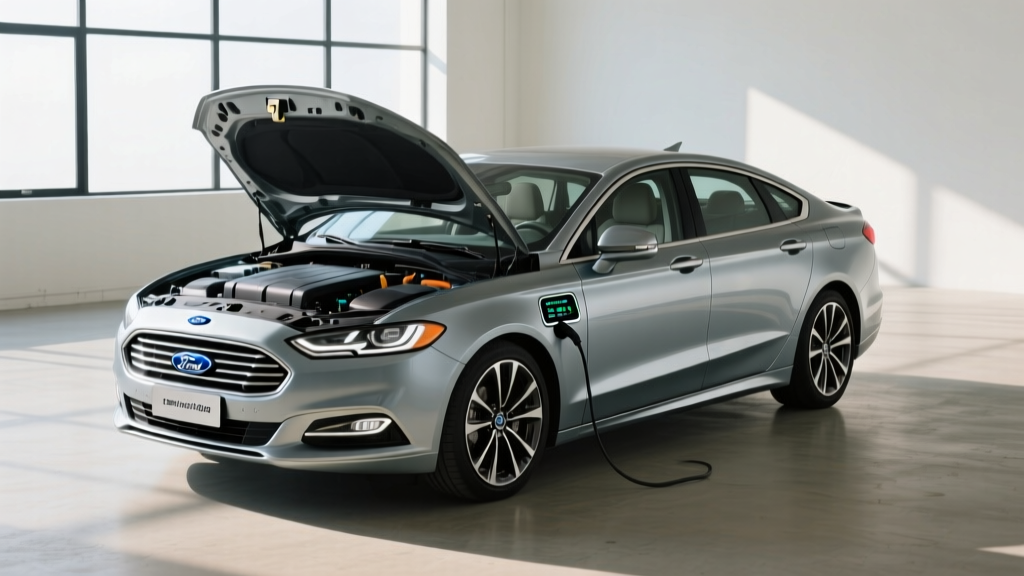
Before we get into problems, it's critical to understand that Ford sold the 2019 Fusion in two distinct electrified variants. Confusing them is the single most common mistake used buyers make.
2019 Fusion Hybrid (HEV) vs. 2019 Fusion Energi (PHEV)
| Spec | Fusion Hybrid (HEV) | Fusion Energi (PHEV) |
|---|---|---|
| Powertrain type | Conventional hybrid — no plug | Plug-in hybrid — requires charging for EV mode |
| Battery capacity | 1.4 kWh (net usable) | 7.6 kWh (net usable) |
| Electric-only range | N/A (motor assists only) | 26 miles (EPA) |
| Combined gasoline MPG | 42 MPG (EPA combined) | 42 MPG (gas-only), 103 MPGe (with charge) |
| DC fast charging | No | No — Level 1/Level 2 only |
| Level 2 charge time (0–100%) | N/A | ~2.5 hours at 3.3 kW |
| Combined horsepower | 188 hp | 188 hp |
| Trunk space | 12.0 cu ft | 8.2 cu ft (battery intrudes) |
Key distinction: The HEV charges its small battery through regenerative braking and the gasoline engine — you never plug it in. The Energi PHEV has a larger battery you charge via a J1772 connector to unlock its 26-mile electric-only range.
Known 2019 Ford Fusion Hybrid Problems
Based on NHTSA owner complaints, IIHS reliability data, and widespread owner forum reports, here are the documented issues ranked by frequency and severity.
1. eCVT Transmission Shudder and Harsh Engagement
The Fusion Hybrid uses an electronically controlled continuously variable transmission (eCVT) — technically a planetary gearset, not a belt-driven CVT. The most commonly reported powertrain complaint involves a noticeable shudder or clunk during low-speed transitions, especially when the gasoline engine engages or disengages from the electric motor at stoplights or in parking-lot maneuvers.
This issue is present in a minority of vehicles but tends to worsen with mileage. Some owners report resolution through a transmission fluid flush and software update at the dealer; others have required the eCVT assembly replacement, which runs $3,000–$4,500 at independent shops. When test-driving, pay close attention to any vibration or jolt between 0–15 mph.
2. 12V Auxiliary Battery Drain
Paradoxically, the most common "dead battery" problem in the Fusion Hybrid isn't the high-voltage traction battery — it's the conventional 12V lead-acid battery under the hood. The Fusion's electronics, telematics module, and keyless-entry system can parasitically drain the 12V battery if the car sits unused for more than 10–14 days. A dead 12V battery renders the car completely inoperable, even though the large hybrid battery is fully charged.
Fix: Replace the OEM 12V battery with an AGM (absorbed glass mat) unit (~$180–$250 installed) and avoid letting the car sit for extended periods without starting it. A battery tender is an inexpensive preventive measure.
3. Inflatable Rear Seatbelt Malfunction
The 2019 Fusion offered optional inflatable (airbag-equipped) rear seatbelts. Multiple NHTSA complaints cite warning-light faults and module failures in this system. Replacement parts are expensive and increasingly difficult to source since Ford discontinued the Fusion in 2020. If the vehicle you're considering has this option, verify the system is fault-free during a pre-purchase inspection.
4. SYNC 3 Infotainment Freezing
The SYNC 3 infotainment system is generally well-regarded, but intermittent freezing, unresponsive touchscreens, and Bluetooth dropout are reported at higher-than-average rates for the 2019 model year. Ford released several software updates to address this; verify that the latest SYNC update has been applied. This is an annoyance rather than a safety concern.
5. Coolant Intrusion in 2.0L Engine (Energi PHEV Primarily)
The 2.0-liter Atkinson-cycle four-cylinder used in both variants has a known — though uncommon — issue with coolant intrusion into the cylinders, which can lead to misfires and, in severe cases, engine damage. This was the subject of Ford Technical Service Bulletin (TSB) 21-22-097. The Energi PHEV appears slightly more affected, likely due to more frequent cold-engine cycling. A pre-purchase compression test and coolant-level check are essential.
Fuel Economy: EPA Sticker vs. Real-World MPG
The 2019 Fusion Hybrid's EPA ratings remain competitive even against 2026 hybrid sedans like the Toyota Camry Hybrid and Honda Accord Hybrid.
| Cycle | EPA Rating | Real-World Expectation |
|---|---|---|
| City | 43 MPG | 44–48 MPG (hybrids often exceed EPA in city) |
| Highway | 41 MPG | 36–40 MPG (aerodynamic drag, less regen benefit) |
| Combined | 42 MPG | 39–44 MPG depending on driving mix |
Real-world note: Like all hybrids, the Fusion Hybrid excels in stop-and-go city driving where regenerative braking recaptures energy and the electric motor handles low-speed propulsion. On sustained highway runs above 70 mph, expect fuel economy to drop 3–5 MPG below the EPA sticker. In cold weather (below 30°F), plan on a further 5–10% reduction as the engine runs more frequently for cabin heat. Source: fueleconomy.gov — 2019 Ford Fusion Hybrid.
For the Fusion Energi PHEV, the picture changes if you charge regularly. With a full charge, the first 26 miles run on electricity alone (103 MPGe combined). Once the battery is depleted, it reverts to the same 42 MPG combined as the standard hybrid. Owners who charge nightly and commute under 25 miles report using gasoline only on weekend trips.
Hybrid Battery Longevity, Warranty & Replacement Cost
2019 Fusion Hybrid Battery Warranty
- Original factory warranty: 8 years / 100,000 miles (10 years / 150,000 miles in CARB states including CA, NY, MA, and others)
- Capacity threshold: Ford covers the battery if it falls below approximately 70% of original capacity within the warranty period
- 2026 status: Original 8-year/100k warranty has expired for most vehicles unless mileage remains low. CARB-state 10-year coverage may still apply through the 2029 model-year boundary for low-mileage examples.
How Long Do Fusion Hybrid Batteries Actually Last?
The Fusion Hybrid uses a lithium-ion (NMC chemistry) traction battery — 1.4 kWh usable in the HEV, 7.6 kWh usable in the Energi PHEV. Real-world degradation data from high-mileage owners and fleet operators shows:
- HEV (1.4 kWh): Minimal noticeable degradation at 150,000+ miles. The small battery cycles shallowly and is thermally managed, resulting in very long service life. Failures before 200,000 miles are uncommon.
- Energi PHEV (7.6 kWh): Moderate degradation of 10–15% by 100,000 miles is typical, reducing electric-only range from 26 miles to approximately 22–23 miles. Full battery failure is rare but more common than in the HEV due to deeper cycling.
Battery Replacement Cost in 2026
If the traction battery does fail out of warranty, here's what you're looking at:
- HEV battery replacement: $2,500–$4,000 (remanufactured unit installed at an independent hybrid specialist)
- Energi PHEV battery replacement: $5,500–$8,000 (new or remanufactured, dealer or specialist)
- Individual module replacement: Some shops offer cell-level repair for $800–$1,500, replacing only the degraded modules rather than the full pack. Results vary.
For context, the HEV battery replacement cost is roughly equivalent to a major transmission repair on a conventional gasoline car — not trivial, but not the catastrophic $15,000+ figure that some fear-mongering sources suggest.
Powertrain Specs at a Glance
| Specification | Value |
|---|---|
| Engine | 2.0L Atkinson-cycle inline-4 |
| Engine output | 141 hp / 129 lb-ft torque |
| Electric motor output | 118 hp / 117 lb-ft torque |
| Net combined system horsepower | 188 hp |
| Transmission | eCVT (planetary gearset) |
| Drivetrain | Front-wheel drive |
| 0–60 mph | ~8.0 seconds |
| Towing capacity | Not rated for towing |
Acceleration is adequate for commuting and highway merging but won't thrill anyone. The eCVT delivers smooth, linear power with no shift shock under normal driving — the shudder issues noted above are the exception, not the rule.
Used Pricing & Tax Credit Eligibility in 2026
The 2019 Fusion Hybrid is no longer in production — Ford discontinued the entire Fusion lineup after the 2020 model year. As a used vehicle in 2026, here's the pricing landscape:
- Used Fusion Hybrid (HEV): $13,000–$19,000 depending on mileage, condition, and trim (S, SE, Titanium)
- Used Fusion Energi (PHEV): $14,000–$20,000 — commands a small premium for the plug-in capability
Does It Qualify for Any Tax Credit?
Federal §30D new-vehicle credit: Not applicable — this credit applies only to new vehicle purchases, and the Fusion is discontinued.
Federal §25A used-EV credit: The IRS used clean vehicle credit offers up to $4,000 (or 30% of the sale price, whichever is less) for qualifying used EVs and PHEVs purchased from a dealer. Key requirements for 2026:
- Sale price must be $25,000 or less (most used Fusions qualify)
- Buyer income caps: $75,000 single / $112,500 head of household / $150,000 joint
- Vehicle must be at least two model years old (2019 qualifies)
- HEV (standard hybrid): Does NOT qualify — only BEVs and PHEVs are eligible
- Energi PHEV: May qualify, provided the battery is at least 7 kWh (the Energi's 7.6 kWh pack meets this threshold) and the specific VIN is confirmed eligible by the dealer at point of sale
- Credit is non-refundable and can only be claimed once per VIN
State incentives: Vary widely. Check your state's energy office or AFDC incentive database for current local programs.
Hybrid vs. PHEV vs. EV: Which Should You Choose?
If you're weighing the used 2019 Fusion Hybrid against other electrified options in 2026, here's a practical decision framework:
Choose the Fusion Hybrid (HEV) if:
- You want maximum fuel economy with zero behavior change — no plugging in, no range planning
- You drive 10,000–15,000 miles/year and want to spend under $20,000 on a reliable commuter
- You lack access to home or workplace charging
- You value a quiet, comfortable ride over sporty handling
Choose the Fusion Energi (PHEV) if:
- You can charge at home (Level 1 standard outlet is sufficient for overnight charging of the 7.6 kWh battery)
- Your daily commute is under 25 miles round-trip and you want to drive mostly on electricity
- You want to qualify for the up-to-$4,000 used clean vehicle credit
- You take occasional long road trips and don't want range limitations
Choose a full EV (BEV) instead if:
- You have reliable home Level 2 charging and want to eliminate gasoline entirely
- Your budget allows $25,000+ for a newer used EV (Chevy Bolt, Tesla Model 3, Hyundai Kona Electric)
- You want the lowest per-mile fuel cost and minimal maintenance (no oil changes, no engine)
- You drive less than 250 miles between charging opportunities
Pre-Purchase Inspection Checklist
If you're seriously considering a 2019 Fusion Hybrid or Energi, insist on a pre-purchase inspection that specifically covers:
- Hybrid battery state of health (SoH): Ask the dealer or a hybrid specialist to pull the battery health report via Ford's diagnostic tool. Look for less than 15% degradation.
- eCVT behavior: Test-drive in stop-and-go conditions. Any shudder, clunk, or hesitation during engine-on/engine-off transitions is a red flag.
- 12V battery age: If it's the original lead-acid unit (7+ years old), budget for immediate replacement (~$200).
- Coolant level and condition: Check both the engine coolant and the inverter coolant reservoirs. Low coolant or milky discoloration suggests the intrusion issue.
- NHTSA recall status: Verify all open recalls have been completed at nhtsa.gov/recalls using the VIN.
- SYNC 3 software version: Confirm the latest firmware is installed to minimize infotainment glitches.
Pros and Cons
Pros
- 42 MPG combined still competitive in 2026
- Spacious, quiet cabin with excellent ride quality
- Strong safety ratings (IIHS Top Safety Pick)
- Hybrid battery proves durable past 150k miles
- Low used pricing ($13k–$19k) for a midsize sedan
- Energi PHEV may qualify for up to $4,000 used-EV credit
- Apple CarPlay / Android Auto standard
Cons
- Discontinued — no new parts pipeline, some trim pieces scarce
- eCVT shudder affects a minority of vehicles but is costly to fix
- Energi trunk space compromised to 8.2 cu ft by battery
- No DC fast charging on Energi (Level 2 only, ~2.5 hours)
- 12V battery drain if vehicle sits unused
- Acceleration is leisurely at ~8.0 seconds to 60 mph
- Original hybrid warranty expired for most examples
Frequently Asked Questions
How many MPG does the 2019 Ford Fusion Hybrid get?
The EPA rates the 2019 Fusion Hybrid at 43 city / 41 highway / 42 combined MPG. In real-world driving, most owners see 39–44 MPG combined, with city driving often exceeding the EPA sticker and sustained highway driving falling 3–5 MPG short.
How far can the Fusion Energi go on electric only?
The 2019 Fusion Energi PHEV delivers an EPA-rated 26 miles of electric-only range on a full charge. In practice, expect 22–26 miles depending on temperature, terrain, and driving style. Once depleted, it operates as a conventional hybrid at 42 MPG combined.
Is the 2019 Fusion Hybrid reliable?
Overall, yes. The hybrid powertrain is proven and the lithium-ion traction battery rarely fails before 150,000 miles. The most significant risk is the eCVT shudder issue, which affects a minority of vehicles. A thorough pre-purchase inspection mitigates most risk. The conventional 12V battery drain is a nuisance but cheap to fix.
What does a Fusion Hybrid battery replacement cost?
For the standard HEV, expect $2,500–$4,000 for a remanufactured battery at a hybrid specialist. For the Energi PHEV, $5,500–$8,000. Individual module repair is sometimes available for $800–$1,500. These costs are comparable to a major engine or transmission repair on a conventional vehicle.
Does the 2019 Fusion Hybrid qualify for a tax credit?
The standard Fusion Hybrid (HEV) does not qualify for any federal tax credit — neither the new-vehicle §30D credit nor the used-vehicle §25A credit, as conventional hybrids are excluded. The Fusion Energi PHEV may qualify for the used clean vehicle credit (up to $4,000) if the sale price is under $25,000, buyer income falls within IRS limits, and the VIN is confirmed eligible at point of sale. Consult a tax professional for your specific situation.
Should I buy the Hybrid or the Energi PHEV?
If you can charge at home and your commute is under 25 miles, the Energi's 26-mile electric range can eliminate most gasoline use on weekdays — and it may qualify for the used-EV tax credit. If you lack charging access or take frequent long trips, the standard Hybrid's 42 MPG combined with no plug-in requirement is simpler and the trunk is 46% larger (12.0 vs. 8.2 cu ft).
How does the Fusion Hybrid compare to a Toyota Camry Hybrid?
The 2019 Camry Hybrid rates at 52 MPG combined (LE trim) — a significant 10 MPG advantage over the Fusion. However, used Camry Hybrids command higher prices ($17,000–$23,000) and the Fusion offers a notably quieter, more refined ride. If MPG is the top priority, the Camry wins. If comfort and value matter more, the Fusion is compelling.