Quick Verdict: The 2018 Prius Prime in Today's Market
If you're searching for a car hybrid 2018 model that still holds up in 2026, the Toyota Prius Prime plug-in hybrid is one of the strongest used-EV candidates available. With 25 miles of EPA-rated electric-only range, 54 MPG combined once the battery depletes, and Toyota's legendary hybrid reliability, this second-generation Prime remains a practical commuter and a smart entry point into electrified driving — especially at today's used prices.
This review covers the 2018 Prius Prime from a 2026 ownership perspective: real-world efficiency, battery longevity data, charging practicalities, and whether this PHEV still makes sense compared to newer full EVs and modern plug-in hybrids.
HEV vs PHEV: What the 2018 Prius Prime Actually Is
Conventional Hybrid (HEV): The standard 2018 Toyota Prius (non-Prime) is a self-charging hybrid. It has a small battery recharged by regenerative braking and the engine. You never plug it in. EPA rating: 52 MPG combined.
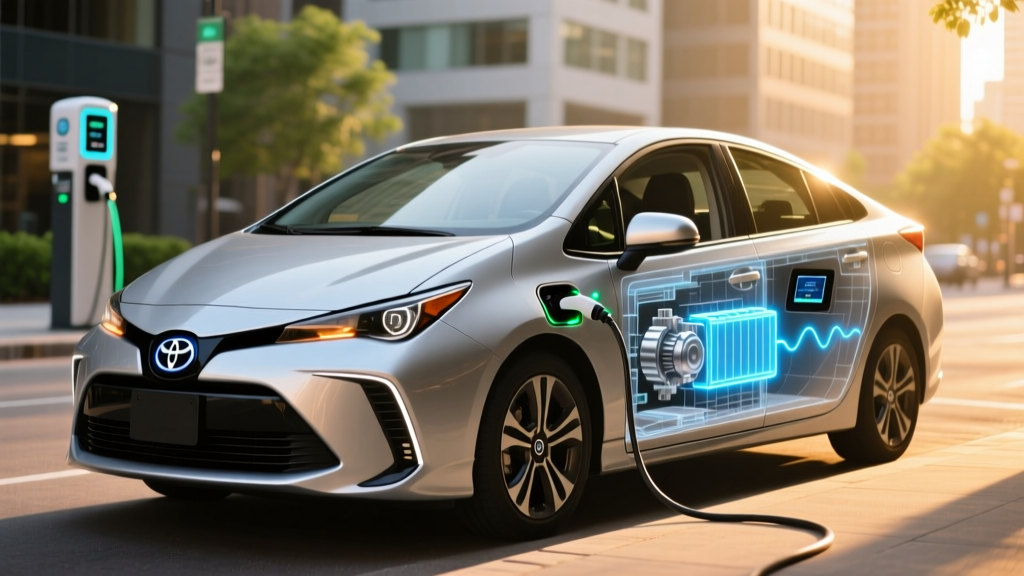
Plug-in Hybrid (PHEV): The 2018 Prius Prime has a larger 8.8 kWh lithium-ion battery that you can plug in to recharge. It delivers up to 25 miles of pure electric driving before the gasoline engine kicks in, operating as a conventional hybrid afterward. EPA rating: 54 MPG combined (hybrid mode) / 133 MPGe (electric mode).
The distinction matters for your daily routine. If you can charge at home or work and your commute is under 25 miles round-trip, the Prime lets you drive almost entirely on electricity — effectively functioning as a short-range EV most days while keeping a gas engine for longer trips.
Fuel Economy and Electric Range: The Numbers That Matter
| Metric | EPA Rating | Real-World Expectation (2026) |
|---|---|---|
| Electric-only range | 25 miles | 20–23 miles (highway/cold); up to 28 miles (city, mild weather) |
| MPGe (electric mode) | 133 MPGe | 115–130 MPGe typical |
| MPG combined (hybrid mode) | 54 MPG | 48–56 MPG (city often exceeds EPA) |
| MPG city (hybrid mode) | 55 MPG | 52–60 MPG (regenerative braking helps in stop-and-go) |
| MPG highway (hybrid mode) | 53 MPG | 46–52 MPG (aerodynamic drag at 75+ mph hurts efficiency) |
| Total combined range | 640 miles | 570–620 miles |
Source: EPA Fuel Economy — 2018 Toyota Prius Prime
The 2018 Prius Prime's 8.8 kWh battery pack (approximately 6.7 kWh usable to protect longevity) gives you that 25-mile electric envelope. In real-world 2026 testing, expect slightly less in winter conditions — cold temperatures reduce lithium-ion efficiency by 15–20%, dropping electric range to roughly 18–20 miles. Conversely, mild-weather city driving with frequent regenerative braking can push electric range to 27–28 miles.
Once the battery depletes, the Prime seamlessly transitions to hybrid mode. Unlike some early PHEVs that became sluggish or inefficient after battery depletion, the Prius Prime's hybrid system is identical in architecture to the standard Prius, meaning you still get excellent fuel economy even without a charge.
Powertrain and Charging Specifications
| Specification | 2018 Toyota Prius Prime |
|---|---|
| Engine | 1.8L 4-cylinder Atkinson cycle (95 HP) |
| Electric motor | Permanent magnet AC synchronous (71 HP / 53 kW) |
| Combined system output | 121 HP |
| Battery capacity | 8.8 kWh total (~6.7 kWh usable), lithium-ion |
| Transmission | CVT (planetary gearset eCVT) |
| 0–60 mph | 10.0 seconds |
| Level 1 charging (120V) | ~5.5 hours (full charge) |
| Level 2 charging (240V) | ~2 hours (full charge) |
| DC fast charging | Not supported |
| Charge connector | J1772 (Level 1 and Level 2) |
| Cargo volume | 19.9 cu ft |
The 2018 Prime does not support DC fast charging — a limitation that persists across the entire second-generation Prius Prime lineup (2017–2022). For a PHEV with a small battery, this is less critical than it would be for a full EV. A standard 120V household outlet (Level 1) replenishes the battery overnight, and a 240V Level 2 charger tops it off in about two hours — more than sufficient for daily use.
The 121 HP combined output is modest. This is not a performance vehicle; it's an efficiency-first commuter. The 10.0-second 0–60 time is adequate for merging and city driving but requires patience on highway on-ramps.
Used Pricing and Tax Credit Eligibility in 2026
The 2018 Prius Prime originally started at $27,965 MSRP (Plus trim) and topped out around $33,965 (Advanced trim). In the 2026 used market, expect to pay:
- $14,000–$17,000 for a 2018 Prius Prime with 60,000–90,000 miles
- $17,000–$21,000 for lower-mileage examples (under 45,000 miles) in excellent condition
Federal tax credit status: The 2018 Prius Prime originally qualified for a $4,502 federal tax credit under the pre-2023 rules. Under current IRS §30D rules (as of 2026), used PHEV purchases may qualify for up to $4,000 through the Used Clean Vehicle Credit (§25E), subject to these requirements:
- Sale price must be $25,000 or less (most 2018 Primes qualify)
- Buyer income cap: $75,000 single / $112,500 head of household / $150,000 joint
- Vehicle must be at least 2 model years old (2018 qualifies)
- Must purchase from a licensed dealer (private sales excluded)
- Battery must have minimum 4 kWh capacity (Prius Prime's 8.8 kWh qualifies)
Always verify current eligibility on IRS.gov before purchasing. Point-of-sale transfer is available for the used credit as of 2024, meaning the dealer can apply the credit directly to your purchase price.
Battery Longevity, Warranty, and Replacement Costs
Original warranty: Toyota covers the 2018 Prius Prime's hybrid battery for 10 years / 150,000 miles (in states that adopted California emissions standards: CA, CT, ME, MD, MA, NJ, NY, OR, RI, VT, WA). In all other states, coverage is 8 years / 100,000 miles.
In 2026: A 2018 model is 8 years old. If you're in a CARB state and under 150,000 miles, you may still have remaining factory battery warranty coverage. Verify with a Toyota dealer using the VIN.
Toyota's hybrid battery track record is among the best in the industry. Data from fleet operators and long-term owners shows Prius batteries commonly lasting 150,000–200,000+ miles with gradual capacity loss rather than sudden failure. The Prius Prime's larger PHEV battery experiences more charge cycles than a standard HEV battery, but Toyota's conservative buffer management (using only ~6.7 of 8.8 kWh) protects long-term health.
Replacement cost if out of warranty:
- New OEM Prius Prime battery from Toyota: $3,500–$4,500 (parts + labor at dealership)
- Refurbished/remanufactured battery: $1,500–$2,500 (aftermarket suppliers)
- Individual cell module replacement: $500–$1,200 (specialist hybrid shops can replace only the degraded cells)
For a used 2018 purchase, request a hybrid battery health check. Many Toyota dealers can pull the battery's State of Health (SoH) percentage via OBD-II diagnostics. A reading above 85% at this age is normal; below 75% may indicate approaching warranty-claim territory or future replacement need.
Real-World Ownership: What to Expect in 2026
The 2018 Prius Prime was designed around a specific use case: plug in at home overnight, commute on electricity, and use gasoline only for longer trips. Eight years later, that formula still works — but there are practical considerations for today's buyers.
Charging at home: The Prime ships with a 120V Level 1 charging cord. Plugging into a standard household outlet delivers a full charge in about 5.5 hours — perfectly adequate for overnight charging. If you want faster turnaround, a 240V Level 2 home charger (such as a ChargePoint Home Flex, ~$400–$700 for equipment) cuts charging to roughly 2 hours. Installation by a licensed electrician typically runs $500–$1,500 depending on your panel and outlet proximity.
Public charging: The Prius Prime uses the J1772 connector for Level 2 public charging. It does not support DC fast charging, so you won't use CCS or NACS connectors. Public Level 2 stations (ChargePoint, EVgo, Blink) work fine, but the small battery means you'll rarely need public charging if you can charge at home.
Insurance: Expect $1,100–$1,600 annually for a 2018 Prius Prime depending on your state, driving record, and coverage level. Hybrid insurance premiums tend to be slightly higher than gas-only equivalents due to battery replacement cost risk, but the Prius's safety record and parts availability keep costs reasonable.
Maintenance: The Prius Prime requires minimal maintenance. There's no traditional starter motor, alternator, or accessory belt to replace. Brake pads last 80,000–100,000+ miles thanks to regenerative braking. Oil changes are needed every 10,000 miles (0W-20 synthetic). Coolant system service is recommended at 100,000 miles for the inverter and engine cooling loops.
2018 Prius Prime vs Alternatives: Which Electrified Car Fits You?
Choose the 2018 Prius Prime (PHEV) if:
- Your daily commute is 20–25 miles or less and you can charge at home
- You want electric commuting without range anxiety on road trips
- You're buying used and want proven reliability with low ownership risk
- You don't have reliable access to public DC fast charging
Choose a full BEV (e.g., used 2020–2022 Chevy Bolt EV, Nissan LEAF) if:
- You want zero gasoline use and lower per-mile energy cost
- You have home Level 2 charging and your daily driving stays under 200 miles
- You want to avoid oil changes and engine maintenance entirely
Choose the standard 2018 Prius (HEV, non-Prime) if:
- You cannot charge at home or at work
- You want maximum simplicity — no plug, no cord, just fill up with gas
- Your budget is tighter (used HEV Prius runs $12,000–$16,000)
| Factor | 2018 Prius Prime (PHEV) | 2018 Prius (HEV) | Used BEV (e.g., 2021 Bolt) |
|---|---|---|---|
| Plug-in required? | Optional (but recommended) | No | Yes (mandatory) |
| Electric-only range | 25 miles | 0 miles | 200–259 miles |
| Gasoline needed? | Yes (for trips over 25 mi) | Yes (always) | No |
| Combined MPG/MPGe | 54 MPG / 133 MPGe | 52 MPG | 110–120 MPGe |
| Used price (2026) | $14,000–$21,000 | $12,000–$16,000 | $13,000–$20,000 |
| DC fast charging | No | N/A | Yes (most models) |
| Best for | Short commute + road trips | No charging access | Home charging + no gas |
Pros and Cons
Pros
- 25-mile electric range covers most daily commutes without gasoline
- 54 MPG hybrid mode is excellent even after battery depletion
- Toyota reliability with proven hybrid powertrain architecture
- 10-year/150,000-mile battery warranty (CARB states) may still apply
- No range anxiety — gas engine provides 640-mile total range
- Charges on standard 120V outlet — no electrical upgrade required
- Eligible for up to $4,000 used-clean-vehicle credit (§25E)
Cons
- Only 121 HP — slow acceleration (10.0 sec 0–60)
- No DC fast charging capability
- 25-mile electric range is short by 2026 PHEV standards (RAV4 Prime offers 42 mi)
- 19.9 cu ft cargo space is tight for a hatchback
- Infotainment system feels dated (no Apple CarPlay/Android Auto in 2018)
- Rear visibility is compromised by the split rear window design
Frequently Asked Questions
How many MPG does the 2018 Prius Prime get?
The EPA rates the 2018 Prius Prime at 54 MPG combined (55 city / 53 highway) in hybrid mode after the battery is depleted. In electric mode, it achieves 133 MPGe. Real-world results vary: city drivers often exceed 55 MPG thanks to regenerative braking, while sustained highway driving at 75+ mph can drop efficiency to 46–50 MPG.
How far can the 2018 Prius Prime go on electric only?
The EPA rates it at 25 miles of electric-only range. In real-world conditions, expect 20–23 miles on the highway or in cold weather, and up to 27–28 miles in mild-weather city driving with frequent stops for regenerative braking. Once depleted, the car seamlessly switches to hybrid mode.
Do I have to plug in the 2018 Prius Prime?
No — the Prius Prime operates perfectly fine as a conventional hybrid even if you never plug it in. You'll simply miss out on the 25-mile electric range and run on gasoline all the time at 54 MPG. However, to get the full efficiency and cost benefit, plugging in (even just at home overnight on a standard 120V outlet) is strongly recommended.
Is the 2018 Prius Prime reliable? What about battery replacement?
Toyota's hybrid systems have an industry-leading reliability record. The Prius Prime battery is warrantied for 8 years/100,000 miles (49-state) or 10 years/150,000 miles (CARB states). Battery replacements cost $3,500–$4,500 OEM or $1,500–$2,500 refurbished, but most Prius batteries last well beyond 150,000 miles. Always get a battery health check before buying used.
Does the 2018 Prius Prime qualify for any tax credit in 2026?
The original new-vehicle credit is no longer available. However, if you purchase a used 2018 Prius Prime from a licensed dealer for $25,000 or less, you may qualify for the Used Clean Vehicle Credit (§25E) worth up to $4,000 — or 30% of the sale price, whichever is less. Income caps apply ($75K single / $150K joint). Verify current rules at IRS.gov.
How does the Prius Prime compare to newer PHEVs?
Modern PHEVs like the 2025 Toyota RAV4 Prime (42 miles electric range, 302 HP) or 2025 Jeep Wrangler 4xe (21 miles, 375 HP) offer more electric range and power — but at $45,000+ MSRP. The 2018 Prius Prime trades performance and range for a dramatically lower used price ($14K–$21K), making it one of the most cost-effective plug-in hybrids on the market in 2026.