Quick Verdict: The 2018 Prius Hybrid Remains a Benchmark
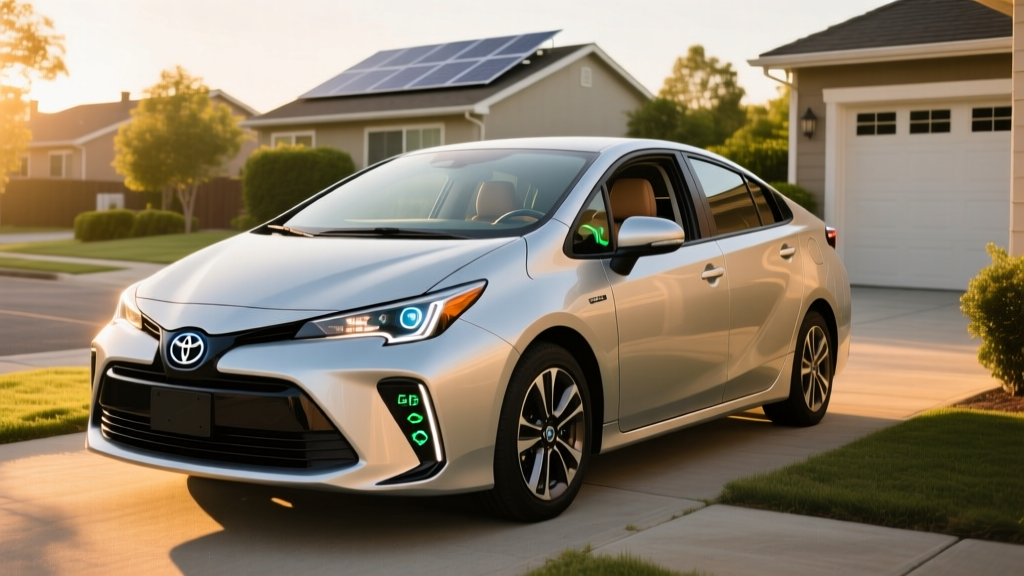
If you are shopping the used hybrid market in 2026, the 2018 Toyota Prius is one of the most data-backed, low-risk purchases you can make. This is the fourth-generation (XW50) Prius, built on Toyota's TNGA platform, and it delivers an EPA-rated 52 MPG combined in the Eco trim — a figure that many owners routinely beat in real-world city driving. It is a conventional hybrid electric vehicle (HEV), meaning it never needs to be plugged in. The gasoline engine and regenerative braking handle all battery charging automatically.
For buyers weighing a used Prius against a newer plug-in hybrid or a full battery-electric vehicle, the 2018 Prius offers a compelling case: low fuel costs, exceptional reliability data, and zero charging-infrastructure dependency. But it also has trade-offs — modest acceleration, a firm ride, and an interior that prioritizes function over luxury. Here is every number you need to decide.
HEV vs PHEV: Which 2018 Prius Are You Looking At?
Toyota sold two distinct Prius models for the 2018 model year, and confusing them is the most common mistake used buyers make. The 2018 Toyota Prius (conventional HEV) and the 2018 Toyota Prius Prime (plug-in hybrid, or PHEV) share a nameplate but serve very different use cases.
| Attribute | 2018 Prius (HEV) | 2018 Prius Prime (PHEV) |
|---|---|---|
| Powertrain type | Conventional hybrid — no plug | Plug-in hybrid — charges via outlet |
| EPA combined MPG / MPGe | 52 MPG (Eco) / 50 MPG (other trims) | 54 MPG (hybrid mode) / 133 MPGe (EV mode) |
| Electric-only range | N/A (EV mode ~1 mi at low speed) | 25 miles EPA electric-only |
| Battery capacity | 0.75 kWh (NiMH, ~1.3 kWh in some trims) | 8.8 kWh (lithium-ion) |
| Charging method | Engine + regen only — never plugged in | Level 1 (120V): ~5.5 hrs / Level 2 (240V): ~2 hrs |
| DC fast charging | No | No |
| Total range | ~590 miles (11.4-gal tank) | ~640 miles (EV + hybrid combined) |
| Combined horsepower | 121 hp | 121 hp |
Key distinction: The conventional 2018 Prius HEV generates all its electricity internally. You fuel it with gasoline and drive — the hybrid system recovers energy during braking and deceleration to charge the small battery. The Prius Prime PHEV can be plugged into a standard 120V household outlet or a 240V Level 2 charger to fill its larger 8.8 kWh battery, giving you 25 miles of pure electric driving before the gasoline engine kicks in. Neither version supports DC fast charging.
Fuel Economy: EPA Ratings vs Real-World MPG
| 2018 Prius Trim | City MPG | Highway MPG | Combined MPG |
|---|---|---|---|
| Prius Two Eco / Four Eco | 58 | 53 | 56 |
| Prius One / Two / Three / Four / Four Touring | 54 | 50 | 52 |
| Prius Prime (hybrid mode, battery depleted) | 54 | 53 | 54 |
| Prius Prime (charge-depleting EV mode) | 133 MPGe combined | ||
Source: fueleconomy.gov — 2018 Toyota Prius
The Eco trims achieve their higher numbers through lighter wheels, a low-rolling-resistance tire package, and the removal of some weight-adding features. If fuel economy is your top priority, the Eco trim is the one to target on the used market.
Real-World MPG: What Owners Actually Report
Toyota's hybrid system excels in stop-and-go city traffic, where regenerative braking recovers energy that a conventional car wastes as heat. This means real-world city MPG often exceeds the EPA city rating — a rarity in the auto industry. Drivers on fueleconomy.gov's user-reported data commonly log 55–62 MPG in mixed urban commuting.
Highway driving tells a different story. At sustained 70–80 mph speeds, the Prius's aerodynamic efficiency helps, but the small 1.8-liter engine works harder, and real-world highway numbers tend to land 2–5 MPG below the EPA highway sticker. Expect roughly 46–50 MPG on long highway trips at 75 mph.
Powertrain and Performance Specs
| Specification | 2018 Prius (HEV) | 2018 Prius Prime (PHEV) |
|---|---|---|
| Engine | 1.8L 4-cylinder Atkinson cycle | 1.8L 4-cylinder Atkinson cycle |
| Engine horsepower | 96 hp @ 5,200 rpm | 96 hp @ 5,200 rpm |
| Electric motor output | 71 hp (53 kW) | 71 hp (53 kW) |
| Net combined horsepower | 121 hp | 121 hp |
| Transmission | eCVT (planetary gearset) | eCVT (planetary gearset) |
| 0–60 mph | ~10.5 seconds | ~10.8 seconds |
| Drivetrain | FWD (AWD-e not offered until 2019) | FWD |
| Curb weight | ~3,042 lbs (Two Eco) | ~3,350 lbs |
| Fuel tank | 11.4 gallons | 11.4 gallons |
The 2018 Prius is not quick by any measure. A 10.5-second 0–60 mph time puts it firmly in the "adequate for commuting" category. The eCVT is not a traditional belt-and-pulley CVT — Toyota uses a planetary gearset that seamlessly blends engine and motor power with no fixed gear ratios. This design is mechanically simple, has no clutch packs or belts to wear, and is a major contributor to the Prius's legendary reliability.
One note for used buyers: the AWD-e (all-wheel-drive) variant was not introduced until the 2019 model year. If you need all-wheel drive for snow-belt climates, you will need to look at a 2019 or newer Prius or consider the Prius Prime, which also remained FWD-only in 2018.
Battery Health, Warranty, and Replacement Costs
How Long Do Prius Hybrid Batteries Last?
The 2018 Prius HEV uses a nickel-metal hydride (NiMH) battery pack in most trims (the Prius Prime uses a lithium-ion pack). Toyota's hybrid battery management system is conservative — it never allows the battery to fully charge or fully discharge, keeping the state of charge in a narrow middle window. This "buffer" strategy dramatically extends cycle life.
Real-world data from fleet operators and long-term owners shows that 2018-era Prius hybrid batteries commonly last 150,000 to 200,000+ miles before significant degradation. Failures before 100,000 miles are statistically rare. When degradation does occur, it typically manifests as a gradual drop in fuel economy (2–5 MPG loss) rather than a sudden failure.
Battery Replacement Cost in 2026
If you do face a hybrid battery replacement on a 2018 Prius, here is the current cost landscape:
- New OEM Toyota battery: $2,200–$3,500 installed at a dealership (part number varies by trim)
- Refurbished/remanufactured battery: $1,000–$1,800 installed at an independent hybrid specialist
- Individual module replacement: $300–$600 if only one or two cells have failed (a viable option that many Prius owners pursue)
For context, a 2018 Prius with 120,000 miles and a clean battery health report is not a risky buy. Ask the seller for a "hybrid battery health check" printout from a Toyota dealer or use an OBD2 scanner with hybrid-specific software (such as Dr. Prius or Techstream) to check battery block voltage variance before purchase.
2018 Prius Used Pricing and Tax Credit Eligibility
As of early 2026, the 2018 Toyota Prius trades on the used market in these ranges:
- 2018 Prius (80,000–110,000 mi): $14,000–$18,000
- 2018 Prius (50,000–80,000 mi): $17,000–$21,000
- 2018 Prius Prime (50,000–80,000 mi): $18,000–$23,000
Original MSRP in 2018 ranged from $23,475 (Prius One) to $32,090 (Prius Four Touring with Advanced Technology Package). The Prius Prime started at $27,100 before incentives.
Does the 2018 Prius Qualify for a Tax Credit?
Federal credit for new purchases: Not applicable — the vehicle is used. The IRS §25E Used Clean Vehicle Credit offers up to $4,000 (30% of sale price, capped at $4,000) for qualifying used EVs and PHEVs, but strict rules apply:
- The vehicle must be purchased from a licensed dealer (private-party sales do not qualify)
- Sale price must be $25,000 or less
- Buyer income caps: $75,000 single / $112,500 head of household / $150,000 married filing jointly
- The vehicle must have a battery capacity of at least 7 kWh — this disqualifies the standard Prius HEV (0.75 kWh battery) but the Prius Prime PHEV qualifies (8.8 kWh battery)
- The credit can be transferred to the dealer at point of sale as a discount
So: if you buy a used 2018 Prius Prime from a dealer for $22,000 and meet the income requirements, you could receive a $4,000 credit, bringing your effective cost to $18,000. The conventional Prius HEV does not qualify for any federal tax credit. Always verify current rules at irs.gov and consult a tax professional before relying on credit eligibility.
Hybrid vs PHEV vs Full EV: Which Is Right for You?
Choose the 2018 Prius (HEV) if:
- You do not have access to home or workplace charging (apartment, street parking, no garage)
- You want the simplest possible ownership experience — gas and go, no charging logistics
- Your commute is long and highway-heavy, where PHEV electric range offers little benefit
- Your budget is under $18,000 for a reliable daily driver
Choose the 2018 Prius Prime (PHEV) if:
- You can charge at home (even a standard 120V outlet works overnight)
- Your daily commute is under 25 miles round-trip — you could drive months without buying gas
- You want EV-like daily driving with gasoline backup for road trips
- You qualify for the $4,000 used-clean-vehicle credit, making the effective price competitive
Choose a full EV (BEV) instead if:
- You have reliable Level 2 home charging and your daily driving is under 200 miles
- You want to eliminate gasoline entirely and reduce maintenance (no oil changes, no engine)
- You are willing to spend $25,000+ for a used EV like a Chevrolet Bolt EV, Nissan Leaf, or older Tesla Model 3
Pros and Cons of the 2018 Prius in 2026
Pros
- 52–56 MPG combined EPA — among the highest of any non-plug-in vehicle ever sold
- Proven reliability: the 1.8L Atkinson-cycle engine and eCVT are among the most durable powertrains in automotive history
- Low annual fuel cost: at $3.20/gallon and 12,000 miles/year, fuel costs roughly $750–$850 annually
- Hatchback cargo versatility: 24.6 cu ft behind rear seats, 50.7 cu ft with seats folded
- Low insurance costs relative to EVs and turbocharged competitors
- No charging infrastructure dependency — works everywhere gasoline is sold
Cons
- Slow acceleration: 10.5-second 0–60 mph makes highway merging deliberate, not confident
- Ride quality is firm; road noise is noticeable above 65 mph
- Rear-seat headroom is limited for taller passengers due to the sloping roofline
- Infotainment system is dated — no Apple CarPlay or Android Auto in 2018 (added in 2020)
- AWD not available in 2018 (introduced for 2019 model year)
- Conventional HEV does not qualify for federal used-vehicle tax credit
- At 8 years old, the hybrid battery warranty may be expired depending on mileage and state
Frequently Asked Questions
How many MPG does the 2018 Toyota Prius get?
The 2018 Prius Eco trim is EPA-rated at 58 city / 53 highway / 56 combined MPG. Non-Eco trims rate at 54 city / 50 highway / 52 combined. Real-world mixed driving typically yields 48–55 MPG, with city-heavy routes often exceeding the EPA city figure thanks to regenerative braking.
How far can the 2018 Prius Prime go on electric only?
The 2018 Prius Prime PHEV delivers 25 miles of EPA-rated electric-only range from its 8.8 kWh lithium-ion battery. In warm weather with gentle driving, some owners report 28–30 miles. In cold weather (below freezing), expect 18–22 miles of electric range due to cabin heating demands and reduced battery efficiency.
Is the 2018 Prius reliable, and what does a battery replacement cost?
The 2018 Prius ranks among the most reliable vehicles in Toyota's lineup. The eCVT has no wearable friction components (no belts, no clutch packs), and the 1.8L Atkinson-cycle engine runs under low stress. Hybrid battery replacement costs $2,200–$3,500 for a new OEM unit or $1,000–$1,800 for a refurbished pack. Most original batteries last 150,000–200,000+ miles.
Does the 2018 Prius need to be plugged in?
No. The standard 2018 Prius is a conventional hybrid (HEV). It charges its battery entirely through the gasoline engine and regenerative braking. You never plug it in. Only the Prius Prime (PHEV variant) requires plugging in to access its 25-mile electric-only range — and even the Prime can be driven indefinitely without plugging in, operating as a regular hybrid once the battery is depleted.
Does the 2018 Prius qualify for any tax credit in 2026?
The conventional 2018 Prius HEV does not qualify for any federal tax credit when purchased used. The 2018 Prius Prime PHEV may qualify for the IRS §25E Used Clean Vehicle Credit of up to $4,000, provided the sale price is $25,000 or less, the buyer meets income limits ($75K single / $150K married filing jointly), and the purchase is made through a licensed dealer. Verify current rules at irs.gov before purchase.
Should I buy a 2018 Prius or a newer model?
The 2018 Prius offers excellent value at $14,000–$21,000 on the used market. However, the 2019 refresh added available AWD-e, and the 2020 model year brought Apple CarPlay/Android Auto. If smartphone integration or all-wheel drive matters to you, budget $3,000–$5,000 more for a 2019–2021 model. If pure fuel economy on a tight budget is the goal, the 2018 Eco trim is hard to beat.