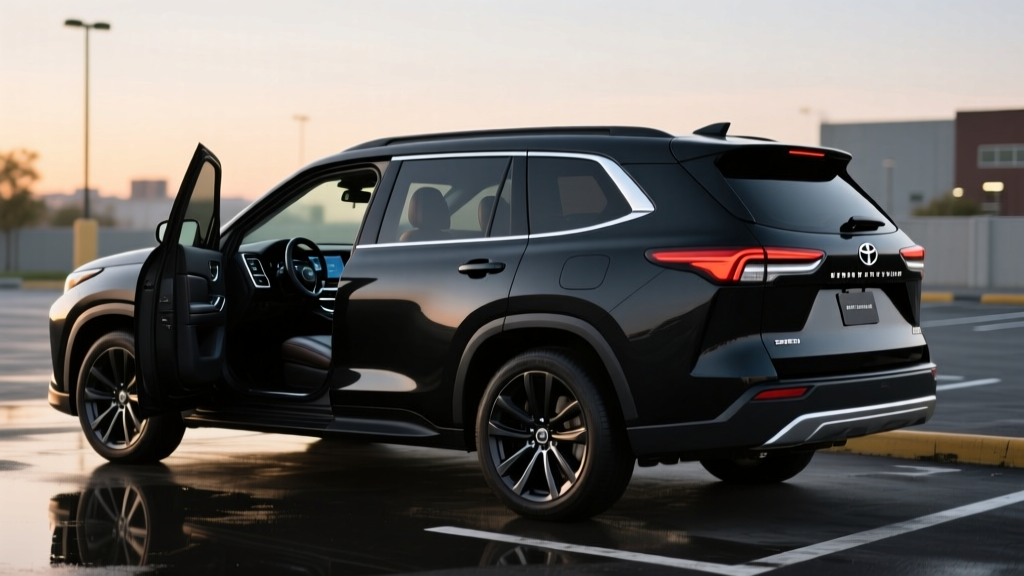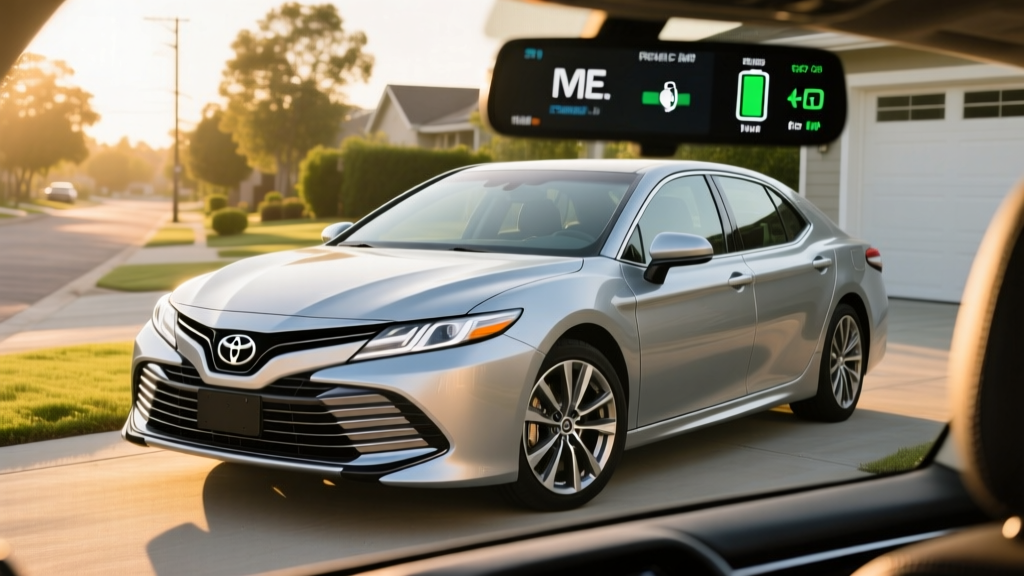
The 2018 Toyota Camry XLE Hybrid arrived as part of Toyota's eighth-generation Camry redesign, bringing a more engaging chassis, updated styling, and a revised hybrid powertrain that pushed fuel economy well past 40 MPG. In 2026, this model remains one of the most sought-after used midsize hybrids on the market — and for good reason. It delivers real-world efficiency that often exceeds its EPA sticker, Toyota's legendary hybrid reliability, and a comfortable, tech-forward cabin. Here's everything a buyer or current owner needs to know about the 2018 Camry XLE Hybrid, from exact MPG figures to battery replacement costs.
Quick Verdict: Who Is the 2018 Camry XLE Hybrid For?
This car is for drivers who want maximum fuel savings without changing their refueling habits. There's no plug, no range anxiety, and no charging infrastructure to worry about. You fill up at any gas station and let Toyota's Hybrid Synergy Drive system handle the rest. The XLE trim specifically adds leather-trimmed seats, a 7-inch touchscreen with Entune Audio Plus, dual-zone climate control, and the Toyota Safety Sense P suite — making it the comfort-oriented choice over the sportier SE Hybrid.
Choose the 2018 Camry XLE Hybrid if: You commute in stop-and-go traffic, want 40+ MPG without plugging in, and prioritize long-term reliability.
Consider a PHEV (like the Prius Prime) if: You have home charging access and want 25+ miles of electric-only driving for short commutes.
Consider a full BEV if: You have reliable Level 2 home charging, drive under 250 miles daily, and want zero tailpipe emissions.
Fuel Economy: EPA Ratings vs. Real-World MPG
The EPA rates the 2018 Toyota Camry Hybrid (all trims including the XLE) at 51 MPG city / 53 MPG highway / 52 MPG combined when equipped with the LE trim's low-rolling-resistance tires. However, the XLE and SE trims carry a slight penalty due to wider tires and additional weight:
| Trim | City MPG | Highway MPG | Combined MPG |
|---|---|---|---|
| Camry Hybrid LE | 51 | 53 | 52 |
| Camry Hybrid XLE / SE | 44 | 47 | 46 |
Source: fueleconomy.gov — 2018 Toyota Camry Hybrid
Real-World MPG: What Owners Actually See
Toyota hybrids consistently outperform their EPA estimates in city driving, where regenerative braking and electric-motor assist shine. On the highway, the gasoline engine does more of the work, so real-world numbers tend to land closer to — or slightly below — the sticker.
- City / suburban driving: Owners frequently report 47–50 MPG in the XLE, sometimes exceeding the EPA city figure.
- Highway cruising (70–75 mph): Expect 40–44 MPG. Aerodynamic drag and the engine running continuously reduce efficiency at sustained high speeds.
- Cold weather (below 30°F): MPG drops 5–10% as the engine runs longer to heat the cabin and warm the catalytic converter. Expect 38–42 MPG combined in winter.
- Overall owner average: Fuelly data shows a lifetime average around 44–46 MPG for the XLE, closely matching the EPA combined estimate.
Powertrain and Performance Specs
The 2018 Camry Hybrid pairs a 2.5-liter Dynamic Force four-cylinder engine (A25A-FXS) with an electric motor and a sealed nickel-metal hydride (NiMH) traction battery. This was the first year of Toyota's new-generation hybrid system in the Camry, delivering more power and efficiency than the prior generation.
| Specification | 2018 Camry XLE Hybrid |
|---|---|
| Engine | 2.5L 4-cylinder (A25A-FXS) Atkinson cycle |
| Engine Horsepower | 176 hp @ 5,700 rpm |
| Electric Motor Output | 118 hp (88 kW) |
| Net Combined Horsepower | 208 hp |
| Transmission | eCVT (planetary gearset, not a belt CVT) |
| Traction Battery | NiMH, ~1.0 kWh (sealed, air-cooled) |
| 0–60 mph | ~7.6 seconds |
| Drivetrain | Front-wheel drive |
| Fuel Tank | 13.2 gallons |
| Total Driving Range | ~607 miles (at 46 MPG combined) |
A key point: Toyota's eCVT is not the rubber-belt continuously variable transmission found in some competitors. It uses a planetary gearset to seamlessly blend engine and motor power. There are no belts to wear, no shudder, and it's one of the most durable transmissions in the automotive industry.
HEV vs. PHEV vs. BEV: Where Does This Camry Fit?
The 2018 Camry Hybrid is a conventional hybrid (HEV). It cannot be plugged in, has no electric-only driving range beyond very low-speed crawling, and recovers all its energy through regenerative braking and the gasoline engine. Here's how that compares to other electrified options:
| Feature | HEV (This Camry) | PHEV (e.g., Prius Prime) | BEV (e.g., Tesla Model 3) |
|---|---|---|---|
| Plug-in charging? | No — gas only | Yes — Level 1 or Level 2 | Yes — Level 1, 2, or DC fast |
| Electric-only range | N/A (motor assists only) | 25–44 miles (model dependent) | 250–360+ miles |
| Total range | ~607 miles | ~600+ miles (electric + gas) | 250–360+ miles |
| Fueling / charging time | 5 min at gas station | ~2–5.5 hrs (Level 2); 5 min gas | 15–40 min DC fast; 6–10 hrs L2 |
| Home charging needed? | No | Recommended for EV-mode benefit | Essential |
| Federal tax credit (§30D) | Not eligible | Up to $7,500 (if eligible) | Up to $7,500 (if eligible) |
| Best for | No home charging; long trips | Short commute + home charger | Home charger + under 250 mi/day |
The Camry Hybrid's advantage is simplicity. You never need to think about charging, and the total range of over 600 miles means fewer stops on road trips than any current BEV.
Battery Warranty, Lifespan, and Replacement Cost
Hybrid battery longevity is the number-one concern for used hybrid buyers. Toyota's track record here is excellent, but it's worth understanding the specifics.
Toyota Hybrid Battery Warranty (2018 model year):
- Standard coverage: 8 years / 100,000 miles (whichever comes first)
- CARB states (CA, NY, MA, and others adopting California emissions standards): 10 years / 150,000 miles
- Warranty threshold: Battery capacity must not fall below approximately 60% of original capacity, or the battery must not have a malfunction
Real-World Battery Lifespan
Toyota's NiMH hybrid batteries have proven remarkably durable. Data from fleet operators, taxi services, and high-mileage owners shows:
- Typical lifespan: 150,000–200,000+ miles before significant degradation or failure.
- Degradation pattern: NiMH cells lose capacity gradually. You may notice slightly reduced electric-assist feel and a small MPG drop (1–3 MPG) over 100,000+ miles, but catastrophic failure is uncommon.
- Failure mode: When a hybrid battery does fail, it's usually one or two degraded cells within the pack rather than the entire battery.
Battery Replacement Cost (2026 Estimates)
- New OEM Toyota battery pack: $2,500–$4,000 (parts and labor at a dealership)
- Refurbished / reconditioned pack: $1,200–$2,000 (independent hybrid specialists)
- Single-cell module replacement: $500–$1,000 (if only one or two cells are bad)
Given that the 2018 Camry Hybrid is now 8 years old in 2026, original battery warranty coverage has expired for most vehicles unless they remain under 100,000 miles (or 150,000 in CARB states). Budget accordingly when purchasing used.
Used Pricing and Tax Credit Eligibility in 2026
As of early 2026, the 2018 Toyota Camry XLE Hybrid trades on the used market in the following range:
- 60,000–80,000 miles, clean title: $19,000–$23,000
- 80,000–120,000 miles: $15,500–$19,000
- 120,000+ miles: $12,000–$15,500
Prices vary by region, condition, service history, and whether the hybrid battery has been tested or replaced.
Does the 2018 Camry Hybrid Qualify for Any Tax Credit?
No. The 2018 Camry Hybrid is a conventional HEV and does not qualify for the federal §30D Clean Vehicle Credit. That credit applies only to plug-in electric vehicles (BEVs and PHEVs) with a battery capacity of at least 7 kWh. The Camry Hybrid's ~1.0 kWh NiMH pack falls far below this threshold.
Some states and local utilities offer small rebates or HOV lane access for hybrids, but these programs vary widely and many have phased out in favor of PHEV/BEV incentives. Check your state's energy office or IRS §30D guidance for current eligibility details.
Reliability, Safety, and Ownership Costs
The eighth-generation Camry (2018–2023) has an outstanding reliability record. Toyota's hybrid system adds complexity in theory but reduces wear in practice — the electric motor handles low-speed driving, regenerative braking extends brake pad life, and the eCVT has no wear-prone belts or clutches.
Safety Ratings
The 2018 Camry earned top marks from both major testing agencies:
- NHTSA: 5-Star Overall Safety Rating (nhtsa.gov)
- IIHS: Top Safety Pick+ (with optional LED headlights and front crash prevention)
Toyota Safety Sense P (TSS-P) comes standard on all 2018 Camry Hybrid trims and includes:
- Pre-Collision System with Pedestrian Detection (PCS-PD)
- Lane Departure Alert with Steering Assist (LDA w/SA)
- Automatic High Beams (AHB)
- Full-Speed Range Dynamic Radar Cruise Control (DRCC)
Important: TSS-P is a Level 2 driver-assistance system under SAE classification. It provides steering and speed support but requires the driver to remain fully engaged at all times. It is not autonomous or "self-driving."
Annual Ownership Cost Estimate
- Fuel (12,000 mi/yr at 46 MPG, $3.40/gal): ~$887/year
- Insurance (national average, mid-40s driver): ~$1,400–$1,800/year
- Maintenance: ~$400–$600/year (oil changes every 10K miles, cabin filter, tire rotation — no transmission fluid changes typically needed)
- Estimated annual total: ~$2,700–$3,300
For comparison, a 2018 Camry gas model (LE, 29 MPG combined) would cost roughly $1,407/year in fuel alone — a difference of about $520/year in the hybrid's favor.
Pros and Cons at a Glance
Pros
- 44–47 MPG combined (XLE) with real-world city numbers often higher
- 208 hp combined — adequate passing power, smooth acceleration
- 600+ mile total range per tank
- Standard Toyota Safety Sense P (adaptive cruise, lane assist, AEB)
- Proven hybrid reliability with 150K–200K+ mile battery lifespan
- No plug-in charging required — works with existing gas infrastructure
- Comfortable XLE cabin with leather, dual-zone climate, Entune audio
Cons
- No federal tax credit eligibility (HEV, not PHEV/BEV)
- XLE's 18-inch wheels reduce MPG vs. LE trim (46 vs. 52 combined)
- Entune infotainment lacks Apple CarPlay / Android Auto (added in 2019 refresh)
- NiMH battery is heavier and less energy-dense than modern lithium packs
- Original hybrid warranty has expired on most 2018 examples in 2026
- Higher used-car prices than comparable gas Camrys (~$2,000–$4,000 premium)
Frequently Asked Questions
How many MPG does the 2018 Toyota Camry XLE Hybrid get?
The EPA rates the XLE trim at 44 MPG city, 47 MPG highway, and 46 MPG combined. In real-world city driving, many owners report 47–50 MPG. Highway cruising at 70+ mph typically yields 40–44 MPG. Cold weather can reduce combined MPG by 5–10%.
Does the 2018 Camry Hybrid need to be plugged in?
No. The 2018 Camry Hybrid is a conventional hybrid (HEV). It charges its battery entirely through regenerative braking and the gasoline engine. There is no plug, no charging port, and no electric-only driving mode. You refuel exclusively at gas stations.
How long will the hybrid battery last, and what does replacement cost?
Toyota's NiMH hybrid batteries typically last 150,000–200,000+ miles. A new OEM replacement costs $2,500–$4,000 installed at a dealer. Refurbished packs run $1,200–$2,000 at independent hybrid shops. Single-cell module repairs can cost as little as $500–$1,000. The original 8-year/100,000-mile warranty has expired on most 2018 examples as of 2026.
Is the 2018 Camry Hybrid reliable?
Yes. The eighth-generation Camry Hybrid has an excellent reliability record. Toyota's hybrid system reduces mechanical wear — the eCVT has no belts or clutches, regenerative braking extends pad life, and the electric motor handles low-speed loads. Consumer Reports and J.D. Power consistently rate the Camry Hybrid above average for long-term dependability.
Does the 2018 Camry Hybrid qualify for a federal tax credit?
No. The federal §30D Clean Vehicle Credit requires a plug-in vehicle with at least 7 kWh of battery capacity. The Camry Hybrid's ~1.0 kWh NiMH battery does not qualify. Only plug-in hybrids (PHEVs) and battery-electric vehicles (BEVs) are eligible. Check the IRS Clean Vehicle Credit page for current rules.
Hybrid vs. PHEV vs. EV — which should I choose?
Choose the Camry Hybrid (HEV) if you lack home charging access, take frequent long road trips, or want zero change to your fueling routine. Choose a PHEV (like the RAV4 Prime or Prius Prime) if you have home charging and a short commute you can cover on electric-only power. Choose a full BEV if you have reliable Level 2 home charging, drive under 250 miles daily, and want to eliminate gasoline entirely.
What's the difference between the XLE and LE Hybrid trims?
The LE Hybrid gets 52 MPG combined thanks to lighter 16-inch wheels and low-rolling-resistance tires. The XLE adds leather seats, 18-inch alloy wheels, a power-adjustable front passenger seat, blind-spot monitoring with rear cross-traffic alert, and an upgraded Entune Audio Plus system — but drops to 46 MPG combined. The trade-off is roughly 6 MPG for significantly more comfort and features.
Does the 2018 Camry Hybrid have Apple CarPlay or Android Auto?
No. The 2018 model year uses Toyota's Entune system without smartphone mirroring. Apple CarPlay was added for the 2019 model year refresh. If smartphone integration is essential, consider an aftermarket head unit replacement ($400–$800 installed) or look at 2019+ Camry Hybrid models instead.