Quick Verdict: The 2018 RAV4 Hybrid as a Used Buy
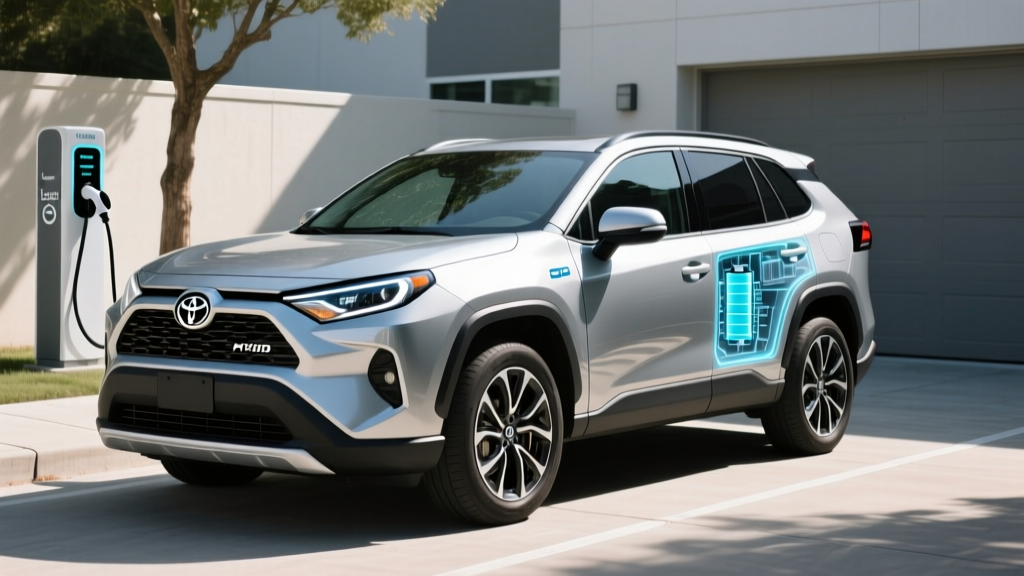
The 2018 Toyota RAV4 Hybrid is a conventional hybrid electric vehicle (HEV) — it does not plug in. It pairs a 2.5-liter four-cylinder engine with two electric motors and a 1.6 kWh nickel-metal hydride (NiMH) battery to deliver an EPA-rated 32 MPG combined. In 2026, this fourth-generation RAV4 Hybrid (model years 2016–2018) remains one of the most reliable used hybrid SUVs on the market, with strong resale value and widely available replacement parts. Used examples typically sell for $16,000–$24,000 depending on mileage and condition.
If you are cross-shopping this against newer electrified SUVs, know this: the 2018 RAV4 Hybrid was the last model year before Toyota's complete redesign for 2019, which brought all-wheel drive, a more powerful hybrid system, and significantly better fuel economy. That context matters for your purchase decision.
HEV vs PHEV: What the 2018 RAV4 Hybrid Actually Is
Before diving into specs, let's clarify the terminology. The 2018 RAV4 Hybrid is a conventional hybrid (HEV). It charges its small battery exclusively through regenerative braking and the gasoline engine. You never plug it in. There was no plug-in hybrid (PHEV) version of the RAV4 until the 2021 RAV4 Prime, which is an entirely different vehicle with an 18.1 kWh battery, 42 miles of electric-only range, and a $7,500 federal tax credit when new.
| Feature | 2018 RAV4 Hybrid (HEV) | 2021+ RAV4 Prime (PHEV) |
|---|---|---|
| Plugs in? | No | Yes (Level 1/Level 2) |
| Battery capacity | 1.6 kWh (NiMH) | 18.1 kWh (Li-ion) |
| Electric-only range | None (EV mode ~0.5 mi at low speed) | 42 miles (EPA) |
| Combined horsepower | 194 hp | 302 hp |
| EPA combined MPG/MPGe | 32 MPG | 94 MPGe / 38 MPG (gas-only) |
| Federal tax credit (when new) | None | $7,500 (§30D, now expired for new) |
| AWD available? | No (FWD only for hybrid) | Yes (standard electronic AWD) |
Fuel Economy: EPA Ratings and Real-World MPG
| Driving Condition | EPA Rating | Real-World Expectation |
|---|---|---|
| City | 34 MPG | 33–38 MPG (hybrids excel in stop-and-go) |
| Highway | 30 MPG | 27–31 MPG (less regen benefit at steady speed) |
| Combined | 32 MPG | 30–34 MPG |
The 2018 RAV4 Hybrid's 34 MPG city rating is higher than its highway figure — a hallmark of conventional hybrids. Regenerative braking recaptures energy during deceleration, and the electric motor handles low-speed driving where gas engines are least efficient. Owners who do mostly city and suburban driving consistently report beating the EPA city estimate, sometimes reaching 36–38 MPG in warm weather.
Highway driving tells a different story. At 70–80 mph, the hybrid system provides minimal benefit over the gas-only RAV4 (rated at 23 city / 30 highway / 26 combined for FWD). Cold weather also reduces fuel economy by 5–10% as the engine runs more frequently to generate cabin heat and maintain battery temperature. In winter testing, expect combined figures closer to 28–30 MPG.
For authoritative EPA data, check the official listing at fueleconomy.gov.
Powertrain and Performance Specs
| Specification | 2018 RAV4 Hybrid |
|---|---|
| Engine | 2.5L inline-4 (152 hp, 152 lb-ft) |
| Front electric motor | 105 kW (141 hp) |
| Rear electric motor | 50 kW (67 hp) |
| Net combined system output | 194 hp |
| Transmission | eCVT (electronically controlled CVT) |
| Drivetrain | AWD (electronic, rear motor-driven) |
| Battery type | NiMH, 1.6 kWh (sealed) |
| 0–60 mph | ~7.8 seconds |
| Towing capacity | 1,750 lbs |
| Cargo volume (behind rear seats) | 35.6 cu ft |
The 2018 RAV4 Hybrid uses Toyota's Hybrid Synergy Drive system. The front motor handles primary propulsion and regenerative braking, while the rear motor provides on-demand all-wheel drive — there is no mechanical driveshaft connecting the front and rear axles. The rear motor engages automatically when the system detects front-wheel slip or during hard acceleration from a stop.
Performance is adequate rather than thrilling. The 194 combined horsepower moves the 3,900-lb SUV competently, and the eCVT delivers smooth, linear acceleration without the rubber-band effect of older CVTs. Toyota's eCVT is actually a planetary gearset, not a belt-driven unit, which contributes to its durability and smoothness.
Battery Warranty, Degradation, and Replacement Cost
Toyota Hybrid Battery Warranty (Original):
- Duration: 8 years / 100,000 miles (10 years / 150,000 miles in California and states adopting CARB emissions standards)
- Coverage: Defects and capacity loss below a defined threshold
- Transferable: Yes, warranty transfers to subsequent owners
The 2018 RAV4 Hybrid's NiMH battery is now 8 years old as of 2026. For most original owners outside CARB states, the federal hybrid battery warranty has expired. In California, Connecticut, Maine, Maryland, Massachusetts, New Jersey, New York, Oregon, Rhode Island, Vermont, and Washington — the 10-year/150,000-mile CARB warranty still applies to 2018 models through 2028.
NiMH hybrid batteries in Toyota vehicles have an excellent longevity track record. Unlike the large lithium-ion packs in full EVs, the RAV4 Hybrid's 1.6 kWh battery operates within a narrow state-of-charge window (roughly 40%–80%), which dramatically reduces degradation stress. Real-world data from Toyota Prius and RAV4 Hybrid fleets shows most NiMH packs lasting 150,000–200,000+ miles before significant capacity loss.
Replacement cost: If the hybrid battery does fail out of warranty, a new OEM replacement from Toyota costs approximately $3,000–$4,500 including labor. Refurbished or reconditioned NiMH modules are available from third-party suppliers for $1,500–$2,500 installed. Independent hybrid specialists can often replace individual failed modules rather than the entire pack, reducing costs further to $500–$1,200 depending on how many cells need service.
Used Pricing and Tax Credit Eligibility
As of early 2026, used 2018 RAV4 Hybrid pricing breaks down by trim:
- XLE: $16,000–$19,500 (60k–90k miles)
- SE: $18,000–$21,000 (50k–80k miles)
- Limited: $19,500–$24,000 (40k–75k miles)
Tax credit reality: The 2018 RAV4 Hybrid does not qualify for any federal tax credit. Conventional hybrids (HEVs) have never been eligible for the §30D new vehicle credit, and the IRS used-EV credit (up to $4,000 under §25E) applies only to battery electric vehicles and plug-in hybrids with at least 7 kWh of battery capacity. The RAV4 Hybrid's 1.6 kWh NiMH pack falls well below that threshold.
Some states offer their own incentives for used hybrid purchases, but these vary widely and change frequently. Check your state's energy office or department of revenue for current programs.
Who Should Choose the 2018 RAV4 Hybrid?
Strengths
- Proven Toyota hybrid reliability with 200k+ mile track records
- Strong city MPG (34 EPA, often 36+ real-world)
- No plug-in charging required — works for apartment dwellers
- AWD standard on hybrid (vs FWD-only gas model in some trims)
- Low maintenance costs (no timing belt, regenerative braking extends pad life)
- Parts availability is excellent nationwide
Weaknesses
- No electric-only driving range (EV mode limited to ~0.5 mi at parking speeds)
- Highway MPG (30) barely beats the gas RAV4's 30 highway
- Dated infotainment (no Apple CarPlay/Android Auto in 2018 — added for 2019)
- Less cargo space than gas RAV4 due to battery placement (35.6 vs 38.4 cu ft)
- Outperformed by 2019+ redesign (41 MPG combined, standard AWD, 219 hp)
- No federal or most state tax credit eligibility
Choose the 2018 RAV4 Hybrid If:
- You want a reliable, efficient compact SUV under $22,000
- Most of your driving is city/suburban where the hybrid system shines
- You cannot charge at home (apartment, street parking, no garage)
- You want AWD without the fuel penalty of a conventional AWD gas SUV
Look Elsewhere If:
- You want electric-only commuting — consider a used RAV4 Prime, plug-in Prius, or a full BEV
- Highway miles dominate your driving — the hybrid advantage shrinks
- Modern tech features matter — the 2019+ RAV4 Hybrid has CarPlay, better safety tech, and 41 MPG for $24,000–$30,000 used
- You want tax credit eligibility — used BEVs and PHEVs can qualify for up to $4,000 under §25E
Hybrid vs PHEV vs Full EV: Which Fits You?
| Factor | HEV (2018 RAV4 Hybrid) | PHEV (RAV4 Prime) | Full EV (e.g., Tesla Model Y) |
|---|---|---|---|
| Plug-in required? | No | Yes (for max benefit) | Yes (mandatory) |
| Electric-only range | ~0.5 mi | 42 mi (EPA) | 260–330 mi (EPA) |
| Fuel/electricity cost per mile | ~$0.10–$0.12 | ~$0.04 (electric) / $0.10 (gas) | ~$0.03–$0.05 |
| Home charging needed? | No | Recommended (Level 2) | Essential (Level 2) |
| Used price range (2026) | $16k–$24k | $30k–$40k | $22k–$38k |
| Best for | No home charging, budget buyers | Home charging + short commute | Home charging, lowest operating cost |
The 2018 RAV4 Hybrid occupies a specific niche: maximum convenience with moderate efficiency gains. If you have access to home Level 2 charging and a commute under 40 miles, a PHEV like the RAV4 Prime will save significantly more on fuel. If your commute is longer and you can charge at home, a full EV will offer the lowest cost per mile and zero tailpipe emissions.
But if you rent, live in an apartment, park on the street, or simply want zero lifestyle change from your gas car — the conventional hybrid remains the lowest-friction path to better fuel economy. The 2018 RAV4 Hybrid asks nothing of you except occasional fill-ups at the pump.
Frequently Asked Questions
How many MPG does the 2018 RAV4 Hybrid get?
The EPA rates the 2018 RAV4 Hybrid at 34 city / 30 highway / 32 combined MPG. Real-world results typically range from 30–34 combined, with city-heavy drivers often seeing 34–38 MPG and highway-heavy drivers seeing 28–31 MPG. Cold weather reduces these figures by 5–10%.
Does the 2018 RAV4 Hybrid need to be plugged in?
No. It is a conventional hybrid (HEV), not a plug-in hybrid (PHEV). The battery charges through regenerative braking and the gasoline engine. There is no charging port.
How long does the hybrid battery last?
Toyota's NiMH hybrid batteries routinely last 150,000–200,000+ miles. The original warranty was 8 years/100,000 miles (10 years/150,000 miles in CARB states). Many first-generation Prius batteries exceeded 200,000 miles before needing service.
What does a replacement hybrid battery cost?
A new OEM battery from Toyota runs $3,000–$4,500 installed. Refurbished packs cost $1,500–$2,500 installed. Individual module replacement by a hybrid specialist can cost as little as $500–$1,200 if only a few cells have failed.
Does the 2018 RAV4 Hybrid qualify for any tax credit?
No federal tax credit applies. Conventional hybrids have never qualified for §30D. The used-EV credit (§25E, up to $4,000) requires at least 7 kWh of battery capacity, which the RAV4 Hybrid's 1.6 kWh pack does not meet. Some states may have their own hybrid incentives — check your state energy office.
Is the 2018 RAV4 Hybrid reliable?
Yes. Toyota's hybrid system is among the most proven in the industry. The eCVT transmission uses a planetary gearset with no belts or clutches to wear out. The NHTSA gave it strong safety ratings, and Toyota's hybrid-specific components have decades of fleet data supporting their longevity. The main reliability concern for a 2026 used buyer is ensuring the hybrid battery has been well-maintained — request service records and consider a pre-purchase hybrid battery health check.
Should I buy the 2018 or wait for a 2019+ RAV4 Hybrid?
If budget allows, the 2019+ redesign is a meaningful upgrade: 41 MPG combined (vs 32), 219 hp (vs 194), standard electronic AWD, Apple CarPlay/Android Auto, and Toyota Safety Sense 2.0. Used 2019–2021 RAV4 Hybrids typically run $24,000–$30,000. The 2018 model makes sense if you need to stay under $22,000 or want lower mileage for the same budget.