Quick Verdict: The 2018 Accord Hybrid Touring at a Glance
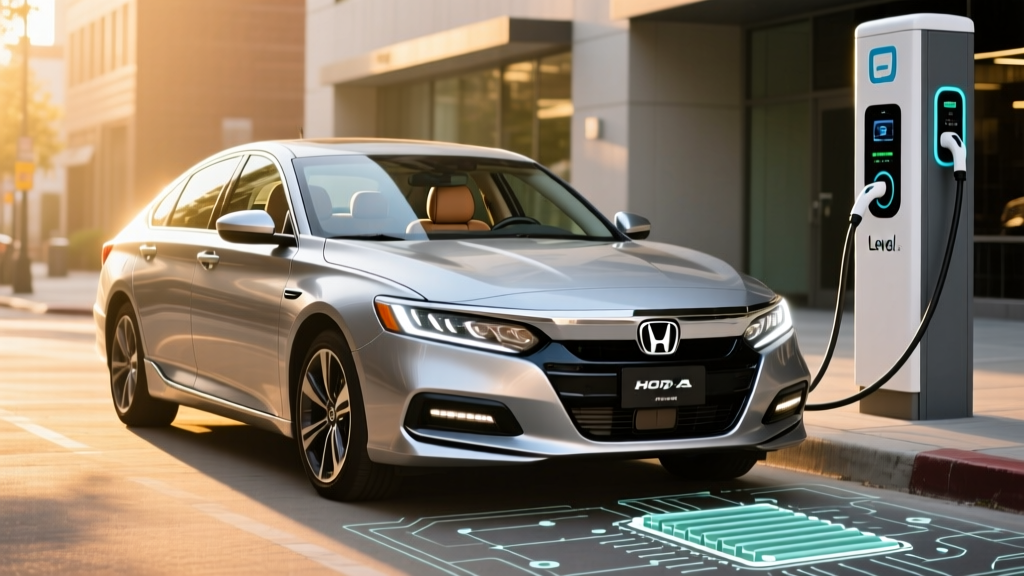
The 2018 Honda Accord Hybrid Touring remains one of the most compelling used midsize sedans for buyers who want serious fuel economy without plugging in. Now eight model years old, the Touring trim delivers a well-equipped cabin, Honda Sensing driver assists, and a two-motor hybrid system that achieves an EPA-rated 48 MPG combined. In 2026, clean examples typically trade between $18,000 and $24,000 depending on mileage and condition — making it a strong value play against newer, pricier hybrids and EVs.
This guide covers the Accord Hybrid's real-world efficiency, powertrain details, battery longevity, and how it stacks up against plug-in hybrids and full EVs for today's buyers.
| Spec | Value |
|---|---|
| Powertrain Type | Conventional Hybrid (HEV) — no plug |
| Engine | 2.0L Atkinson-cycle 4-cylinder |
| Combined Horsepower | 212 hp |
| Engine Output | 143 hp @ 6,200 rpm / 129 lb-ft torque |
| Electric Motor Output | 181 hp / 232 lb-ft torque |
| Transmission | Electronic CVT (e-CVT, no physical gears) |
| EPA MPG (City / Hwy / Combined) | 47 / 47 / 48 |
| Fuel Tank Capacity | 12.8 gallons |
| Total Driving Range | ~614 miles |
| 0–60 mph | ~6.7 seconds |
| Hybrid Battery | ~1.3 kWh lithium-ion |
| Drivetrain | Front-wheel drive |
| Original MSRP (Touring) | $34,990 |
| 2026 Used Price Range | $18,000–$24,000 |
HEV vs. PHEV: What the Accord Hybrid Actually Is
Before diving deeper, it's critical to understand the distinction between a conventional hybrid (HEV) and a plug-in hybrid (PHEV). The 2018 Accord Hybrid is a conventional hybrid (HEV). It has no charging port, no plug, and no meaningful electric-only range.
Conventional Hybrid (HEV) — Accord Hybrid
- No plug required — the gas engine and regenerative braking recharge the small battery
- Electric motor assists the gas engine; brief EV-only mode at very low speeds (under ~1 mile)
- Small battery (~1.3 kWh) — optimized for efficiency assist, not electric driving
- No federal tax credit eligibility
Plug-in Hybrid (PHEV) — e.g., Toyota Prius Prime, Honda Clarity PHEV
- Has a charging port — plug in at home or public Level 2 stations
- Larger battery (8–18 kWh typical) providing 25–50 miles of electric-only range
- Gas engine kicks in after battery depletes, functioning like a conventional hybrid
- May qualify for a federal tax credit (up to $7,500 under IRS §30D, subject to income, MSRP, and battery-sourcing rules — check IRS.gov for current eligibility)
If you were hoping the Accord Hybrid could plug in and drive 30 miles on electricity alone, you're thinking of a PHEV like the discontinued Honda Clarity Plug-In Hybrid (47 miles EV range). The Accord Hybrid is strictly a self-charging system — you just fill it with gas and drive.
Fuel Economy: EPA Numbers vs. Real-World MPG
The EPA rates the 2018 Accord Hybrid at 47 city / 47 highway / 48 combined MPG across all trims, including the Touring. These numbers come from fueleconomy.gov.
| Driving Condition | EPA MPG | Real-World Expectation |
|---|---|---|
| City | 47 | 48–52 MPG (hybrids often beat EPA in stop-and-go) |
| Highway | 47 | 42–46 MPG (sustained 70+ mph reduces regen benefit) |
| Combined | 48 | 44–49 MPG (depends on driving mix and climate) |
| Cold Weather (below 32°F) | — | 38–43 MPG (engine runs more for cabin heat) |
Why hybrids often exceed EPA in city driving: The Accord's two-motor system runs the electric motor as the primary drive unit at low and moderate speeds, with the gas engine acting mostly as a generator. Stop-and-go traffic maximizes regenerative braking, recapturing energy that a gas car would waste as heat. Owners who do mostly city and suburban driving frequently report lifetime averages of 49–52 MPG.
Where it falls short: Sustained highway speeds above 70 mph reduce the hybrid advantage. The gas engine must directly drive the wheels via a lock-up clutch, and aerodynamic drag dominates. In winter, the engine runs more frequently to provide cabin heat (the Accord Hybrid lacks a heat pump), dropping efficiency by 10–15%.
With the 12.8-gallon fuel tank, expect a real-world range of roughly 560–630 miles between fill-ups — enough for most drivers to visit the gas station only once every two to three weeks.
Powertrain Deep Dive: Two-Motor Hybrid System
Honda's Intelligent Multi-Mode Drive (i-MMD) system in the 2018 Accord Hybrid is fundamentally different from the planetary-gear setups used in Toyota hybrids. Instead of blending engine and motor through a physical gearset, Honda uses two electric motors and a lock-up clutch:
- Propulsion Motor (181 hp / 232 lb-ft): Drives the front wheels at low and moderate speeds. This is the primary drive unit most of the time.
- Generator Motor: Converts mechanical energy from the 2.0L Atkinson-cycle engine into electricity to feed the propulsion motor or charge the battery.
- Lock-Up Clutch: At steady highway speeds (~45–80 mph), the clutch engages to directly connect the engine to the wheels, bypassing the electrical conversion for better efficiency.
The combined system output is 212 horsepower. The 0–60 mph time of approximately 6.7 seconds makes it genuinely quick for a midsize hybrid sedan — quicker than the non-hybrid 1.5T Accord (7.2 seconds) and competitive with the 2.0T variant.
The e-CVT has no physical gears or belts. It's an electronic power-split device, which means there's no traditional transmission fluid to change and no belt to replace. This contributes to the powertrain's long-term reliability.
Battery Health, Warranty, and Replacement Cost
Hybrid Battery Warranty & Longevity
- Original Warranty: 8 years / 80,000 miles (10 years / 150,000 miles in CARB states including CA, NY, MA, and others)
- Battery Chemistry: Lithium-ion
- Battery Capacity: ~1.3 kWh (small by design — not meant to hold a large charge)
- Expected Lifespan: 150,000–200,000+ miles with normal use
- 2026 Replacement Cost: $2,000–$4,000 (remanufactured or aftermarket); $4,500–$6,000 (new OEM from Honda)
The 2018 Accord Hybrid's battery is now outside its original 8-year/80,000-mile warranty window for most owners, though examples originally sold in CARB states may still carry coverage through the 10-year/150,000-mile provision if mileage is low enough.
Degradation reality: Unlike EV batteries where degradation directly reduces your driving range, the Accord Hybrid's small battery degrades more gracefully. A 20% capacity loss on a 1.3 kWh pack means roughly 0.26 kWh less buffer — which translates to slightly more frequent engine engagement and perhaps 1–2 MPG reduction, not a stranded vehicle. Many Accord Hybrids surpass 200,000 miles on the original battery pack.
Signs of battery trouble: Watch for reduced MPG over time (more than 3–4 MPG below your historical average), the battery gauge rarely reaching full or empty, or a check-engine light with hybrid system codes. A hybrid battery health check at a Honda dealer or independent hybrid specialist can assess State of Health (SoH) before purchase.
If replacement is needed, remanufactured packs from suppliers like Green Bean Battery or Dorman typically cost $2,000–$3,500 installed, with warranties of 3–5 years. A new OEM pack from Honda runs $4,500–$6,000 including labor.
Touring Trim: What You Get at the Top
The Touring was the most expensive Accord Hybrid trim in 2018, originally priced at $34,990. It bundled nearly every available feature:
- Honda Sensing suite (adaptive cruise control, lane-keeping assist, collision mitigation braking, road departure mitigation)
- 8-inch touchscreen with Apple CarPlay and Android Auto
- Navigation system
- Wireless phone charging
- Heated and ventilated front seats, heated rear seats
- Leather-trimmed interior
- 19-inch alloy wheels
- Auto-dimming rain-sensing wipers
- LED headlights with auto high-beam
- Head-up display
- 450-watt premium audio with 10 speakers
The Honda Sensing system is an SAE Level 2 driver-assistance suite — it provides steering and braking support, but the driver must remain fully engaged at all times. It is not a self-driving system.
Tax Credits and Incentives: What Applies in 2026?
Federal tax credit: The 2018 Honda Accord Hybrid does not qualify for the IRS §30D New Clean Vehicle Credit. That credit applies only to new plug-in electric vehicles (BEVs and PHEVs) meeting battery-sourcing and critical-mineral requirements. Conventional hybrids like the Accord Hybrid have never been eligible.
Used EV credit (IRC §25E): This credit of up to $4,000 (30% of sale price, capped at $4,000) applies only to used plug-in EVs and PHEVs, not conventional hybrids. The Accord Hybrid is not eligible.
State incentives: A handful of states have offered rebates or HOV lane access for hybrids historically, but most hybrid-specific incentives have expired or shifted to plug-in vehicles. Check your state's energy office or DMV for any current programs. California's Clean Vehicle Rebate Project (CVRP), for example, no longer covers conventional hybrids.
The Accord Hybrid's value proposition is purely operational: you save at the pump, not at the tax office.
Reliability and Ownership Costs
The 10th-generation Accord Hybrid (2018–2022) has a strong reliability record. Key points for 2026 buyers:
- NHTSA Safety Rating: 5-Star Overall (see NHTSA.gov)
- IIHS Rating: Top Safety Pick+ for 2018 (with specific headlight criteria)
- Common complaints: Infotainment system responsiveness (laggy by 2026 standards), occasional 12V battery drain if the car sits unused for weeks, and rare reports of e-CVT whine at low speeds
- Maintenance: No transmission fluid changes required under normal service; oil changes every 7,500–10,000 miles; brake pads last 80,000+ miles thanks to regenerative braking
- Insurance: Typically 5–10% less than comparable EVs; comparable to non-hybrid Accord insurance rates
Annual fuel cost at 15,000 miles/year and $3.40/gallon regular unleaded: approximately $1,063. For comparison, a non-hybrid 2018 Accord 1.5T (30 city / 38 highway / 33 combined EPA) would cost roughly $1,545 annually — a savings of about $480 per year with the hybrid.
Pros
- 48 MPG combined EPA; often exceeds 50 MPG in city driving
- 212 hp — genuinely quick for a hybrid sedan (6.7s 0–60)
- Touring trim loaded with premium features and Honda Sensing
- Spacious cabin with 16.7 cu-ft trunk (same as gas Accord)
- No charging infrastructure needed — just fill up with gas
- Strong long-term reliability; e-CVT has no belts or gears to fail
- Low maintenance costs; regenerative braking extends brake life
Cons
- No electric-only driving range — not a plug-in vehicle
- No federal or state tax credit eligibility
- Infotainment system dated by 2026 standards (no wireless CarPlay/Android Auto)
- Hybrid battery may need replacement at high mileage ($2,000–$6,000)
- Highway MPG drops in cold weather and at sustained high speeds
- 19-inch wheels on Touring can produce a firmer ride
- Only available as a sedan — no wagon or hatchback variant
Accord Hybrid vs. PHEV vs. Full EV: Which Fits You?
Choose the 2018 Accord Hybrid if:
- You can't charge at home (apartment, street parking, no garage outlet)
- You drive 15,000+ miles/year and want low fuel costs without route planning
- Your budget is $18,000–$24,000 for a well-equipped used sedan
- You take frequent long road trips and don't want to rely on public charging
- You want a proven, reliable powertrain with minimal lifestyle change from a gas car
Choose a PHEV (e.g., Prius Prime, RAV4 Prime) if:
- You can install a Level 2 home charger and have a short commute (under 40 miles)
- You want electric-only daily driving but gas flexibility for road trips
- You want to reduce gas consumption to near zero on most weekdays
- You're buying new and can leverage the §30D federal tax credit
Choose a full EV (e.g., Tesla Model 3, Hyundai Ioniq 6) if:
- You have reliable home Level 2 charging
- Your daily commute is under 200 miles round-trip
- You want zero tailpipe emissions and minimal maintenance (no oil changes, no gas engine)
- You're comfortable with public DC fast charging for road trips
- You want the lowest per-mile fuel cost (electricity at ~$0.04–$0.06/mile vs. gas at ~$0.07–$0.10/mile for this hybrid)
Frequently Asked Questions
How many MPG does the 2018 Honda Accord Hybrid get?
The EPA rates it at 47 city / 47 highway / 48 combined MPG. In real-world city and suburban driving, many owners consistently achieve 49–52 MPG. Highway-only driving at 75+ mph and cold-weather operation can reduce that to 40–44 MPG. Over a mixed-driving year, expect a lifetime average near 45–48 MPG.
Can the 2018 Accord Hybrid plug in to charge?
No. The Accord Hybrid is a conventional hybrid (HEV), not a plug-in hybrid (PHEV). It has no charging port. The battery recharges through the gas engine and regenerative braking. If you want plug-in capability from Honda, look at the discontinued Honda Clarity Plug-In Hybrid (2017–2021), which offered 47 miles of electric-only range.
Is the 2018 Accord Hybrid reliable, and what does a battery replacement cost?
Yes — the 10th-generation Accord Hybrid has a strong reliability record. The i-MMD two-motor system has fewer moving parts than a conventional transmission. The hybrid battery typically lasts 150,000–200,000+ miles. If replacement is needed, expect $2,000–$4,000 for a remanufactured pack or $4,500–$6,000 for a new OEM unit from Honda. The original warranty was 8 years/80,000 miles (10 years/150,000 miles in CARB states), which has now expired for most 2018 models.
Does the 2018 Accord Hybrid qualify for any tax credit?
No. The federal §30D New Clean Vehicle Credit and the §25E Used Clean Vehicle Credit apply only to plug-in electric vehicles (BEVs and PHEVs). The Accord Hybrid, as a conventional self-charging hybrid, does not qualify for any federal tax credit. Some states historically offered hybrid incentives, but most have expired. Check your state's energy office for any remaining programs.
How does the Accord Hybrid compare to the Toyota Camry Hybrid?
The 2018 Toyota Camry Hybrid (XLE) is rated at 46 city / 46 highway / 46 combined EPA — very close to the Accord's 48 combined. The Accord has a slight edge in horsepower (212 vs. 208 hp) and trunk space (16.7 vs. 15.1 cu-ft). The Camry Hybrid offers available all-wheel drive in later model years, which the Accord does not. Both are excellent; the choice often comes down to styling preference and dealer availability in the used market.
What should I check before buying a used 2018 Accord Hybrid?
Prioritize these inspections: (1) hybrid battery State of Health check via OBD-II scanner or Honda dealer diagnostic; (2) service records showing regular oil changes; (3) 12V battery age (these can drain if the car sits for extended periods); (4) infotainment system functionality including Apple CarPlay/Android Auto; (5) tire wear pattern (uneven wear may indicate alignment issues from the heavier hybrid components). A pre-purchase inspection by a mechanic familiar with Honda hybrids is strongly recommended.