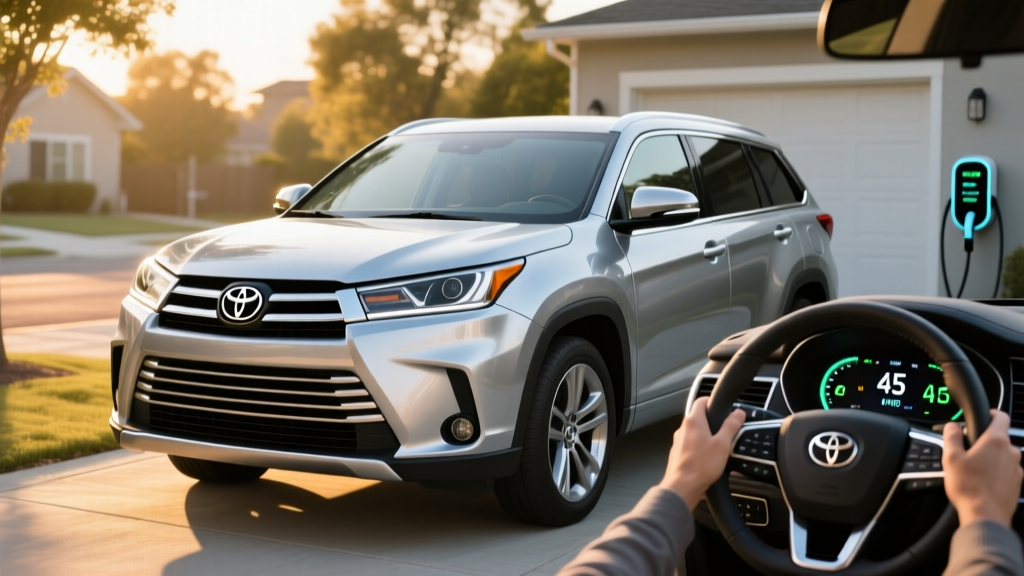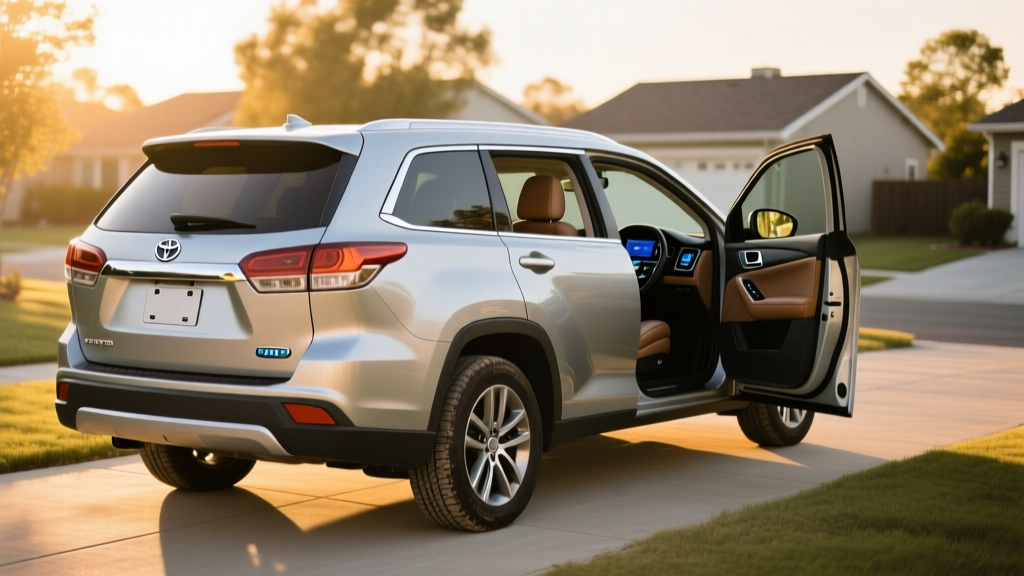
Quick Verdict: The 2017 Toyota Highlander Hybrid SUV in 2026
Nine years after it rolled off the line, the 2017 Toyota Highlander Hybrid SUV remains one of the most dependable three-row hybrid crossovers on the used market. Toyota paired a 3.5-liter V6 with a nickel-metal hydride (NiMH) battery pack and three electric motors to produce 306 combined horsepower and an EPA-estimated 29 MPG combined — figures that still hold up against newer hybrid SUVs. For buyers who want three-row seating, standard all-wheel drive, and proven hybrid reliability without plugging in, this generation is a strong used-EV-adjacent option.
But before you hand over cash at a dealership, you need the real numbers: actual fuel economy in daily driving, battery replacement costs approaching the 10-year mark, and how this conventional hybrid (HEV) stacks up against plug-in hybrids and full EVs in today's market. Let's break it all down.
HEV vs PHEV: What the 2017 Highlander Hybrid Actually Is
The 2017 Toyota Highlander Hybrid is a conventional hybrid electric vehicle (HEV), not a plug-in hybrid (PHEV). This distinction matters because it dictates everything about how you fuel and maintain the vehicle.
HEV vs PHEV — Key Differences
| Feature | HEV (2017 Highlander Hybrid) | PHEV (e.g., RAV4 Prime) |
|---|---|---|
| Plug-in charging | No — charges via regenerative braking and engine | Yes — plug into Level 1 or Level 2 |
| Electric-only range | ~1 mile at low speed | 25–42 miles typical |
| Battery size | ~1.9 kWh (NiMH) | 13–18 kWh (lithium-ion) |
| Federal tax credit | None (not a PHEV or BEV) | Up to $7,500 under §30D if eligible |
| Fueling | Gasoline only | Gasoline + electricity |
The Highlander Hybrid recovers energy through regenerative braking and the gasoline engine. You never plug it in. It operates like a gas car that happens to be significantly more efficient.
Toyota did not offer a plug-in hybrid Highlander in 2017 — the Highlander PHEV doesn't exist in the U.S. market even today. If you need electric-only commuting range, you'll need to look at a different model, such as the Toyota RAV4 Prime or a full BEV like the Kia EV9 for three-row electric driving.
Fuel Economy: EPA Ratings and Real-World MPG
The EPA rates the 2017 Toyota Highlander Hybrid at 29 MPG combined, with 29 MPG city and 27 MPG highway for the AWD configuration, according to fueleconomy.gov. These numbers apply across all trims (LE, XLE, Limited, Limited Platinum) because the powertrain is identical.
| Metric | City | Highway | Combined |
|---|---|---|---|
| EPA Estimate | 29 MPG | 27 MPG | 29 MPG |
| Real-World (Owner Avg) | 28–31 MPG | 25–28 MPG | 27–30 MPG |
| Gas-Only Highlander V6 (AWD) | 20 MPG | 26 MPG | 22 MPG |
Real-world context: Like most Toyota hybrids, the Highlander Hybrid tends to exceed its EPA city estimate in stop-and-go traffic, where regenerative braking and electric-motor assist do the most work. Owners on Fuelly report averages between 27 and 30 MPG combined, with some achieving 31+ MPG on gentle city routes. Highway driving at 75+ MPH drops efficiency to around 25–26 MPG because the aerodynamic drag on a 4,600-pound SUV overwhelms the hybrid system's benefits.
Cold weather reduces fuel economy by roughly 2–4 MPG in winter conditions due to the engine running more frequently for cabin heat and reduced battery efficiency. This is normal for all hybrids and far less severe than the 20–30% range loss a full EV experiences in freezing temperatures.
Powertrain and Performance Specs
| Engine | 3.5L V6 (2GR-FXE) + 3 electric motors |
| Combined Horsepower | 306 hp (net system) |
| Transmission | eCVT (electronically controlled CVT) |
| Drivetrain | AWD-i (electronic on-demand rear motor) |
| 0–60 mph | ~7.8 seconds |
| Hybrid Battery | ~1.9 kWh NiMH (sealed, no plug) |
| Towing Capacity | 3,500 lbs |
| Seating | 7 or 8 passengers (trim-dependent) |
| Cargo Volume | 13.8 cu ft (behind 3rd row) / 83.7 cu ft (max) |
| Curb Weight | ~4,630 lbs |
The 2017 model year was significant for the Highlander lineup — Toyota introduced the 3.5L V6 with direct and port injection (D-4S), an 8-speed automatic for gas models, and a revised hybrid system. The hybrid uses Toyota's AWD-i system, where a separate rear electric motor powers the rear axle when slip is detected or during hard acceleration. There is no mechanical driveshaft to the rear wheels.
The 306 hp net output makes this one of the more powerful midsize hybrid SUVs of its era. Acceleration is confident for highway merging, though the eCVT produces the characteristic drone under hard throttle that Toyota hybrids are known for. In normal driving, the transitions between electric and gas power are nearly seamless.
Battery Reliability, Warranty, and Replacement Cost
Hybrid Battery Warranty
Original coverage: 8 years / 100,000 miles (10 years / 150,000 miles in California and states adopting CARB emissions standards).
2026 status: The original factory warranty has expired for most 2017 Highlanders. However, California and CARB-state vehicles may still fall within the 10-year/150,000-mile window if mileage is under the cap.
Replacement cost (2026): $2,500–$4,000 for a new OEM NiMH battery pack installed at a Toyota dealer. Refurbished or aftermarket packs run $1,500–$2,500 installed.
Toyota's hybrid battery track record is among the best in the industry. The NiMH pack in the 2017 Highlander Hybrid is conservative in its charge/discharge strategy — Toyota never lets the battery drop below ~40% or charge above ~80% state of charge, which dramatically extends cell life. Taxi fleets running Toyota hybrids routinely surpass 200,000 miles on the original battery.
That said, a 2017 model is now 9 years old. NiMH batteries degrade primarily from age and heat cycles rather than mileage alone. If you're buying a 2017 Highlander Hybrid in 2026, budget for the possibility of a battery replacement within your ownership period. A pre-purchase inspection should include a hybrid battery health check — many Toyota dealers can pull the battery's internal resistance readings and block voltage data to assess remaining life.
Signs of hybrid battery decline: Noticeably reduced fuel economy, the engine running more frequently, dashboard warnings ("Check Hybrid System"), or reduced regenerative braking feel. These don't always mean full replacement — sometimes individual battery modules can be reconditioned or replaced for under $500.
For reliability data, the 2017 Highlander Hybrid scores well in NHTSA safety records and has historically earned strong marks from Consumer Reports and J.D. Power for long-term dependability.
Used Pricing and Tax Credit Eligibility
The 2017 Toyota Highlander Hybrid was originally priced from approximately $47,030 (LE trim) to $53,680 (Limited Platinum) MSRP. In today's used market (early 2026), expect to pay:
| Trim | Original MSRP | Used Price (2026, ~80k mi) |
|---|---|---|
| LE | $47,030 | $22,000–$26,000 |
| XLE | $49,330 | $24,000–$28,500 |
| Limited | $51,790 | $26,000–$31,000 |
| Limited Platinum | $53,680 | $28,000–$33,000 |
Federal tax credit: The 2017 Highlander Hybrid does not qualify for the federal §30D clean vehicle credit. That credit applies only to plug-in electric vehicles (BEVs and PHEVs) with sufficient battery capacity — conventional hybrids like this one are excluded. The IRS §30D rules are clear: the vehicle must have a battery capacity of at least 7 kWh and be capable of plug-in charging to be eligible.
There is also no federal used-EV credit (§25E) available for this vehicle, as that credit also applies only to qualifying plug-in vehicles. Some states may offer minimal incentives for used hybrid purchases, but these are uncommon and vary by jurisdiction — check your state's energy office for current programs.
Who Should Choose the 2017 Highlander Hybrid vs a PHEV or EV?
Decision Framework
Choose the 2017 Highlander Hybrid if:
- You need three rows of seating and AWD but can't plug in at home
- You want maximum simplicity — no charging cables, no range calculations
- Your budget is $22,000–$33,000 and you want proven Toyota reliability
- You tow occasionally (3,500 lb capacity)
- You drive a mix of city and highway and want consistent 27–30 MPG
Choose a PHEV (e.g., Chrysler Pacifica Hybrid, Toyota RAV4 Prime) if:
- You can charge at home and want 25–32 miles of electric-only commuting
- Your daily round-trip commute is under 30 miles
- You want to reduce gasoline consumption by 60–80% on typical days
Choose a full BEV (e.g., Kia EV9, Tesla Model X) if:
- You have reliable home Level 2 charging
- You want zero tailpipe emissions and the lowest per-mile fuel cost
- You can spend $45,000+ for a three-row electric SUV
- You want to qualify for the up-to-$7,500 federal tax credit on a new purchase
The 2017 Highlander Hybrid occupies a specific niche: it's for the buyer who wants hybrid efficiency without changing their fueling habits at all. You fill up at a gas station, the car manages the hybrid system automatically, and you get roughly 30% better fuel economy than the gas-only V6 Highlander. The trade-off is that you can't access electric-only driving, you don't qualify for EV tax credits, and you're still paying for gasoline.
For families who drive 12,000–15,000 miles per year at 29 MPG combined, annual fuel cost is approximately $1,700–$2,100 at $3.50/gallon. A comparable full EV at 3.0 miles/kWh and $0.14/kWh home electricity would cost roughly $560–$700 annually — but comes with a significantly higher purchase price and the need for home charging infrastructure.
Pros and Cons at a Glance
Pros
- 29 MPG combined in a 3-row AWD SUV — excellent for the class
- 306 hp provides confident acceleration
- Toyota's proven hybrid reliability and NiMH battery longevity
- Standard AWD-i with no fuel-economy penalty vs FWD
- No plug-in charging required — zero lifestyle change
- Strong resale value retention
- 3,500-lb towing capacity
Cons
- No electric-only driving range (this is an HEV, not a PHEV)
- No federal or state tax credit eligibility
- Hybrid battery may need replacement soon (age-related degradation)
- eCVT drone under hard acceleration
- Third-row space is tight for adults
- Dated infotainment vs 2024+ models (no wireless CarPlay on most trims)
- Cargo space behind third row is only 13.8 cu ft
Frequently Asked Questions
How many MPG does the 2017 Toyota Highlander Hybrid get?
The EPA rates it at 29 MPG city, 27 MPG highway, and 29 MPG combined. In real-world driving, owners typically report 27–31 MPG combined depending on driving conditions. City driving tends to yield higher numbers due to regenerative braking, while sustained highway speeds above 70 MPH drop efficiency to 25–27 MPG.
Does the 2017 Highlander Hybrid need to be plugged in?
No. This is a conventional hybrid (HEV), not a plug-in hybrid (PHEV). The battery charges through regenerative braking and the gasoline engine. You fuel it exclusively at gas stations, just like a regular car.
Is the hybrid battery reliable, and what does replacement cost?
Toyota's NiMH hybrid batteries are among the most reliable in the industry, often lasting 150,000–200,000+ miles. However, age is a factor — a 9-year-old battery in 2026 may show degradation regardless of mileage. A new OEM replacement costs $2,500–$4,000 installed at a dealer; refurbished options are $1,500–$2,500. The original warranty was 8 years/100,000 miles (10 years/150,000 miles in CARB states).
Does the 2017 Highlander Hybrid qualify for any tax credit?
No. The federal §30D clean vehicle credit and the §25E used EV credit both require plug-in capability and a minimum battery capacity that conventional hybrids don't meet. This vehicle is not eligible for any federal purchase incentive. Check your state energy office for any local hybrid incentives, though these are rare.
How does the 2017 Highlander Hybrid compare to the gas-only version?
The gas-only 2017 Highlander V6 AWD gets 22 MPG combined (20 city / 26 highway) versus the hybrid's 29 MPG combined. That's a 32% improvement. The hybrid also produces more combined horsepower (306 vs 295 for the gas V6) and includes standard AWD-i. The trade-off is a higher initial purchase price and the eventual battery replacement consideration.
Can I tow with the 2017 Highlander Hybrid?
Yes. The hybrid is rated for 3,500 pounds of towing capacity, which is adequate for a small boat, utility trailer, or a pair of jet skis. It matches the gas V6 AWD model. Note that towing will reduce fuel economy significantly — expect 18–22 MPG when pulling a loaded trailer.
Hybrid vs PHEV vs EV — which should I buy?
If you can't charge at home and want a three-row SUV with minimal hassle, the conventional hybrid (HEV) like this Highlander is the practical choice. If you have home charging and a short commute, a PHEV gives you electric-only weekday driving with gas flexibility for road trips. If you want the lowest operating cost and have Level 2 charging access, a full BEV eliminates gasoline entirely — but three-row BEV options in the used market are limited and more expensive.
Sources: EPA fuel economy data via fueleconomy.gov, IRS clean vehicle credit rules at irs.gov, NHTSA vehicle safety data at nhtsa.gov. Used pricing reflects market averages as of early 2026 and varies by condition, mileage, and region.