Quick Verdict: A Performance SUV Ahead of Its Time
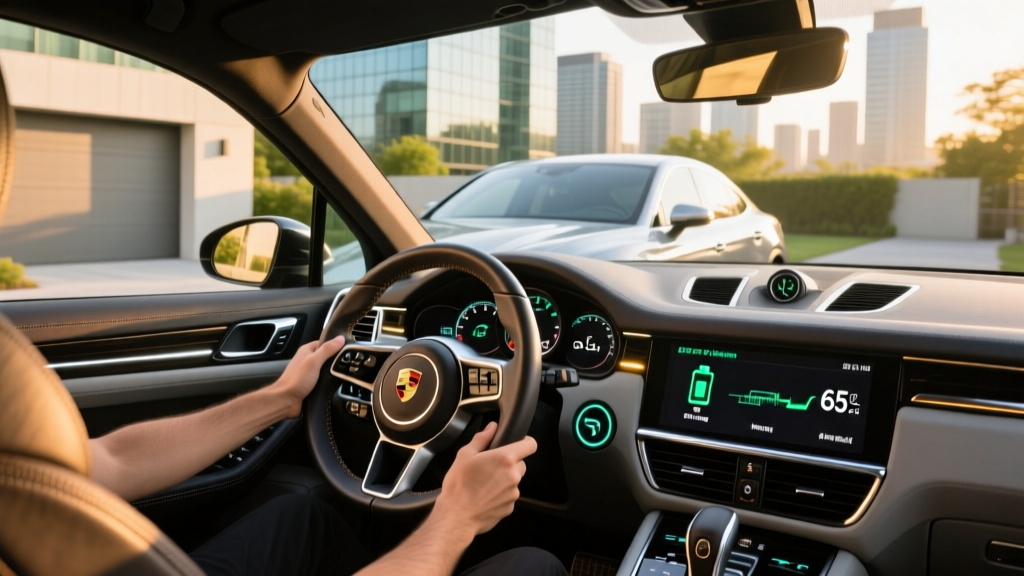
The 2017 Porsche Cayenne S E-Hybrid was one of the first luxury plug-in hybrid SUVs to pair serious performance with genuine electric-only driving. Producing a combined 416 horsepower from a supercharged 3.0-liter V6 and an electric motor, it hits 60 mph in 5.4 seconds while returning an EPA-rated 46 MPGe when the battery is charged. Nearly a decade later, it remains a compelling used-PHEV option — but buyers in 2026 need to understand its aging battery, limited electric range, and the real cost of ownership before signing the paperwork.
This guide breaks down every spec that matters: EPA fuel economy, electric-only range, charging logistics, battery health expectations, and how the Cayenne S E-Hybrid stacks up against modern PHEVs and full EVs. If you are shopping the used market, this is the reference you need.
HEV vs PHEV: Where the Cayenne S E-Hybrid Fits
Porsche offered two hybrid Cayenne variants in the 2015–2018 generation. Understanding the difference is critical before you buy.
| Attribute | Cayenne S E-Hybrid (PHEV) | Conventional Hybrid (HEV) Example |
|---|---|---|
| Plugs in? | Yes — Level 2 (J1772) | No — charges via regenerative braking and engine |
| Electric-only range | EPA 14 miles | 0 miles (motor assists engine only) |
| Battery size | 10.8 kWh lithium-ion | ~1–2 kWh nickel-metal hydride or Li-ion |
| EV mode at highway speed | Yes, up to ~78 mph | No — engine always engaged above low speed |
| Federal tax credit (new) | Was eligible (expired) | Never eligible under §30D |
| Best for | Short commutes + performance driving | Drivers who want efficiency without plugging in |
The Cayenne S E-Hybrid is a plug-in hybrid (PHEV). It has a charge port, a meaningful battery, and the ability to drive on electricity alone. A conventional hybrid (HEV) like the Toyota RAV4 Hybrid cannot plug in and has no electric-only range. This distinction affects your daily routine, your fuel costs, and your charging infrastructure needs.
Fuel Economy and Electric-Only Range
| Metric | EPA Rating | Real-World Expectation |
|---|---|---|
| Combined (charge-depleting + sustaining) | 46 MPGe | 38–44 MPGe with regular charging |
| Gas-only combined | 22 MPG | 19–21 MPG mixed driving |
| City (gas-only) | N/A (blended PHEV rating) | ~20 MPG |
| Highway (gas-only) | N/A (blended PHEV rating) | ~23 MPG |
| Electric-only range | 14 miles | 10–12 miles (2026 battery degradation) |
| Total combined range | ~430 miles | ~380–410 miles |
The 46 MPGe figure from fueleconomy.gov only applies when you start with a full battery and drive within the electric range. Once the 10.8 kWh battery is depleted, the Cayenne S E-Hybrid operates as a conventional hybrid, returning about 22 MPG combined — respectable for a 5,200-pound luxury SUV but not exceptional.
Real-world range reality: The EPA-rated 14 miles of electric-only range was measured when the vehicle was new. In 2026, expect a well-maintained example to deliver 10–12 miles on a full charge. Cold weather (below 40°F) can reduce that to 8–9 miles. If your commute is under 10 miles round-trip with home charging, you will rarely burn fuel. Beyond that, the V6 takes over.
Powertrain: 416 HP from Supercharger + Electric Motor
| Specification | Detail |
|---|---|
| Engine | 3.0L supercharged V6 |
| Engine output | 333 hp / 325 lb-ft torque |
| Electric motor | 95 hp (70 kW), integrated into 8-speed automatic |
| Combined system output | 416 hp / 435 lb-ft torque |
| Transmission | 8-speed Tiptronic S automatic |
| Drivetrain | All-wheel drive (AWD) |
| 0–60 mph | 5.4 seconds |
| Top speed | 151 mph |
| Curb weight | ~5,181 lbs |
| Towing capacity | 7,716 lbs (braked) |
The powertrain pairs a Volkswagen Group 3.0-liter supercharged V6 with an electric motor sandwiched between the engine and the ZF 8-speed automatic. The result is seamless torque fill — the electric motor eliminates the lag typical of supercharged engines off the line. In Sport mode, both power sources deliver maximum output simultaneously, and the acceleration is genuinely quick for a vehicle of this mass.
Three primary drive modes govern the powertrain: E-Power (electric-only), Hybrid (automatic blending), and Sport (maximum combined output). An E-Charge mode uses the engine to replenish the battery while driving — useful if you want electric-only operation in a city center after a highway stretch, though it reduces fuel economy significantly.
Battery, Charging, and Degradation
| Charging Metric | Specification |
|---|---|
| Battery capacity (total) | 10.8 kWh lithium-ion |
| Usable capacity | ~8.0 kWh (buffered) |
| Chemistry | NMC (nickel manganese cobalt) |
| Level 1 (120V) charge time | ~7–8 hours (0–100%) |
| Level 2 (240V, 3.6 kW) charge time | ~2.5 hours (0–100%) |
| Max AC charge rate | 3.6 kW |
| DC fast charging | Not supported |
| Charge port | J1772 (driver-side rear quarter panel) |
The Cayenne S E-Hybrid charges exclusively on AC power. There is no DC fast-charging capability — a limitation that was common for PHEVs of this era and persists in many 2026 PHEVs. The onboard charger maxes out at 3.6 kW, meaning even a high-powered Level 2 home station will charge the battery at that rate.
For daily use, this is rarely an issue. The 10.8 kWh battery is small enough that a standard 120V outlet can replenish it overnight (roughly 1.2 kW from a household plug yields about 5–6 miles of range per hour of charging). A 240V Level 2 charger cuts that to roughly 2.5 hours for a full charge.
Battery warranty and replacement: Porsche originally warranted the high-voltage battery for 8 years or 100,000 miles (whichever comes first) against defects and excessive capacity loss (below 70% state of health). For a 2017 model, this warranty expired in 2025 at the latest. Out-of-warranty battery replacement costs range from $8,000 to $14,000 including parts and labor at a Porsche dealer. Independent hybrid-battery specialists may offer refurbished packs for $4,000–$7,000.
Assessing Battery Health on a Used Example
Before purchasing any 2017 Cayenne S E-Hybrid, request a battery health report from a Porsche dealer or qualified independent shop. The Porsche PIWIS diagnostic tool can read the battery's State of Health (SoH) as a percentage. Expect a 2017 example to show 75–88% SoH depending on charging habits and climate exposure. Vehicles regularly charged to 100% and stored in hot climates (Arizona, Texas, Southern California) will show more degradation.
Key degradation indicators:
- Electric-only range below 9 miles on a full charge suggests significant cell imbalance
- Visible corrosion on the charge port or high-voltage connectors
- Check Engine or Hybrid System Warning lights (request OBD-II scan)
- Inconsistent charging — battery stops before reaching full SoC
2026 Used Pricing and Tax Credit Eligibility
The 2017 Cayenne S E-Hybrid originally carried an MSRP starting around $78,200, with well-optioned examples exceeding $95,000. In the 2026 used market, typical transaction prices are:
| Condition | Mileage Range | Approximate Price (2026) |
|---|---|---|
| Excellent, dealer-certified | 40,000–60,000 mi | $32,000–$38,000 |
| Good, private party | 60,000–90,000 mi | $24,000–$32,000 |
| Fair, high mileage | 90,000–120,000 mi | $18,000–$24,000 |
Tax Credit Status
Under current IRS §30D rules, the federal clean vehicle credit applies only to new vehicles. The 2017 Cayenne S E-Hybrid is not eligible for the new-vehicle credit. However, the used clean vehicle credit (§25E) may apply if:
- The sale price is $25,000 or less
- The buyer's modified adjusted gross income is below $75,000 (single) / $150,000 (joint)
- The vehicle is purchased from a licensed dealer
- The vehicle has not been claimed for the used-EV credit since August 16, 2022 (each VIN gets one used credit)
- The credit equals 30% of the sale price, capped at $4,000
A Cayenne S E-Hybrid priced at $24,000 from a dealer could yield a $4,000 credit for an income-qualified buyer. Verify eligibility with a tax professional — rules are subject to change and prior-claim history on the specific VIN.
Reliability, Maintenance, and Ownership Costs
The 2015–2018 Cayenne generation is generally regarded as one of Porsche's more reliable modern platforms, but the S E-Hybrid adds complexity that elevates maintenance costs above a standard Cayenne or Cayenne S.
Known Issues to Inspect
- Water pump failure: The supercharged 3.0L V6 is known for coolant system issues. Inspect for leaks, and budget $800–$1,500 for a water pump replacement if not already performed.
- Transfer case wear: High-torque AWD system can stress the transfer case. Listen for clunking or binding during tight turns.
- Air suspension: Optional air suspension (standard on many S E-Hybrid trims) has air struts that typically require replacement at 80,000–120,000 miles. Budget $1,500–$3,000 per corner at a dealer, or $600–$1,200 per corner with aftermarket units.
- Brake wear: Regenerative braking extends pad life, but the heavy curb weight still demands $600–$1,000 per axle for pad and rotor service.
- 12V battery: Like all PHEVs, the 12V accessory battery can fail if the vehicle sits unplugged for extended periods. Replacement is $300–$500.
Annual maintenance costs average $1,200–$2,000 for routine service (oil, filters, brakes, tires). Insurance premiums for a used Cayenne S E-Hybrid typically run $1,800–$2,800 per year depending on location, driver profile, and coverage level.
Who Should Buy This PHEV — And Who Shouldn't
Choose the 2017 Cayenne S E-Hybrid if:
- Your daily commute is under 12 miles and you can charge at home
- You want Porsche performance and AWD without committing to a full EV
- You need towing capacity (7,716 lbs) that most EVs in this price range cannot match
- You accept higher maintenance costs in exchange for luxury and driving dynamics
- You plan to own it 3–5 years and can budget for potential battery or suspension work
Look elsewhere if:
- Your commute exceeds 20 miles and you want meaningful electric-only driving (consider a newer PHEV with 30+ miles of range like the 2024+ RAV4 Prime or a used BMW X5 xDrive45e)
- You want zero tailpipe emissions and access to growing DC fast-charging networks (consider a used Tesla Model X or Rivian R1S)
- You need low ongoing maintenance costs (a Toyota Highlander Hybrid will cost roughly half to maintain)
- You cannot install a Level 2 charger at home — without regular charging, you are paying a weight and complexity penalty for a battery you never use
How It Compares to Modern Alternatives
| Vehicle | Type | Electric Range | Combined Power | Used Price (2026) |
|---|---|---|---|---|
| 2017 Cayenne S E-Hybrid | PHEV | 14 mi (new) | 416 hp | $24K–$38K |
| 2021 BMW X5 xDrive45e | PHEV | 31 mi | 389 hp | $42K–$55K |
| 2021 Toyota RAV4 Prime | PHEV | 42 mi | 302 hp | $35K–$44K |
| 2019 Tesla Model X Long Range | BEV | 325 mi | 518 hp | $38K–$50K |
The Cayenne S E-Hybrid occupies a niche: it is the most affordable way to get a Porsche-badged plug-in SUV with genuine performance. But its 14-mile electric range is a generation behind modern PHEVs, and the lack of DC fast charging limits road-trip utility. If electric driving is your priority, newer PHEVs or used BEVs deliver far more. If the Porsche crest and driving dynamics are non-negotiable, the Cayenne S E-Hybrid is a unique value proposition in the $25K–$35K bracket.
Frequently Asked Questions
How many MPG does the 2017 Cayenne S E-Hybrid get?
The EPA rates it at 46 MPGe combined when the battery is charged, and approximately 22 MPG combined once the battery is depleted and the vehicle operates on gasoline alone. Real-world results vary: expect 38–44 MPGe if you charge regularly and drive short distances, and 19–21 MPG on longer trips where the engine does all the work.
How far can it go on electric only?
The EPA-rated electric-only range was 14 miles when new. In 2026, most examples deliver 10–12 miles on a full charge due to natural battery degradation. Cold weather can reduce this further to 8–9 miles. The vehicle can sustain electric-only driving at speeds up to approximately 78 mph.
Does the 2017 Cayenne S E-Hybrid qualify for any tax credit?
Not the new-vehicle §30D credit — that applied only at original purchase. However, if you buy a qualifying example for $25,000 or less from a licensed dealer and meet income thresholds (under $75K single / $150K joint), you may be eligible for the §25E used clean vehicle credit of up to $4,000. Confirm the specific VIN has not previously been claimed and consult a tax professional.
Is this PHEV reliable and what does battery replacement cost?
The powertrain is generally reliable, with the supercharged V6 and hybrid system holding up well past 100,000 miles when maintained. The primary risk is the high-voltage battery. Out-of-warranty replacement runs $8,000–$14,000 at a Porsche dealer, or $4,000–$7,000 through independent hybrid specialists. Air suspension and coolant system components are the other common cost items. Always get a pre-purchase inspection that includes a battery SoH reading.
Hybrid vs PHEV vs EV — which should I choose?
A conventional hybrid (HEV) is best if you cannot charge at home and want simple, reliable efficiency gains with no plug-in routine. A plug-in hybrid (PHEV) like the Cayenne S E-Hybrid suits drivers with short commutes, home charging access, and a desire for occasional gas-powered road trips without range limitations. A full EV (BEV) makes sense if you want zero tailpipe emissions, the lowest per-mile fuel cost, and access to DC fast-charging networks for road trips — but requires higher upfront investment and charging infrastructure planning.
Can I charge it at a public DC fast charger?
No. The 2017 Cayenne S E-Hybrid supports only AC charging via a J1772 connector — Level 1 (120V) or Level 2 (240V). It has no CCS or CHAdeMO port and cannot accept DC fast charging. This is typical for PHEVs of this generation and remains common in many 2026 PHEVs due to their smaller battery sizes.
What should I check before buying a used 2017 Cayenne S E-Hybrid?
Prioritize these five items: (1) Battery State of Health reading via PIWIS diagnostic — aim for above 78%. (2) Coolant system inspection for water pump leaks. (3) Air suspension function test — cycle through ride heights and listen for compressor strain. (4) Transfer case operation during tight low-speed turns. (5) Complete service history, especially hybrid system and high-voltage cable inspections.