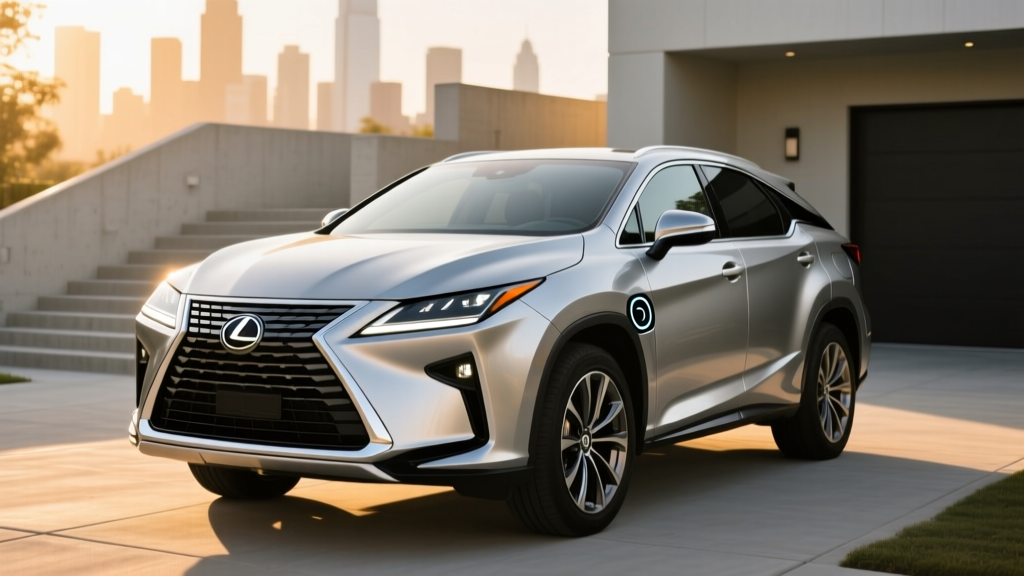
Quick Verdict: The 2017 Lexus RX 450h Hybrid in 2026
The 2017 Lexus RX 450h is a conventional hybrid (HEV), not a plug-in. It requires no charging infrastructure, delivers an EPA-rated 30 MPG combined, and benefits from Toyota/Lexus's decades-long hybrid reliability track record. In 2026, used examples typically trade between $22,000 and $32,000 depending on mileage and condition. For buyers who want luxury-crossover comfort with strong fuel economy but lack access to home charging, this HEV remains a rational choice — though newer PHEV and full-electric alternatives offer more electric-only driving if you can plug in.
| Spec | Value |
|---|---|
| Powertrain | 3.5L V6 + dual electric motors (HEV) |
| Combined Horsepower | 308 hp |
| Transmission | eCVT (electronically controlled) |
| EPA MPG (City / Hwy / Combined) | 31 / 28 / 30 |
| Drivetrain | AWD (E-Four — rear motor-driven) |
| Hybrid Battery | NiMH, ~1.9 kWh (self-charging, no plug) |
| Fuel Tank | 17.2 gallons |
| Total Range (est.) | ~516 miles |
| 0–60 mph | 7.4 seconds |
| Towing Capacity | 3,500 lbs |
| Cargo Volume (behind 2nd row) | 18.4 cu ft |
HEV vs PHEV: What the 2017 RX 450h Actually Is
A common source of confusion with the RX 450h badge is whether it's a plug-in hybrid. It is not. The 2017 RX 450h is a conventional hybrid electric vehicle (HEV). It generates all of its electricity internally — through regenerative braking and the gasoline engine — and stores it in a small nickel-metal hydride (NiMH) battery pack. You never plug it in.
Lexus did not offer a plug-in hybrid (PHEV) version of the RX until the 2023 model year, when the RX 450h+ debuted with an 18.1 kWh lithium-ion pack and roughly 37 miles of electric-only range. If you're looking at a 2017 model, you are exclusively looking at the self-charging HEV variant.
| Feature | HEV (RX 450h) | PHEV (e.g., RX 450h+) | BEV (e.g., Tesla Model Y) |
|---|---|---|---|
| Plug-in Required? | No | Yes (optional) | Yes |
| Electric-Only Range | ~1–2 mi at low speed | ~37 mi | 250–330 mi |
| Battery Size | ~1.9 kWh NiMH | ~18.1 kWh Li-ion | 60–82 kWh Li-ion |
| Home Charging Needed? | No | Recommended | Essential |
| Federal Tax Credit (new) | None | Up to $7,500* | Up to $7,500* |
* §30D credit subject to MSRP caps, buyer income limits, and battery-sourcing requirements per IRS guidelines. No credit is available on a 2017 used purchase unless it qualifies under the separate used-clean-vehicle credit (up to $4,000, income-capped).
Fuel Economy: EPA Ratings and Real-World MPG
The EPA rates the 2017 Lexus RX 450h at 31 MPG city, 28 MPG highway, and 30 MPG combined, per fueleconomy.gov. That's a meaningful improvement over the gas-only 2017 RX 350, which is rated at 20 city / 27 highway / 23 combined.
| Model | City MPG | Highway MPG | Combined MPG |
|---|---|---|---|
| RX 450h (AWD HEV) | 31 | 28 | 30 |
| RX 350 (AWD gas) | 19 | 26 | 22 |
Real-World MPG: What Owners Actually See
Hybrids like the RX 450h tend to meet or slightly exceed their EPA city rating in stop-and-go traffic, where regenerative braking is most effective. Many owners report 31–33 MPG in mixed suburban driving. However, sustained highway cruising at 75+ mph often yields 26–28 MPG — the electric motors contribute less at high, steady speeds, and the V6 carries more of the load.
In cold weather (below freezing), expect a 5–10% MPG reduction. The engine runs more frequently to heat the cabin and maintain battery temperature, reducing the hybrid system's efficiency advantage. Realistic winter combined figures hover around 27–28 MPG.
Powertrain and Performance
The 2017 RX 450h pairs a 3.5-liter V6 (262 hp on its own) with two electric motor-generators through an electronically controlled CVT. Lexus quotes a combined system output of 308 horsepower. The AWD system — branded E-Four — uses a dedicated rear electric motor rather than a mechanical driveshaft, which saves weight and improves packaging.
The 0–60 mph time of 7.4 seconds is adequate for merging and passing but not sporty. The eCVT delivers smooth, linear acceleration without the shift-shock of a conventional automatic. Under gentle throttle inputs, the RX 450h can operate in EV mode for very short distances (roughly 1–2 miles) at low speeds below 25 mph — useful for creeping through neighborhoods or parking garages silently, but not a substitute for real electric-only range.
Hybrid Battery Lifespan, Warranty, and Replacement Cost
Original Hybrid Battery Warranty
When new, the 2017 RX 450h's hybrid battery was covered by Lexus's hybrid-component warranty: 8 years / 100,000 miles (extended to 10 years / 150,000 miles in California and states that follow CARB emissions standards). By 2026, most examples have passed the 8-year mark, meaning the original factory warranty has expired for the majority of vehicles on the road.
Battery Degradation and Real-World Lifespan
Toyota/Lexus NiMH hybrid batteries have an exceptionally strong longevity record. The ~1.9 kWh pack in the RX 450h is small and is never deeply cycled — the hybrid system keeps the battery in a narrow state-of-charge window (roughly 40–80%), which dramatically reduces stress. Data from fleet operators and long-term owners suggests these packs routinely last 150,000–200,000+ miles before significant capacity loss.
When degradation does occur, it typically manifests as a slight reduction in fuel economy (1–3 MPG) and more frequent engine engagement — not a sudden failure.
Replacement Cost
If the hybrid battery does need replacement:
- New OEM battery (Lexus dealer): $3,000–$4,500 installed
- Remanufactured/reconditioned pack: $1,500–$2,500 installed
- Individual cell/module replacement: $500–$1,200 at a hybrid specialist shop
Given the robust lifespan of Toyota/Lexus NiMH packs, most buyers of a 2017 RX 450h with under 120,000 miles should not expect a battery replacement within typical ownership. A pre-purchase hybrid-battery health check (available at any Toyota/Lexus dealer via the Techstream diagnostic tool) can confirm remaining capacity.
Pricing, Tax Credits, and Total Ownership Cost
As of early 2026, used 2017 Lexus RX 450h pricing breaks down roughly as follows:
| Condition / Mileage | Typical Price Range |
|---|---|
| Low miles (<60k), excellent | $28,000–$32,000 |
| Average (60k–100k), good | $24,000–$28,000 |
| Higher miles (100k+), fair | $20,000–$24,000 |
Tax Credit Eligibility
The 2017 RX 450h did not qualify for a federal tax credit when new — conventional HEVs have not been eligible for the §30D plug-in credit since the early days of the program.
As a used purchase in 2026, it may qualify for the Used Clean Vehicle Credit (IRC §25E), which offers up to $4,000 or 30% of the sale price (whichever is less) for qualified used plug-in EVs and fuel-cell vehicles. However, conventional hybrids (HEVs) like the RX 450h are not eligible — only used BEVs and PHEVs qualify. Check current IRS §25E guidance for details.
Some states offer their own incentives for used hybrids or efficient vehicles, but these vary widely. Consult your state's energy or environmental agency for current programs.
Estimated Annual Fuel Cost
At 15,000 miles/year and $3.40/gallon (2026 national average estimate):
- RX 450h (30 MPG combined): ~$1,700/year
- RX 350 (22 MPG combined): ~$2,318/year
- Annual savings vs. gas RX 350: ~$618/year
Over a 5-year ownership period, that's roughly $3,000 in fuel savings over the gas-only equivalent — a meaningful offset to any premium paid at purchase.
Reliability, Safety, and Known Issues
The 2017 RX 450h benefits from one of the strongest reliability reputations in the luxury segment. Lexus consistently tops IIHS and J.D. Power dependability studies, and the RX's hybrid powertrain has been refined across multiple generations since 2006.
NHTSA gave the 2017 RX a 5-star overall safety rating. The IIHS named it a Top Safety Pick when equipped with the optional Safety System+ package (pre-collision braking, lane-departure alert, adaptive cruise).
Common Issues to Watch
- Inverter coolant pump: Some 2016–2017 RX hybrids were included in a recall for the hybrid inverter coolant pump. Verify recall completion via the VIN at nhtsa.gov/recalls.
- Brake actuator: Toyota/Lexus hybrid brake actuators can fail at high mileage ($1,500–$2,500 replacement). Listen for unusual brake-pedal feel or warning lights.
- 12V auxiliary battery: Like all hybrids, the RX 450h has a conventional 12V battery (located in the rear cargo area). These typically last 4–5 years and cost ~$200–$300 to replace.
Who Should Choose the 2017 RX 450h?
Choose the RX 450h If:
- You lack access to home or workplace charging (apartment, street parking)
- You want luxury-crossover comfort with 30 MPG without behavioral changes
- Reliability and low maintenance cost are top priorities
- You drive mostly city/suburban routes where hybrid efficiency peaks
- You want AWD capability without a fuel-economy penalty
Look Elsewhere If:
- You want meaningful electric-only driving range (consider a PHEV or BEV)
- You want to qualify for a federal tax credit (only PHEVs and BEVs qualify)
- You prioritize the latest infotainment (the 2017 RX's interface feels dated in 2026)
- You want one-pedal driving or full EV silence at highway speeds
- Cargo space is paramount (the hybrid battery slightly reduces under-floor storage)
Hybrid vs PHEV vs EV: Which Fits You in 2026?
The 2017 RX 450h occupies a specific niche. Here's how it stacks up against modern alternatives for a buyer cross-shopping in 2026:
| Factor | 2017 RX 450h (HEV) | 2024+ RX 450h+ (PHEV) | Tesla Model Y / Ioniq 5 (BEV) |
|---|---|---|---|
| Upfront Cost (2026) | $22k–$32k used | ~$55k–$65k new | ~$38k–$55k new |
| Plug-in Required? | No | Recommended | Yes |
| Annual Fuel/Energy Cost | ~$1,700 | ~$800–$1,200 | ~$600–$900 |
| Federal Tax Credit | None | Up to $7,500 | Up to $7,500* |
| Maintenance Cost | Low (proven) | Moderate | Very low |
| Tech/Infotainment | Dated | Current | Current |
* Credit eligibility depends on MSRP caps, buyer income, and battery-sourcing rules. Verify at fueleconomy.gov.
Frequently Asked Questions
How many MPG does the 2017 Lexus RX 450h hybrid get?
The EPA rates it at 31 MPG city, 28 MPG highway, and 30 MPG combined. Real-world owners typically report 28–33 MPG depending on driving mix, with city-heavy routes favoring the higher end and sustained highway driving the lower end.
Is the 2017 RX 450h a plug-in hybrid?
No. The 2017 RX 450h is a conventional hybrid (HEV). It charges its own battery through regenerative braking and the gasoline engine. You never plug it in. The plug-in variant (RX 450h+) was not introduced until the 2023 model year.
How long does the hybrid battery last?
Toyota/Lexus NiMH hybrid batteries commonly last 150,000–200,000+ miles. The battery management system keeps the pack in a narrow charge window to minimize degradation. Replacement, if needed, costs $1,500–$4,500 depending on whether you choose remanufactured or new OEM.
Does the 2017 RX 450h qualify for any tax credit?
No federal tax credit is available for the 2017 RX 450h, either as a new purchase (it never qualified for §30D) or as a used purchase (the §25E used-vehicle credit applies only to PHEVs and BEVs, not conventional hybrids). Some state programs may offer minor incentives — check your local regulations.
Is the 2017 RX 450h reliable?
Yes. The RX 450h is one of the most reliable luxury crossovers of its era. The hybrid powertrain is proven across millions of Toyota/Lexus vehicles. Key things to verify at purchase: completion of the inverter coolant pump recall, hybrid battery health via diagnostic scan, and brake actuator condition.
Should I buy the 2017 RX 450h or a full EV in 2026?
If you have reliable home charging, a modern BEV (like a Tesla Model Y or Hyundai Ioniq 5) will deliver lower operating costs, a tax credit, and a more current tech experience. If you lack charging access, drive in areas with sparse public charging, or simply want a no-compromise, fill-up-and-go experience with strong fuel economy, the 2017 RX 450h remains an excellent, low-risk choice.