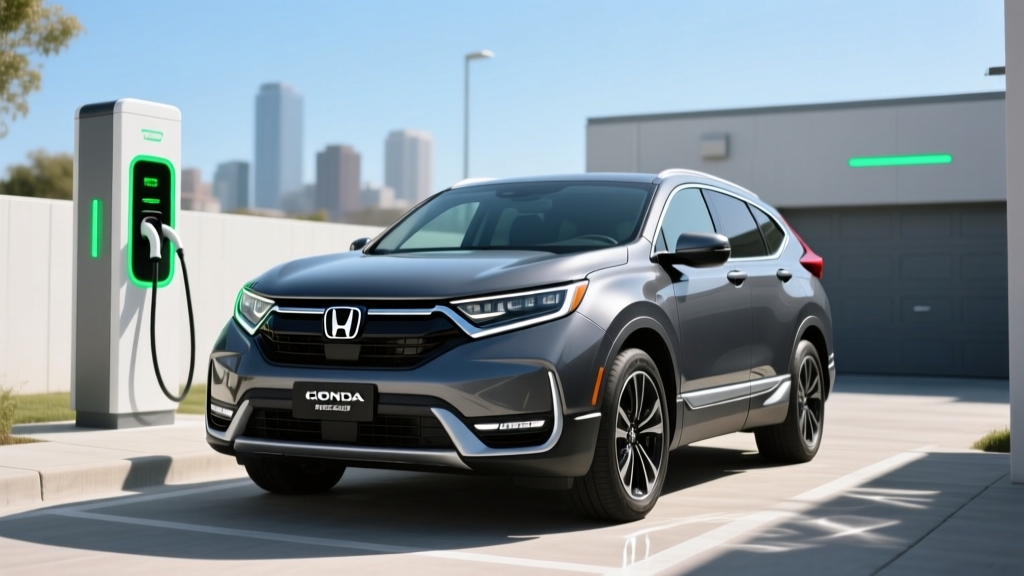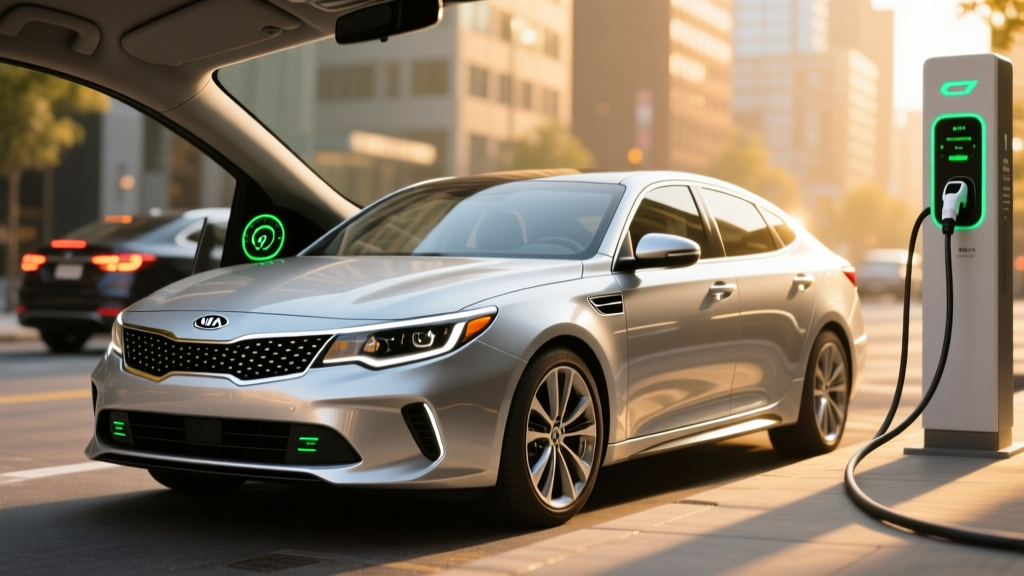
Quick Verdict: A Thrifty Midsize Sedan That Still Holds Up
The 2017 Kia Optima Hybrid is a conventional hybrid electric vehicle (HEV) — not a plug-in — that pairs a 2.0-liter four-cylinder engine with an electric motor to deliver an EPA-estimated 42 MPG combined. Nearly a decade after its debut, it remains a compelling used-car choice for buyers who want hybrid efficiency without the complexity of plug-in charging or the range considerations of a full EV. With a proven powertrain, generous warranty coverage on its lithium-ion battery, and low running costs, the Optima Hybrid occupies a practical niche in the 2026 used-car market.
This guide covers everything a prospective buyer needs: exact fuel economy figures, powertrain specifications, real-world MPG expectations, battery longevity and replacement costs, and how this HEV compares to PHEVs and full EVs for different driving lifestyles.
HEV vs. PHEV: What the 2017 Optima Hybrid Actually Is
Before diving into specs, it is critical to distinguish the two electrified variants Kia sold under the Optima nameplate for the 2017 model year:
2017 Kia Optima Hybrid (HEV)
- Type: Conventional hybrid — no plug, no external charging
- How it charges: Regenerative braking and the gasoline engine recharge the small battery
- Electric-only driving: Very limited (under 1 mile at low speeds)
- EPA combined MPG: 42 MPG
- Battery: 1.76 kWh lithium-ion polymer
- Federal tax credit: None (expired long before 2017; no §30D credit for conventional HEVs under current IRS rules)
2017 Kia Optima Plug-In Hybrid (PHEV)
- Type: Plug-in hybrid — charges from a wall outlet or public charger
- How it charges: Level 1 (120V) or Level 2 (240V) external charging, plus regenerative braking
- Electric-only range: EPA-estimated 29 miles
- EPA combined MPG (charge-sustaining): 40 MPG / 103 MPGe
- Battery: 9.8 kWh lithium-ion polymer
- Federal tax credit: Originally eligible for ~$4,919 under the pre-2023 §30D rules; no longer eligible for new purchases. Used-EV credit (§25E) does not apply to PHEVs with batteries under 7 kWh — the Optima PHEV's 9.8 kWh battery does qualify for the used-PHEV credit of up to $4,000 if income and price caps are met (see IRS §25E)
This review focuses on the conventional HEV. If you are specifically researching the plug-in variant, note the distinct battery size, charging requirements, and electric-only range above. The two vehicles share the Optima nameplate but serve different use cases.
Fuel Economy: EPA Ratings and Real-World MPG
The 2017 Kia Optima Hybrid comes in two trims — Premium and EX — and both share the same EPA fuel economy ratings according to fueleconomy.gov:
| Metric | EPA Rating | Real-World Expectation |
|---|---|---|
| City MPG | 41 MPG | 42–48 MPG (hybrids excel in stop-and-go traffic where regen braking and electric-motor assist dominate) |
| Highway MPG | 46 MPG | 38–43 MPG (at sustained 70–80 mph, the gasoline engine carries more load; hybrid advantage narrows) |
| Combined MPG | 42 MPG | 40–45 MPG depending on driving mix |
| Fuel tank capacity | 18.5 gallons | — |
| Total driving range | ~777 miles | ~700–830 miles depending on conditions |
Why city MPG beats highway in this hybrid: Conventional hybrids like the Optima HEV recapture kinetic energy during braking and low-speed driving through regenerative braking. In city traffic, the electric motor handles more propulsion work, reducing gasoline consumption. On the highway, the 2.0L engine runs continuously at higher RPM, and the hybrid system's efficiency advantage over a conventional sedan narrows. This is the opposite pattern from full EVs, which lose range at highway speeds but have no such city penalty.
Real-world note for 2026 buyers: A nine-year-old hybrid battery will have experienced some capacity loss. Expect a slight MPG reduction (1–3 MPG) compared to a new vehicle if the battery's state of health (SoH) has degraded to 85–90%. Kia's hybrid system is relatively mild compared to Toyota's Hybrid Synergy Drive, so degradation impact on fuel economy is modest but measurable.
Powertrain Specs: Engine, Motor, and Combined Output
| Specification | 2017 Kia Optima Hybrid (HEV) |
|---|---|
| Engine | 2.0L GDI inline-4 (Atkinson cycle) |
| Engine horsepower | 154 HP @ 6,000 RPM |
| Engine torque | 140 lb-ft @ 5,000 RPM |
| Electric motor output | 51 HP (38 kW) |
| Combined system horsepower | 192 HP |
| Transmission | 6-speed automatic (no CVT) |
| Drivetrain | Front-wheel drive |
| 0–60 MPH | ~8.3 seconds (estimated) |
| Hybrid battery | 1.76 kWh lithium-ion polymer |
| Curb weight | ~3,496 lbs |
Kia's decision to use a conventional 6-speed automatic rather than a continuously variable transmission (CVT) sets the Optima Hybrid apart from competitors like the Toyota Camry Hybrid and Ford Fusion Hybrid. The result is more natural-feeling acceleration and gear shifts, though it sacrifices a small amount of efficiency. The 192 combined horsepower provides adequate passing power, though this is not a performance-oriented sedan — it prioritizes smoothness and fuel savings over sprint times.
Battery Longevity, Warranty, and Replacement Costs
Hybrid Battery Warranty (Original)
- Coverage: 10 years / 100,000 miles (whichever comes first)
- Applies to: Hybrid battery pack and hybrid-system components
- Transferable: Yes — Kia's hybrid battery warranty transfers to subsequent owners at the full 10yr/100k terms
- Capacity threshold: Kia has historically warranted the battery against failure or significant capacity loss, though exact SoH percentage thresholds are not publicly specified in owner manuals
What this means in 2026: A 2017 model's original 10-year/100,000-mile hybrid battery warranty has expired (or will expire in 2027 if the odometer is under 100k). For most used examples on the market, this warranty is either fully expired or nearing expiration. Buyers should budget accordingly.
Battery replacement cost: A replacement hybrid battery pack for the 2017 Optima Hybrid typically costs between $2,000 and $3,500 for the part alone, with labor adding $500–$1,000 at a dealership. Independent hybrid specialists may offer refurbished packs for $1,500–$2,500 installed. The 1.76 kWh battery is small compared to a full EV pack (which can exceed 75 kWh), so replacement costs are proportionally lower.
Realistic battery lifespan: Kia's lithium-ion polymer hybrid batteries have demonstrated good longevity in owner reports. Many Optima Hybrids have exceeded 150,000 miles without battery replacement. The small battery operates within a narrow state-of-charge window (roughly 40–80%), which reduces stress and extends cycle life compared to full EV batteries that regularly cycle from 10% to 90%.
2017 Kia Optima Hybrid vs. PHEV vs. Full EV: Which Fits You?
Choose the Optima HEV If:
- You cannot charge at home (apartment, street parking, no garage outlet)
- You want hybrid efficiency with zero behavior change — just fill up with gas
- Your budget is $10,000–$16,000 (typical 2026 used pricing for a 2017 Optima Hybrid)
- You drive a mix of city and highway and want 700+ miles between fill-ups
- You prefer lower maintenance costs and simpler ownership than a PHEV or EV
Consider a PHEV or Full EV Instead If:
- You have home Level 2 charging and a short commute (a PHEV like the 2017 Optima PHEV covers 29 miles electric-only; a 2026 EV covers 250–350+ miles)
- You want to reduce gasoline consumption to near zero for daily driving
- You qualify for the IRS §25E used-EV credit (up to $4,000 for qualifying used EVs and PHEVs with 7+ kWh batteries)
- You value instant electric torque, one-pedal driving, and lower per-mile energy costs
- You want access to HOV lanes (available for PHEVs/EVs in many states, not for conventional HEVs)
The decision framework is straightforward: No home charging access → HEV. Home charging + short commute → PHEV. Home charging + willingness to plan longer trips around DC fast charging → full EV. The 2017 Optima Hybrid is the lowest-friction entry point into electrified driving because it demands nothing from the owner except gasoline.
Tax Credit Eligibility: What Applies in 2026
Under current IRS §30D rules, the 2017 Kia Optima Hybrid (conventional HEV) does not qualify for any federal new-vehicle tax credit. The §30D credit applies only to plug-in electric vehicles (BEVs and PHEVs) with battery capacities of at least 7 kWh, purchased new.
For the 2017 Optima Plug-In Hybrid (PHEV variant), the situation is different when purchased used:
- §25E Used Clean Vehicle Credit: Up to $4,000 or 30% of the sale price (whichever is lower) for qualifying used PHEVs and BEVs
- Battery capacity requirement: At least 7 kWh — the Optima PHEV's 9.8 kWh battery qualifies
- Vehicle price cap: Sale price must be $25,000 or less (easily met for a 2017 model in 2026)
- Buyer income cap: Modified AGI ≤ $75,000 (single), $112,500 (head of household), $150,000 (joint)
- Dealer requirement: Must purchase from a licensed dealer (private-party sales do not qualify)
- First transfer rule: The vehicle must be sold by a dealer for the first time as a used vehicle after Dec. 31, 2022, or subsequent qualifying transfers
Important: Tax credit eligibility depends on your individual circumstances. Consult a tax professional and verify current rules on irs.gov before making a purchase decision based on credit availability.
Reliability, Safety, and Ownership Costs
The 2017 Kia Optima earned a 5-star overall safety rating from NHTSA and was an IIHS Top Safety Pick+ when equipped with optional LED headlights and front crash prevention. The hybrid variant shares the same body structure and safety equipment as the gasoline model.
Known reliability considerations:
- The 2.0L GDI engine has a generally solid track record, though some owners report carbon buildup on intake valves (common to all direct-injection engines) — an intake-valve cleaning service at ~80,000–100,000 miles costs $200–$400
- The 6-speed automatic transmission has been reliable in the hybrid application, with fewer reported issues than the dual-clutch transmissions used in some Kia models
- Hybrid-specific components (inverter, motor, battery) have low failure rates based on owner surveys
- Brake pads often last 80,000+ miles thanks to regenerative braking reducing friction-brake wear
Estimated annual ownership costs (2026):
- Fuel: At 42 MPG combined and $3.20/gallon regular unleaded, driving 12,000 miles/year costs approximately $914 annually
- Insurance: $1,200–$1,800/year depending on state and driver profile (hybrid surcharges are minimal for a 2017 model)
- Maintenance: $400–$600/year (oil changes, tire rotations, cabin filter — no hybrid-specific routine maintenance required)
- Total estimated annual running cost: ~$2,500–$3,300
Compared to a 2017 Optima with the 2.4L gasoline engine (EPA 28 MPG combined), the hybrid saves approximately $480/year in fuel at 12,000 miles driven — a meaningful difference that compounds over years of ownership.
Frequently Asked Questions
How many MPG does the 2017 Kia Optima Hybrid get?
The EPA rates the 2017 Kia Optima Hybrid at 41 MPG city, 46 MPG highway, and 42 MPG combined. In real-world driving, owners typically see 40–48 MPG depending on their city-to-highway ratio. City-heavy commutes often exceed the EPA estimate due to regenerative braking efficiency, while sustained highway driving at 75+ mph may yield 38–42 MPG.
Does the 2017 Kia Optima Hybrid need to be plugged in?
No. The Optima Hybrid is a conventional HEV. Its 1.76 kWh battery charges entirely through regenerative braking and the gasoline engine. You never plug it in. If you want plug-in capability, look for the separate 2017 Optima Plug-In Hybrid (PHEV) model, which offers 29 miles of electric-only range from its 9.8 kWh battery.
Is the 2017 Kia Optima Hybrid reliable?
Yes, with caveats appropriate for a nine-year-old vehicle. The hybrid powertrain has proven durable, with many examples exceeding 150,000 miles without major hybrid-component failures. The 2.0L GDI engine may require intake-valve cleaning at high mileage. The original 10-year/100,000-mile hybrid battery warranty has likely expired on most 2017 examples by 2026, so factor potential battery replacement ($2,000–$3,500) into your budget.
What does a replacement hybrid battery cost for the 2017 Optima?
A new OEM hybrid battery pack costs approximately $2,000–$3,500 for the part, plus $500–$1,000 in labor at a Kia dealership. Refurbished or aftermarket packs from independent hybrid specialists may be available for $1,500–$2,500 installed. Given the battery's small 1.76 kWh capacity, replacement costs are far lower than a full EV battery swap.
Does the 2017 Kia Optima Hybrid qualify for any tax credit in 2026?
The conventional HEV does not qualify for any federal tax credit. The Optima PHEV variant may qualify for the IRS §25E used clean vehicle credit (up to $4,000) if purchased from a dealer for $25,000 or less, and if the buyer meets income caps ($75k single / $150k joint). Always verify eligibility with a tax professional and current IRS guidance before purchasing.
How does the Optima Hybrid compare to a Toyota Camry Hybrid of the same year?
The 2017 Camry Hybrid (LE trim) is EPA-rated at 42 MPG combined — essentially identical to the Optima Hybrid. The Camry benefits from Toyota's more mature Hybrid Synergy Drive system and a larger dealer network, but the Optima Hybrid offers a more engaging 6-speed automatic (vs. Toyota's CVT) and typically lower used-car pricing. Both are strong choices; the Optima often represents better value on the used market.
What is the total driving range on a full tank?
With an 18.5-gallon fuel tank and 42 MPG combined, the EPA-estimated total range is approximately 777 miles. In real-world conditions, expect 700–830 miles depending on your driving style, terrain, and climate. This is a significant advantage over full EVs for long road trips where DC fast-charging infrastructure may be sparse.