Quick Verdict: The 2017 Kia Niro Hybrid at a Glance
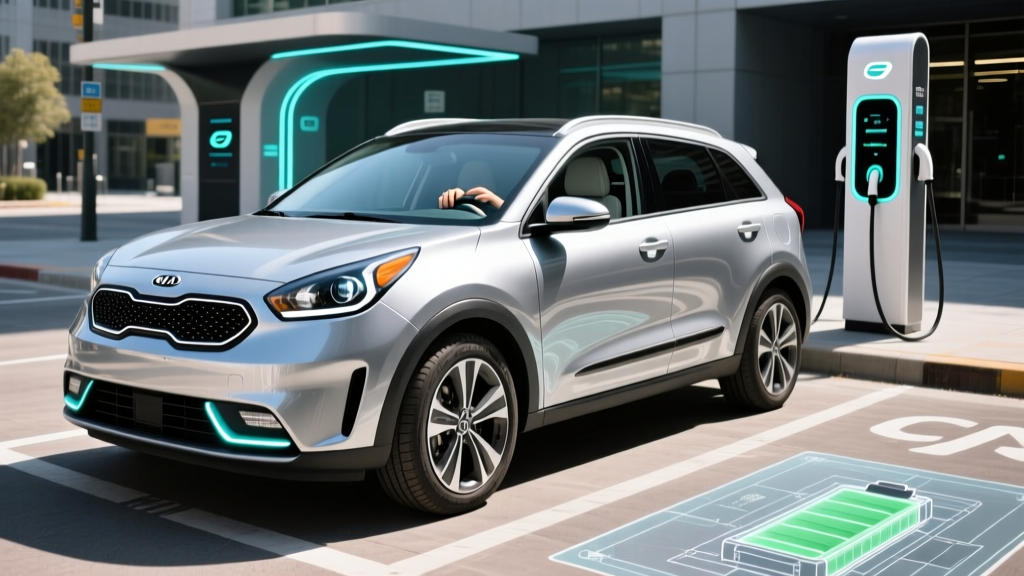
The 2017 Kia Niro hybrid remains one of the most fuel-efficient crossover-shaped vehicles ever sold in the United States. Built on a dedicated hybrid platform shared with the Hyundai Ioniq, the first-generation Niro delivers an EPA-estimated 50 MPG combined in its FE trim — a number that still holds up nearly a decade later. For buyers in 2026 shopping the used market, the 2017 Niro offers a compelling mix of proven reliability, low running costs, and practical cargo space, all without requiring a plug.
But buying a nine-year-old hybrid comes with specific questions: How does real-world fuel economy compare to the EPA sticker? What's the battery replacement cost? And does the 2017 Niro qualify for any tax incentives today? This guide answers each of those with exact figures.
The 2017 Kia Niro was sold in two electrified variants:
- Niro Hybrid (HEV): A conventional hybrid that charges its battery through regenerative braking and the gasoline engine. No plug required. You simply fill up with gas and drive.
- Niro Plug-In Hybrid (PHEV): Introduced for the 2018 model year (not available as a 2017). Features a larger battery, plug-in charging capability, and an EPA-rated 26 miles of electric-only range.
This review focuses on the 2017 Niro HEV. If you're looking at plug-in capability, you'll need to look at 2018 or newer Niro PHEV models.
Fuel Economy: EPA Ratings and Real-World MPG
The 2017 Kia Niro hybrid's fuel economy varies by trim level, primarily due to wheel size and weight differences. The base FE trim rides on 16-inch wheels with low-rolling-resistance tires, while higher trims step up to 18-inch alloys that reduce efficiency slightly.
| Trim | City MPG | Highway MPG | Combined MPG |
|---|---|---|---|
| FE (base) | 52 | 49 | 50 |
| LX / EX | 51 | 46 | 49 |
| Touring / Touring Launch Edition | 46 | 40 | 43 |
Source: EPA Fuel Economy
Real-World MPG: What Owners Actually Report
Hybrid vehicles like the Niro often exceed their EPA city estimates in stop-and-go traffic, where regenerative braking and electric-motor assist do the most work. However, highway driving at sustained speeds above 70 mph tends to reduce fuel economy compared to the EPA highway figure.
Based on aggregated owner data from Fuelly and real-world testing, expect the following from a 2017 Niro FE:
- City driving: 48–55 MPG (often exceeds EPA in warm weather)
- Highway driving (65–75 mph): 42–47 MPG
- Cold-weather combined (below 35°F): 40–45 MPG (engine runs more frequently for cabin heat)
- Annual average (mixed driving): 46–50 MPG
The Touring trim's real-world average drops to roughly 39–43 MPG combined, reflecting the penalty of larger wheels, a sunroof, and additional equipment weight. If maximum fuel economy is your priority, the FE trim is the clear choice.
Powertrain and Performance Specifications
The 2017 Niro pairs a 1.6-liter Atkinson-cycle four-cylinder gasoline engine with a permanent-magnet synchronous electric motor, routed through a six-speed dual-clutch automatic transmission (DCT). Unlike the Toyota Prius's planetary-gear CVT, Kia's DCT provides more natural shift feel and better highway passing response, at a minor cost to seamless low-speed efficiency.
| Specification | Value |
|---|---|
| Gasoline Engine | 1.6L GDI 4-cylinder (Atkinson cycle) |
| Engine Horsepower | 104 hp @ 5,700 rpm |
| Engine Torque | 109 lb-ft @ 4,000 rpm |
| Electric Motor Output | 43 hp (32 kW) |
| Combined System Output | 139 hp / 195 lb-ft torque |
| Transmission | 6-speed dual-clutch automatic (DCT) |
| Hybrid Battery | 1.56 kWh lithium-ion polymer |
| Drivetrain | Front-wheel drive |
| 0–60 mph | ~9.7 seconds |
| Curb Weight | 3,106–3,273 lbs (varies by trim) |
The 1.56 kWh traction battery is modest by today's standards — it's a conventional hybrid battery, not designed for plug-in electric-only driving. It stores energy captured from regenerative braking and engine excess, then deploys it for acceleration assist and low-speed electric creep. The battery uses lithium-ion polymer cells, which were more energy-dense and lighter than the nickel-metal hydride packs still used in some competitors at the time.
Battery Longevity, Warranty, and Replacement Cost
Hybrid battery lifespan is the single most common concern for used-hybrid buyers. Here's what the data shows for the 2017 Niro's 1.56 kWh lithium-ion pack:
Original coverage: 10 years / 100,000 miles (whichever comes first) for the hybrid battery and related components, transferable to second owners in most states.
Emissions warranty: In CARB states (California, New York, Massachusetts, and others), hybrid battery coverage extends to 15 years / 150,000 miles under the PZEV emissions warranty.
Capacity threshold: Kia's warranty covers the battery if it fails or loses capacity to the point of triggering a hybrid-system warning light — typically below ~60% of original capacity.
Source: Kia Warranty Information
Real-World Battery Degradation
Because the Niro's hybrid battery is small and the vehicle's battery-management system (BMS) keeps the state of charge in a conservative middle window (roughly 40–80%), degradation is gradual. Owner reports and iFixit/RepairPal data suggest:
- At 100,000 miles: Most Niro hybrid batteries retain 85–92% of original capacity — well within warranty thresholds.
- At 150,000+ miles: Some capacity loss becomes noticeable (slightly reduced regen effectiveness, marginally lower MPG), but outright failure before 150,000 miles is uncommon.
- Failure rate: Hybrid battery replacement claims for the first-generation Niro remain low relative to the vehicle population, based on RepairPal reliability data.
Battery Replacement Cost
If the battery does require replacement outside of warranty:
- New OEM battery (Kia dealer): $2,500–$3,800 including parts and labor
- Refurbished/remanufactured battery: $1,200–$2,000 from independent hybrid specialists
- Individual cell module replacement: $400–$800 if only specific modules are degraded (requires a qualified hybrid technician)
For a 2017 model in 2026, most vehicles will still be within the original 10-year/100,000-mile battery warranty window — though mileage may have exceeded 100,000. Check the vehicle's service history and whether any hybrid-system recalls or TSBs (technical service bulletins) were addressed.
Reliability and Ownership Costs
The 2017 Niro earned strong reliability marks. RepairPal rates the Kia Niro at 4.0 out of 5.0 for reliability, placing it above the compact SUV average. Common issues reported across model years include:
- Dual-clutch transmission shudder: Some owners report hesitation or shudder at low-speed takeoff. Kia issued software updates via TSB to address this — verify the update was applied.
- Infotainment system glitches: The 2017 UVO system can freeze or reboot. Usually resolved with a firmware update or soft reset.
- 12V auxiliary battery drain: Like many hybrids, the Niro can drain its 12V battery if left unused for extended periods. The 12V battery is separate from the hybrid traction battery and is a standard replacement item ($150–$250).
Estimated Annual Ownership Costs (2026)
| Category | Annual Cost |
|---|---|
| Fuel (12,000 mi/yr @ 48 MPG, $3.20/gal) | ~$800 |
| Insurance (national average) | $1,100–$1,500 |
| Maintenance (oil, filters, brakes, tires) | $400–$600 |
| Estimated repairs (post-warranty) | $200–$450 |
| Total annual cost | $2,500–$3,350 |
For comparison, a similarly aged gasoline-only compact SUV averaging 28 MPG would cost approximately $1,370 per year in fuel alone — roughly $570 more annually at current gas prices.
Pricing and Tax Credit Eligibility in 2026
The 2017 Kia Niro is available only on the used market. Current pricing based on mileage and condition:
| Trim | Mileage Range | Typical Price |
|---|---|---|
| FE | 60,000–90,000 mi | $13,500–$16,000 |
| LX / EX | 60,000–90,000 mi | $14,000–$17,500 |
| Touring | 60,000–90,000 mi | $15,500–$19,000 |
Does the 2017 Niro Qualify for a Tax Credit?
No. The federal §30D new clean vehicle credit applies only to new vehicles. However, there is a used clean vehicle credit under IRS §25E that may apply:
- Credit amount: 30% of the sale price, up to a maximum of $4,000
- Vehicle requirements: Must be at least 2 model years old (2017 qualifies), sold for $25,000 or less, and purchased from a licensed dealer
- Buyer income caps (2026): Modified AGI must not exceed $75,000 (single), $112,500 (head of household), or $150,000 (joint)
- One-time use: Each buyer can claim the used-EV credit once every 3 years, and each specific VIN can only trigger the credit once
- Point-of-sale transfer: Eligible buyers can transfer the credit to the dealer at purchase for an immediate price reduction
At a typical used price of $14,000–$18,000, the 30% calculation yields $4,200–$5,400 — but the credit is capped at $4,000. So qualifying buyers purchasing from a dealer could reduce their effective cost by up to $4,000. Verify current eligibility rules at IRS.gov §25E, as income thresholds and sourcing requirements are subject to legislative change.
Who Should Choose the 2017 Niro Hybrid vs. a PHEV or Full EV?
Choose the 2017 Niro Hybrid (HEV) if:
- You don't have access to home or workplace charging (apartment, street parking)
- You want maximum fuel economy with zero behavioral change — just fill up and drive
- Your budget is under $18,000 and you want the lowest total cost of ownership
- You drive 10,000–15,000 miles per year in mixed city/highway conditions
Look at a PHEV (2018+ Niro PHEV or similar) if:
- You can install a Level 2 home charger and your daily commute is under 26 miles
- You want some electric-only driving for short trips but gas flexibility for road trips
- You want to reduce gasoline consumption by 60–80% on typical daily driving
Consider a full EV (BEV) if:
- You have reliable home Level 2 charging and your daily driving is under 250 miles
- You want to eliminate gasoline and oil changes entirely
- You're willing to spend more upfront ($25,000+ used, $30,000+ new) for lower per-mile energy costs
Pros and Cons
- Class-leading 50 MPG combined (FE trim)
- Spacious cargo area (22.7 cu ft behind rear seats, 54.5 cu ft folded)
- Strong 10-year/100,000-mile hybrid battery warranty
- Natural-feeling DCT (no rubber-band CVT drone)
- Low annual fuel cost (~$800/yr at 12k miles)
- Eligible for up to $4,000 used-EV tax credit (income-dependent)
- Modest 139 hp — not quick (9.7 sec 0–60)
- Touring trim drops to 43 MPG combined
- No all-wheel-drive option
- DCT can hesitate from a stop (check for TSB updates)
- 2017 infotainment feels dated by 2026 standards
- No DC fast charging (not applicable to HEV — no plug)
Frequently Asked Questions
How many MPG does the 2017 Kia Niro hybrid get?
The EPA rates the 2017 Niro FE at 52 city / 49 highway / 50 combined MPG. The Touring trim is rated at 46/40/43 MPG. In real-world mixed driving, most owners average 46–50 MPG in the FE trim, with city driving sometimes exceeding the EPA estimate and highway driving at 75+ mph reducing it to the low 40s.
Does the 2017 Niro hybrid need to be plugged in?
No. The 2017 Niro is a conventional hybrid (HEV). It charges its 1.56 kWh battery through regenerative braking and the gasoline engine. You never plug it in — you simply refuel with gasoline. The plug-in hybrid (PHEV) variant was introduced for the 2018 model year, not 2017.
Is the 2017 Niro hybrid reliable?
Yes. RepairPal rates the Niro at 4.0/5.0 for reliability. The hybrid battery has a low failure rate, and the powertrain is proven across Kia and Hyundai models. The most common complaints involve DCT low-speed hesitation (addressable via dealer software update) and infotainment glitches. The 10-year/100,000-mile hybrid battery warranty provides long-term peace of mind.
What does a replacement hybrid battery cost?
A new OEM hybrid battery from a Kia dealer costs approximately $2,500–$3,800 installed. Refurbished batteries from independent hybrid specialists run $1,200–$2,000. However, most 2017 Niros will still be within or just past the original battery warranty window, and outright battery failure before 150,000 miles is uncommon based on owner data.
Does the 2017 Niro qualify for any tax credit in 2026?
It does not qualify for the new-vehicle §30D credit. However, it may qualify for the IRS §25E used clean vehicle credit: up to $4,000 (30% of sale price, capped) if purchased from a dealer for $25,000 or less, and if the buyer's income falls within the $75,000–$150,000 caps depending on filing status. Confirm eligibility at IRS.gov before purchase.
How does the 2017 Niro compare to a Toyota Prius or Hyundai Ioniq?
The 2017 Niro FE (50 MPG combined) sits between the 2017 Prius Two (54 MPG combined) and the 2017 Hyundai Ioniq Blue (58 MPG combined) in fuel economy. The Niro trades a few MPG for a higher seating position, more cargo volume (22.7 vs. 24.6 cu ft in the Prius — comparable), and a more conventional crossover driving feel. The Ioniq offers slightly better efficiency but a lower, sedan-like profile. All three share similar powertrain architectures and reliability profiles.