Quick Verdict: A Practical Used Hybrid Sedan in 2026
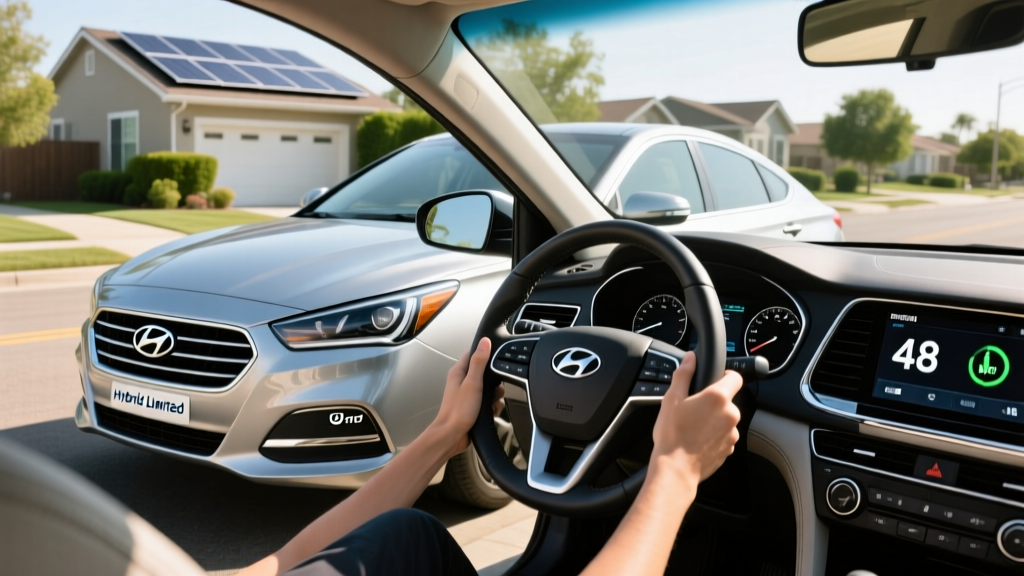
The 2017 Hyundai Sonata Hybrid Limited sits in a specific niche for today's used-car buyer: a mid-size sedan that delivers genuine fuel savings without requiring any change to your driving or fueling habits. Unlike a plug-in hybrid (PHEV), this is a conventional hybrid electric vehicle (HEV) — it generates all its electric energy internally through regenerative braking and engine-driven generation. You never plug it in.
Nearly a decade after it rolled off the assembly line, the 2017 Sonata Hybrid Limited remains a compelling option for buyers who want a comfortable, well-equipped sedan with strong city fuel economy but aren't ready (or able) to commit to a full battery electric vehicle (BEV). With typical used-market pricing between $11,000 and $16,000 depending on mileage and condition, it undercuts most new hybrids by a wide margin while still delivering a usable 39 MPG combined EPA rating.
This review covers the exact powertrain specifications, real-world fuel economy expectations, battery longevity data, and total ownership costs you need to evaluate whether this hybrid sedan fits your daily driving in 2026.
2017 Hyundai Sonata Hybrid Limited: Core Specifications
| Specification | Value |
|---|---|
| Vehicle Type | Conventional Hybrid (HEV) |
| Engine | 2.0L 4-cylinder GDI (154 hp / 140 lb-ft) |
| Electric Motor | Permanent magnet synchronous (50 hp / 151 lb-ft) |
| Combined System Output | 193 hp |
| Transmission | 6-speed automatic |
| Hybrid Battery | 1.62 kWh lithium-ion polymer |
| EPA Fuel Economy (City / Hwy / Combined) | 39 / 43 / 40 MPG |
| Fuel Tank Capacity | 18.5 gallons |
| Total Driving Range | ~740 miles (EPA combined) |
| 0-60 mph | ~8.4 seconds |
| Drivetrain | Front-wheel drive |
| Original MSRP (Limited Trim) | $31,250 |
| Typical Used Price (2026 Market) | $11,000–$16,000 |
Important clarification: The 2017 Sonata Hybrid Limited is not a plug-in hybrid. Hyundai also sold a Sonata Plug-in Hybrid (PHEV) in 2016–2017 with a larger 9.8 kWh battery and approximately 27 miles of electric-only range, but that was a separate model that was discontinued after the 2017 model year. This review covers the conventional HEV version exclusively.
Fuel Economy: EPA Ratings vs. Real-World MPG
| Driving Condition | EPA Rating | Real-World Expectation |
|---|---|---|
| City | 39 MPG | 38–44 MPG (hybrids often exceed EPA in city) |
| Highway | 43 MPG | 38–42 MPG (aerodynamic drag reduces hybrid advantage) |
| Combined | 40 MPG | 37–42 MPG |
| Cold Weather (below 35°F) | — | 33–37 MPG (engine runs more for cabin heat) |
The 2017 Sonata Hybrid's EPA ratings — 39 city / 43 highway / 40 combined — remain competitive with newer mid-size hybrid sedans. In practice, Hyundai's hybrid system is particularly effective in stop-and-go city driving, where the electric motor handles low-speed propulsion and regenerative braking recaptures energy that would otherwise be lost as heat at the brake pads.
Owners on fuel-tracking platforms like Fuelly consistently report combined averages in the 38–42 MPG range. Some drivers who do predominantly city driving report exceeding 40 MPG regularly. Highway-only driving at sustained 75+ mph speeds tends to return 36–39 MPG, as the gasoline engine bears more of the workload and aerodynamic drag increases significantly.
Cold-weather caveat: Like all hybrids, the Sonata Hybrid's fuel economy drops in winter months. The gasoline engine runs more frequently to provide cabin heat (since there's no waste heat from an electric motor like in a BEV) and the battery operates less efficiently at low temperatures. Expect a 10–15% reduction in MPG during sustained cold weather, bringing combined figures to approximately 33–37 MPG.
HEV vs. PHEV vs. BEV: Which Powertrain Fits You?
| Factor | HEV (This Car) | PHEV | BEV (Full Electric) |
|---|---|---|---|
| Plug-in Required? | No | Yes (for EV range) | Yes |
| Electric-Only Range | Less than 1 mile at low speed | 20–45 miles typical | 200–400+ miles |
| Total Range | ~740 miles | 400–550 miles (EV + gas) | 200–400+ miles |
| Fueling/Charging | Gas station only | Gas station + Level 1/2 outlet | Level 1/2/DC fast charger |
| Maintenance | Standard + hybrid system | Standard + hybrid + larger battery | Minimal (no oil, spark plugs, etc.) |
| Used Price Range (2026) | $11,000–$16,000 | $15,000–$25,000 | $15,000–$35,000+ |
| Best For | No home charging access; long trips | Short commute + home charging | Home charging + daily commute under 300 mi |
Choose the 2017 Sonata Hybrid (HEV) if: You lack access to home or workplace charging, regularly drive more than 300 miles between fuel stops, want the lowest possible purchase price for a fuel-efficient sedan, and prefer the simplicity of gas-station-only fueling with no behavioral changes.
Consider a PHEV instead if: You have a garage or driveway where you can install a Level 2 charger, your daily commute is under 30 miles round-trip (meaning you'd rarely use gasoline on weekdays), and you want some electric-only driving without range anxiety on longer trips.
Consider a full BEV instead if: You have reliable home charging, want to eliminate gasoline entirely, are willing to plan around charging stops on road trips, and can absorb a higher upfront purchase price in exchange for lower per-mile fuel costs and reduced maintenance.
Powertrain Deep Dive: How the Hybrid System Works
The 2017 Sonata Hybrid Limited pairs a 2.0-liter gasoline direct-injection (GDI) four-cylinder engine with a 50-horsepower electric motor integrated into the transmission housing. Unlike Toyota's planetary-gear hybrid system (used in the Camry Hybrid), Hyundai uses a parallel hybrid architecture with a conventional 6-speed automatic transmission. This gives the Sonata Hybrid a more familiar driving feel — shifts are perceptible, and acceleration builds linearly rather than through a continuously variable ratio.
The combined system output of 193 hp is adequate for merging and passing, though it won't feel quick by modern standards. The 0-60 mph time of approximately 8.4 seconds places it behind the Toyota Camry Hybrid (~7.6 seconds) but ahead of some older hybrid sedans. The electric motor's 151 lb-ft of torque, available from zero RPM, provides responsive initial acceleration from stoplights.
At low speeds and light throttle inputs, the Sonata Hybrid can operate in EV mode for brief distances (typically under one mile at speeds below 25 mph). However, the 1.62 kWh battery is far too small for sustained electric-only driving. This battery exists to buffer energy captured from regenerative braking and smooth out engine load — not to provide meaningful all-electric range. This is the fundamental difference between an HEV and a PHEV.
Battery Longevity, Warranty, and Replacement Costs
Hybrid Battery Warranty (Original)
- Coverage: 8 years / 100,000 miles (10 years / 150,000 miles in CARB states including California, New York, Massachusetts, and others adopting California emissions standards)
- Capacity Threshold: Hyundai covers battery failure or significant capacity loss that triggers a malfunction indicator
- Transferability: Original warranty is transferable to subsequent owners within the coverage period
2026 status: The original 8-year/100,000-mile federal warranty for a 2017 model expired in 2025. However, vehicles originally sold in CARB states retain coverage through 2027 or 150,000 miles, whichever comes first. Check your vehicle's original sale state and current odometer reading.
The 2017 Sonata Hybrid's 1.62 kWh lithium-ion polymer battery pack is relatively small and operates within a conservative state-of-charge (SoC) window — Hyundai's battery management system (BMS) never fully charges or fully depletes the pack, which significantly reduces degradation stress. This buffer strategy is the primary reason hybrid batteries tend to outlast their warranty periods.
Based on long-term ownership data and hybrid battery failure rates across the industry, the Sonata Hybrid's battery pack is expected to last 150,000–200,000+ miles before requiring replacement. Capacity loss in a 1.62 kWh HEV battery is far less consequential than in a BEV — even a 20% loss in battery capacity only marginally affects fuel economy, since the engine remains the primary power source.
Battery replacement cost: If the hybrid battery does fail outside warranty, a refurbished replacement pack typically costs $2,000–$3,500 including installation at an independent hybrid specialist. A new OEM battery from Hyundai runs approximately $3,500–$5,000 installed at a dealership. Given that the car itself may be worth $11,000–$16,000 in today's market, a battery replacement represents a significant but not catastrophic expense — comparable to a transmission replacement on a conventional vehicle.
The conventional 12V lead-acid auxiliary battery (which powers electronics and starts the hybrid system) should be replaced every 3–5 years as with any vehicle, at a cost of $150–$250.
Reliability, Safety, and Common Issues
The 2017 Sonata Hybrid benefits from being part of the seventh-generation Sonata platform (2015–2019), which received significant improvements over the earlier sixth-generation models. The NHTSA awarded the 2017 Sonata Hybrid a 5-star overall safety rating, with 5 stars in frontal crash, 5 stars in side crash, and 4 stars in rollover resistance.
In terms of mechanical reliability, the Sonata Hybrid's 2.0L GDI engine and 6-speed automatic are well-understood components with a long service history. The hybrid system adds complexity — the inverter, electric motor, and high-voltage battery are additional failure points — but Hyundai's hybrid components have proven robust in fleet and taxi service.
Known issues to check before purchasing:
- Brake actuator recalls: Some 2017 Sonata Hybrids were subject to recalls related to the anti-lock brake system (ABS) module. Verify all recall campaigns have been completed by checking the VIN at NHTSA's recall lookup.
- Transmission shudder: A small number of owners have reported mild shudder during low-speed acceleration. This is typically addressed through transmission fluid service and software updates.
- GDI carbon buildup: Direct-injection engines can accumulate carbon deposits on intake valves over 80,000+ miles. An intake valve cleaning service ($200–$400) may be needed if rough idle or reduced performance is noted.
- Hybrid battery cooling fan: The battery cooling fan, located behind the rear seat, can accumulate dust and debris. Ensure the fan inlet is clean and unobstructed to maintain proper battery temperature management.
2017 Sonata Hybrid Limited Trim: What You Get
The Limited was the top-tier trim for the 2017 Sonata Hybrid, and it came well-equipped even by today's standards. Standard equipment on the Limited includes:
- Leather seating surfaces with heated and ventilated front seats
- 8-inch touchscreen infotainment with navigation and rearview camera
- Infinity premium audio system (9 speakers + subwoofer)
- Blue Link connected car services (remote start, climate control via app)
- Blind spot detection with rear cross-traffic alert
- Lane departure warning
- Adaptive cruise control (stop-and-go capable)
- LED daytime running lights and taillights
- 17-inch alloy wheels with low-rolling-resistance tires
- Dual-zone automatic climate control
- Proximity key entry with push-button start
For 2017, Hyundai also offered a Ultimate Package on the Limited trim that added forward collision warning with automatic emergency braking, lane keep assist, and a panoramic sunroof. If you're shopping for a 2017 Sonata Hybrid Limited today, a vehicle with the Ultimate Package commands a modest premium ($500–$1,000) and provides a more complete active safety suite.
Tax Credits and Incentives: What Applies in 2026
Here's where expectations need calibration. The 2017 Hyundai Sonata Hybrid Limited is a conventional hybrid (HEV), not a plug-in hybrid or battery electric vehicle. Under current IRS rules, conventional HEVs do not qualify for the federal §30D New Clean Vehicle Credit (up to $7,500) or the §25E Used Clean Vehicle Credit (up to $4,000). These credits are reserved for vehicles with plug-in capability meeting specific battery capacity, critical mineral sourcing, and MSRP thresholds.
When the 2017 Sonata Hybrid was new, a separate federal tax credit of up to $2,500 was available under the Energy Policy Act for certain hybrid vehicles, but this credit had already phased out for Hyundai by the 2017 model year, and it no longer exists for any vehicle.
Bottom line for 2026 buyers: No federal tax credits are available for the purchase of a used 2017 Sonata Hybrid. Some states may offer minor incentives for fuel-efficient used vehicles, but these vary by jurisdiction. Check with your state's department of revenue or energy office for current programs. Consult a tax professional for any questions about deductions or credits.
2026 Ownership Economics: Total Cost vs. Gas-Only Sedans
Even without tax credits, the 2017 Sonata Hybrid Limited delivers meaningful fuel savings over a comparable gas-only mid-size sedan. Here's a practical cost comparison based on 15,000 miles driven annually and $3.40/gallon average fuel price (2026 national average):
| Cost Factor | 2017 Sonata Hybrid (40 MPG) | 2017 Sonata 2.4L Gas (28 MPG) |
|---|---|---|
| Annual Fuel Cost | $1,275 | $1,821 |
| 5-Year Fuel Cost | $6,375 | $9,107 |
| Fuel Savings (Hybrid) | $2,732 over 5 years | |
| Annual Insurance (estimated) | $1,100–$1,400 | $1,000–$1,300 |
| Maintenance (annual avg) | $400–$600 | $400–$600 |
The hybrid's fuel savings of approximately $546 per year (at current gas prices) will accumulate to over $2,700 across five years of ownership. That essentially covers the price premium you'd pay for the hybrid over a gas-only 2017 Sonata in the used market. If gas prices rise above $4.00/gallon in your area, the savings widen significantly — to over $3,600 across five years.
Insurance costs for the Sonata Hybrid are typically comparable to or slightly higher than the gas-only model, since the hybrid system adds replacement-cost complexity. Shop quotes from multiple insurers before purchasing.
Pros, Cons, and Final Assessment
Pros
- 40 MPG combined EPA; real-world city driving can exceed 42 MPG
- ~740-mile total range between fill-ups
- No plug-in charging required — zero lifestyle adjustment
- Limited trim is well-equipped (leather, nav, adaptive cruise, blind spot detection)
- 5-star NHTSA safety rating
- Conservative battery management promotes long pack life
- Used pricing ($11K–$16K) offers strong value for a fuel-efficient sedan
- Conventional 6-speed automatic feels natural vs. CVT drones
Cons
- No electric-only driving range (less than 1 mile at low speed)
- No federal or state tax credits available for used HEV purchase
- Original 8-year/100,000-mile hybrid warranty has expired (most vehicles)
- Battery replacement ($2,000–$5,000) is a significant out-of-warranty risk
- Acceleration (8.4 sec 0-60) is adequate but not quick
- Infotainment system lacks Apple CarPlay / Android Auto (added in 2018 refresh)
- Trunk space slightly reduced vs. gas Sonata due to battery placement
- No DC fast charging capability (not applicable — HEV)
The 2017 Hyundai Sonata Hybrid Limited makes the most sense for a buyer who wants a comfortable, loaded mid-size sedan with strong fuel economy, has no home charging access, and is comfortable purchasing a vehicle approaching its ninth year on the road. It is not a bridge to electric — it is a destination powertrain for drivers who want maximum efficiency with zero infrastructure dependency.
Frequently Asked Questions
How many MPG does the 2017 Hyundai Sonata Hybrid Limited get?
The EPA rates the 2017 Sonata Hybrid at 39 MPG city, 43 MPG highway, and 40 MPG combined. Real-world owners typically report 38–42 MPG combined, with city-heavy driving sometimes exceeding 42 MPG and sustained highway driving at 75+ mph returning 36–39 MPG.
Does the 2017 Sonata Hybrid need to be plugged in?
No. The 2017 Sonata Hybrid is a conventional HEV, not a plug-in hybrid. It charges its 1.62 kWh battery entirely through regenerative braking and engine-driven generation. You fuel it exclusively at gas stations. If you want a Sonata that plugs in, look for the separate 2016–2017 Sonata Plug-in Hybrid model (discontinued after 2017).
Is the hybrid battery reliable and what does replacement cost?
Hyundai's lithium-ion polymer hybrid battery is designed to last 150,000–200,000+ miles thanks to conservative charge/discharge cycling. The original 8-year/100,000-mile warranty has expired for most 2017 models (10-year/150,000-mile CARB-state coverage may still apply through 2027). Out-of-warranty replacement costs $2,000–$3,500 for a refurbished pack or $3,500–$5,000 for a new OEM battery, installed.
Does the 2017 Sonata Hybrid qualify for any tax credit in 2026?
No. Federal tax credits under IRS §30D (new clean vehicles) and §25E (used clean vehicles) are available only for plug-in vehicles — battery electric vehicles (BEVs) and plug-in hybrids (PHEVs) meeting battery capacity, MSRP, income, and critical mineral sourcing requirements. The Sonata Hybrid is a conventional HEV and does not qualify for these credits.
How does the 2017 Sonata Hybrid compare to the Toyota Camry Hybrid?
The 2017 Camry Hybrid rates at 40/38/40 MPG (city/highway/combined) — nearly identical to the Sonata Hybrid's 39/43/40. The Camry Hybrid has a slightly more powerful combined system (200 hp) and a more proven long-term reliability track record. The Sonata Hybrid counters with a more conventional 6-speed automatic (vs. Toyota's e-CVT), a more spacious rear seat, and often lower used-market pricing. Both are strong choices; the decision often comes down to which specific vehicle you find in better condition at a better price in your area.
What should I check before buying a used 2017 Sonata Hybrid?
Verify that all NHTSA recalls have been completed (check the VIN at nhtsa.gov/recalls). Confirm the hybrid battery cooling fan inlet is clean. Request maintenance records showing regular oil changes (critical for GDI engines). Test-drive for any transmission shudder during low-speed acceleration. If possible, have a hybrid-certified technician perform a pre-purchase inspection including a hybrid battery health check.