Quick Verdict: The 2017 Accord Hybrid Still Punches Above Its Weight
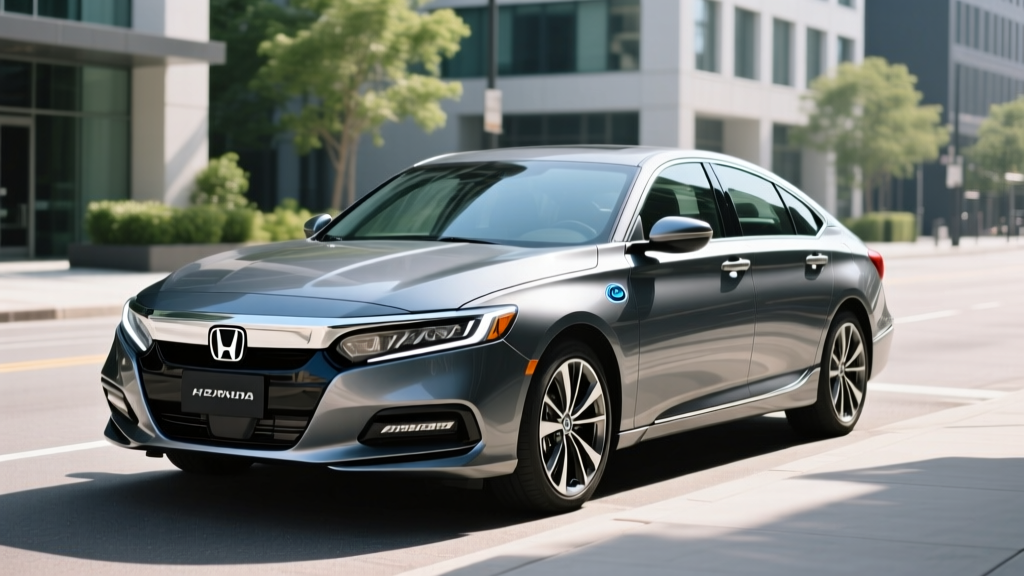
If you're searching for a 17 Accord Hybrid on the used market in 2026, you're looking at one of the most efficient midsize sedans Honda ever built — and one that's aged remarkably well. With an EPA-estimated 48 MPG combined, a 212-horsepower two-motor hybrid powertrain, and a reputation for bulletproof reliability, the 2017 Accord Hybrid remains a smart buy for commuters, rideshare drivers, and anyone who wants EV-like city efficiency without plugging in.
This is a conventional hybrid (HEV), not a plug-in hybrid (PHEV). You never plug it in. It charges its own small lithium-ion battery through regenerative braking and the gasoline engine. That simplicity is a major selling point nearly a decade after this car rolled off the assembly line.
The 2017 Accord Hybrid is a conventional hybrid (HEV). It has a small battery (~1.3 kWh usable) that recharges itself — no plug, no charging cable, no home charger needed. A plug-in hybrid (PHEV), like the Toyota Prius Prime or the newer Honda Clarity Plug-In, has a larger battery (8-18 kWh), an electric-only driving range (typically 20-45 miles), and requires plugging in to access that electric range. The Accord Hybrid was never offered as a PHEV.
Fuel Economy: EPA Ratings vs Real-World MPG
The headline number on the 2017 Accord Hybrid is its EPA fuel economy, which remains competitive with brand-new hybrids in 2026.
| Metric | MPG |
|---|---|
| City | 48 |
| Highway | 47 |
| Combined | 48 |
Source: EPA / fueleconomy.gov
Hybrids almost always exceed their EPA city rating in stop-and-go traffic because the electric motor does the heavy lifting at low speeds. Owners on Fuelly and Edmunds forums consistently report 44-52 MPG combined in mixed driving. Expect the high end (48-52 MPG) on city-heavy commutes and the lower end (40-44 MPG) on sustained highway trips at 75+ MPH or in very cold weather (below 25°F), where the engine runs more often for cabin heat. A well-maintained 2017 Accord Hybrid with ~80,000 miles should still deliver within 2-3 MPG of its original sticker if the hybrid system is healthy.
Powertrain: How Honda's Two-Motor System Works
The 2017 Accord Hybrid uses Honda's two-motor i-MMD (Intelligent Multi-Mode Drive) system, which operates differently from the planetary-gear setup in a Toyota Camry Hybrid. Here's the breakdown:
| Component | Specification |
|---|---|
| Gasoline Engine | 2.0L Atkinson-cycle 4-cylinder, 143 hp / 129 lb-ft |
| Drive Motor | 166 hp / 226 lb-ft (electric traction motor) |
| Generator Motor | Starter/generator (recharges battery, starts engine) |
| Combined System Output | 212 hp |
| Transmission | e-CVT (no traditional gears — direct drive clutch at highway speed) |
| 0-60 MPH | ~7.1 seconds |
| Drivetrain | Front-wheel drive |
The i-MMD system operates in three modes. In EV Drive, the battery powers the drive motor alone (short bursts at low speed). In Hybrid Drive, the gasoline engine spins the generator motor to produce electricity that feeds the drive motor — the engine never directly turns the wheels. In Engine Drive, a lockup clutch connects the engine directly to the wheels at steady highway cruising speeds (roughly 45-80 MPH), where the gasoline engine is most efficient. This design means the car feels more like an EV in city driving than most competitors.
Battery Health, Warranty & Replacement Cost
The hybrid battery is the number-one concern for used hybrid buyers, and for good reason. Here's what you need to know about the 2017 Accord Hybrid's lithium-ion pack.
Honda warranted the 2017 Accord Hybrid's IMA (Integrated Motor Assist) battery for 8 years / 100,000 miles in most states, and 10 years / 150,000 miles in CARB states (California, New York, Massachusetts, and others that follow California emissions standards). As of 2026, most examples have aged out of the 8-year warranty window. However, Honda's lithium-ion hybrid batteries have proven extremely durable — it's common to see these packs functioning well past 150,000 miles with minimal capacity loss. The pack is approximately 1.3 kWh (usable), which is small enough that even 20-30% degradation has a modest impact on fuel economy — perhaps 2-4 MPG less than new.
| Option | Estimated Cost |
|---|---|
| New OEM Honda battery (dealer) | $3,000 – $4,500 |
| Remanufactured battery (independent hybrid shop) | $1,800 – $2,800 |
| Individual cell/module replacement | $500 – $1,200 |
Before purchasing any used 2017 Accord Hybrid, ask for a hybrid battery health check from a Honda dealer or a hybrid-specialist shop. A scan tool can read the battery's State of Health (SoH) and flag any weak modules. If the IMA warning light is on, walk away unless the price reflects the repair cost.
Trims, Pricing & What to Pay in 2026
The 2017 Accord Hybrid was offered in three trims: Hybrid, Hybrid EX-L, and Hybrid Touring. Original MSRPs ranged from roughly $29,605 to $36,005 (including destination). Here's what used pricing looks like in the current market:
| Trim | Original MSRP | 2026 Used Range (60K-100K mi) |
|---|---|---|
| Hybrid (base) | $29,605 | $14,000 – $17,500 |
| Hybrid EX-L | $32,605 | $16,000 – $20,000 |
| Hybrid Touring | $36,005 | $18,500 – $23,000 |
The Touring trim adds Honda Sensing (adaptive cruise, lane-keeping, forward collision warning), LED headlights, navigation, and heated rear seats. Given that Honda Sensing is a valuable safety suite, the Touring is the trim to target if your budget allows.
Does the 2017 Accord Hybrid Qualify for Any Tax Credit?
No. The federal §30D clean vehicle credit applies only to new plug-in electric vehicles (BEVs and PHEVs) purchased new. The 2017 Accord Hybrid is a conventional HEV and does not plug in, so it has never qualified for the federal EV tax credit. The used EV credit (up to $4,000 or 30% of sale price, capped at $4,000 under IRS §25E) also requires the vehicle to be a plug-in EV or fuel-cell vehicle — conventional hybrids are excluded. Some states or local utilities offer rebates for used hybrids, but these vary by jurisdiction. Check your state energy office or utility provider for current programs.
2017 Accord Hybrid vs. Alternatives: HEV, PHEV, or Full EV?
Deciding between a used hybrid, a plug-in hybrid, and a full battery-electric vehicle comes down to your driving patterns, charging access, and budget.
Choose the 17 Accord Hybrid If:
- You have no access to home or workplace charging
- Your budget is under $20,000
- You drive 15,000+ miles/year and want maximum MPG without plugging in
- You want proven reliability with minimal maintenance
- You frequently take long road trips and don't want to plan around chargers
Consider a PHEV or Full EV If:
- You can install a Level 2 charger at home
- Your daily commute is under 40 miles (PHEV covers it on electric alone)
- You want to eliminate or drastically reduce gasoline use
- You qualify for the §30D federal tax credit on a new EV (up to $7,500 with income, MSRP, and battery-sourcing requirements per IRS rules)
- You want the lowest per-mile fuel cost (electricity at $0.14/kWh ≈ $0.04/mile vs. gas at $3.50/gal and 48 MPG ≈ $0.07/mile)
| Vehicle | Type | EPA MPG / MPGe | EV Range | ~Used Price |
|---|---|---|---|---|
| 2017 Accord Hybrid | HEV | 48 combined | N/A | $14K-$23K |
| 2017 Toyota Camry Hybrid | HEV | 40 combined | N/A | $13K-$19K |
| 2017 Prius Prime | PHEV | 54 MPG / 133 MPGe | 25 mi | $16K-$22K |
| 2018 Chevrolet Bolt EV | BEV | 119 MPGe | 238 mi | $14K-$19K |
Ownership Costs: Fuel, Maintenance & Insurance
One of the strongest arguments for the 2017 Accord Hybrid is its low running cost. Here's a realistic 5-year ownership projection assuming 15,000 miles/year, $3.50/gallon regular unleaded, and national-average insurance rates.
| Category | Cost |
|---|---|
| Fuel (48 MPG avg, $3.50/gal) | $5,470 |
| Maintenance (oil, brakes, tires, fluids) | $2,800 – $3,500 |
| Insurance (national avg ~$1,500/yr) | $7,500 |
| Estimated repairs (post-warranty) | $800 – $2,000 |
| Total (excluding purchase price) | $16,570 – $18,470 |
For comparison, a non-hybrid 2017 Accord with a 2.4L engine (rated at 27 MPG combined) would cost roughly $9,720 in fuel over the same period — a $4,250 fuel penalty. The hybrid premium pays for itself quickly at high mileage.
Maintenance is minimal. The regenerative braking system extends brake pad life significantly — many owners report original brake pads lasting 80,000+ miles. The 2.0L Atkinson-cycle engine is under less stress than a conventional engine, and oil change intervals remain at the standard Honda-recommended 7,500 miles or 12 months.
Pros and Cons of the 2017 Accord Hybrid
Pros
- 48 MPG combined — best in its class for 2017
- 212 hp provides confident highway merging
- Smooth, EV-like driving feel in city traffic
- Spacious cabin with 15.8 cu-ft trunk (only 0.4 cu-ft less than gas Accord)
- Honda Sensing safety suite on Touring trim
- Proven hybrid system with low failure rates
- Regen braking extends brake pad life dramatically
Cons
- No plug-in / electric-only driving option
- Trunk slightly smaller due to battery placement (no pass-through for long items)
- Road noise is noticeable at highway speeds (a known Accord trait of this generation)
- Infotainment system is dated by 2026 standards (no wireless CarPlay)
- No all-wheel-drive option
- Most examples are now out of hybrid battery warranty
Frequently Asked Questions
How many MPG does the 2017 Accord Hybrid get?
The EPA rates it at 48 city / 47 highway / 48 combined. In real-world driving, most owners report 44-52 MPG combined depending on driving style and climate. City-heavy commutes favor the higher end; sustained 75+ MPH highway driving and extreme cold pull it toward the lower end.
Does the 2017 Accord Hybrid need to be plugged in?
No. This is a conventional hybrid (HEV). The battery recharges through regenerative braking and the gasoline engine. You fuel it exactly like a regular car — just with fewer stops at the gas station.
How far can it drive on electric power alone?
Only very short distances at low speed (typically under 1 mile at speeds below 25 MPH). The battery is too small (~1.3 kWh) for meaningful electric-only range. If you want 20-40 miles of electric-only driving, you need a PHEV like the Prius Prime or Honda Clarity Plug-In Hybrid.
Is the 2017 Accord Hybrid reliable?
Yes. Honda's i-MMD hybrid system has proven highly durable. The 2.0L Atkinson-cycle engine is mechanically simple, the e-CVT has no belts or bands to wear, and the lithium-ion battery pack commonly exceeds 150,000 miles without major issues. IIHS rated it a Top Safety Pick+ when equipped with Honda Sensing.
What does a hybrid battery replacement cost?
A new OEM battery from a Honda dealer runs $3,000-$4,500 installed. Remanufactured packs from hybrid specialists cost $1,800-$2,800. Individual cell or module repairs can be as low as $500-$1,200. However, most 2017 Accord Hybrid batteries are still functioning well and may never need replacement during typical ownership.
Does it qualify for any federal tax credit?
No. Federal tax credits under IRS §30D and the used-vehicle credit under §25E apply only to plug-in electric vehicles (BEVs and PHEVs) and fuel-cell vehicles. Conventional hybrids like the Accord Hybrid do not qualify. Check with your state energy office or a tax professional for any local incentives that may apply in your jurisdiction.
How does it compare to the newer Accord Hybrid (2023+)?
The 11th-generation Accord Hybrid (2023+) uses a refined version of the same two-motor system with a slightly larger battery and improved efficiency, rated at 44-51 MPG combined depending on trim. It also has a modern interior with a larger touchscreen and wireless Apple CarPlay/Android Auto. However, a new 2026 Accord Hybrid starts around $34,000 — roughly double the cost of a well-maintained 2017 model. If budget is the priority, the 2017 remains exceptional value.
Is the 2017 Accord Hybrid a good car for rideshare or delivery driving?
Excellent. The 48 MPG combined keeps fuel costs low, the cabin is spacious for passengers, and the smooth electric-motor torque makes for comfortable stop-and-go driving. Many Uber and Lyft drivers specifically seek out this generation Accord Hybrid for its combination of comfort, reliability, and low per-mile cost.