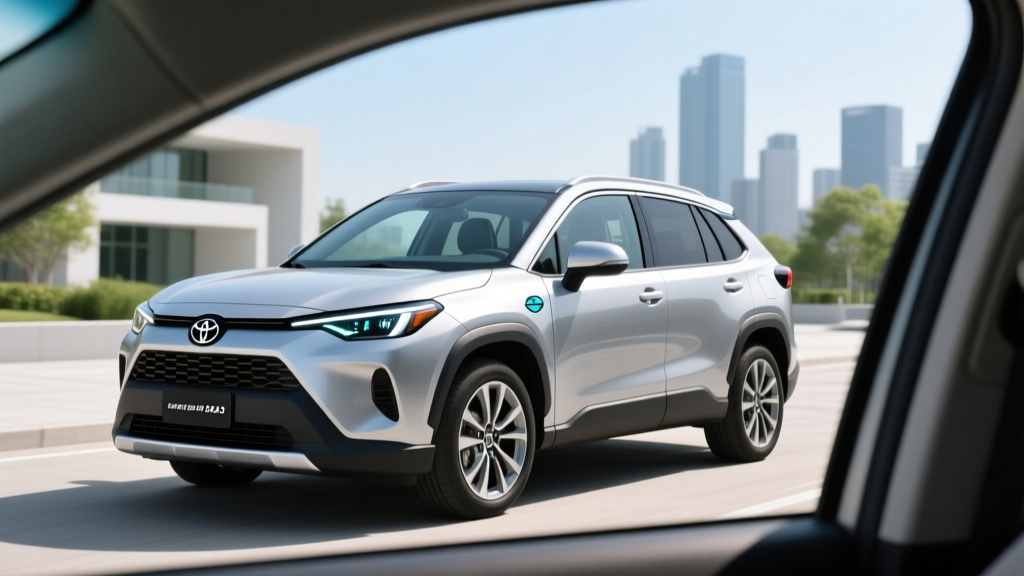
The 2016 Toyota RAV4 Hybrid Limited was a turning point for the compact hybrid SUV segment. Before this model year, Toyota's hybrid synergy drive had been mostly confined to sedans and hatchbacks. The RAV4 Hybrid brought proven hybrid efficiency to the crossover body style that American buyers actually wanted — and the Limited trim loaded it with features that rivaled luxury competitors at half the price. A decade later, this vehicle remains one of the most sought-after used hybrid SUVs on the market. Here is exactly what you need to know before buying one in 2026.
2016 Toyota RAV4 Hybrid Limited: Core Specifications
| Specification | Value |
|---|---|
| Powertrain Type | Conventional Hybrid (HEV) — no plug-in |
| Engine | 2.5L inline-4 Atkinson cycle |
| Combined System Horsepower | 194 hp |
| Electric Motor | Front: 105 kW / Rear: 50 kW (electronic AWD) |
| Hybrid Battery | 1.6 kWh nickel-metal hydride (NiMH) |
| Transmission | eCVT (planetary gearset) |
| EPA MPG (City / Hwy / Combined) | 34 / 31 / 33 |
| 0–60 mph | ~7.8 seconds |
| Drivetrain | AWD-i (electronic all-wheel drive) |
| Cargo Volume (behind rear seats) | 35.6 cu ft |
| Original MSRP (Limited trim) | ~$34,510 |
| Typical 2026 Used Price (80k–110k mi) | $15,500–$19,500 |
Fuel Economy: EPA vs Real-World MPG
The EPA rates the 2016 RAV4 Hybrid at 34 city / 31 highway / 33 combined MPG. These figures come from fueleconomy.gov, the official source for all EPA-certified fuel economy data.
But real-world results tell a more nuanced story — and it is mostly good news for city drivers.
| Driving Scenario | EPA Estimate | Typical Real-World |
|---|---|---|
| City (stop-and-go) | 34 MPG | 34–37 MPG |
| Highway (65–75 mph) | 31 MPG | 29–31 MPG |
| Combined mixed driving | 33 MPG | 32–35 MPG |
| Cold weather combined (<30°F) | — | 28–31 MPG |
The key insight: hybrid efficiency shines in the city, where the electric motor handles low-speed propulsion and regenerative braking recharges the battery. Highway driving is where conventional gas engines are already relatively efficient, narrowing the hybrid advantage.
HEV vs PHEV vs EV: Where Does the RAV4 Hybrid Fit?
The 2016 RAV4 Hybrid is a conventional hybrid electric vehicle (HEV). It is not a plug-in hybrid (PHEV) and not a battery electric vehicle (BEV). Understanding this distinction is critical before you buy.
HEV (This Vehicle)
Plug in? No
Electric-only driving: Brief low-speed assist only
Fuel source: Gasoline only
Battery: Small (~1.6 kWh), recharged by engine + regen braking
Best for: Drivers without home charging access who want better MPG
PHEV (e.g., RAV4 Prime)
Plug in? Yes
Electric-only range: 25–42 miles (model dependent)
Fuel source: Electricity + gasoline
Battery: Larger (~18 kWh), plug-in rechargeable
Best for: Drivers with home charging who want EV-like daily commutes
BEV (e.g., Tesla Model Y)
Plug in? Yes (required)
Electric-only range: 250–330+ miles
Fuel source: Electricity only
Battery: Large (60–82 kWh)
Best for: Drivers with reliable charging access ready to eliminate gas
The 2016 RAV4 Hybrid does not plug into any outlet. You never need to think about charging infrastructure, install a home charger, or plan routes around charging stations. You simply fill it with gasoline and drive — the hybrid system handles the rest automatically. This is its biggest advantage for buyers who lack Level 2 home charging access or who frequently travel to areas with sparse public charging networks.
Powertrain Deep Dive: How the Hybrid System Works
Toyota's Hybrid Synergy Drive in the 2016 RAV4 pairs a 2.5-liter Atkinson-cycle four-cylinder engine (150 hp on its own) with a front electric motor (105 kW / ~141 hp) and a rear electric motor (50 kW / ~67 hp). The combined system output is 194 horsepower — though peak engine and motor output do not occur simultaneously, which is why the combined figure is not a simple sum.
The eCVT transmission is not a traditional belt-and-cone continuously variable transmission. It uses a planetary gearset that seamlessly blends power from the engine and motors. There are no fixed gear ratios and no rubber band-like acceleration feel common in some competitors' CVTs. Acceleration from 0–60 mph takes approximately 7.8 seconds — adequate for highway merging and passing, though not sporty.
The AWD-i system is fully electronic. There is no mechanical driveshaft connecting the front and rear axles. Instead, the rear electric motor engages automatically when the system detects front-wheel slip or when additional traction is needed during acceleration. This means the rear wheels are electrically driven only when needed, reducing parasitic losses compared to a mechanical AWD system.
Hybrid Battery Longevity, Warranty, and Replacement Cost
The 2016 RAV4 Hybrid uses a 1.6 kWh nickel-metal hydride (NiMH) battery pack — not the lithium-ion chemistry found in newer hybrids and EVs. NiMH is less energy-dense but has a long track record of durability. Toyota's hybrid battery management system is conservative: it never allows the battery to fully charge or fully discharge, keeping the state of charge (SoC) within a narrow operating window that dramatically extends cycle life.
Real-world battery longevity data: Based on owner reports and fleet data compiled through 2025, the majority of 2016 RAV4 Hybrid batteries remain functional well past 150,000 miles. Many original batteries are still in service at 180,000–220,000 miles with only gradual capacity loss (typically 10–15% over 10 years). This is because the battery is small, the load on it is light, and Toyota's thermal management keeps it within safe operating temperatures.
Battery replacement cost in 2026:
- OEM new battery from Toyota: $3,000–$4,000 (parts + dealer labor)
- Refurbished/remanufactured battery: $1,500–$2,500 (installed at independent hybrid specialists)
- Individual module replacement: $500–$1,000 (if only 1–2 of the 28 NiMH modules have failed — a common repair for older Toyota hybrids)
The key takeaway: hybrid battery replacement is not the catastrophic expense that many prospective used-hybrid buyers fear. A refurbished pack or module-level repair is often less expensive than a single major repair on a conventional gas vehicle (such as a transmission rebuild or timing chain replacement).
2016 RAV4 Hybrid Limited: Trim Features and Equipment
The Limited was the top trim for the 2016 RAV4 Hybrid and came well-equipped by mid-2010s standards:
- SofTex synthetic leather upholstery with heated front seats
- 7-inch touchscreen with Entune Audio Plus and navigation
- Blind Spot Monitor (BSM) with Rear Cross-Traffic Alert (RCTA)
- Toyota Safety Sense P (TSS-P): pre-collision system, lane departure alert, automatic high beams, dynamic radar cruise control
- Power liftgate
- 18-inch alloy wheels
- Dual-zone automatic climate control
- Smart Key with push-button start
The inclusion of Toyota Safety Sense P was notable for 2016 — it made forward collision warning with automatic emergency braking standard on the Hybrid Limited, a feature many competitors still charged extra for. According to NHTSA, the 2016 RAV4 earned a 5-star overall safety rating.
Tax Credits and Incentives in 2026
The 2016 Toyota RAV4 Hybrid does not qualify for the federal §30D Clean Vehicle Credit. That credit applies only to plug-in electric vehicles (BEVs and PHEVs) that meet specific battery capacity, MSRP, buyer income, and critical-mineral sourcing requirements as outlined by the IRS. Conventional hybrids like this RAV4 have never been eligible for the federal EV tax credit.
When new, the 2016 RAV4 Hybrid did not qualify for any significant federal incentive. Some states offered modest hybrid rebates at the time (typically $250–$500), but most of these programs have ended or shifted exclusively to plug-in vehicles.
Used EV credit (IRC §25E): This credit, which provides up to $4,000 or 30% of the sale price (whichever is less) for qualifying used electrified vehicles, also applies only to BEVs and PHEVs — not conventional hybrids. The 2016 RAV4 Hybrid is excluded.
Bottom line: there are no federal tax credits available for purchasing a used 2016 RAV4 Hybrid in 2026. Check your state's energy office for any remaining local incentives, but do not expect them.
Ownership Costs: Fuel Savings vs a Gas RAV4
To understand the value proposition, compare the 2016 RAV4 Hybrid's fuel costs against the equivalent gas-only 2016 RAV4 (rated at 22 city / 29 highway / 25 combined MPG):
| Metric | 2016 RAV4 Hybrid (33 MPG) | 2016 RAV4 Gas AWD (25 MPG) |
|---|---|---|
| Annual fuel (15,000 mi/yr @ $3.30/gal) | $1,500 | $1,980 |
| 5-year fuel cost | $7,500 | $9,900 |
| 5-year fuel savings | $2,400 in favor of hybrid | |
| Cost per mile (fuel only) | $0.10 | $0.132 |
Over 5 years and 75,000 miles, the hybrid saves approximately $2,400 in fuel at $3.30/gallon. If gas prices rise to $4.00/gallon, savings increase to roughly $2,900. These savings help offset the used-market premium the Hybrid commands over the gas version — typically $1,500–$3,000 at similar mileage in 2026.
Insurance costs for the RAV4 Hybrid are comparable to the gas version, and maintenance costs are often lower because regenerative braking extends brake pad life significantly (many owners report original brake pads lasting 80,000+ miles), and the engine runs less, reducing oil degradation.
Pros and Cons at a Glance
✓ Pros
- Proven Toyota hybrid reliability — NiMH battery lasting 180k+ miles is common
- 33 MPG combined real-world; 34–37 MPG in city driving
- No charging infrastructure needed — just fill with gas
- Standard AWD-i for all-weather traction
- Toyota Safety Sense P standard on Limited
- Low brake wear from regenerative braking
- Strong resale value; holds price better than gas RAV4
✗ Cons
- No electric-only driving range — always burns gas
- No federal or state tax credits available
- Infotainment is dated (7-inch screen, no Apple CarPlay/Android Auto)
- Highway MPG (31) less impressive than city (34)
- Cargo space slightly reduced vs gas RAV4 (battery under rear seat)
- Limited trim pricing was steep when new; used prices reflect demand
- NiMH battery is older tech — less efficient than modern Li-ion packs
Who Should Buy the 2016 RAV4 Hybrid Limited in 2026?
Choose this hybrid if:
- You want 33+ MPG without changing your fueling habits or installing a charger
- You live in an apartment or area without reliable Level 2 home charging access
- You prioritize long-term reliability and low maintenance costs over performance
- You drive primarily in city or suburban conditions where hybrid efficiency peaks
- You need AWD for snow or rain but do not want the fuel penalty of a gas AWD SUV
- You want a used SUV under $20,000 with Toyota's proven powertrain durability
Look elsewhere if:
- You want any electric-only driving range — consider a RAV4 Prime (PHEV) or a BEV like the Hyundai Ioniq 5
- You want the latest infotainment with wireless CarPlay/Android Auto (this generation lacks both)
- You primarily drive highway miles — the hybrid advantage narrows at sustained high speeds
- You want to qualify for federal EV tax credits — only plug-in vehicles qualify under current IRS §30D rules
Frequently Asked Questions
How many MPG does the 2016 Toyota RAV4 Hybrid Limited get?
The EPA rates it at 34 city / 31 highway / 33 combined MPG. In real-world city driving, many owners achieve 34–37 MPG. Highway-only trips typically yield 29–31 MPG. Cold weather can reduce combined economy to 28–31 MPG.
Does the 2016 RAV4 Hybrid need to be plugged in?
No. This is a conventional hybrid (HEV), not a plug-in hybrid (PHEV). The 1.6 kWh battery is recharged entirely by the gasoline engine and regenerative braking. You never plug it in — you only refuel with gasoline.
Is the 2016 RAV4 Hybrid reliable, and what does a battery replacement cost?
Yes. Toyota's hybrid system is among the most reliable powertrains in the industry. The NiMH battery commonly lasts 180,000+ miles. If replacement is needed, a refurbished pack costs $1,500–$2,500 installed, and individual module repair can cost as little as $500–$1,000. The original hybrid battery warranty was 8 yr/100k mi (10 yr/150k mi in CARB states), though most have expired by 2026.
Does the 2016 RAV4 Hybrid qualify for any tax credit?
No. Federal tax credits (§30D for new, §25E for used) apply only to plug-in vehicles (BEVs and PHEVs). Conventional hybrids have never qualified. No significant state-level hybrid incentives remain active in most jurisdictions as of 2026.
How does the 2016 RAV4 Hybrid compare to the current RAV4 Hybrid?
The 2026 RAV4 Hybrid uses a more efficient lithium-ion battery, produces 219 hp (vs 194), and achieves an EPA-rated 41/38/40 MPG — a substantial improvement. It also features a modern 10.5-inch touchscreen with wireless Apple CarPlay and Android Auto. However, a new 2026 RAV4 Hybrid Limited starts above $40,000, while a used 2016 model can be found for $15,500–$19,500. The value proposition depends on your budget and how much you prioritize modern tech and peak efficiency.
What is the difference between the RAV4 Hybrid and the RAV4 Prime?
The RAV4 Prime is a plug-in hybrid (PHEV) with an 18.1 kWh lithium-ion battery that provides approximately 42 miles of electric-only range before the gas engine engages. It can be plugged in to recharge and qualifies for certain tax incentives. The 2016 RAV4 Hybrid is a conventional HEV with no plug, no electric-only range, and a much smaller 1.6 kWh NiMH battery. The Prime is significantly more expensive — expect $35,000+ used for a 2021–2023 model.