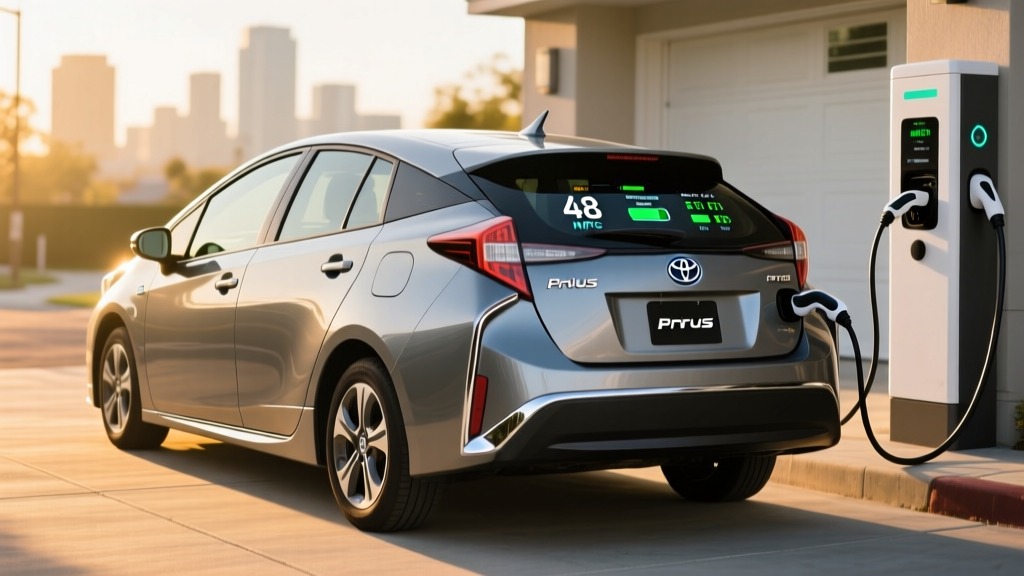
If you're researching used hybrids in 2026, the fourth-generation Toyota Prius remains one of the most fuel-efficient vehicles ever sold in the United States. Launched for the 2016 model year on Toyota's New Generation Architecture (TNGA) platform, this Prius introduced independent rear suspension, a lower center of gravity, and meaningful aerodynamic improvements over its predecessor. But the headline question for buyers remains the same: what kind of 2016 Toyota Prius hybrid MPG can you actually expect in daily driving?
This guide covers the EPA numbers, real-world fuel economy data, battery longevity, ownership costs, and how the 2016 Prius stacks up against modern hybrids, plug-in hybrids, and full EVs in 2026.
2016 Toyota Prius Hybrid MPG: EPA Estimates vs. Real-World Results
The 2016 Toyota Prius is a conventional hybrid electric vehicle (HEV) — it generates its own electricity through regenerative braking and the gasoline engine. It does not plug in. This is a critical distinction from the Prius Prime (PHEV), which debuted for the 2017 model year and can charge from an external power source.
Here are the official EPA fuel economy ratings for the 2016 Prius, broken down by trim configuration:
| Configuration | City MPG | Highway MPG | Combined MPG |
|---|---|---|---|
| Prius Two / Two Eco (15" wheels, no spare) | 58 | 53 | 56 |
| Prius Three / Four / Touring (17" wheels, spare tire) | 54 | 50 | 52 |
Powertrain Specifications: Engine, Motor, and Combined Output
The 2016 Prius uses Toyota's fourth-generation Hybrid Synergy Drive, pairing a 1.8-liter Atkinson-cycle four-cylinder gasoline engine with two motor-generators and a planetary gearset that functions as an electronically controlled continuously variable transmission (eCVT).
| Specification | Value |
|---|---|
| Engine | 1.8L 4-cyl Atkinson cycle (95 hp / 105 lb-ft) |
| Electric Motor (MG2 — drive motor) | 71 hp / 120 lb-ft |
| Net Combined System Output | 121 hp |
| Hybrid Battery (traction) | 0.75 kWh NiMH (Two Eco: 3.6 Ah Li-ion) |
| Transmission | eCVT (planetary gearset) |
| 0–60 mph | ~10.0 seconds |
| Curb Weight | 3,042–3,108 lbs (varies by trim) |
The 0.75 kWh traction battery is small by modern standards — it stores energy recovered from braking and deceleration, not from an external charger. This battery enables short electric-only bursts at low speeds (typically under 25 mph for roughly one mile), but the Prius HEV is not designed for meaningful electric-only driving. That's the domain of a PHEV.
HEV vs. PHEV vs. EV: Which Powertrain Fits Your Needs?
The 2016 Prius is a conventional hybrid. Understanding where it sits in the electrification spectrum helps clarify whether it's the right choice compared to a plug-in hybrid or full battery electric vehicle.
| Factor | HEV (2016 Prius) | PHEV (e.g., Prius Prime) | BEV (e.g., Tesla Model 3) |
|---|---|---|---|
| Plugs in? | No | Yes (Level 1/2) | Yes (Level 1/2/DC) |
| Electric-only range | ~1 mile at low speed | 25–44 miles (model dependent) | 250–400+ miles |
| Fuel / energy source | Gasoline only | Gasoline + grid electricity | Grid electricity only |
| Home charging needed? | No | Recommended for full benefit | Essential |
| Typical combined efficiency | 52–56 MPG | 127 MPGe (electric) / 54 MPG (gas) | 120–140 MPGe |
| Federal tax credit (new) | None | Up to $7,500 (§30D, if eligible) | Up to $7,500 (§30D, if eligible) |
| Used EV credit (up to $4,000) | Not eligible | Eligible (if qualifying PHEV) | Eligible |
Choose the 2016 Prius HEV if: You lack home charging access, want maximum simplicity with zero plug-in requirements, drive a mix of city and highway miles, and prioritize low purchase price and proven long-term reliability.
Choose a PHEV if: You have home Level 2 charging, your daily commute is under 30 miles round-trip (meaning you could drive mostly on electricity), but you still want a gasoline engine for longer road trips without range planning.
Choose a full EV if: You have reliable home or workplace charging, want zero tailpipe emissions, are willing to plan around DC fast charging on road trips, and want to access current federal tax credits.
2016 Prius Battery Warranty, Lifespan, and Replacement Costs
Battery longevity is the single most common concern among used hybrid buyers. The 2016 Prius uses a nickel-metal hydride (NiMH) traction battery in most trims (the Two Eco trim uses a smaller lithium-ion pack). Toyota's hybrid battery warranty coverage is among the strongest in the industry.
• Standard states: 8 years / 100,000 miles
• CARB states (CA, NY, MA, and others adopting California emissions standards): 10 years / 150,000 miles
Source: Toyota warranty guide. Coverage transfers to subsequent owners for the remainder of the original term.
Real-World Battery Longevity Data
The fourth-generation Prius has an excellent track record for battery durability. Key data points:
- iFixit and taxi fleet analyses show many Gen 4 Prius batteries retaining 85%+ capacity beyond 200,000 miles.
- Common failure pattern: NiMH batteries in the Prius typically degrade gradually rather than failing catastrophically. A 15-year-old pack may show 10–20% capacity loss, which translates to slightly lower MPG and more frequent engine engagement — not a stranded vehicle.
- Heat is the primary degradation factor. Vehicles in consistently hot climates (Arizona, Texas, Florida) see faster degradation than those in moderate climates. The Gen 4 Prius relocated the battery cooling intake for improved airflow.
Battery Replacement Cost (2026 Estimates)
| Option | Estimated Cost | Notes |
|---|---|---|
| New OEM Toyota battery | $2,200–$2,800 (parts + labor) | Dealership-installed; 12-month warranty on replacement |
| Refurbished / reconditioned battery | $800–$1,500 | Individual module replacement; variable quality |
| Aftermarket new battery (e.g., Dorman) | $1,800–$2,400 | Available through independent shops; 3-year warranty typical |
| Individual cell/module replacement | $300–$600 | Requires hybrid-savvy technician; replaces only failed modules |
For context, a well-maintained 2016 Prius with 100,000–130,000 miles is statistically unlikely to need a battery replacement before 180,000+ miles. The Gen 4's thermal management improvements over the Gen 3 (2010–2015) significantly reduced early battery failure rates.
Ownership Economics: What a 2016 Prius Costs to Run in 2026
With the used Prius market having depreciated significantly from new-vehicle MSRP (which ranged from $24,200 to $30,000 depending on trim), the 2016 Prius now represents one of the lowest cost-per-mile vehicles available.
| Cost Category | 2016 Prius (52 MPG combined) | 2016 Toyota Camry (28 MPG combined) |
|---|---|---|
| Annual fuel cost (at $3.40/gal avg) | ~$981 | ~$1,821 |
| 5-year fuel total | ~$4,905 | ~$9,107 |
| Annual maintenance | ~$350–$450 | ~$450–$600 |
| Insurance (avg annual) | ~$1,100–$1,400 | ~$1,100–$1,400 |
| 5-year fuel savings vs. Camry | ~$4,200 | |
The Prius also benefits from exceptionally low maintenance requirements: no timing belt (chain-driven), regenerative braking extends pad life to 80,000–100,000+ miles, and the eCVT has no traditional transmission fluid to change on most service schedules.
Tax Credit Eligibility
The 2016 Toyota Prius (conventional HEV) does not qualify for the federal §30D new clean vehicle credit or the §25E used clean vehicle credit. These credits apply only to plug-in hybrids (PHEVs) and battery electric vehicles (BEVs) with sufficient battery capacity and meeting sourcing requirements. The standard Prius HEV's battery is too small to meet the minimum 4 kWh threshold that §30D historically required, and it lacks plug-in capability.
If tax credit eligibility is a priority, consider the Prius Prime (PHEV, 2017+ model years) or a used BEV, which may qualify for the up-to-$4,000 used clean vehicle credit under §25E — subject to income caps ($75,000 single / $150,000 joint), a $25,000 maximum sale price, and dealer reporting requirements. Verify current eligibility at irs.gov.
Reliability, Safety, and Known Issues
The 2016 Prius benefits from Toyota's longstanding hybrid reliability reputation. The Gen 4 model specifically addressed several Gen 3 complaints with a stiffer chassis, improved ride quality, and revised thermal management.
Safety Ratings
- NHTSA: 5-Star Overall Safety Rating (source: nhtsa.gov)
- IIHS: Top Safety Pick+ (when equipped with available Pre-Collision System and LED headlights)
Known Issues to Inspect (Used Buyer Checklist)
- Head gasket: Rare on Gen 4 (a Gen 3 problem largely resolved), but check for coolant loss or white exhaust smoke on high-mileage examples.
- EGR valve clogging: Carbon buildup in the exhaust gas recirculation system can cause rough idle around 100,000–120,000 miles. A $150–$300 cleaning resolves this.
- Oil consumption: Some early Gen 4 engines (2016–2017) showed slightly higher oil consumption. Check dipstick at purchase and monitor between changes.
- 12V auxiliary battery: Located in the rear cargo area; AGM type, ~$200 replacement every 4–6 years. A dead 12V battery prevents the hybrid system from booting — keep jumper procedures in your glovebox.
- Inverter coolant pump: Inspect for leaks or check engine codes related to the inverter cooling system. Less common on Gen 4 than Gen 3.
Pros and Cons of the 2016 Prius in 2026
Pros
- 52–56 MPG combined EPA; often exceeded in city driving
- Proven hybrid system with 200,000+ mile battery longevity
- Excellent safety ratings (NHTSA 5-star, IIHS TSP+)
- Low maintenance costs (no timing belt, extended brake life)
- No plug-in requirement — works with any lifestyle
- Strong resale value and parts availability
- Improved ride quality over Gen 3 (TNGA platform)
Cons
- Modest 121 hp — 0–60 in ~10 seconds; not a performance vehicle
- No plug-in capability; cannot access HOV lanes or tax credits
- Polarizing exterior design (subjective)
- Infotainment system dated by 2026 standards (no wireless CarPlay/Android Auto)
- Rear visibility compromised by split rear window and spoiler
- Cargo space (21.6 cu ft) smaller than some compact crossovers
- Highway MPG drops noticeably above 70 mph
Frequently Asked Questions
How many MPG does the 2016 Toyota Prius actually get?
The EPA rates the most efficient 2016 Prius (Two Eco trim) at 58 city / 53 highway / 56 combined. Other trims with 17-inch wheels are rated 54/50/52. In real-world driving, owners commonly report 48–55 MPG combined, with city driving often exceeding the EPA estimate and sustained highway driving at 75+ mph falling to 44–48 MPG. Cold weather reduces efficiency by approximately 5–10%.
Does the 2016 Prius need to be plugged in?
No. The 2016 Prius is a conventional hybrid (HEV). It charges its own small battery through regenerative braking and the gasoline engine. You never plug it in. If you want plug-in capability with electric-only range, look at the Prius Prime (2017+ model years), which is a plug-in hybrid (PHEV).
How long will the 2016 Prius hybrid battery last, and what does replacement cost?
Toyota warranted the hybrid battery for 8 years/100,000 miles (10 years/150,000 miles in CARB states). Real-world data shows Gen 4 Prius batteries commonly lasting 180,000–250,000+ miles before significant degradation. A new OEM replacement costs $2,200–$2,800 installed; refurbished options range from $800–$1,500. Individual module replacement by a hybrid specialist can cost as little as $300–$600.
Is the 2016 Prius reliable compared to other used cars?
Yes. The 2016 Prius ranks among the most reliable vehicles in its class. The Gen 4 Hybrid Synergy Drive has fewer wear components than a conventional powertrain — no starter motor, no alternator, no traditional transmission, no serpentine belt, and regenerative braking dramatically extends pad life. The most common maintenance items are standard (oil changes, cabin filter, brake fluid) plus EGR system cleaning around 100,000+ miles.
Does the 2016 Prius qualify for any tax credit?
No. As a conventional hybrid without plug-in capability, the 2016 Prius does not qualify for the federal §30D new vehicle credit or the §25E used clean vehicle credit. These incentives are reserved for plug-in hybrids and battery electric vehicles. Some states may offer minor incentives for high-efficiency vehicles, but these vary by jurisdiction — check your state's energy office for current programs.
Should I buy a 2016 Prius or a newer hybrid/EV in 2026?
If your budget is under $18,000 and you lack home charging access, the 2016 Prius is arguably the most rational used car purchase available — unmatched fuel economy, low maintenance, and proven longevity. If you have home charging and a higher budget ($25,000+), a newer PHEV like the 2023+ Prius Prime (44 miles electric-only, 127 MPGe) or a used BEV like the Chevrolet Bolt EV offers lower running costs and potential tax credit eligibility. The 2016 Prius wins on simplicity and upfront value; newer electrified options win on technology, electric-only capability, and incentive access.