Quick Verdict: Is the 2016 RAV4 Hybrid XLE Still a Smart Buy?
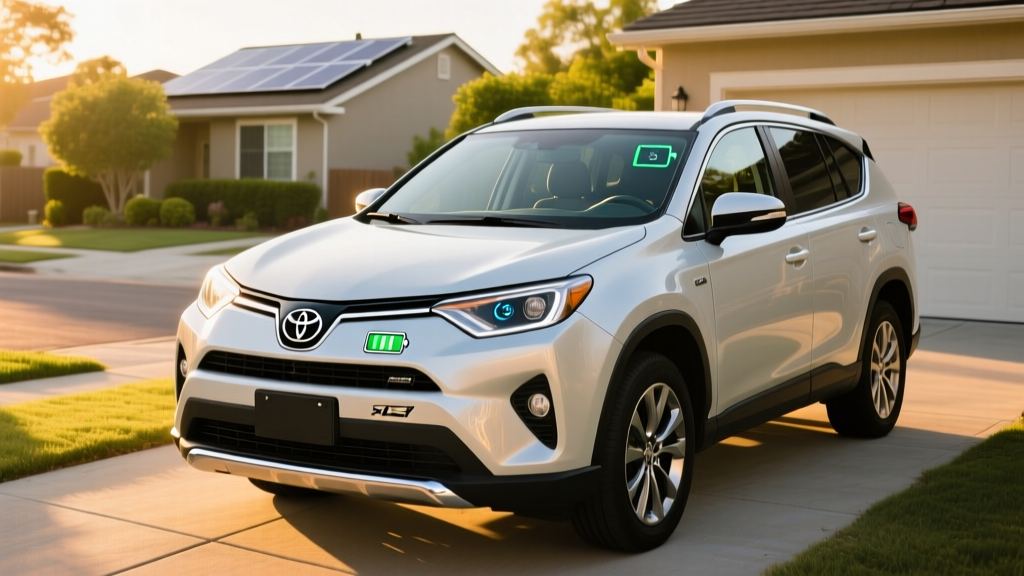
The 2016 Toyota RAV4 Hybrid XLE remains one of the most practical used hybrid SUVs on the market a decade after its debut. With an EPA-rated 32 MPG combined, standard all-wheel drive, and Toyota's proven hybrid reliability, it delivers consistent fuel savings without requiring any change in driving habits — no plugs, no range anxiety, no charging infrastructure needed. For 2026 buyers navigating higher new-car prices and uncertain EV charging access, a well-maintained 2016 RAV4 Hybrid XLE at $14,000–$19,000 on the used market represents a compelling value proposition. But the hybrid battery is now entering its high-mileage window, and understanding replacement costs and warranty coverage is essential before signing the paperwork.
| Specification | Value |
|---|---|
| Powertrain | 2.5L 4-cyl Atkinson-cycle + 2 electric motors (AWD-i) |
| Combined Horsepower | 194 HP (net system) |
| Transmission | eCVT (planetary gearset) |
| EPA Fuel Economy | 34 city / 31 highway / 32 combined MPG |
| Hybrid Battery | 1.6 kWh Nickel-Metal Hydride (NiMH), sealed |
| Drivetrain | Electronic On-Demand AWD (rear electric motor) |
| 0–60 MPH | ~7.8 seconds |
| Cargo Volume | 35.6 cu ft (rear seats up) / 72.6 cu ft (folded) |
| Towing Capacity | 1,750 lbs |
| Original MSRP (2016) | $29,270 (XLE AWD-i) |
| Typical Used Price (2026) | $14,000–$19,000 depending on mileage/condition |
| Hybrid Battery Warranty (Original) | 8 years / 100,000 miles (10 yr/150k in CARB states) |
How Many MPG Does the 2016 RAV4 Hybrid XLE Get?
The EPA rates the 2016 RAV4 Hybrid XLE at 34 MPG city, 31 MPG highway, and 32 MPG combined (fueleconomy.gov). That city-dominant split is characteristic of Toyota's Hybrid Synergy Drive system, which relies heavily on electric motor assist at low speeds and recaptures energy through regenerative braking during stop-and-go driving.
| Driving Scenario | MPG |
|---|---|
| EPA City | 34 MPG |
| EPA Highway | 31 MPG |
| EPA Combined | 32 MPG |
| Real-World City (owner-reported average) | 33–37 MPG |
| Real-World Highway (70+ MPH, flat terrain) | 28–31 MPG |
| Real-World Highway (cold weather, winter fuel blend) | 26–29 MPG |
| Real-World Combined (mixed driving, moderate climate) | 30–34 MPG |
Many owners report exceeding the EPA city figure in warm-weather urban driving, where the hybrid system operates at peak efficiency. Highway fuel economy, however, tends to fall below the sticker — especially above 70 MPH, in cold weather, or with roof cargo boxes that compromise aerodynamics. Fuelly.com owner data clusters around 30–33 MPG combined for mixed driving, which aligns closely with EPA expectations.
For comparison, the gas-only 2016 RAV4 AWD with the 2.5L engine and 6-speed automatic is rated at 22 city / 29 highway / 25 combined. The hybrid's 7 MPG combined advantage translates to roughly $400–$550 in annual fuel savings for a driver covering 15,000 miles per year at $3.25/gallon regular unleaded.
Powertrain Deep Dive: How Toyota's AWD-i Hybrid System Works
The 2016 RAV4 Hybrid uses Toyota's third-generation Hybrid Synergy Drive with an AWD-i (all-wheel drive intelligent) layout. Here's how the power flows:
- Front axle: A 2.5-liter Atkinson-cycle 4-cylinder engine (150 HP, 152 lb-ft torque) paired with a front electric motor (105 kW / 141 HP) through a planetary eCVT gearset. The combined net output is 194 HP.
- Rear axle: A separate 50 kW (67 HP) electric motor drives the rear wheels on demand — there is no mechanical driveshaft connecting the engine to the rear axle. This is a key distinction from conventional AWD systems.
- Hybrid battery: A 1.6 kWh (gross) Nickel-Metal Hydride (NiMH) pack located beneath the rear seat. This is a conventional hybrid — the battery charges exclusively through regenerative braking and engine-driven generation. There is no plug, no external charging port, and no electric-only driving mode beyond very low-speed creep (typically under 1 mile at speeds below ~25 MPH).
The eCVT is not a belt-and-cone CVT like those found in Nissan or Subaru products. Toyota's planetary gearset design has no belts or clutches to wear out, which is a significant factor in the system's long-term durability. The engine can shut off entirely at stops and during low-load coasting, contributing to the strong city MPG figure.
HEV vs PHEV vs EV — Which Fits You?
| Factor | HEV (like this RAV4 Hybrid) | PHEV (e.g., RAV4 Prime) | Full EV (e.g., Tesla Model Y) |
|---|---|---|---|
| Plug-in required? | No — gas only | Yes — for max savings | Yes — always |
| Electric-only range | ~1 mile at low speed | 35–42 miles | 260–330+ miles |
| Home charging needed? | No | Recommended (Level 2) | Essential |
| Federal tax credit (new) | None | Up to $7,500 (§30D) | Up to $7,500 (§30D) |
| Used tax credit (§25E) | No | No (PHEVs excluded for 2024+) | Up to $4,000 |
| Maintenance complexity | Low (engine + hybrid) | Moderate (engine + EV systems) | Lowest (no engine) |
| Best for | No home charger, long trips | Short commute + home charger | Home charger + mostly under 250 mi/day |
Battery Lifespan, Reliability, and Replacement Costs
This is the question every used-hybrid buyer asks — and it should be. The 2016 RAV4 Hybrid's 1.6 kWh NiMH battery is now 10 years old. Here's what the data tells us:
Hybrid Battery Warranty Coverage
Original warranty: 8 years / 100,000 miles nationwide; 10 years / 150,000 miles in CARB states (CA, CT, ME, MD, MA, NJ, NY, OR, RI, VT, WA, and others adopting California emissions standards).
2026 status: Most 2016 RAV4 Hybrids have exceeded the 8-year/100,000-mile warranty window. If the vehicle was originally sold in a CARB state and has under 150,000 miles, some warranty coverage may still apply — verify with a Toyota dealer using the VIN.
Real-world battery longevity: Toyota's NiMH hybrid batteries have a strong track record. Data from owner communities and repair databases suggests these packs commonly last 150,000–200,000+ miles before significant capacity loss triggers a check-engine light or noticeable fuel economy decline. The NiMH chemistry is less energy-dense than modern lithium-ion but is notably tolerant of heat and deep cycling — two factors that degrade EV batteries faster.
Replacement costs in 2026:
- New OEM battery (Toyota dealer): $3,000–$4,500 installed
- Remanufactured battery (e.g., Green Bean Battery, Dorman): $1,500–$2,500 installed, typically with a 3–5 year warranty
- Individual module replacement (independent hybrid specialist): $500–$1,200, replacing only the weak cells rather than the full pack
Before purchasing, request a hybrid battery health check from a Toyota dealer or qualified hybrid technician. They can pull the battery's State of Health (SoH) data, check for voltage imbalance between modules, and review any stored diagnostic codes. An OBD-II scanner app like Dr. Prius or Hybrid Assistant can also perform a battery life test in about 15 minutes for a DIY assessment.
Overall Vehicle Reliability
The 2016 RAV4 Hybrid carries a strong reliability record. The A25A-FXS engine is a proven Atkinson-cycle design shared across Toyota's hybrid lineup. The eCVT has no friction bands or torque converter to fail. Consumer Reports has historically rated the RAV4 Hybrid above average for reliability, and the model has no widespread pattern failures beyond normal wear items.
Common issues to watch for on a 10-year-old example:
- 12V auxiliary battery: Located in the rear cargo area; typical lifespan 4–6 years. A weak 12V battery can prevent the hybrid system from booting, even if the traction battery is healthy.
- Brake actuator assembly: Some 2016 RAV4 Hybrids had a recall (Toyota recall G0J/G1J) related to the brake booster assembly. Verify recall completion via the NHTSA recall lookup.
- Inverter coolant pump: Generally reliable but worth checking service records.
- AWD-i rear motor: Rare failures, but check for unusual noise from the rear axle during test drive.
Pricing, Ownership Costs, and Tax Credit Eligibility
The 2016 RAV4 Hybrid XLE originally carried an MSRP of $29,270 (including destination). In 2026, used examples trade between $14,000 and $19,000 depending on mileage, condition, and market. Lower-mileage examples (under 80,000 miles) with clean titles and documented service history command the top of that range.
Tax Credit Reality for This Vehicle
Here's where buyer expectations need calibration:
- Federal §30D new-vehicle credit: Not applicable — this credit applies only to new vehicle purchases.
- Federal §25E used-EV credit (up to $4,000): This credit applies to used battery electric vehicles and some plug-in hybrids purchased from a dealer for $25,000 or less. However, conventional hybrids (HEVs) like the RAV4 Hybrid do not qualify — the §25E credit requires the vehicle to have a plug. See IRS §25E guidelines for current eligibility rules.
- State incentives: A handful of states offer used-hybrid incentives or HOV lane access, but these vary widely by jurisdiction. Check your state's energy office or DMV for current programs.
The absence of tax credits is offset by the vehicle's lower purchase price and strong fuel economy. Over 5 years of ownership at 15,000 miles/year, a 2016 RAV4 Hybrid XLE can save approximately $2,000–$2,750 in fuel costs compared to the gas-only RAV4 AWD — and far more compared to a non-hybrid SUV in its class.
Who Should Choose the 2016 RAV4 Hybrid XLE?
Pros
- Proven hybrid system with 150k–200k+ mile battery lifespan
- 32 MPG combined — strong for a compact AWD SUV
- No plug required — works with any lifestyle or housing situation
- Standard AWD-i (rear electric motor, no mechanical linkage to fail)
- Comfortable ride, good visibility, practical cargo space
- Low maintenance: no timing belt, eCVT has no wear bands
- Strong resale value retention for a 10-year-old vehicle
Cons
- Hybrid battery nearing end of original warranty window
- Highway MPG drops noticeably above 70 MPH
- Infotainment is dated (no Apple CarPlay/Android Auto on 2016 model)
- No DC fast charging or plug-in capability
- Modest 194 HP — adequate but not quick for highway merging
- Towing limited to 1,750 lbs
- Not eligible for federal EV or used-EV tax credits
Choose the 2016 RAV4 Hybrid XLE If:
- You want a fuel-efficient AWD SUV without changing your fueling habits
- You lack access to home or workplace charging (apartment, street parking)
- You regularly take road trips over 300 miles and don't want to plan around chargers
- Your budget is $14,000–$19,000 and you want Toyota reliability
- Your daily commute is under 50 miles with mixed city/highway driving
Consider a PHEV or Full EV Instead If:
- You have Level 2 home charging and a short commute (PHEV like the RAV4 Prime gives 42 miles electric-only)
- You want to eliminate gas expenses entirely (full EV with home solar)
- You want the latest driver-assistance tech and infotainment (2024+ models)
- You want federal tax credit eligibility on a new or qualifying used purchase
What to Inspect Before Buying a Used 2016 RAV4 Hybrid
If you're evaluating a specific vehicle, prioritize these checks:
- Hybrid battery health report: Dealer or specialist scan for SoH, module voltage spread, and stored codes.
- Recall completion: Verify brake actuator recall (G0J/G1J) and any open campaigns via NHTSA VIN lookup.
- 12V battery age: If over 4 years old, budget $180–$250 for replacement.
- Service records: Look for regular oil changes (0W-20 synthetic, every 10,000 miles) and inverter coolant service.
- Test drive observations: Listen for unusual rear-axle whine (AWD-i motor), feel for smooth engine stop/start transitions, and verify regenerative braking feel is consistent.
- Tire wear pattern: Uneven rear tire wear could indicate AWD-i system issues or neglected alignment.
Frequently Asked Questions
How many MPG does the 2016 RAV4 Hybrid XLE get in real-world driving?
The EPA rates it at 34 city / 31 highway / 32 combined. Most owners report 30–34 MPG combined in mixed driving, with city MPG often exceeding the EPA estimate in warm weather. Highway-only driving above 70 MPH typically yields 28–31 MPG, and cold weather can reduce combined economy to 26–29 MPG.
Does the 2016 RAV4 Hybrid need to be plugged in?
No. This is a conventional hybrid (HEV), not a plug-in hybrid (PHEV). The 1.6 kWh NiMH battery charges entirely through regenerative braking and the gasoline engine. You fuel it exactly like a gas car — there is no charging port.
How long does the hybrid battery last, and what does replacement cost?
Toyota's NiMH hybrid batteries commonly last 150,000–200,000+ miles. A new OEM replacement costs $3,000–$4,500 installed. Remanufactured options run $1,500–$2,500, and individual module replacement by a specialist can be $500–$1,200.
Is the 2016 RAV4 Hybrid eligible for any federal tax credit?
No. The federal §30D new-vehicle credit applies only to new purchases, and the §25E used-vehicle credit requires a plug-in vehicle (BEV or PHEV). Conventional hybrids like the RAV4 Hybrid do not qualify for either. Some state-level incentives may apply — check your local programs.
How does the 2016 RAV4 Hybrid compare to the RAV4 Prime (PHEV)?
The RAV4 Prime (introduced for 2021) is a plug-in hybrid with a larger 18.1 kWh lithium-ion battery, 42 miles of electric-only range, 302 combined HP, and available DC fast charging. It qualifies for federal tax credits when purchased new. However, used RAV4 Primes command $30,000–$38,000+ in 2026 — roughly double the price of a 2016 RAV4 Hybrid XLE. The Prime is the better choice if you have home charging and a short commute; the 2016 Hybrid XLE is the budget-friendly, no-plug-needed alternative.
What's the difference between the XLE and Limited trims for 2016?
The XLE includes SofTex seats, dual-zone climate, blind-spot monitoring, rear cross-traffic alert, and a 7-inch touchscreen. The Limited adds leather, heated front seats, navigation, a power liftgate, and 18-inch wheels. Both share the identical hybrid powertrain and EPA ratings. The XLE represents the better value on the used market, as the Limited's additional features don't significantly impact reliability or fuel economy.
Can I tow with the 2016 RAV4 Hybrid?
Yes, but capacity is limited to 1,750 lbs — adequate for a small utility trailer or a pair of jet skis, but not for a camper or boat. The gas-only 2016 RAV4 is also rated at 1,750 lbs (some earlier model years were rated at 1,500 lbs for the hybrid; verify the door-jamb sticker on the specific vehicle).