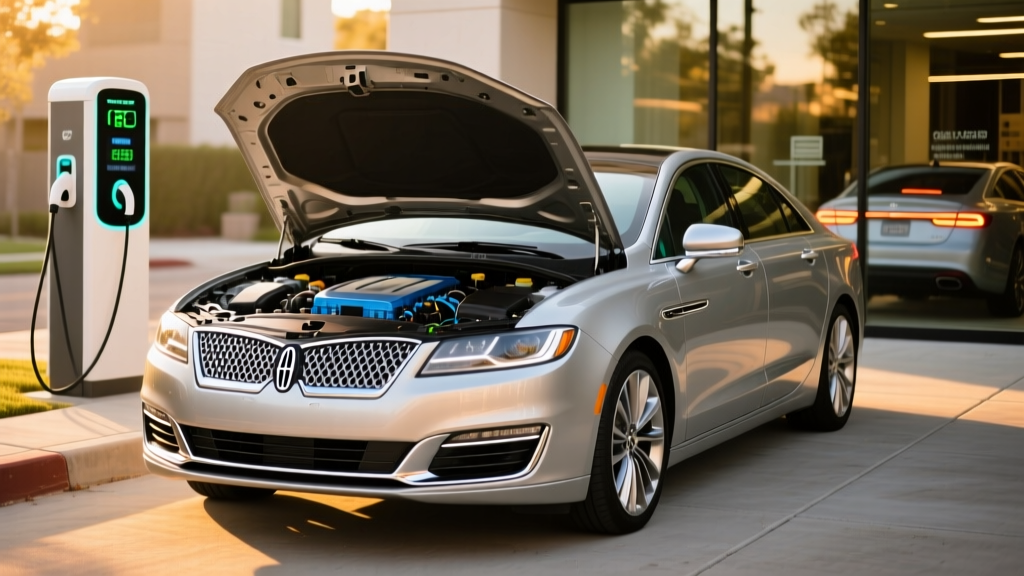
The 2016 Lincoln MKZ Hybrid occupies a specific niche in the used-car market: a luxury midsize sedan that delivers Prius-rivaling efficiency without the economy-car stigma. A decade after its debut, buyers searching for a 2016 Lincoln hybrid are typically weighing it against newer PHEVs, full EVs, and conventional gas sedans. This guide breaks down the MKZ Hybrid's powertrain, real-world fuel economy, battery durability, and 2026 ownership economics so you can decide whether this aging but capable hybrid still earns a spot in your driveway.
HEV vs PHEV: Where the 2016 MKZ Hybrid Fits
Lincoln only offered the 2016 MKZ as a conventional hybrid (HEV) — not a plug-in hybrid. This is a critical distinction that affects how you use and fuel the car:
| Feature | 2016 MKZ Hybrid (HEV) | Typical PHEV (e.g., 2026 Chrysler Pacifica Hybrid) |
|---|---|---|
| Plug-in charging | No — charges via engine and regenerative braking only | Yes — 16 kWh battery, ~32 mi electric-only |
| Electric-only driving | Brief low-speed EV mode (~1 mi) | 32+ miles on battery alone |
| Fueling | Gasoline only (87 octane) | Gasoline + electricity |
| Federal tax credit (new) | Never eligible | Up to $7,500 under §30D (when new) |
| Ideal use case | High-mileage commuters without home charging | Short-commute drivers with home Level 2 |
The MKZ Hybrid never offered a plug. You simply fill the 16.5-gallon tank with regular unleaded and let the hybrid system optimize the rest. For buyers without garage access or the ability to install a Level 2 charger, this is actually an advantage — zero behavioral change required.
Fuel Economy: EPA Ratings vs Real-World MPG
The EPA rated the 2016 Lincoln MKZ Hybrid at 40 MPG combined, with a 40 city / 39 highway split — one of the highest ratings for any luxury-branded vehicle that year. But how does that translate to actual driving?
| Driving Scenario | EPA Estimate | Real-World Expectation |
|---|---|---|
| City (stop-and-go) | 40 MPG | 41–45 MPG (regen braking excels here) |
| Highway (65–75 mph) | 39 MPG | 34–37 MPG (aero drag, sustained ICE use) |
| Combined (mixed) | 40 MPG | 36–41 MPG (varies by climate and driving style) |
| Cold weather (below 30°F) | N/A | 32–36 MPG (engine runs more for cabin heat) |
The MKZ Hybrid's Atkinson-cycle 2.0L engine paired with its electric motor is optimized for urban driving. Like the Ford Fusion Hybrid it shares a platform with, the MKZ often exceeds its EPA city rating in real-world stop-and-go traffic because regenerative braking recovers energy that gas cars waste as heat. Highway driving is the opposite story — sustained speeds above 70 mph keep the gasoline engine running continuously, and the sedan's 3,700-lb curb weight works against it.
According to fueleconomy.gov, the 2016 MKZ Hybrid's combined 40 MPG translates to an estimated annual fuel cost of roughly $1,450 at 15,000 miles/year and $3.50/gallon — a significant advantage over the non-hybrid 2.0L EcoBoost MKZ, rated at 26 MPG combined (~$2,230/year).
Powertrain and Performance Specs
| Specification | 2016 Lincoln MKZ Hybrid |
|---|---|
| Engine | 2.0L Atkinson-cycle inline-4 |
| Engine output | 141 HP @ 6,000 rpm / 129 lb-ft torque |
| Electric motor | Permanent-magnet AC synchronous, 88 kW (118 HP) |
| Net system horsepower | 188 HP combined |
| Transmission | eCVT (planetary gearset, no fixed gears) |
| Drivetrain | Front-wheel drive (AWD not available on hybrid) |
| 0–60 mph | ~8.5 seconds |
| Battery | 1.4 kWh lithium-ion (sealed, air-cooled) |
| Fuel tank | 16.5 gallons (87 octane regular) |
| Total driving range | ~660 miles (EPA combined) |
| Curb weight | ~3,713 lbs |
The 188 combined horsepower is adequate for merging and passing but won't thrill anyone coming from a 3.7L V6 MKZ. The eCVT operates without shift shock — it's smooth and linear, though the engine can drone under hard acceleration as the planetary gearset holds RPMs high. This is normal hybrid behavior, not a defect.
One limitation worth noting: AWD was not available on the 2016 MKZ Hybrid. If you live in a snow-belt state and want all-wheel drive, you'd need the EcoBoost AWD variant (which sacrifices ~14 MPG) or look at a different model entirely.
Battery Longevity, Warranty, and Replacement Costs
The 2016 MKZ Hybrid uses a compact 1.4 kWh lithium-ion battery pack mounted behind the rear seats. Unlike full EVs with 60–100 kWh packs, this small buffer is designed for frequent shallow cycling — absorbing regenerative braking energy and assisting acceleration — rather than deep discharge cycles. This operating pattern is inherently easier on battery chemistry.
Real-world durability data is encouraging. The Ford/Lincoln hybrid system, shared with the Fusion Hybrid and C-Max, has proven robust in taxi and fleet service, with many examples surpassing 200,000 miles on the original battery pack. Degradation in a 1.4 kWh HEV battery manifests as slightly reduced EV-mode capability and marginally lower fuel economy — not the dramatic range loss you'd see in a full EV.
If replacement is needed, expect these costs in 2026:
- OEM dealer replacement: $2,500–$3,800 (part + labor)
- Refurbished/remanufactured pack: $1,200–$2,000 (installed at an independent hybrid specialist)
- Individual cell/module replacement: $400–$800 (if only one or two modules have failed — a viable option with the right technician)
Before purchasing any used 2016 MKZ Hybrid, have a qualified technician scan the hybrid battery's State of Health (SoH) using Ford's IDS tool or an equivalent OBD-II hybrid diagnostic. A healthy pack should show balanced cell voltages (within 0.2V of each other) and minimal internal resistance deviation.
Used Pricing and Tax Credit Reality
As of early 2026, the 2016 Lincoln MKZ Hybrid trades in the used market at approximately:
- $9,000–$12,000 — examples with 90,000–130,000 miles, average condition
- $12,000–$16,000 — examples with 50,000–90,000 miles, well-maintained, Reserve or Black Label trims
- $16,000–$19,000 — low-mileage (<50,000 mi) examples, dealer-certified, top trims
Regarding tax incentives: the 2016 MKZ Hybrid does not qualify for the federal §30D new clean vehicle credit, as it was never a plug-in vehicle. The IRS restricts §30D credits to BEVs and PHEVs with sufficient battery capacity (IRS §30D guidelines). However, depending on your state, you may find:
- Reduced registration fees for hybrid vehicles in some states
- Access to HOV lane stickers (varies by state; many have expired for older hybrids)
- No state-level purchase incentives for used conventional HEVs
If tax credits are a priority, you'd need to look at a used PHEV (eligible for the up-to-$4,000 used EV credit under §25E, subject to income caps, dealer reporting, and a $25,000 maximum sale price) or a new PHEV/BEV for the full §30D credit.
Ownership Economics: 5-Year Cost Projection
Here's what five years of ownership might look like for a 2016 MKZ Hybrid purchased at $12,000 with 80,000 miles, driven 15,000 miles/year:
| Cost Category | 5-Year Estimate | Notes |
|---|---|---|
| Purchase price | $12,000 | Mid-range example, private party or independent dealer |
| Fuel (gasoline) | $7,250 | ~38 MPG real-world avg, $3.50/gal, 75,000 miles |
| Insurance | $6,500–$8,500 | $1,300–$1,700/year (varies by state, driver profile) |
| Maintenance | $3,000–$4,500 | Oil changes, brakes (last longer due to regen), tires, fluid |
| Potential hybrid battery | $0–$2,000 | Most packs survive past 150k mi; budget for contingency |
| Depreciation | $4,000–$6,000 | Resale value at ~155,000 miles |
| Total 5-year cost | $32,750–$40,250 | ~$6,550–$8,050/year all-in |
Compared to a 2016 MKZ 2.0L EcoBoost (26 MPG combined), the hybrid saves approximately $3,900 in fuel over five years / 75,000 miles — enough to offset a modestly higher purchase premium and any insurance differential.
Who Should Buy the 2016 Lincoln MKZ Hybrid?
Reasons to Buy
- 40 MPG combined is exceptional for a luxury sedan — real savings at the pump
- Quiet, comfortable ride with Lincoln's signature cushy suspension tuning
- No plug-in required — ideal for apartment dwellers and street parkers
- Strong reliability record for the Ford hybrid powertrain
- Low used pricing — well-equipped examples under $15,000
- 660-mile total range eliminates any range anxiety
Reasons to Pass
- No AWD availability on the hybrid variant
- Modest 188 HP — adequate, not quick (8.5s to 60 mph)
- Trunk space reduced by battery placement (11.1 cu ft vs 15.4 in gas model)
- Infotainment (SYNC 3) feels dated by 2026 standards
- No federal tax credit eligibility
- Out-of-warranty hybrid battery is a financial risk at high mileage
Decision Framework
Choose the 2016 MKZ Hybrid if: You drive 15,000+ miles/year in mixed/city conditions, lack access to plug-in charging, want luxury comfort, and prioritize low fuel costs over performance or the latest tech.
Choose a PHEV instead if: Your daily commute is under 30 miles, you can install a Level 2 charger at home, and you want electric-only driving for most trips with gas backup for road trips.
Choose a full BEV instead if: You have reliable home charging, want zero tailpipe emissions, qualify for the §30D tax credit on a new EV, and your driving patterns fit within 250+ miles of range.
Choose a newer gas sedan if: You prioritize AWD, the latest safety tech (automatic emergency braking was optional, not standard, on the 2016 MKZ), and a modern infotainment experience.
Frequently Asked Questions
How many MPG does the 2016 Lincoln MKZ Hybrid get?
The EPA rates the 2016 MKZ Hybrid at 40 city / 39 highway / 40 combined MPG. In real-world driving, expect 41–45 MPG in city traffic (where regenerative braking shines), 34–37 MPG on the highway, and 36–41 MPG in mixed driving. Cold weather can reduce efficiency to 32–36 MPG due to increased engine runtime for cabin heating.
Does the 2016 Lincoln MKZ Hybrid need to be plugged in?
No. The 2016 MKZ Hybrid is a conventional hybrid (HEV), not a plug-in hybrid (PHEV). It charges its 1.4 kWh battery entirely through the gasoline engine and regenerative braking. You never plug it in — you simply refuel at any gas station with regular 87-octane fuel.
Is the 2016 Lincoln MKZ Hybrid reliable?
The Ford/Lincoln hybrid powertrain has a strong reliability track record. The eCVT transmission has no traditional clutch packs or bands to wear out, and regenerative braking significantly extends brake pad life (many owners report 80,000+ miles on original pads). The primary long-term risk is hybrid battery degradation, but the 1.4 kWh pack's shallow cycling design has proven durable well past 150,000 miles in fleet and taxi use.
What does a replacement hybrid battery cost?
An OEM dealer replacement runs $2,500–$3,800 installed. Refurbished packs from hybrid specialists cost $1,200–$2,000 installed. Individual module replacement — viable when only one or two cells fail — costs $400–$800. Most 2016 MKZ Hybrid batteries outlast 150,000 miles without needing replacement.
Does the 2016 Lincoln MKZ Hybrid qualify for any tax credit?
No federal tax credit applies. The IRS §30D credit is limited to plug-in vehicles (BEVs and PHEVs). The §25E used clean vehicle credit also requires a plug-in vehicle. Some states offer minor registration-fee reductions for hybrids, but no significant purchase incentives exist for a used conventional HEV in 2026.
How does the MKZ Hybrid compare to a full EV like a used Tesla Model 3?
A used 2018–2020 Tesla Model 3 offers 220–310 miles of electric range, far lower fuel costs (electricity vs gasoline), and stronger performance — but requires home charging access, may carry higher insurance premiums, and presents battery degradation concerns at high mileage. The MKZ Hybrid is the lower-risk, lower-complexity choice for buyers without charging infrastructure or who regularly drive 400+ miles between stops.
Was AWD available on the 2016 MKZ Hybrid?
No. All-wheel drive was only offered with the 2.0L EcoBoost gasoline engine (rated at 22 MPG combined). If AWD is essential and you want hybrid efficiency, you'd need to look at alternatives like the Lexus ES 300h (also FWD-only) or step up to a hybrid SUV like the Lexus RX 450h.
The 2016 Lincoln MKZ Hybrid remains a rational used-car pick in 2026 for high-mileage drivers who value comfort and efficiency without the infrastructure demands of a plug-in vehicle. Its 40 MPG EPA rating holds up in real-world city driving, the powertrain has proven durable, and sub-$15,000 pricing makes it accessible. Just go in with eyes open about the trunk compromise, the lack of AWD, and the out-of-warranty battery risk at higher mileage.