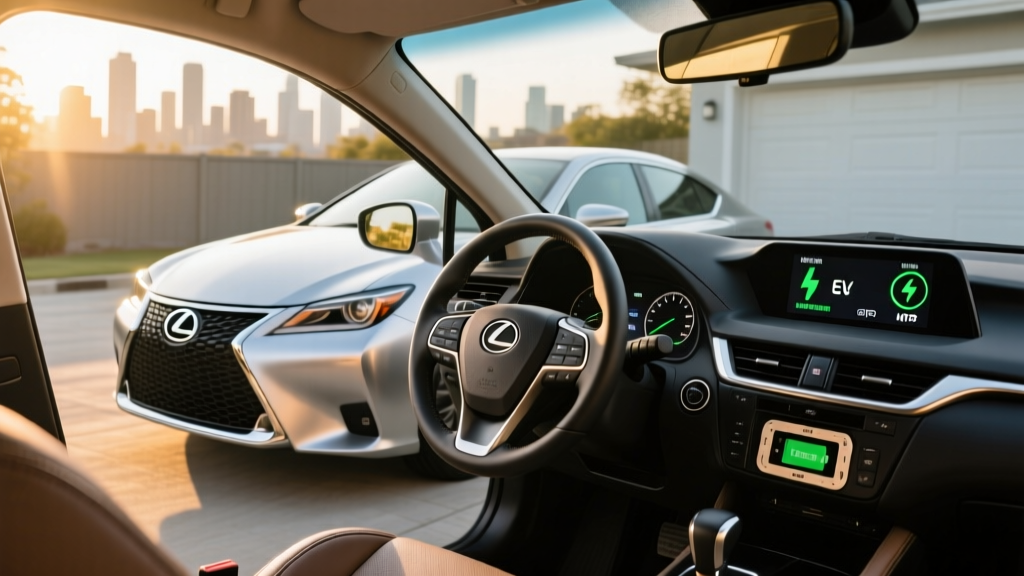
Quick Verdict: The 2016 Lexus CT 200h a Decade Later
The 2016 Lexus CT 200h occupies a specific niche in the used-electrified market: a luxury-badged conventional hybrid (HEV) that delivers Toyota Prius underpinnings in a more refined package. With an EPA-rated 42 MPG combined, proven reliability from its third-generation Toyota Hybrid Synergy Drive powertrain, and used prices that have settled into the $12,000–$18,000 range as of early 2026, it remains a pragmatic entry point for buyers who want hybrid efficiency without plug-in infrastructure or EV range considerations.
But the CT 200h is not a plug-in hybrid, it cannot drive on electric power alone at meaningful speeds, and its 134 combined horsepower means performance is adequate at best. This review breaks down exactly what you get, what it costs to own, and whether this aging hybrid still makes sense against modern PHEVs and affordable EVs.
| Spec | Value |
|---|---|
| Powertrain Type | Conventional Hybrid (HEV) — no plug |
| Engine | 1.8L 4-cylinder Atkinson-cycle (98 hp) |
| Electric Motor | 60 kW (80 hp) permanent-magnet AC |
| Combined System Output | 134 hp |
| Transmission | eCVT (planetary gearset) |
| Hybrid Battery | 1.3 kWh (nominal), Nickel-Metal Hydride (NiMH) |
| Drivetrain | Front-wheel drive |
| 0–60 mph | 9.8 seconds |
| EPA Fuel Economy | 43 city / 40 highway / 42 combined MPG |
| Fuel Tank | 10.6 gallons |
| Total Range | ~445 miles (EPA estimate) |
| Cargo Volume | 14.3 cu ft (rear seats up) / 37.4 cu ft (folded) |
| Curb Weight | 3,130 lbs |
| Original MSRP (2016 base) | $31,250 |
| Typical Used Price (2026) | $12,000–$18,000 depending on mileage/condition |
Fuel Economy: EPA Ratings vs. Real-World MPG
The 2016 CT 200h carries an EPA rating of 43 city / 40 highway / 42 combined MPG, per fueleconomy.gov. These figures are identical to the mechanically similar Toyota Prius of the same era, which shares the 1.8L 2ZR-FXE Atkinson-cycle engine and hybrid transaxle.
| Driving Cycle | EPA MPG | Real-World Expectation |
|---|---|---|
| City | 43 MPG | 44–48 MPG (regenerative braking favors stop-and-go) |
| Highway | 40 MPG | 37–40 MPG (aerodynamic drag, less regen benefit) |
| Combined | 42 MPG | 40–45 MPG (varies with driving mix and climate) |
Like most conventional hybrids, the CT 200h tends to exceed its EPA city rating in real-world urban driving. The hybrid system recovers kinetic energy during braking and deceleration, making stop-and-go traffic an efficiency advantage rather than a penalty. On sustained highway runs at 70–80 mph, expect fuel economy to dip closer to 37–39 MPG, particularly in hot weather when the A/C compressor places additional load on the engine.
Cold weather (below 35°F) reduces fuel economy by roughly 5–10% as the engine runs more frequently to maintain cabin heat and bring the catalytic converter up to operating temperature. Owners in northern climates should budget for 36–38 MPG combined during winter months.
HEV vs. PHEV vs. EV: Where the CT 200h Fits
The CT 200h is a conventional hybrid (HEV). It has no plug, no charge port, and no meaningful electric-only driving capability. The 1.3 kWh NiMH battery is charged exclusively through regenerative braking and the gasoline engine. You fuel it like any other car and never need to think about charging infrastructure.
| Attribute | HEV (CT 200h) | PHEV (e.g., Prius Prime) | BEV (e.g., Chevy Bolt EV) |
|---|---|---|---|
| Plug Required? | No | Yes (optional but recommended) | Yes (mandatory) |
| Electric-Only Range | None (motor assists only) | 25–45 miles typical | 200–350+ miles |
| Battery Size | 1.3 kWh (NiMH) | 8.8–18 kWh (Li-ion) | 40–85 kWh (Li-ion) |
| Fuel/Energy Source | Gasoline only | Gasoline + grid electricity | Grid electricity only |
| Home Charging Needed? | No | Recommended for full benefit | Yes — Level 2 strongly advised |
| Federal Tax Credit (§30D) | Not eligible | Up to $7,500 (if eligible, new purchases) | Up to $7,500 (if eligible, new purchases) |
| Used EV Credit (§25E) | Not eligible | Up to $4,000 (qualified used PHEV) | Up to $4,000 (qualified used BEV) |
The CT 200h is the right choice if you lack access to home or workplace charging, drive in a region with limited public charging infrastructure, or simply want a fuel-efficient car with zero behavioral change from a conventional vehicle. If you have reliable Level 2 charging access and a commute under 40 miles, a modern PHEV like the current Toyota Prius Prime (44 miles electric-only, 52 MPG combined on gas) or a used BEV like a Chevrolet Bolt EV will deliver significantly lower per-mile energy costs.
Powertrain Deep Dive: How the Hybrid System Works
The 2016 CT 200h uses Toyota's third-generation Hybrid Synergy Drive, a power-split system built around a planetary gearset that seamlessly blends the gasoline engine and electric motor. Here's what's under the hood:
- Gasoline Engine: 1.8-liter 4-cylinder Atkinson-cycle (2ZR-FXE), producing 98 hp and 105 lb-ft of torque. The Atkinson cycle sacrifices low-RPM torque for greater thermal efficiency — ideal for a hybrid where the electric motor compensates off the line.
- Electric Motor: 60 kW (80 hp) permanent-magnet AC motor integrated into the transaxle. This motor handles initial acceleration, low-speed crawling, and regenerative braking.
- Combined Output: 134 hp (the engine and motor don't peak simultaneously, so combined output is less than the arithmetic sum).
- Hybrid Battery: 1.3 kWh nominal capacity, Nickel-Metal Hydride (NiMH), located beneath the rear cargo floor. This is a small buffer battery — it stores recaptured braking energy for short bursts of electric assist, not for sustained electric driving.
- Transmission: Electronically controlled CVT (eCVT). Unlike belt-driven CVTs, this is a planetary gearset with no belts or cones — extremely durable with no routine maintenance required.
The system can operate in EV Mode at very low speeds (under ~25 mph, light throttle, sufficient battery charge), but the electric-only range in this mode is measured in fractions of a mile. This is not a plug-in vehicle and EV Mode is a minor efficiency feature, not a usable driving mode.
Battery Longevity, Warranty, and Replacement Cost
Original Hybrid Battery Warranty (2016 model year):
- 8 years / 100,000 miles in most states
- 10 years / 150,000 miles in California and states that adopted CARB emissions standards (CT, ME, MA, NJ, NY, OR, RI, VT, WA)
For a 2016 model, the original 8-year/100k warranty expired in 2024 in non-CARB states and the 10-year/150k warranty expires in 2026 in CARB states. Most used CT 200h examples on the market are now outside factory battery warranty coverage.
The NiMH battery in the CT 200h is one of the most proven hybrid battery packs in existence. The same fundamental chemistry and configuration has been used in millions of Toyota Prius vehicles since 2004. NiMH cells degrade more gracefully than early lithium-ion packs — they lose capacity slowly and rarely fail catastrophically.
Real-world longevity data: Based on owner reports aggregated across Prius and CT 200h platforms, the original NiMH battery typically lasts 150,000–200,000 miles or 12–15 years before capacity loss becomes noticeable (reduced fuel economy, more frequent engine cycling). Some units exceed 250,000 miles with minimal degradation, particularly in moderate climates where thermal stress is low.
Replacement cost (2026 estimates):
- OEM new battery (Lexus dealer): $2,500–$3,500 installed
- Refurbished/reconditioned battery: $1,200–$2,000 installed (individual module replacement or full reconditioned pack from independent hybrid specialists)
- DIY module replacement: $800–$1,200 in parts for those with high-voltage safety training
The availability of refurbished NiMH packs and independent hybrid repair shops keeps long-term ownership costs reasonable. Unlike early lithium-ion EV batteries, there's a mature aftermarket for Toyota/Lexus NiMH hybrid battery service.
Tax Credits and Incentives: What Applies in 2026?
The 2016 Lexus CT 200h is a conventional hybrid (HEV). It does not qualify for the federal §30D New Clean Vehicle Credit, as that credit requires a plug-in vehicle (PHEV or BEV) with a minimum battery capacity of 7 kWh. It also does not qualify for the §25E Used Clean Vehicle Credit, which similarly applies only to plug-in vehicles.
There is no federal tax credit available for conventional hybrids as of 2026. Some states and municipalities may offer minor incentives for hybrid purchases (registration fee reductions, HOV lane access in certain states for hybrids with clean-air decals, though California's green sticker program for HEVs ended years ago). Check your state's department of revenue or energy office for any current programs.
If the lack of a tax credit is a concern and you have charging access, consider that a qualified used PHEV purchased from a dealer for $25,000 or less may be eligible for the §25E Used Clean Vehicle Credit of up to $4,000 (30% of sale price, capped at $4,000), subject to income limits and dealer registration requirements per irs.gov.
Reliability, Safety, and Ownership Costs
The CT 200h benefits from one of the most extensively validated hybrid powertrains ever produced. The 2ZR-FXE engine and eCVT transaxle have been in continuous production since 2009 with incremental refinements. Common failure points are few:
- 12V auxiliary battery: Like all hybrids, the CT 200h has a standard 12V battery that powers electronics. This typically lasts 4–6 years and costs $150–$250 to replace. A dead 12V battery will prevent the car from starting even though the high-voltage hybrid battery is fine.
- Brake actuator assembly: The regenerative braking system uses an electronic brake actuator that can fail at high mileage (120,000+ miles). Replacement runs $1,200–$1,800 at a dealer. This is the most significant known repair cost.
- Inverter coolant pump: Electric water pump for the inverter cooling circuit can fail around 100,000–130,000 miles. Replacement is roughly $400–$600.
- EGR valve and intake: Carbon buildup in the EGR system can cause rough idle at high mileage. Cleaning or replacement is $200–$500.
The eCVT transmission itself is essentially bulletproof — the planetary gearset has no wear components like belts or clutches. Regular maintenance is limited to oil changes (every 10,000 miles with synthetic), cabin air filter, brake fluid, and inverter coolant service.
Estimated annual maintenance cost: $400–$700 per year for routine service, rising to $800–$1,200 in years when brake actuator or hybrid battery service is needed.
Safety ratings: The 2016 CT 200h received a Good rating from IIHS in moderate overlap front, side, roof strength, and head restraint tests. It was not tested in the updated small overlap or pedestrian protocols. NHTSA gave it 4 stars overall. Standard safety equipment includes 8 airbags, stability control, and a rearview camera. It does not include modern ADAS features like automatic emergency braking or lane-keeping assist — these were not standard on this generation.
Who Should Buy the 2016 CT 200h — And Who Shouldn't
Pros
- Proven 42 MPG combined with no plug-in requirement
- Exceptional powertrain reliability (NiMH battery, eCVT)
- Low annual maintenance costs and affordable battery replacement
- Lexus build quality, quiet cabin, premium materials
- Strong resale value retention relative to non-luxury hybrids
- No charging infrastructure needed — ideal for apartment dwellers
Cons
- 134 hp and 9.8-second 0–60 — sluggish acceleration
- No electric-only driving capability
- No federal tax credit eligibility
- Dated infotainment (no Apple CarPlay/Android Auto, no native navigation on base trim)
- Small cargo area (14.3 cu ft) compared to hatchback competitors
- No modern ADAS features (no AEB, no lane-keeping)
- Out of production since 2017 — no new examples available
Decision Framework: Is the CT 200h Right for You?
Choose the 2016 Lexus CT 200h if:
- You lack reliable access to Level 2 home or workplace charging
- Your priority is low fuel cost with zero behavioral change
- You value Lexus refinement and long-term reliability over performance
- You drive 10,000–15,000 miles per year and want ~$1,100–$1,400 annual fuel cost (at $3.50/gal)
Consider a used PHEV (Prius Prime, Clarity PHEV) instead if:
- You have Level 2 charging at home and a commute under 40 miles
- You want electric-only daily driving with gas backup for road trips
- You want eligibility for the $4,000 used clean vehicle credit
Consider a used BEV (Bolt EV, Leaf, Model 3) instead if:
- You have reliable charging and want the lowest per-mile energy cost
- You want instant torque, one-pedal driving, and zero tailpipe emissions
- You want access to HOV lanes and the $4,000 used EV credit
Frequently Asked Questions
How many MPG does the 2016 Lexus CT 200h hybrid get?
The EPA rates it at 43 city / 40 highway / 42 combined MPG. In real-world driving, city MPG often exceeds the EPA estimate (44–48 MPG) thanks to regenerative braking, while highway MPG tends to run 37–40 MPG. Cold weather reduces combined economy by roughly 5–10%.
Is the 2016 Lexus CT 200h a plug-in hybrid?
No. The CT 200h is a conventional hybrid (HEV). It has no charge port and cannot be plugged in. The 1.3 kWh NiMH battery charges exclusively through regenerative braking and the gasoline engine. You fuel it at a gas station like any conventional car.
How far can the CT 200h drive on electric power alone?
Effectively zero miles at any meaningful speed. The EV Mode allows very low-speed creeping (under ~25 mph, light load) for short distances — typically a few hundred feet in a parking lot. This is an efficiency assist, not a usable electric driving range. If electric-only driving matters to you, you need a PHEV or BEV.
Is the 2016 Lexus CT 200h reliable, and what does battery replacement cost?
Very reliable. The Toyota Hybrid Synergy Drive powertrain is among the most proven in production, with millions of units on the road. The NiMH hybrid battery typically lasts 150,000–200,000 miles. OEM replacement costs $2,500–$3,500 at a dealer; refurbished packs are available for $1,200–$2,000 from independent hybrid specialists.
Does the 2016 Lexus CT 200h qualify for any tax credit?
No federal tax credit is available. The §30D New Clean Vehicle Credit and §25E Used Clean Vehicle Credit both require plug-in vehicles (PHEV or BEV). As a conventional hybrid, the CT 200h is ineligible. Some states may offer minor incentives — check your state's energy or revenue department.
How does the CT 200h compare to the Toyota Prius of the same year?
Mechanically, they share the same powertrain (1.8L engine, eCVT, NiMH battery). The CT 200h adds Lexus-tuned suspension, more sound insulation, premium interior materials, and standard leatherette. The trade-off is slightly higher weight (3,130 lbs vs. 3,042 lbs for the Prius), which marginally affects acceleration but not fuel economy. The Prius offers more cargo space and a lower used price; the CT 200h offers a quieter, more refined cabin.
What should I check before buying a used 2016 CT 200h?
Prioritize: (1) hybrid battery health check — a dealer or hybrid specialist can pull the State of Health (SoH) data via OBD-II; (2) brake actuator function — test for smooth, consistent braking without warning lights; (3) 12V battery age — replace proactively if over 4 years old; (4) maintenance records — confirm regular oil changes and inverter coolant service. A pre-purchase inspection by a hybrid-experienced technician ($150–$250) is strongly recommended.