Quick Verdict: A Smart Used PHEV for Commuters Who Can Charge at Home
The 2016 Hyundai Sonata Plug-In Hybrid (PHEV) occupies a specific niche in the used market: a midsize sedan that delivers genuine electric-only commuting range paired with a conventional hybrid powertrain for longer trips. With an EPA-rated 27 miles of all-electric driving, a combined 99 MPGe in charge-depleting mode, and 35 MPG combined once the battery is depleted, it remains one of the more practical used PHEVs available under $15,000 in 2026.
This is not a car you buy new — Hyundai discontinued the Sonata PHEV after the 2017 model year in the U.S. market. But for buyers who want to reduce daily fuel consumption without committing to a full battery-electric vehicle, a well-maintained 2016 Sonata PHEV offers compelling economics, especially if you have access to Level 2 home charging.
| Specification | Value |
|---|---|
| EPA Electric-Only Range | 27 miles |
| EPA Combined MPGe (EV mode) | 99 MPGe |
| EPA MPG (gas hybrid mode) | 35 city / 39 highway / 35 combined |
| Battery Capacity (total / usable) | 9.8 kWh total / ~7.6 kWh usable |
| Battery Chemistry | Lithium Polymer (LiPoly) |
| Combined System Horsepower | 202 hp |
| Engine | 2.0L 4-cylinder (154 hp) + 50 kW electric motor |
| Transmission | 6-speed automatic |
| 0-60 mph | ~8.5 seconds |
| Level 1 Charging (120V) | ~9 hours (full) |
| Level 2 Charging (240V, 3.3 kW) | ~2.5 hours (full) |
| DC Fast Charging | Not available |
| Original MSRP (base) | $34,600 |
| Typical Used Price (2026) | $9,000–$14,000 |
| Battery/Powertrain Warranty (original) | 10 years / 100,000 miles |
Understanding the Powertrain: HEV vs. PHEV Explained
Before evaluating this car specifically, it's critical to understand the difference between a conventional hybrid (HEV) and a plug-in hybrid (PHEV), because Hyundai sold both versions of the Sonata simultaneously.
| Feature | Sonata Hybrid (HEV) | Sonata Plug-In Hybrid (PHEV) |
|---|---|---|
| Plugs in to charge? | No — charges via regenerative braking and engine | Yes — J1772 port, Level 1 or Level 2 |
| Battery size | 1.62 kWh | 9.8 kWh |
| Electric-only range | ~1 mile at very low speeds | 27 miles (EPA) |
| EPA Combined MPG (gas) | 40 combined | 35 combined (hybrid mode) |
| EPA MPGe (EV mode) | N/A | 99 MPGe |
| Electric motor | 38 kW | 50 kW |
| Combined system HP | 193 hp | 202 hp |
The 2016 Sonata HEV is a conventional hybrid — like a Toyota Prius or Camry Hybrid — that never plugs in. It regenerates energy during braking and uses the engine to maintain its small battery. The Sonata PHEV, by contrast, carries a battery roughly six times larger and can be plugged into a standard 120V outlet or a 240V Level 2 charger. That larger battery enables 27 miles of pure electric driving before the car seamlessly transitions into hybrid mode.
Why does this distinction matter? If you can charge at home or at work, the PHEV's 27-mile electric buffer means many daily commutes use zero gasoline. If you cannot plug in regularly, the HEV version actually achieves better fuel economy in hybrid-only driving (40 MPG combined vs. 35 MPG) because it's lighter and optimized for that mode. Buying the PHEV without access to charging defeats much of its purpose.
Electric-Only Range and Real-World Efficiency
The EPA rates the 2016 Sonata PHEV at 27 miles of electric-only range. In real-world driving, expect that figure to vary based on conditions:
- Ideal conditions (55-65°F, city/suburban driving, moderate speeds): 25-29 miles on a full charge
- Highway driving (70+ mph): 18-22 miles — higher speeds drain the battery faster
- Cold weather (below 32°F): 15-20 miles — battery chemistry is less efficient and cabin heating draws significant energy
- Hot weather with A/C (above 90°F): 20-24 miles
The 9.8 kWh total battery capacity yields approximately 7.6 kWh of usable energy. Hyundai employs a buffer strategy at both the top and bottom of the state-of-charge window to protect long-term battery health. You'll never see a full 9.8 kWh on the dash display — this is normal and intentional.
Once the battery is depleted, the Sonata PHEV operates as a conventional hybrid. Here, the EPA rates it at 35 MPG combined (35 city / 39 highway). Real-world owners on fueleconomy.gov report averages between 33 and 38 MPG in hybrid mode, which is consistent with the EPA estimate.
| Mode | City | Highway | Combined |
|---|---|---|---|
| Electric (MPGe) | 104 | 93 | 99 |
| Hybrid (MPG, battery depleted) | 35 | 39 | 35 |
| Total range (electric + gas) | ~590 miles (14.3-gallon tank + 27 mi electric) | ||
Charging: What You Need to Know Before Buying
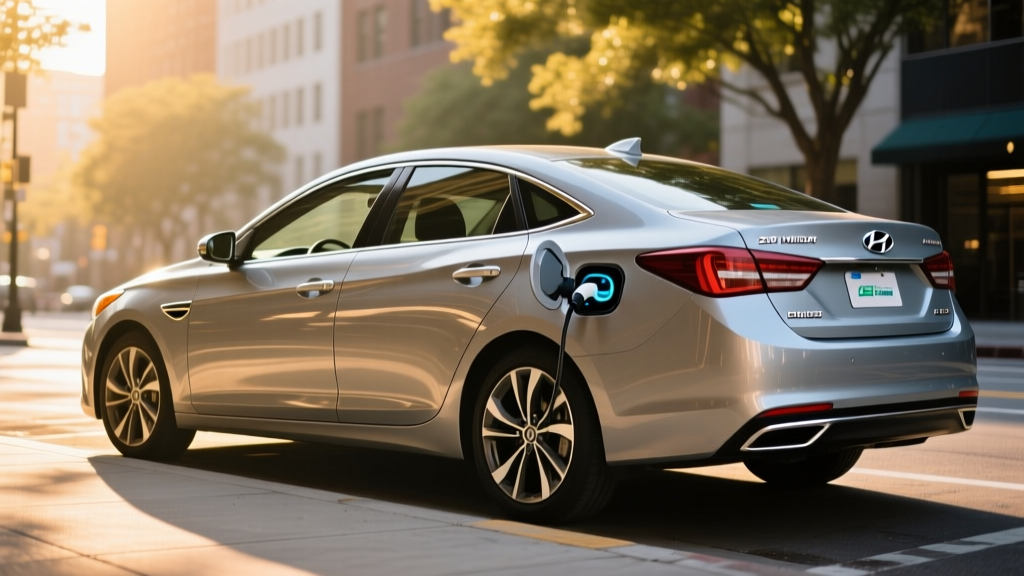
The 2016 Sonata PHEV uses a J1772 connector for AC charging. It does not support DC fast charging — this is a common limitation among 2016-era PHEVs and means you cannot use CCS or CHAdeMO rapid chargers to top up the battery quickly.
Here's what charging looks like in practice:
| Charging Method | Power | Time (0-100%) | Practical Notes |
|---|---|---|---|
| Level 1 (120V household outlet) | ~1.4 kW | ~9 hours | Sufficient for overnight charging if you drive <27 mi/day |
| Level 2 (240V, 16A) | 3.3 kW (onboard charger max) | ~2.5 hours | Recommended; requires 240V outlet or hardwired station |
| DC Fast Charge | Not supported | N/A | No CCS/CHAdeMO capability |
The onboard charger is limited to 3.3 kW. Even if you connect the car to a 7.2 kW or 11.5 kW Level 2 station, the Sonata PHEV will only draw 3.3 kW. This is a hardware limitation of the car, not the charger. For most owners, this isn't a problem — the 9.8 kWh battery is small enough that 2.5 hours on Level 2 is plenty to recharge during the workday or between errands.
Home charging setup cost: If you already have a 240V outlet (like a dryer outlet) near your parking spot, a portable Level 2 EVSE costs $200-$400. If you need a dedicated 240V circuit installed, expect $500-$1,500 from a licensed electrician depending on panel proximity and local permit requirements. A panel upgrade (from 100A to 200A service) can add $1,500-$3,000 if your home's electrical system is older.
Performance and Driving Impressions
The 2016 Sonata PHEV pairs a 2.0-liter four-cylinder engine (154 hp, 140 lb-ft) with a 50 kW (67 hp) electric motor integrated into the transmission. Combined system output is 202 horsepower. The 6-speed automatic transmission — a conventional torque-converter unit rather than the CVT found in many hybrids — delivers smooth, predictable shifts.
Acceleration to 60 mph takes approximately 8.5 seconds, which is adequate for highway merging but won't win any drag races. The car feels notably quicker in EV mode around town thanks to the electric motor's instant torque. At higher speeds, the engine engages and the transition is generally seamless, though you'll hear the 2.0L engine work harder under heavy throttle.
Driving dynamics are tuned for comfort, not sportiness. The ride is compliant over rough pavement, steering is light and predictable, and cabin noise isolation is good for the class. The regenerative braking system offers moderate regen but does not enable true one-pedal driving — you'll still use the brake pedal regularly. This is typical of 2016-era PHEVs; aggressive one-pedal regen became more common in later-generation systems.
Battery Longevity, Warranty, and Replacement Cost
Original Warranty: Hyundai covered the 2016 Sonata PHEV's high-voltage battery and hybrid/electric powertrain components for 10 years or 100,000 miles, whichever came first. This warranty applied to the original owner and transferred to subsequent owners for 10 years / 100,000 miles from the original in-service date (Hyundai's hybrid battery warranty was transferable at full coverage for this model year, unlike some competitors).
Warranty status in 2026: A 2016 model's 10-year warranty expired in 2026 by calendar year. However, if the vehicle was first sold/registered in mid-2016 and has under 100,000 miles, the mileage portion may still apply. Always verify warranty status with a Hyundai dealer using the VIN before purchasing.
Real-world degradation: Hyundai's lithium polymer battery chemistry has shown moderate degradation in owner reports. Expect a used 2016 Sonata PHEV with 80,000-120,000 miles to retain roughly 75-85% of its original battery capacity, yielding approximately 20-23 miles of electric range instead of the original 27. This is a natural consequence of lithium-ion aging and varies based on climate (hot climates accelerate degradation), charging habits (frequent 100% charges), and mileage.
Battery replacement cost: If the high-voltage battery fails out of warranty, a replacement from Hyundai runs approximately $3,000-$5,000 for the battery pack, plus $500-$1,000 in labor. Third-party rebuilt or refurbished packs are available for $2,000-$3,500 installed through independent hybrid specialists. Before purchasing a used Sonata PHEV, request a battery state-of-health (SoH) reading from a Hyundai dealer or use an OBD-II scanner app to check capacity retention.
The 12V auxiliary battery (a standard lead-acid unit) is separate and typically needs replacement every 3-5 years at a cost of $150-$250. This is a normal maintenance item unrelated to the high-voltage traction battery.
Pricing, Tax Credits, and Used-Car Value
The 2016 Sonata PHEV originally carried an MSRP of $34,600 (before the $7,500 federal tax credit that was available to original purchasers who met income requirements). In 2026, used examples typically sell for $9,000 to $14,000 depending on mileage, condition, and battery health.
Federal tax credit for used PHEVs (§25E, 2026 rules):
- Credit amount: 30% of sale price, up to $4,000 maximum
- Vehicle must be at least 2 model years old (2016 qualifies)
- Sale price must be $25,000 or less (virtually all used Sonata PHEVs qualify)
- Buyer income caps: $75,000 single / $112,500 head of household / $150,000 joint (modified AGI)
- Battery capacity must be at least 7 kWh (the Sonata PHEV's 9.8 kWh qualifies)
- Credit is non-refundable but can be transferred to the dealer at point of sale as a price reduction
- Must purchase from a licensed dealer (private-party sales do not qualify)
- Verify current rules at IRS.gov §25E — requirements may change
At a typical purchase price of $12,000, the §25E credit could yield $3,600 back (30% × $12,000), bringing the effective cost down to approximately $8,400. This makes a well-maintained Sonata PHEV one of the most affordable entries into plug-in hybrid ownership in 2026.
Pros and Cons
Pros
- 27 miles of real electric-only range covers most daily commutes
- Strong combined system output (202 hp) for the class
- Conventional 6-speed automatic avoids the rubber-band feel of CVTs
- Comfortable ride quality and spacious midsize cabin
- Excellent used value — often under $12,000 before tax credits
- Hyundai's original 10-year powertrain warranty reflects confidence in the drivetrain
- Standard J1772 charging — compatible with all Level 1 and Level 2 home equipment
Cons
- Hybrid-mode MPG (35 combined) trails the HEV Sonata Hybrid (40 combined)
- No DC fast charging — not viable for road-trip battery top-ups
- 3.3 kW onboard charger limits Level 2 speed
- Original 10-year battery warranty has expired or is expiring in 2026
- Lithium polymer chemistry shows moderate degradation at 8-10 years
- Trunk space reduced by battery pack (~13.3 cu ft vs. 16.3 cu ft in gas Sonata)
- Infotainment system dated by 2026 standards (small screen, no wireless CarPlay)
Who Should Buy the 2016 Sonata PHEV (and Who Shouldn't)
Choose the 2016 Sonata PHEV if:
- Your daily commute is under 30 miles round-trip and you can charge at home (Level 1 or Level 2)
- You want to reduce fuel consumption without the range limitations of a full EV
- You regularly take road trips where charging infrastructure may be sparse
- You're budget-conscious and want a PHEV under $15,000 with potential §25E tax credit savings
- You prefer a traditional sedan over a crossover or hatchback
Look elsewhere if:
- You cannot charge at home or at work — the PHEV's advantage disappears, and the HEV Sonata Hybrid (40 MPG) is a better choice
- You want a full EV experience with 200+ miles of range — consider a used Chevrolet Bolt EV or Nissan LEAF instead
- You need DC fast charging for road-trip flexibility — the Sonata PHEV doesn't offer it
- You want the latest tech features (large touchscreen, wireless connectivity, advanced ADAS) — 2016-era infotainment and driver-assist systems are dated
- You need maximum cargo space — the battery pack reduces trunk volume significantly
Hybrid vs. PHEV vs. Full EV — which is right for you?
| Scenario | Best Choice |
|---|---|
| No home charging, mostly city driving | Conventional hybrid (HEV) — Toyota Prius, Sonata Hybrid |
| Home charging available, <30 mi daily commute, occasional road trips | PHEV — Sonata PHEV, Prius Prime, Clarity PHEV |
| Home charging available, <250 mi daily driving, minimal road trips | Full EV (BEV) — Bolt EV, Model 3, LEAF |
| Frequent 300+ mi road trips, limited charging access | HEV or PHEV — avoid BEV unless DC fast charging is available on your routes |
Frequently Asked Questions
How many MPG does the 2016 Hyundai Sonata Plug-In Hybrid get?
In hybrid mode (after the battery is depleted), the EPA rates it at 35 city / 39 highway / 35 combined MPG. In electric mode, it achieves 99 MPGe combined. Real-world owners report 33-38 MPG in hybrid mode and up to 29 miles of electric range in ideal conditions. Source: fueleconomy.gov.
How far can the 2016 Sonata PHEV go on electric power alone?
The EPA rates it at 27 miles of electric-only range. In practice, expect 25-29 miles in mild weather at moderate speeds, 18-22 miles at highway speeds, and 15-20 miles in cold weather. The total combined range (electric + 14.3-gallon gas tank) is approximately 590 miles.
Is the 2016 Sonata PHEV reliable? What about battery replacement costs?
The 2.0L engine and 6-speed automatic are conventional, well-understood components with strong reliability records. The hybrid system and lithium polymer battery have held up reasonably well, though 8-10 year-old batteries will show capacity loss. Battery replacement costs $3,000-$5,000 (OEM) or $2,000-$3,500 (aftermarket/refurbished). Hyundai's original 10-year/100,000-mile hybrid warranty has expired or is expiring for 2016 models, so factor potential battery costs into your purchase decision.
Does the 2016 Sonata PHEV qualify for any tax credit?
It no longer qualifies for the new-vehicle §30D credit (that was available to original purchasers). However, under the §25E used clean vehicle credit (current through 2026), buyers who meet income requirements ($75K single / $150K joint) and purchase from a dealer for $25,000 or less can claim 30% of the sale price, up to $4,000. At a typical $12,000 purchase price, that's a $3,600 credit. Always verify eligibility at IRS.gov and consult a tax professional.
Can I charge the 2016 Sonata PHEV at a DC fast charger?
No. The 2016 Sonata PHEV only supports AC charging via a J1772 connector at Level 1 (120V, ~9 hours) or Level 2 (240V, 3.3 kW max, ~2.5 hours). It has no DC fast-charge port. This is standard for PHEVs of this era — DC fast charging is typically found only on full battery-electric vehicles.
Should I buy the PHEV or the regular Sonata Hybrid?
If you can plug in at home or work and your daily driving is under 30 miles, the PHEV will use significantly less gasoline (often zero on commute days). If you cannot charge regularly, the conventional Sonata Hybrid is actually more efficient in pure hybrid driving (40 MPG combined vs. 35 MPG), lighter, and less complex. The PHEV only makes financial sense if you'll actually use its electric range.
What should I check before buying a used 2016 Sonata PHEV?
Request a battery state-of-health (SoH) report from a Hyundai dealer. Check that the electric-only range is at least 20 miles on a full charge (indicating acceptable degradation). Verify the hybrid system warning lights are absent. Inspect the J1772 charge port for damage or corrosion. Confirm maintenance records, particularly for the conventional engine components (oil changes, coolant). A pre-purchase inspection by a hybrid-experienced mechanic is strongly recommended.