Quick Verdict: The 2016 BMW X5 xDrive40e a Decade Later
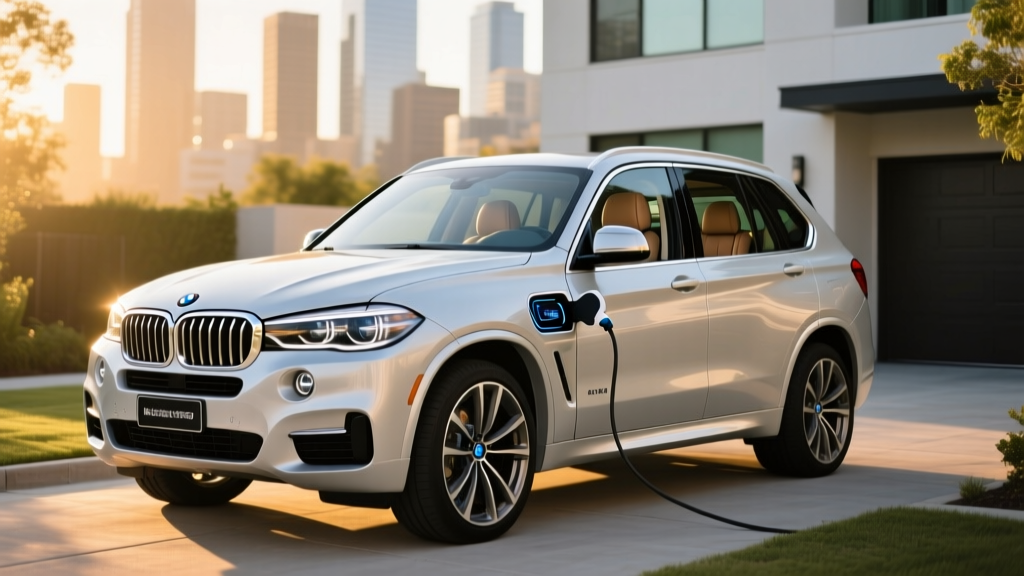
The 2016 BMW X5 xDrive40e was BMW's first plug-in hybrid SUV sold in the United States — a luxury midsize crossover that paired a turbocharged four-cylinder engine with an electric motor and a modest battery. If you're researching a BMW SUV hybrid 2016 model today, you're almost certainly looking at the used market, where examples trade between $14,000 and $22,000 depending on mileage and condition. The xDrive40e offers a taste of electrified BMW driving, but its 14-mile EPA electric-only range and 9.2 kWh battery reflect 2016-era PHEV technology. This guide breaks down what a decade of real-world ownership looks like, whether the hybrid battery is a ticking time bomb, and how this aging PHEV stacks up against modern alternatives in 2026.
| Spec | Value |
|---|---|
| Powertrain | 2.0L turbo I4 + electric motor (8-speed auto, AWD) |
| Combined HP / Torque | 308 HP / 332 lb-ft |
| Battery (usable) | ~6.7 kWh usable of 9.2 kWh total, NMC lithium-ion |
| EPA Electric Range | 14 miles |
| EPA MPGe (charge-sustaining + electric) | 56 MPGe combined |
| EPA MPG (gas-only, charge-sustaining) | 24 combined (22 city / 25 highway) |
| 0–60 mph | 6.5 seconds |
| Level 2 Charge Time (0–100%) | ~3 hours at 3.5 kW |
| DC Fast Charging | Not supported |
| Original MSRP (base) | $63,095 |
| Used Price Range (2026) | $14,000–$22,000 |
HEV vs PHEV: Where the X5 xDrive40e Fits
BMW did not sell a conventional hybrid (HEV) X5 in the U.S. for the 2016 model year. The xDrive40e is strictly a plug-in hybrid electric vehicle (PHEV) — meaning it has a charge port, a battery large enough for short electric-only trips, and the ability to run on gasoline alone once the battery depletes.
| Feature | Conventional Hybrid (HEV) | Plug-in Hybrid (PHEV) — X5 xDrive40e |
|---|---|---|
| Plug-in charging required? | No — charges via regenerative braking and engine | Yes — plug in to access electric-only range |
| Electric-only driving | Very limited, low-speed assist only | Up to 14 miles at speeds up to 75 mph |
| Battery size | ~1–2 kWh | 9.2 kWh (6.7 usable) |
| Fuel economy advantage | Better city MPG via regen | Electric commuting eliminates gas for short trips |
| Charge port | No | Yes (J1772 connector, Level 1/2 only) |
If you never plug the X5 xDrive40e in, it operates as a heavy conventional hybrid, returning roughly 22–24 MPG combined — respectable for a 5,100-pound luxury SUV but far from exceptional. The real value unlocks only when you charge regularly.
Fuel Economy: EPA Numbers vs Real-World MPG
According to fueleconomy.gov, the 2016 BMW X5 xDrive40e posts the following EPA figures:
| Metric | City | Highway | Combined |
|---|---|---|---|
| MPGe (electric + gas) | — | — | 56 MPGe |
| MPG (gas-only mode) | 22 | 25 | 24 |
Real-World MPG: What Owners Actually Report
PHEV fuel economy is heavily dependent on charging habits. Owners who plug in nightly and commute under 14 miles may use almost no gasoline for months. Those who never charge report 20–23 MPG combined in mixed driving — slightly below the EPA gas-only figure, partly because the added battery mass (roughly 400 lbs over a gas X5 35i) hurts efficiency when the electric motor isn't assisting.
Highway driving at 70+ mph yields around 23–25 MPG in gas-only mode. In city driving with a depleted battery, regenerative braking helps push figures toward 22–24 MPG. Cold weather (below 30°F) reduces electric-only range by roughly 20–30%, dropping usable electric miles to about 10–11 in winter conditions.
Electric-Only Range and Charging Details
The X5 xDrive40e's 14-mile EPA electric range is modest by 2026 standards — the current-generation BMW X5 xDrive50e delivers 38 miles on electricity alone. But for short commutes, school runs, and grocery trips, 14 miles covers a meaningful share of daily driving.
Charging Speed and Equipment
The 2016 xDrive40e uses a standard J1772 connector and accepts Level 1 (120V) and Level 2 (240V) AC charging only. There is no DC fast-charging capability — a limitation shared with nearly all PHEVs of this era.
- Level 1 (120V household outlet): ~7 hours for a full charge at ~1.4 kW
- Level 2 (240V, 16A): ~3 hours for a full charge at ~3.5 kW
- DC Fast Charge: Not available
At 3.5 kW peak, the onboard charger is relatively slow. Most owners find overnight Level 1 charging sufficient given the small battery — a standard 120V outlet adds roughly 3–4 miles of range per hour, enough to fully replenish the battery in 7 hours.
Total Combined Range
With a full 22.5-gallon fuel tank and a fully charged battery, total range is approximately 560–580 miles in mixed driving. On a long highway road trip running purely on gasoline, expect closer to 540 miles before refueling.
Powertrain and Driving Dynamics
The xDrive40e pairs a 240-horsepower 2.0-liter turbocharged inline-four with a 111-horsepower electric motor integrated into the 8-speed ZF automatic transmission. Combined system output is 308 horsepower and 332 lb-ft of torque, routed through BMW's xDrive all-wheel-drive system.
Three driving modes manage the powertrain:
- MAX eDrive: Pure electric operation up to 75 mph, limited to 14 miles.
- SAVE Battery: Engine runs to preserve current charge level for later electric use — useful for saving battery for city driving after a highway segment.
- Auto eDrive: Default mode that intelligently blends electric and gas power based on speed, throttle input, and navigation data (if equipped).
The 0–60 mph sprint takes 6.5 seconds — brisk for a luxury SUV of this weight. The electric motor fills in torque at low RPM, eliminating the turbo lag common to the four-cylinder engine. However, the engine does sound coarse under hard acceleration compared to BMW's inline-six options, a trade-off for the efficiency gains.
Battery Health, Warranty, and Replacement Cost
BMW High-Voltage Battery Warranty (Original)
BMW warranted the X5 xDrive40e's high-voltage battery for 8 years or 80,000 miles, whichever came first, against defects and capacity loss below 70% of original capacity. For a 2016 model, this factory warranty expired in 2024 at the latest.
Degradation and Real-World Battery Health
The 9.2 kWh NMC (nickel-manganese-cobalt) battery in the xDrive40e has aged over a decade of use. Real-world data from owner forums and BMW diagnostic scans suggest most 2016 xDrive40e batteries retain between 65% and 80% of original capacity as of 2026, depending on climate and charging habits. Units in hot climates (Arizona, Texas, Southern California) tend toward the lower end of that range.
At 70% state of health (SoH), expect electric-only range to drop from the original 14 miles to roughly 9–10 miles. The vehicle remains fully functional as a hybrid — it simply has less electric range.
Battery Replacement Cost
If the high-voltage battery fails or degrades beyond acceptable levels, replacement costs are significant:
- New OEM battery from BMW: $10,000–$14,000 (parts and labor)
- Refurbished/aftermarket module replacement: $4,000–$7,000 (individual cell module replacement by a specialist)
- Used battery from a salvage vehicle: $2,500–$4,500 (risky — unknown SoH)
Given that a clean 2016 xDrive40e sells for $14,000–$22,000, a full OEM battery replacement can approach the vehicle's value. Buyers should request a BMW high-voltage battery health report (available via ISTA diagnostic tool at any BMW dealer) before purchasing.
Reliability and Common Issues
The 2016 X5 platform (F15 generation) is generally solid, but the xDrive40e introduces complexity that the gas-only xDrive35i does not have. Key reliability considerations include:
- Electric motor and power electronics: Largely trouble-free in BMW's PHEV lineup. Failures are rare but expensive when they occur.
- Coolant system: The PHEV has additional cooling circuits for the battery and power electronics. Coolant leaks from electric water pumps have been reported.
- Charging port door: The motorized charge door actuator can fail — a $400–$600 repair.
- Standard F15 X5 issues: Air suspension (if equipped), transfer-case actuator, valve cover gasket leaks, and water pump failures carry over from the conventional X5.
The 12-volt auxiliary battery is another pain point — PHEVs are hard on 12V batteries due to frequent high-current draws when the vehicle powers up. Budget for a replacement AGM 12V battery every 3–4 years ($250–$400 installed).
Tax Credits and Incentives in 2026
When new, the 2016 X5 xDrive40e did not qualify for the full $7,500 federal EV tax credit under the old §30D rules because BMW had not yet hit the manufacturer cap but the vehicle's battery and sourcing did not meet later requirements. Some original purchasers claimed a partial credit.
As a used vehicle purchase in 2026, the Used Clean Vehicle Credit (§25E) is potentially available:
- Credit amount: Up to $4,000 or 30% of the sale price, whichever is less
- Price cap: Sale price must be $25,000 or below — most 2016 xDrive40e examples qualify
- Buyer income cap: AGI ≤ $75,000 (single) / $112,500 (head of household) / $150,000 (joint)
- Dealer requirement: Must be purchased from a licensed dealer (not private party) to claim point-of-sale transfer
- Model year rule: Vehicle must be at least 2 model years old (easily satisfied)
At a typical sale price of $18,000, the credit would be $4,000 (30% of $18,000 = $5,400, capped at $4,000). This effectively drops the purchase price to around $14,000 for income-eligible buyers. Verify current rules at irs.gov before purchasing, as incentive programs are subject to legislative change.
Who Should Buy This BMW SUV Hybrid — and Who Shouldn't
Pros
- 308 HP with smooth electric torque fill and BMW driving dynamics
- Luxury interior with premium materials, iDrive infotainment, and available air suspension
- Short electric-only range eliminates gas for brief commutes
- No range anxiety — 22.5-gallon tank for long road trips
- Used pricing ($14K–$22K) is accessible for a luxury PHEV SUV
- Potential $4,000 used-EV tax credit for eligible buyers
Cons
- Only 14 miles EPA electric range (likely 9–12 in real-world 2026 condition)
- No DC fast charging — slow 3.5 kW Level 2 only
- High-voltage battery is out of warranty; replacement costs $4K–$14K
- Four-cylinder engine sounds unrefined under hard acceleration
- Gas-only MPG (22–24 combined) is unimpressive for a hybrid
- Maintenance costs remain at BMW luxury levels
Choose the 2016 X5 xDrive40e If:
- You have home charging access (even a 120V outlet works for this small battery)
- Your daily commute is under 15 miles round-trip
- You want a luxury SUV with AWD and don't want to commit to a full EV
- You understand the battery replacement risk and budget accordingly
- You value BMW driving dynamics and are willing to accept higher maintenance costs
Look Elsewhere If:
- You need meaningful electric-only range for a longer commute (consider a 2024+ BMW X5 xDrive50e with 38 miles, or a used Chrysler Pacifica Hybrid with 32 miles)
- You want a worry-free battery warranty (a newer PHEV with remaining coverage is safer)
- You primarily drive highway miles — the PHEV system adds weight without much highway benefit
- You're considering a full EV: a used Tesla Model Y, Hyundai Ioniq 5, or Ford Mustang Mach-E offers 250+ miles of range with lower per-mile energy costs
Frequently Asked Questions
How many MPG does the 2016 BMW X5 xDrive40e get?
The EPA rates it at 24 MPG combined (22 city / 25 highway) in gas-only mode and 56 MPGe when factoring in electric operation. Real-world gas-only MPG typically falls between 20–24 combined depending on driving style and conditions. Owners who charge daily and drive short distances may use far less fuel than these figures suggest.
How far can the 2016 X5 xDrive40e go on electric only?
The EPA rated it at 14 miles electric-only when new. In 2026, with battery degradation, expect roughly 9–12 miles of real-world electric range depending on the battery's state of health. Cold weather further reduces this to approximately 7–10 miles.
Is the 2016 BMW X5 hybrid reliable?
The PHEV powertrain components (electric motor, power electronics) have proven durable. The primary concern is high-voltage battery degradation, which is now out of warranty on all 2016 examples. The F15 X5 platform has known issues with coolant systems, air suspension, and transfer-case actuators that apply regardless of powertrain. A pre-purchase inspection including a BMW ISTA battery health scan is strongly recommended.
What does it cost to replace the hybrid battery?
A new OEM battery from BMW costs $10,000–$14,000 installed. Specialist shops can replace individual cell modules for $4,000–$7,000. Given the vehicle's $14,000–$22,000 used value, a full OEM replacement is often uneconomical, making module-level repair or a used battery the more common path.
Does the 2016 X5 xDrive40e qualify for any tax credit in 2026?
It is not eligible for the new-vehicle §30D credit. However, income-eligible buyers purchasing from a licensed dealer for $25,000 or less may qualify for the Used Clean Vehicle Credit (§25E) — up to $4,000 or 30% of the sale price. Income caps apply: $75K single, $150K joint. Always confirm current eligibility at irs.gov and with a tax professional.
Should I buy a used 2016 X5 xDrive40e or a newer PHEV?
If budget is the primary constraint and you accept the battery risk, the 2016 xDrive40e offers luxury PHEV ownership at a low entry price — especially with the $4,000 used-EV credit. However, a 2021+ Toyota RAV4 Prime (42 miles electric), 2022+ BMW X5 xDrive45e (31 miles electric), or 2024+ X5 xDrive50e (38 miles) provides dramatically more electric range, modern tech, and remaining battery warranty at a higher purchase price.
Can I charge the 2016 X5 xDrive40e at a public DC fast charger?
No. The xDrive40e only accepts AC charging via a J1772 connector at Level 1 (120V) or Level 2 (240V). It cannot connect to DC fast chargers (CCS, CHAdeMO, or NACS). This is standard for PHEVs of this era — the battery is too small to benefit from fast charging, and the onboard hardware doesn't support it.