Quick Verdict: A Pioneering PHEV That Shows Its Age
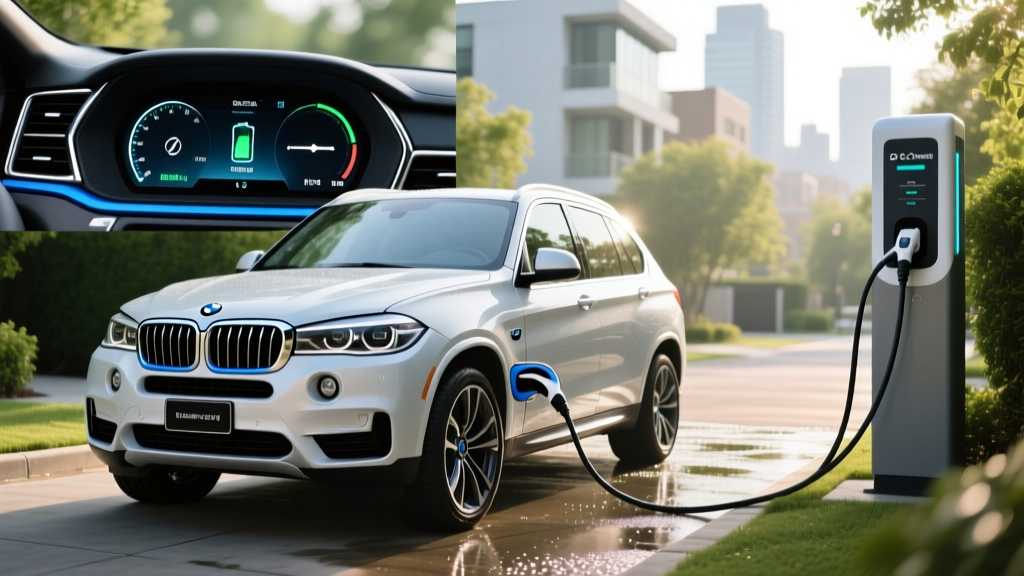
The 2016 BMW X5 xDrive40e was BMW's first plug-in hybrid SUV sold in the United States, pairing a turbocharged four-cylinder engine with an electric motor sandwiched into the ZF 8-speed transmission. A decade later, this first-generation PHEV remains on the used market at tempting prices — typically $16,000–$24,000 depending on mileage and condition. But with just 14 miles of EPA-rated electric-only range and a modest 9.2 kWh battery pack, it operates more as a mild efficiency booster than a true EV-commuter vehicle.
If you're cross-shopping the 2016 X5 hybrid against newer PHEVs like the BMW X5 xDrive50e (38 miles electric, 18.7 kWh) or full EVs like the iX, the xDrive40e's limitations become obvious fast. Still, for buyers who want BMW's driving dynamics, standard all-wheel drive, and a slight fuel-economy bump over the gas-only xDrive35i without range anxiety, the xDrive40e can make sense — provided the high-voltage battery is healthy.
2016 BMW X5 xDrive40e: Full Powertrain & Spec Table
| Specification | Value |
|---|---|
| Powertrain Type | Plug-in Hybrid (PHEV) |
| Gasoline Engine | 2.0L turbocharged inline-4 (N20) |
| Engine Output | 240 HP / 260 lb-ft torque |
| Electric Motor | Integrated in transmission, 111 HP |
| Combined System Output | 308 HP / 332 lb-ft torque |
| Transmission | 8-speed automatic (ZF) |
| Drivetrain | xDrive AWD |
| High-Voltage Battery | 9.2 kWh total / ~7.0 kWh usable, NMC lithium-ion |
| EPA Electric-Only Range | 14 miles |
| EPA MPGe (electric + gas) | 56 MPGe |
| EPA MPG (gas only, combined) | 24 MPG (city 23 / hwy 25) |
| 0–60 mph | 6.5 seconds |
| Fuel Tank | 18.5 gallons |
| Total Combined Range (est.) | ~460 miles |
| AC Charging (Level 2) | 3.5 kW max (full charge ~2.5 hours) |
| DC Fast Charging | Not supported |
| Cargo Volume | 34.2 cu ft (rear seats up) / 72.5 cu ft (folded) |
| Original MSRP (base) | $63,450 (before destination & options) |
| Used Price Range (2026) | $16,000–$24,000 |
Sources: EPA fueleconomy.gov, BMW USA archived specifications.
Electric Range, MPGe, and Real-World Fuel Economy
How Many MPG Does the 2016 X5 Hybrid Get?
| Driving Mode | City | Highway | Combined |
|---|---|---|---|
| Charge-Depleting (EV-first, short trips) | — | — | 56 MPGe |
| Charge-Sustaining (gas engine, battery depleted) | 23 MPG | 25 MPG | 24 MPG |
| Real-world mixed (owner reports) | 22–26 MPG | 24–28 MPG | 23–26 MPG |
The 56 MPGe figure is meaningful only if your daily driving stays under 14 miles and you recharge between trips. Once the battery is depleted, the 2.0L turbo four-cylinder hauls a 5,200-pound SUV, and 24 MPG combined is the realistic baseline. That's a modest improvement over the gas-only xDrive35i (21 MPG combined), but not transformative.
Where the xDrive40e shines is in stop-and-go city traffic, where regenerative braking and electric assist reduce fuel consumption noticeably. Owners who plug in nightly and commute under 12 miles report averaging 35–45 MPGe over months of mixed driving. Those who rarely charge see 22–24 MPG — essentially a heavier, more complex xDrive35i.
Charging: Level 1 and Level 2 Only
The xDrive40e charges via a J1772 connector at a maximum of 3.5 kW on Level 2 (240V). A full charge from empty takes approximately 2.5 hours. On a standard 120V household outlet (Level 1, ~1.4 kW), expect a full charge in roughly 5–6 hours.
There is no DC fast charging capability. The battery is too small to warrant it, and the architecture doesn't support it. For a PHEV with 14 miles of range, overnight Level 2 or even Level 1 charging is sufficient for daily use.
HEV vs PHEV vs EV: Where Does the X5 xDrive40e Fit?
The xDrive40e is a plug-in hybrid (PHEV), meaning it has both a gasoline engine and a rechargeable battery you can plug into an external power source. This is fundamentally different from a conventional hybrid (HEV) like the Toyota RAV4 Hybrid, which recharges its small battery solely through regenerative braking and the engine — you never plug it in.
Conventional Hybrid (HEV)
Example: Toyota RAV4 Hybrid
Plug in? No
Electric-only range: <1 mile
Best for: Drivers who want better MPG with zero behavior change
Plug-in Hybrid (PHEV)
Example: 2016 BMW X5 xDrive40e
Plug in? Yes (optional)
Electric-only range: 14 miles
Best for: Short commutes + road trip flexibility
Battery Electric (BEV)
Example: BMW iX xDrive50
Plug in? Yes (required)
Electric-only range: 300+ miles
Best for: Home chargers, low running costs, zero tailpipe emissions
Which Should You Choose?
Choose the X5 xDrive40e (PHEV) if: You have a short commute (under 15 miles), access to Level 2 charging at home or work, and want the option of gas-powered road trips without planning charging stops. It also works if you live in a cold climate where EV range loss is a concern.
Choose a conventional hybrid (HEV) if: You cannot plug in at home, drive mostly highway miles, and want simplicity. A used Lexus RX 450h will deliver more consistent real-world efficiency without charging infrastructure.
Choose a full EV (BEV) if: You have reliable home charging, drive under 250 miles daily, and want the lowest cost per mile. A used Tesla Model X or BMW iX eliminates oil changes and delivers far superior electric range.
Driving Dynamics and Powertrain Performance
The xDrive40e's 308 combined horsepower delivers respectable thrust for a luxury midsize SUV. The 0–60 mph time of 6.5 seconds feels eager, aided by the electric motor's instant torque fill at low RPMs. The transition between electric and gas power is generally smooth, though you can feel the four-cylinder engine engage under hard acceleration — a notable step down in refinement from the inline-six in the xDrive35i.
BMW offers three driving modes:
- MAX eDrive: Forces pure electric driving up to ~75 mph (battery permitting)
- AUTO eDrive: The car manages the blend of electric and gas based on navigation and driving conditions
- SAVE Battery: Preserves current charge level for later use (useful if you're highway-driving and want electric mode in a city center)
The SAVE Battery mode is particularly clever: if your commute involves 20 miles of highway followed by 5 miles in a low-emission zone, you can conserve battery on the highway and deploy it in the city. However, running the engine to charge the battery is less efficient than plugging in.
Battery Health, Warranty, and Replacement Cost
Is the 2016 X5 Hybrid Reliable? What Does Battery Replacement Cost?
The N20 2.0L turbo engine in the xDrive40e has known issues — specifically, timing chain guide failures on early-production N20 engines (pre-2015 redesigns). By the 2016 model year, BMW had largely addressed this with updated timing chain components, but it remains a watch-item for high-mileage examples. The ZF 8-speed transmission is widely regarded as one of the most reliable automatics in the industry.
The high-voltage battery pack, manufactured by Samsung SDI, has proven reasonably durable. Real-world data from owner forums and fleet usage suggests 10–15% degradation after 8–10 years and 80,000–120,000 miles. Given the small 9.2 kWh pack, a 15% loss means electric range drops from 14 to roughly 11–12 miles — noticeable but not catastrophic.
If the battery does fail outside warranty, replacement costs are significant:
- New OEM battery pack: $8,000–$12,000 (parts + labor at a BMW dealer)
- Refurbished/remanufactured pack: $4,500–$7,000 (limited availability)
- Individual cell/module repair: $1,500–$3,500 (specialist EV shops only)
Critical used-buying advice: Before purchasing a 2016 X5 xDrive40e, request a battery State of Health (SoH) report from a BMW dealer or an independent BMW specialist. The iDrive system doesn't display SoH directly, but a diagnostic scan can reveal actual vs. original capacity. Avoid examples with SoH below 80% unless the price reflects a future battery replacement.
Tax Credits, Pricing, and Total Cost of Ownership
When new, the 2016 BMW X5 xDrive40e qualified for a $4,161 federal tax credit under the previous §30D rules, based on its battery capacity. That credit is no longer available for used purchases under current law.
Does the 2016 X5 Hybrid Qualify for Any Tax Credit in 2026?
Under the current IRS Used Clean Vehicle Credit (§25E), buyers purchasing a qualifying used PHEV or EV from a dealer may be eligible for up to $4,000 or 30% of the sale price (whichever is less), subject to these requirements:
- Sale price must be $25,000 or less
- Buyer income caps: $75,000 single / $112,500 head of household / $150,000 joint
- Vehicle must be at least 2 model years old (2016 qualifies)
- Vehicle must have a battery capacity of at least 7 kWh (the xDrive40e's 9.2 kWh qualifies)
- Must purchase from a licensed dealer (private-party sales excluded)
- Credit is available once per buyer every 3 years
Since most 2016 X5 xDrive40e examples sell for $16,000–$24,000, they fall under the $25,000 cap. At a $20,000 purchase price, the credit would be $4,000 (30% of $20,000 = $6,000, but the $4,000 cap applies). This makes the effective purchase price as low as $12,000–$20,000 for eligible buyers — a compelling value for a luxury AWD SUV.
5-Year Ownership Cost Estimate (2026)
| Cost Category | Estimated 5-Year Total |
|---|---|
| Purchase price (avg, after credit) | $16,000 |
| Insurance (avg $180/mo) | $10,800 |
| Fuel (12,000 mi/yr, 24 MPG avg, $3.50/gal) | $8,750 |
| Electricity (charging ~50% of miles) | $1,200 |
| Maintenance (BMW independent shop) | $4,500 |
| Potential battery repair reserve | $3,000–$8,000 |
| Total (5-year) | $44,250–$49,250 |
Note: Depreciation not included. Actual costs vary by driving habits, location, and vehicle condition.
Pros and Cons of the 2016 BMW X5 xDrive40e
✓ Pros
- Standard xDrive AWD with confident handling
- 308 HP provides strong acceleration (6.5s to 60)
- Eligible for up to $4,000 used-EV tax credit
- Quiet, refined cabin with premium materials
- No range anxiety — gas backup for long trips
- Lower used prices than gas-only X5 equivalents
✗ Cons
- Only 14 miles EPA electric range (10–13 real-world)
- No DC fast charging
- Four-cylinder engine lacks refinement of BMW sixes
- Factory battery warranty has expired
- Battery replacement cost: $8,000–$12,000
- Less cargo space than gas X5 (battery under floor)
- Outdated iDrive infotainment vs modern systems
Who Should Buy the 2016 X5 xDrive40e?
This PHEV makes the most sense for a specific buyer profile:
- Short-distance commuters who can plug in at home and drive under 15 miles daily, effectively running on electricity most weekdays
- Two-car households where the X5 serves as the road-trip vehicle but also handles school runs and grocery trips on electric power
- BMW enthusiasts who want the F15-generation X5's driving dynamics and build quality at a steep discount from new pricing
- Tax-credit-eligible buyers who can claim the $4,000 §25E credit, bringing the effective price well below a comparable gas-only X5
This PHEV is not ideal for drivers who cannot charge at home, who drive primarily long highway distances (where the electric motor contributes nothing), or who plan to keep the vehicle 5+ years without budgeting for a potential battery replacement.
Frequently Asked Questions
How far can the 2016 BMW X5 xDrive40e go on electric only?
The EPA rates it at 14 miles of all-electric range. Real-world testing shows 10–13 miles in mild conditions and as low as 8–10 miles in cold weather or at sustained highway speeds. The electric motor can propel the vehicle up to approximately 75 mph in MAX eDrive mode.
Do I have to plug in the X5 xDrive40e?
No. The xDrive40e operates as a hybrid even without plugging in — the gasoline engine and regenerative braking keep the battery charged. However, you forfeit the electric-only range and most of the efficiency advantage if you never plug in. To get value from the PHEV system, regular charging (even on a standard 120V outlet) is strongly recommended.
What is the battery replacement cost for the 2016 X5 hybrid?
A new OEM high-voltage battery replacement runs $8,000–$12,000 at a BMW dealership. Refurbished packs cost $4,500–$7,000 when available. Individual module repairs at specialist shops can cost $1,500–$3,500 if only specific cells have degraded. Always get a battery SoH diagnostic before purchase.
Is the 2016 X5 xDrive40e more reliable than the gas X5?
The hybrid components (motor, battery, power electronics) have proven durable, but the N20 2.0L turbo engine carries more risk than the N55 3.0L inline-six in the xDrive35i. Timing chain concerns were largely resolved by 2016, but the four-cylinder works harder to move the heavier PHEV powertrain. Overall reliability is comparable to the gas model, with higher potential repair costs if the hybrid system needs service out of warranty.
Does the 2016 BMW X5 hybrid qualify for a tax credit?
It no longer qualifies for the new-vehicle §30D credit. However, under the §25E Used Clean Vehicle Credit, eligible buyers purchasing from a dealer for $25,000 or less can claim up to $4,000 (30% of sale price), subject to income limits ($75K single / $150K joint). Verify eligibility with a tax professional before purchase.
How does the 2016 xDrive40e compare to the current BMW X5 PHEV?
The current-generation BMW X5 xDrive50e offers 38 miles of electric range from an 18.7 kWh battery, nearly triple the 2016 model's capability. It also produces 483 combined HP, supports 7.4 kW Level 2 charging, and features BMW's latest iDrive 8.5 infotainment. However, a new xDrive50e starts above $75,000. The 2016 xDrive40e at $16,000–$24,000 (potentially $12,000–$20,000 after the used credit) represents a dramatically lower entry point — if you can accept the shorter electric range and older technology.