Quick Verdict: The 2015 Highlander Hybrid in 2026
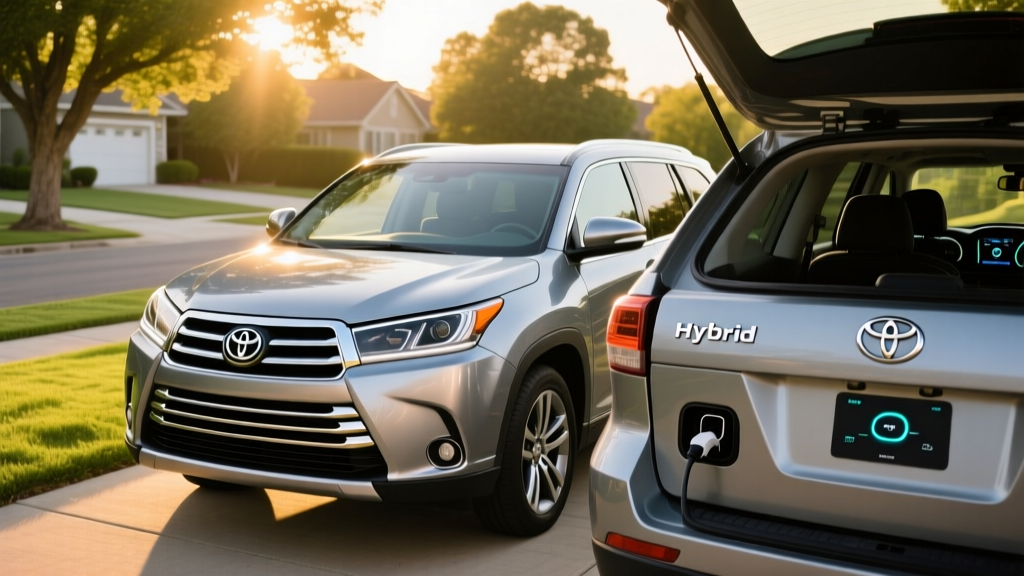
If you're shopping the used three-row SUV market and want hybrid efficiency without plug-in complexity, the 2015 Toyota Highlander Hybrid remains one of the most pragmatic choices available. Over a decade after its debut, this conventional hybrid (HEV) still delivers a genuine 28 MPG combined in a package that seats up to seven — a combination few rivals have matched, even in newer model years. For buyers who want to cut fuel costs without worrying about charging infrastructure, battery degradation anxiety, or the upfront premium of a new electrified vehicle, the 2015 Highlander Hybrid deserves serious consideration on the used market.
But age brings questions: How has the hybrid battery held up? What does replacement cost? And how does this HEV compare to modern PHEVs and full EVs? This guide covers everything you need to know before signing the paperwork.
HEV vs PHEV vs EV: Where the 2015 Highlander Hybrid Fits
The 2015 Toyota Highlander Hybrid is a conventional hybrid (HEV). It cannot be plugged in. It has no electric-only driving range. Instead, it uses a small nickel-metal hydride (NiMH) battery paired with a gasoline V6 and electric motor-generators to recapture braking energy and assist acceleration. You fuel it like any other car — the hybrid system simply makes every gallon go further.
| Feature | HEV (2015 Highlander Hybrid) | PHEV (e.g., Toyota RAV4 Prime) | BEV (e.g., Tesla Model X) |
|---|---|---|---|
| Plug-in required? | No | Yes (Level 1 or 2) | Yes (Level 2 or DC fast) |
| Electric-only range | None | ~42 miles | 300+ miles |
| Fuel source | Gasoline only | Gasoline + electricity | Electricity only |
| Tailpipe emissions | Yes | Yes (when engine runs) | None |
| Home charging needed? | No | Recommended | Essential |
| Used-market price (2026) | $14,000–$22,000 | $28,000–$40,000 | $35,000–$65,000 |
Who should choose the HEV? Drivers without reliable access to home or workplace charging who want lower fuel bills and don't want to change their refueling habits. The 2015 Highlander Hybrid is ideal for families who need three rows, drive 12,000–18,000 miles per year, and want proven Toyota reliability without the complexity of plug-in ownership.
Fuel Economy: EPA Ratings and Real-World MPG
The EPA rated the 2015 Toyota Highlander Hybrid at:
| Driving Cycle | MPG |
|---|---|
| City | 27 MPG |
| Highway | 28 MPG |
| Combined | 28 MPG |
Source: fueleconomy.gov
Real-World MPG: What Owners Actually See
Toyota's Hybrid Synergy Drive system excels in stop-and-go traffic, where regenerative braking and electric-motor assist do the most work. In real-world driving:
- City / suburban driving: Many owners report 28–31 MPG, occasionally exceeding the EPA city estimate thanks to frequent regen opportunities.
- Highway cruising (70+ mph): Expect 25–27 MPG. At sustained high speeds, the gasoline engine does most of the work, and the aerodynamic penalty of a large SUV becomes the dominant factor.
- Cold weather (below 30°F): MPG can dip to 23–25 MPG as the engine runs more frequently to provide cabin heat and maintain battery temperature.
- Mountainous terrain: Uphill segments drop efficiency significantly, but downhill regen recaptures some energy — net impact varies by route.
Powertrain Specs: Engine, Motors, and Horsepower
The 2015 Highlander Hybrid pairs a 3.5-liter V6 Atkinson-cycle engine with two electric motor-generators through Toyota's eCVT (electronically controlled continuously variable transmission). All-wheel drive models add a rear-mounted electric motor for on-demand rear traction — there is no mechanical driveshaft connecting the front and rear axles.
| Specification | Detail |
|---|---|
| Engine | 3.5L V6 Atkinson-cycle (2GR-FXE) |
| Engine output | 236 hp @ 5,800 rpm |
| Front electric motor | 123 kW (165 hp) |
| Rear electric motor (AWD-i) | 50 kW (67 hp) |
| Net combined system horsepower | 280 hp |
| Transmission | eCVT (planetary gearset) |
| Drivetrain | AWD-i (electric on-demand rear axle) |
| 0–60 mph | ~7.8 seconds (estimated) |
| Towing capacity | 3,500 lbs |
| Hybrid battery type | NiMH (Nickel-Metal Hydride) |
| Hybrid battery capacity | ~1.9 kWh (nominal) |
| Curb weight | ~4,885 lbs |
| Seating capacity | 7 passengers |
The 280 net horsepower is substantial for a three-row SUV from this era, and the instant torque from the electric motors gives the Highlander Hybrid confident acceleration from stops. The eCVT has no physical gears or belts to wear — it uses a planetary gearset that is among the most durable transmissions Toyota has ever built.
Hybrid Battery Lifespan, Warranty, and Replacement Cost
This is the single biggest concern for any used-hybrid buyer, and it deserves a thorough answer.
How Long Does the Battery Actually Last?
Toyota's NiMH hybrid batteries have an exceptional track record. Based on fleet data and owner reports:
- Typical lifespan: 150,000–200,000 miles before significant capacity loss or cell failure.
- Age-related degradation: NiMH batteries also degrade with time, not just mileage. At 11 years old (2015 to 2026), even low-mileage examples may show reduced hybrid battery performance.
- Failure mode: Unlike EV batteries that gradually lose range, NiMH hybrid batteries tend to work well until a single cell weakens, triggering a check-engine light and reduced efficiency. The vehicle remains drivable.
Replacement Cost in 2026
- New OEM Toyota battery: $3,000–$4,500 (parts and labor at a dealership)
- Refurbished / reconditioned battery: $1,500–$2,500 from independent hybrid specialists
- Single-cell replacement: $500–$1,200 if only one or two cells have failed (a viable option offered by specialist shops)
Before purchasing any 2015 Highlander Hybrid, have the hybrid battery's State of Health (SoH) checked using a Toyota-compatible OBD-II scanner (apps like Dr. Prius or Hybrid Assistant can read individual cell voltages). A healthy pack shows cell voltage variance of less than 0.2V under load. Variance exceeding 0.3V suggests impending failure.
Pricing, Tax Credits, and Ownership Economics
Used Market Pricing (2026)
As of early 2026, the 2015 Toyota Highlander Hybrid trades on the used market in these ranges:
- Fair condition (150K+ miles): $12,000–$15,000
- Good condition (100K–150K miles): $15,000–$19,000
- Excellent / low mileage (under 100K miles): $19,000–$23,000
Tax Credit Eligibility
The 2015 Toyota Highlander Hybrid does not qualify for the federal §30D new clean vehicle credit — it was never eligible even when new, as conventional HEVs have been excluded from the federal EV tax credit since the program's restructuring. It also does not qualify for the Used Clean Vehicle Credit (§25E), which applies only to used battery-electric vehicles and plug-in hybrids, not conventional hybrids.
Some states and local utilities offer rebates or incentives for hybrid vehicle purchases, but these vary widely by jurisdiction. Check your state's energy office or utility provider for current programs. A tax professional can advise on any applicable deductions.
Five-Year Cost of Ownership Estimate
| Category | Estimated Cost |
|---|---|
| Purchase price | $17,000 |
| Fuel (5 years @ 15K mi/yr) | $9,100 |
| Insurance (avg) | $6,500 |
| Maintenance & repairs | $3,500 |
| Potential hybrid battery replacement | $2,500 (budget reserve) |
| Depreciation (5 years) | $7,000 |
| Total estimated 5-year cost | $45,600 |
Reliability and Common Issues
The 2015 Highlander Hybrid benefits from Toyota's longstanding hybrid expertise. The 2GR-FXE V6 and eCVT powertrain are among the most thoroughly proven in the industry. Key reliability notes:
- Powertrain: Excellent. The eCVT has no clutch packs, belts, or torque converters to fail. The Atkinson-cycle V6 runs under less thermal stress than a conventional engine.
- Hybrid system: Very good. Inverter and motor-generators rarely fail. The NiMH battery is the primary age-related wear item (see battery section above).
- Brakes: Exceptional longevity. Regenerative braking reduces mechanical brake wear dramatically — many owners report original brake pads lasting 80,000–100,000+ miles.
- Common complaints: Some owners report water pump failures (the hybrid system uses an electric water pump), occasional 12V auxiliary battery issues, and infotainment system quirks typical of 2015-era Toyota units.
- NHTSA safety rating: The 2015 Highlander received a 5-star overall safety rating from NHTSA, and the IIHS named it a Top Safety Pick.
Who Should Buy the 2015 Highlander Hybrid — and Who Shouldn't
Choose the 2015 Highlander Hybrid if:
- You need three rows and AWD but want better fuel economy than a gas SUV
- You cannot charge at home or work (apartment, street parking, no garage)
- You want a proven, low-risk used hybrid with widely available parts and service
- You drive 12,000+ miles/year and want to reduce fuel spending without a large upfront investment
- You value strong reliability ratings and low long-term maintenance costs
Look elsewhere if:
- You want electric-only driving or zero tailpipe emissions — consider a BEV or PHEV
- You have home charging access and want maximum fuel savings — a PHEV like the Chrysler Pacifica Hybrid may serve you better
- You want modern driver-assist features (the 2015 model predates Toyota Safety Sense as standard equipment on all trims)
- You need a vehicle warranty — at 11 years old, factory coverage has expired
- You prioritize the latest infotainment, Apple CarPlay, or Android Auto (not available on the 2015 model)
2015 Highlander Hybrid vs Modern Alternatives
The used-SUV market offers several electrified alternatives. Here's how the 2015 Highlander Hybrid stacks up against common cross-shopped options:
| Vehicle | Type | EPA Combined | Typical Used Price | 3rd Row? |
|---|---|---|---|---|
| 2015 Toyota Highlander Hybrid | HEV | 28 MPG | $14K–$23K | Yes |
| 2020 Toyota Highlander Hybrid | HEV | 35 MPG | $30K–$40K | Yes |
| 2021 Chrysler Pacifica Hybrid | PHEV | 30 MPG / 82 MPGe | $25K–$35K | Yes (minivan) |
| 2019 Tesla Model X (Long Range) | BEV | 100 MPGe | $35K–$50K | Yes (optional) |
| 2018 Lexus RX 450hL | HEV | 29 MPG | $25K–$33K | Yes (tight) |
The 2015 Highlander Hybrid's advantage is entry price. At roughly half the cost of a newer Highlander Hybrid or a used Tesla Model X, it offers the lowest barrier to three-row hybrid efficiency. The trade-off is older technology, higher mileage, and no remaining factory warranty.
Frequently Asked Questions
How many MPG does the 2015 Toyota Highlander Hybrid get?
The EPA rates it at 27 city / 28 highway / 28 combined MPG. In real-world driving, city-heavy commuters often see 28–31 MPG, while sustained highway driving at 70+ mph typically yields 25–27 MPG. Cold weather and mountainous terrain reduce efficiency further.
Does the 2015 Highlander Hybrid need to be plugged in?
No. This is a conventional hybrid (HEV), not a plug-in hybrid (PHEV). The battery charges exclusively through regenerative braking and the gasoline engine. You never plug it in — just fill up with gasoline as you would with any other vehicle.
Is the 2015 Highlander Hybrid reliable?
Yes. Toyota's hybrid powertrain is among the most reliable in the industry. The eCVT transmission, Atkinson-cycle V6, and electric motor-generators have proven extremely durable. The main long-term concern is the NiMH hybrid battery, which may need replacement after 150,000–200,000 miles or 10–15 years of age. Replacement costs $1,500–$4,500 depending on whether you choose refurbished or new OEM.
What does a hybrid battery replacement cost?
In 2026, expect to pay $3,000–$4,500 for a new OEM Toyota hybrid battery installed at a dealership. Refurbished batteries from independent hybrid specialists run $1,500–$2,500. If only individual cells have failed, cell-level repair can cost as little as $500–$1,200.
Does the 2015 Highlander Hybrid qualify for any tax credits?
No. Conventional hybrids (HEVs) do not qualify for the federal §30D new vehicle credit or the §25E used clean vehicle credit. These programs are reserved for plug-in electric vehicles (BEVs and PHEVs). Some state or utility incentives may apply — check your local programs.
Hybrid vs PHEV vs EV — which should I choose?
Choose the HEV (2015 Highlander Hybrid) if you have no charging access and want simplicity. Choose a PHEV if you have home charging and want 30–40 miles of electric-only commuting with a gas engine for road trips. Choose a BEV if you have reliable charging, want zero tailpipe emissions, and are ready for the lowest per-mile fuel cost — but higher upfront investment.
Can the 2015 Highlander Hybrid tow?
Yes. It is rated to tow up to 3,500 pounds, which covers small boat trailers, utility trailers, and light campers. Towing will reduce fuel economy to roughly 20–22 MPG depending on load and terrain.
Does it have Apple CarPlay or Android Auto?
No. The 2015 model year predates Toyota's adoption of Apple CarPlay and Android Auto. The factory infotainment system supports Bluetooth audio streaming and USB connectivity but lacks smartphone mirroring. Aftermarket head unit replacements are available from brands like Pioneer and Kenwood for $400–$800 installed.