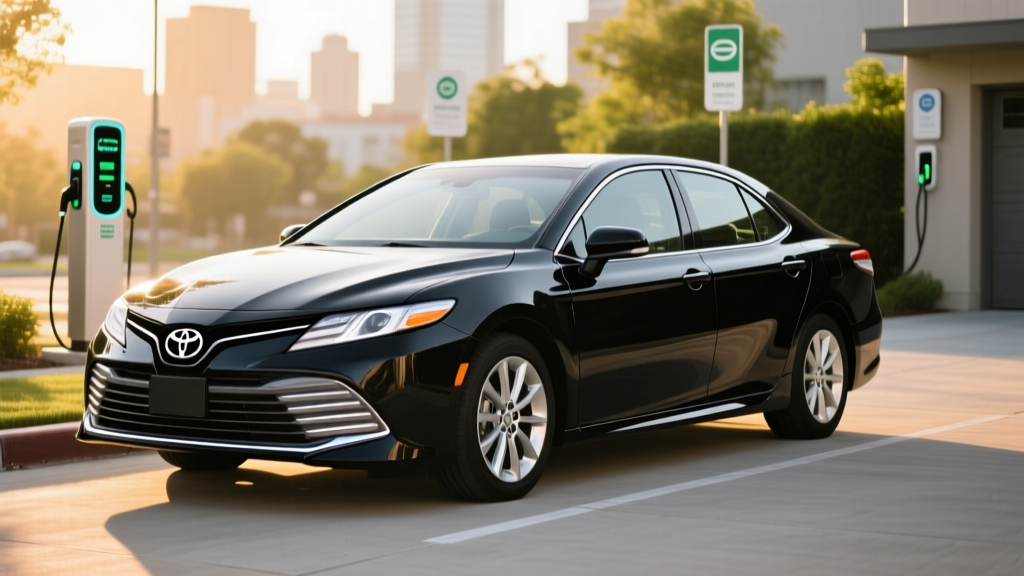
Quick Verdict: A Proven Hybrid Workhorse for Used-Car Buyers
The 2015 Toyota Camry Hybrid remains one of the most dependable used midsize hybrids on the market. With an EPA-rated 41 MPG combined, a nickel-metal hydride (NiMH) traction battery backed by a 10-year/150,000-mile warranty (in CARB states), and Toyota's reputation for hybrid longevity, it's a rational pick for drivers who want EV-like city efficiency without plugging in. In 2026, well-maintained examples trade between $11,000 and $17,000 depending on mileage and trim — making it a compelling alternative to both newer gas-only sedans and pricier plug-in hybrids.
2015 Camry Hybrid Fuel Economy: EPA vs Real-World MPG
| Metric | City | Highway | Combined |
|---|---|---|---|
| EPA Rating | 43 MPG | 39 MPG | 41 MPG |
| Real-World Expectation | 44–48 MPG | 36–39 MPG | 39–44 MPG |
Source: fueleconomy.gov
Powertrain Specs: Engine, Motor, and Combined Output
| Specification | Value |
|---|---|
| Gasoline Engine | 2.5L inline-4 Atkinson cycle |
| Engine Power | 156 hp / 156 lb-ft torque |
| Electric Motor | Permanent-magnet AC synchronous, 105 kW (141 hp) |
| Net Combined System Power | 200 hp |
| Transmission | eCVT (planetary gearset, not a belt CVT) |
| 0–60 mph | 7.1 seconds |
| Drivetrain | Front-wheel drive |
| Traction Battery | NiMH, ~1.6 kWh (gross) |
| Fuel Tank | 17.2 gallons |
| Total Range | ~705 miles (at combined 41 MPG) |
The 200-hp combined output gives the Camry Hybrid adequate passing power. The eCVT — Toyota's Hybrid Synergy Drive planetary gearset — is fundamentally different from the rubber-belt CVTs found in Nissan or Subaru products. It has no belts or pulleys to wear out, contributing to its excellent long-term reliability record.
Hybrid Battery: Chemistry, Lifespan, and Replacement Cost
The 2015 Camry Hybrid uses a nickel-metal hydride (NiMH) battery pack — not the lithium-ion chemistry found in modern BEVs and PHEVs. NiMH is less energy-dense but extremely durable. Toyota's hybrid battery degradation curve is remarkably flat: most Camry Hybrids lose only 5–10% of battery capacity over 150,000 miles.
Real-world longevity data: Numerous owners and fleet operators report the original NiMH pack lasting 200,000–300,000+ miles before needing replacement. Taxis and rideshare vehicles running Camry Hybrids routinely exceed 250,000 miles on the original battery.
Battery replacement cost (2026):
- Remanufactured pack: $1,800–$2,800 installed (most common route for an 11-year-old vehicle)
- New OEM Toyota pack: $3,500–$4,500 installed
- Individual module replacement: $500–$1,200 if only a few cells have failed (common repair at hybrid-specialist shops)
Unlike full EV batteries costing $10,000–$20,000 to replace, the Camry Hybrid's small NiMH pack is affordable to service — a major ownership advantage.
HEV vs PHEV vs EV: Which Powertrain Fits You?
| Factor | HEV (2015 Camry Hybrid) | PHEV (e.g., Prius Prime) | BEV (e.g., Tesla Model 3) |
|---|---|---|---|
| Plugs in? | No | Yes (120V/240V) | Yes (240V/DCFC) |
| Electric-only range | ~1 mi (low speed) | 25–44 mi | 250–360 mi |
| Fuel/energy cost per mile | ~$0.09 | ~$0.04–$0.09 | ~$0.03–$0.06 |
| Home charging needed? | No | Recommended | Essential |
| Federal tax credit (new) | None | Up to $7,500 (§30D) | Up to $7,500 (§30D) |
| Used price range (2026) | $11K–$17K | $18K–$28K | $18K–$35K |
- You lack access to home or workplace charging
- Your budget is under $18,000
- You want minimal maintenance and no charging-cable hassle
- You drive a mix of city and highway with no daily plug-in routine
- You can charge at home (Level 1 120V outlet is sufficient for most PHEVs)
- Your daily commute is under 30 miles and you want electric-only operation
- You want to reduce gasoline consumption by 60–80%
- You have reliable Level 2 home charging
- You want zero tailpipe emissions and lowest per-mile cost
- You're willing to plan around DC fast charging on road trips
Trims, Pricing, and Tax Credit Eligibility
The 2015 Camry Hybrid was offered in three trims: LE, SE, and XLE. Original MSRPs ranged from approximately $26,790 (LE) to $31,390 (XLE with navigation). In the 2026 used market:
- LE (base): $11,000–$14,000 (80K–130K miles)
- SE (sport-tuned suspension): $12,500–$15,500
- XLE (premium, leather, nav): $14,000–$17,000 (lower-mileage examples)
Tax credit note: The federal §30D New Clean Vehicle Credit does not apply to used hybrid (HEV) purchases. The Used Clean Vehicle Credit (up to $4,000 or 30% of sale price, whichever is less) applies only to qualified used BEVs and PHEVs — not conventional hybrids like the Camry Hybrid. No federal incentive exists for purchasing a used HEV. Some states may offer minimal incentives for efficient used vehicles, but these vary by jurisdiction and change frequently. Check your state's energy office or DMV for current programs.
Pros and Cons of the 2015 Camry Hybrid
✓ Pros
- 41 MPG combined — real-world city driving often exceeds EPA
- NiMH battery proven to 200K–300K+ miles
- eCVT has no belt/pulley wear points
- ~705-mile total range per tank
- Comfortable ride, spacious rear seat (38.3" legroom)
- Affordable battery replacement ($1,800–$2,800 remanufactured)
- Low insurance costs vs EVs
✗ Cons
- No electric-only driving (not a PHEV)
- No DC fast charging capability
- Infotainment is dated (no Apple CarPlay/Android Auto)
- Highway MPG drops to 36–39 (aerodynamic drag)
- Trunk reduced by battery pack (13.1 cu ft vs 15.4 in gas Camry)
- No federal tax credit for used HEV purchase
- Factory battery warranty likely expired by 2026
Frequently Asked Questions
How many MPG does the 2015 Toyota Camry Hybrid get?
The EPA rates the 2015 Camry Hybrid at 43 city / 39 highway / 41 combined MPG. In real-world city driving, many owners report 44–48 MPG thanks to aggressive regenerative braking. Highway driving yields 36–39 MPG. Cold weather can reduce combined economy by 3–5 MPG.
Does the 2015 Camry Hybrid plug in?
No. It is a conventional hybrid (HEV). The battery charges via regenerative braking and the gasoline engine. You never plug it in. If you want a plug-in Toyota, look at the Prius Prime (PHEV) or RAV4 Prime.
How far can it drive on electric only?
Approximately 0.5–1 mile at very low speeds (under 25 mph) on a fully charged hybrid battery. This is not a meaningful electric-only range — the system is designed for electric assist, not electric propulsion. For 25+ miles of electric-only driving, you need a PHEV.
Is the hybrid battery reliable, and what does replacement cost?
Very reliable. Toyota's NiMH hybrid batteries routinely last 200,000–300,000 miles. If replacement is needed, a remanufactured pack costs $1,800–$2,800 installed, or $500–$1,200 for individual module repair. The original 8-year/100,000-mile warranty (10yr/150K in CARB states) has likely expired on a 2015 model.
Does the 2015 Camry Hybrid qualify for any tax credit?
No federal tax credit applies. The §30D credit covers only new BEVs and PHEVs. The Used Clean Vehicle Credit covers only used BEVs and PHEVs sold by dealers for $25,000 or less. Conventional hybrids (HEVs) do not qualify for any federal purchase incentive. Check your state for possible local programs.
How does the Camry Hybrid compare to the gas Camry on fuel costs?
At $3.50/gallon and 15,000 miles/year: the gas Camry (28 MPG combined) costs ~$1,875/year in fuel. The Camry Hybrid (41 MPG combined) costs ~$1,280/year — saving approximately $595 annually. Over five years, that's roughly $2,975 in fuel savings, which typically covers the used-market price premium over a gas Camry.
Should I buy a 2015 Camry Hybrid or a newer used EV?
If you have home Level 2 charging and a budget above $20,000, a used EV like the 2019–2021 Nissan Leaf (40/62 kWh) or Chevrolet Bolt offers zero tailpipe emissions and lower per-mile costs. But if you lack charging access, live in an apartment, or want to stay under $16,000, the Camry Hybrid's proven reliability and no-plug convenience make it the more practical choice. It eliminates range anxiety and charging infrastructure dependence entirely.