Quick Verdict: A Mild Hybrid That Punches Below Its Weight
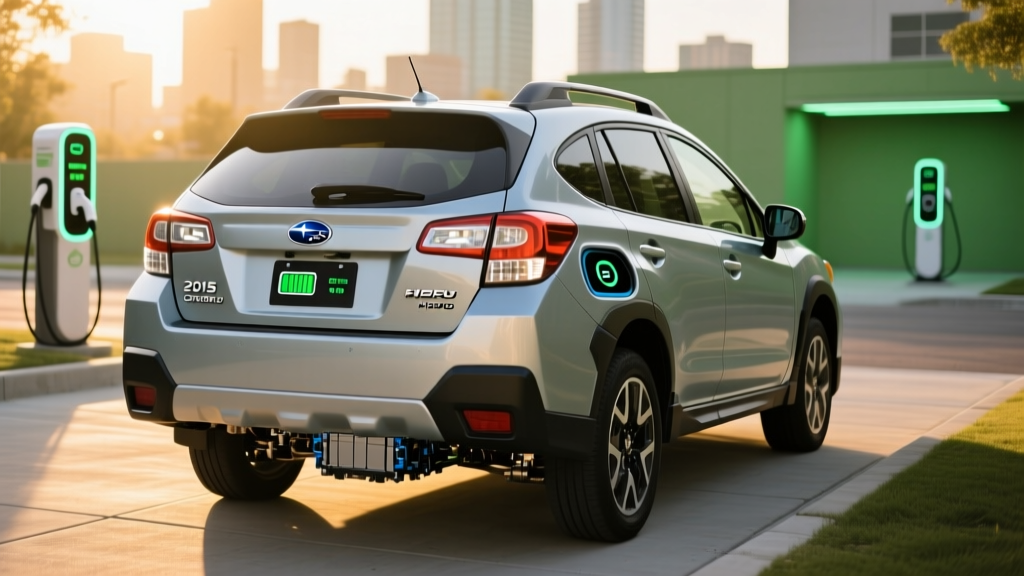
The 2015 Subaru XV Crosstrek Hybrid was Subaru's first attempt at an electrified vehicle for the U.S. market. Built on the popular Crosstrek platform, it paired a 2.0-liter flat-four boxer engine with a small 10-kW electric motor integrated into the transmission. The result was a conventional hybrid (HEV) — not a plug-in — that delivered modest fuel economy gains over the standard gas Crosstrek. More than a decade later, the 2015 Subaru hybrid remains a niche used-car find for buyers who want Subaru's standard all-wheel drive with a slight efficiency bump, but its limited electric assist and aging nickel-metal hydride battery demand careful evaluation before purchase.
| Spec | Value |
|---|---|
| Powertrain | 2.0L boxer-4 + 10 kW electric motor (HEV) |
| Combined Horsepower | 160 hp (148 hp engine + 13 hp motor) |
| Combined Torque | 163 lb-ft |
| Transmission | Lineartronic CVT |
| Drivetrain | Symmetrical AWD (standard) |
| EPA MPG (City / Hwy / Combined) | 29 / 33 / 31 |
| Gas-Only Crosstrek CVT MPG (Combined) | 29 combined (26 city / 34 hwy) |
| Hybrid Battery | NiMH, ~0.5 kWh (not plug-in capable) |
| 0–60 mph | ~10.5 seconds |
| Cargo Volume (behind rear seats) | 22.3 cu ft |
| Original MSRP (2015) | $25,995 (base Hybrid) / $29,295 (Hybrid Touring) |
| Estimated Used Price (2026) | $8,000 – $13,500 depending on mileage/condition |
HEV vs PHEV: What the 2015 Subaru Hybrid Actually Is
Before evaluating this vehicle, it's essential to understand what it is — and what it isn't.
Conventional Hybrid (HEV) — 2015 Crosstrek Hybrid
- No plug. The battery charges exclusively through regenerative braking and the gasoline engine.
- Tiny battery (~0.5 kWh NiMH). It stores just enough energy for brief low-speed electric assist and stop-start functionality.
- No electric-only driving range. The electric motor assists the gas engine; it cannot propel the car alone at meaningful speeds.
- No federal tax credit. HEVs do not qualify for the IRS §30D clean vehicle credit.
Plug-In Hybrid (PHEV) — Not This Car
- A PHEV has a larger battery (typically 10–20+ kWh), a charge port, and 20–40 miles of electric-only range.
- Subaru did not offer a PHEV until the 2019 Crosstrek PHEV (a Toyota-derived system with 17 miles of EV range).
- The 2015 model is strictly an HEV — you will never plug it in.
This distinction matters because many used-car shoppers searching for a "2015 Subaru hybrid" assume plug-in capability. It doesn't exist on this model. If you want electric-only commuting from a Subaru, you'd need to look at the 2019+ Crosstrek PHEV or the 2022+ Solterra BEV instead.
Fuel Economy: EPA Ratings vs Real-World MPG
The headline question for any hybrid buyer: how many MPG does it actually get?
| Driving Cycle | Hybrid (HEV) | Gas Crosstrek (CVT) | Difference |
|---|---|---|---|
| City | 29 MPG | 26 MPG | +3 MPG |
| Highway | 33 MPG | 34 MPG | −1 MPG |
| Combined | 31 MPG | 29 MPG | +2 MPG |
According to fueleconomy.gov, the 2015 Crosstrek Hybrid earns 31 MPG combined — a 2 MPG improvement over the gas-only CVT Crosstrek. The gains come almost entirely in city driving, where regenerative braking and electric assist at low speeds make the biggest difference. On the highway, the hybrid's added weight (~300 lbs heavier than the gas model) actually erases any advantage.
Real-World Expectations
Owner-reported data on fueleconomy.gov shows real-world averages clustering around 28–32 MPG combined, with some drivers reporting as high as 35 MPG in warm-weather city commuting and as low as 24 MPG in cold climates with short trips. Subaru's boxer engine and full-time AWD system create inherent drivetrain losses that limit hybrid efficiency gains compared to front-wheel-drive competitors like the Toyota Prius (50+ MPG combined).
Bottom line: Expect 29–31 MPG in mixed driving, 26–28 in cold weather or heavy highway use, and up to 33–34 in warm-weather city conditions. These are modest gains over the gas Crosstrek, not Prius-level savings.
Powertrain Deep Dive: How the Hybrid System Works
The 2015 Crosstrek Hybrid uses Subaru's first-generation hybrid architecture, which is best described as a mild parallel hybrid:
- 2.0-liter FB20 boxer-4 engine: 148 hp and 145 lb-ft of torque on its own.
- 10 kW (13 hp) electric motor: Sandwiched between the engine and the Lineartronic CVT, providing assist during acceleration and enabling regenerative braking.
- NiMH battery pack (~0.5 kWh): Located under the cargo floor, reducing spare-tire space (a tire-inflation kit replaces the spare).
- Stop-start system: The engine shuts off at stops and restarts seamlessly when you lift off the brake.
- EV mode button: Allows very low-speed electric-only movement (under ~20 mph, for less than a mile) in ideal conditions — useful for creeping through a parking garage, not for actual commuting.
The combined system output is rated at 160 hp and 163 lb-ft. In practice, the electric motor's torque fill is most noticeable from 0–30 mph, giving the hybrid slightly better around-town responsiveness than the gas model. At highway speeds or on steep grades, the 10 kW motor is essentially irrelevant — this is a 3,400-lb SUV with a 2.0-liter engine, and it feels like one.
Battery Health, Reliability, and Replacement Cost
For any 10+ year-old hybrid, battery condition is the single biggest financial risk.
2015 Crosstrek Hybrid Battery Warranty
- Original warranty: 8 years / 100,000 miles (10 years / 150,000 miles in CARB states — CA, CT, ME, MD, MA, NJ, NY, OR, RI, VT, WA)
- Warranty status in 2026: All original hybrid battery warranties have expired (the 11-year-old vehicle is past even the 10-year CARB extension).
- Battery chemistry: Nickel-metal hydride (NiMH), not lithium-ion.
- Expected lifespan: NiMH packs in mild-hybrid applications typically last 120,000–180,000 miles before significant degradation, though individual results vary with climate and usage patterns.
Battery Replacement Cost
If the hybrid battery fails out of warranty, expect the following:
- New OEM battery from Subaru: $2,500 – $3,500 (parts) + $500 – $800 labor = $3,000 – $4,300 total.
- Refurbished/remanufactured battery: $1,200 – $2,000 installed from third-party hybrid specialists.
- Individual cell replacement: Some hybrid repair shops can replace failed NiMH cells for $600 – $1,200, extending pack life at lower cost.
General Reliability
The 2015 Crosstrek Hybrid shares the standard Crosstrek's mechanical DNA, which carries some known issues:
- CVT transmission: Subaru's Lineartronic CVTs from this era have a mixed reliability record. Some owners report shuddering or failure past 100,000 miles. Subaru extended the CVT warranty to 10 years/100,000 miles for certain model years via a class-action settlement — check whether a specific VIN is covered.
- Head gasket: The FB20 engine is less prone to head gasket issues than older Subaru EJ engines, but it's still a watch item past 120,000 miles.
- Oil consumption: Some FB20 owners report elevated oil use. Check oil levels regularly.
- Hybrid system: The mild-hybrid components (motor, inverter, NiMH pack) have been generally reliable, with fewer failure reports than the CVT itself.
Before purchasing, request a hybrid battery health report from a Subaru dealer or hybrid specialist. This scan shows individual cell voltages and overall state of health (SoH) — critical data for a vehicle of this age.
Pricing and Tax Credit Eligibility in 2026
The 2015 Crosstrek Hybrid is long out of production, so pricing is entirely in the used-car market.
Used Market Pricing (2026 Estimates)
- 80,000 – 100,000 miles: $10,000 – $13,500
- 100,000 – 130,000 miles: $8,500 – $11,000
- 130,000+ miles: $6,500 – $9,000
Tax Credit Eligibility
The 2015 Subaru hybrid does not qualify for the federal §30D new clean vehicle credit — it's a used HEV with no plug. Here's how incentive rules apply:
- Federal used-EV credit (§25E): Up to $4,000 for qualifying used plug-in EVs and PHEVs priced under $25,000. The Crosstrek Hybrid is a conventional HEV — not eligible.
- Federal new-vehicle credit (§30D): Only for new plug-in vehicles (BEVs and PHEVs) meeting battery-sourcing, MSRP, and income requirements per IRS guidelines. Not applicable.
- State incentives: Some states offer rebates for used hybrids, but these are rare and typically small ($250–$500). Check your state's energy or environmental agency for current programs.
In short: there are no meaningful tax incentives for buying this vehicle in 2026. You're paying market price.
Who Should Buy the 2015 Subaru Hybrid — And Who Shouldn't
Pros
- Standard symmetrical AWD — excellent for snow and rain climates
- Slightly better city MPG than the gas Crosstrek (+3 MPG city)
- Extra torque from electric motor improves low-speed responsiveness
- 8.7 inches of ground clearance for light off-road and winter roads
- Subaru's EyeSight driver-assist system available (adaptive cruise, pre-collision braking, lane departure warning)
- No charging infrastructure needed — just drive it like a gas car
Cons
- Only 2 MPG combined improvement over the gas Crosstrek — minimal fuel savings
- Highway MPG is actually 1 MPG worse than the gas model
- No electric-only driving range — this is not a plug-in
- Hybrid battery is 11 years old and out of warranty — replacement risk of $3,000+
- Reduced cargo space (battery pack under cargo floor, no spare tire)
- Sluggish acceleration (10.5 sec 0–60) and heavy for its power
- No federal or state tax credits available
Choose the 2015 Crosstrek Hybrid If:
- You live in a snow-belt state and need AWD with slightly better city fuel economy.
- You want a simple hybrid with no plug, no charging anxiety, and no behavior change.
- You find a low-mileage example (under 90,000 miles) with a documented hybrid battery health check.
- Your budget is $10,000–$13,000 and you want a compact crossover with ground clearance.
Look Elsewhere If:
- You want real fuel savings: A Toyota Prius (50+ MPG) or Prius AWD-e (49 MPG combined) will save dramatically more at the pump.
- You want electric-only commuting: Look at a used 2019+ Crosstrek PHEV (17 mi EV range), a Toyota RAV4 Prime (42 mi EV range), or a full BEV like the Chevrolet Bolt EUV.
- You want warranty coverage: Any 2015 hybrid is out of its battery warranty. If peace of mind matters, consider a newer certified pre-owned hybrid with remaining coverage.
- You drive mostly highway miles: The hybrid offers no highway advantage and is actually less efficient than the gas Crosstrek at 70+ mph.
Hybrid vs PHEV vs EV: Which Fits Your Needs?
Shopping for a used electrified vehicle in 2026 means weighing three distinct powertrain types. Here's how they compare for a buyer considering the 2015 Subaru hybrid:
| Factor | HEV (e.g., 2015 Crosstrek Hybrid) | PHEV (e.g., 2019+ Crosstrek PHEV) | BEV (e.g., 2023+ Solterra) |
|---|---|---|---|
| Plug required? | No | Optional (but recommended) | Yes |
| Electric-only range | 0 miles (assist only) | 17–42 miles depending on model | 200–300+ miles |
| Home charging needed? | No | Recommended for EV range | Essential |
| Fuel cost savings | Modest (~$150–250/yr vs gas) | Significant if charging daily | Largest ($600–1,200/yr savings) |
| Tax credits | None | Up to $4,000 used (§25E) or $7,500 new (§30D) | Up to $4,000 used or $7,500 new |
| Maintenance complexity | Gas engine + small battery | Gas engine + larger battery + charge port | No engine — simplest drivetrain |
| Best for | No charging access, light efficiency gains | Short commutes, home charging available | Full electrification, home charging |
The 2015 Crosstrek Hybrid makes the most sense for buyers who lack access to any charging (no garage, no workplace charger, apartment dwelling) but still want AWD and a slight efficiency bump. If you can charge at home, even a standard 120V outlet, a PHEV or BEV will deliver far greater savings and a fundamentally different driving experience.
Pre-Purchase Checklist for a Used 2015 Crosstrek Hybrid
If you're seriously considering one, take these steps before signing:
- Get a hybrid battery health scan. A Subaru dealer or hybrid specialist can read individual NiMH cell voltages. Look for cells within 0.2V of each other — wider variance signals impending failure.
- Check CVT service history. Ask whether the CVT fluid was changed at recommended intervals (every 60,000 miles under severe use). Slipping or shuddering during a test drive is a red flag.
- Verify the EyeSight system. If equipped, test adaptive cruise control and pre-collision braking. Windshield replacement can misalign the stereo cameras and require dealer recalibration.
- Inspect for rust. The Crosstrek's undercarriage is exposed. In salt-belt states, check subframe and suspension mounting points.
- Calculate your real fuel savings. At 31 MPG combined vs 29 MPG for the gas model, you'd save roughly 15–20 gallons per year at 12,000 annual miles — about $50–$70 per year at $3.50/gallon. That's $500–$700 over a decade of ownership. Weigh this against the battery replacement risk.
- Compare total cost to a gas Crosstrek. A gas-only 2015 Crosstrek is typically $1,500–$3,000 cheaper on the used market. The hybrid's fuel savings may not offset the higher purchase price and battery risk.
Frequently Asked Questions
How many MPG does the 2015 Subaru Crosstrek Hybrid get?
The EPA rates it at 29 city / 33 highway / 31 combined MPG. Real-world averages from owners cluster around 28–32 MPG combined, with city driving yielding the best results and highway driving offering essentially no advantage over the gas model.
Can I plug in the 2015 Subaru hybrid to charge it?
No. The 2015 XV Crosstrek Hybrid is a conventional hybrid (HEV), not a plug-in hybrid (PHEV). It has no charge port. The small NiMH battery charges only through regenerative braking and the gasoline engine.
How far can the 2015 Crosstrek Hybrid drive on electric power alone?
Effectively zero miles in normal driving. An EV mode button allows very low-speed electric-only movement (under ~20 mph, for less than a mile on a full battery) in parking lots, but this is not a usable electric driving range. For meaningful EV-only miles, you'd need the 2019+ Crosstrek PHEV (17 miles EPA electric range).
Is the 2015 Subaru hybrid reliable?
The hybrid system itself (motor, inverter, NiMH battery) has been generally reliable with few widespread failure reports. The larger concern is the Lineartronic CVT transmission, which has a mixed reliability record in this generation. The FB20 engine is adequate but watch for oil consumption. Overall, it's an average-reliability vehicle — not in the same tier as a contemporary Toyota Prius or Camry Hybrid.
What does it cost to replace the hybrid battery?
A new OEM NiMH battery from Subaru costs approximately $2,500–$3,500 for the part plus $500–$800 in labor, totaling $3,000–$4,300. Refurbished packs from third-party hybrid specialists run $1,200–$2,000 installed. Individual cell repairs can cost $600–$1,200. All original factory warranties on the 2015 hybrid battery have expired as of 2026.
Does the 2015 Subaru Crosstrek Hybrid qualify for any tax credit?
No. The federal §30D new clean vehicle credit and the §25E used clean vehicle credit both require a plug-in vehicle (BEV or PHEV) with a minimum battery capacity. As a conventional HEV with no plug, the 2015 Crosstrek Hybrid is ineligible for any federal tax credit. Some states may offer small rebates for used hybrids, but these are uncommon — check your state energy office for details.
Should I buy the 2015 Crosstrek Hybrid or the gas-only Crosstrek?
If you find a well-maintained hybrid at a comparable price to the gas model, the hybrid's city MPG advantage and low-speed torque assist are nice bonuses. But if the hybrid carries a $2,000+ premium, the fuel savings (~$50–$70/year) won't recoup the cost. For most buyers, a well-maintained gas Crosstrek is the safer financial bet at this vehicle's age, unless you specifically need the hybrid's stop-start and city efficiency.
How does the 2015 Crosstrek Hybrid compare to a Toyota Prius of the same year?
They serve entirely different purposes. A 2015 Toyota Prius achieves 50 MPG combined (vs 31 for the Crosstrek Hybrid), offers more cargo space, and has a stronger long-term reliability record. But the Prius is front-wheel drive with 4.0 inches of ground clearance. If you need AWD and ground clearance for snow or dirt roads, the Crosstrek Hybrid fills a niche the Prius cannot. If fuel economy is your primary goal, the Prius wins decisively.
Sources: EPA fuel economy data via fueleconomy.gov; IRS clean vehicle credit rules via irs.gov; NHTSA safety data via nhtsa.gov.