The 2015 XV Crosstrek Hybrid: Subaru's First Electrified Experiment
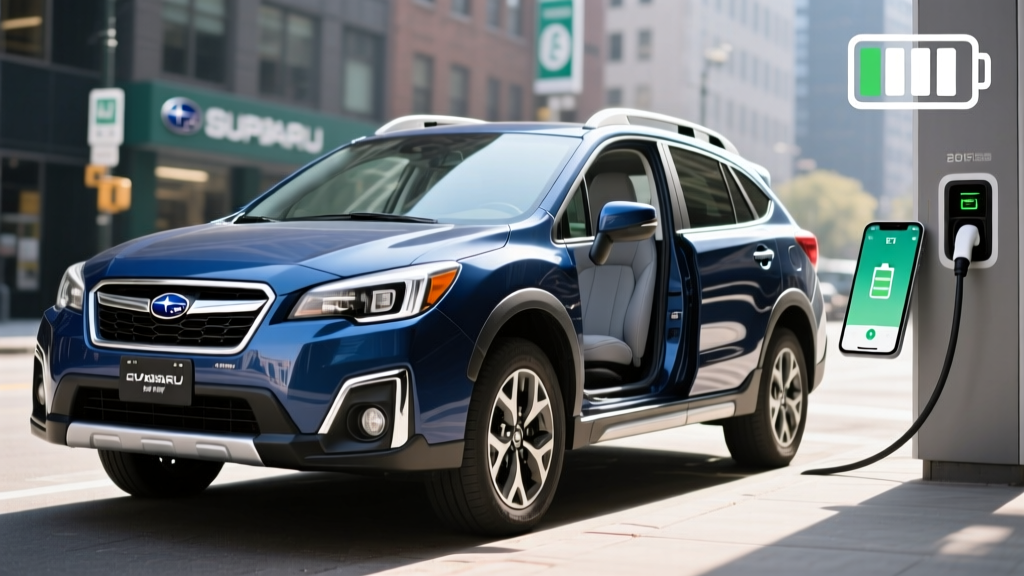
Subaru's first hybrid was a modest one. The 2015 XV Crosstrek Hybrid paired the standard Crosstrek's 2.0-liter flat-four engine with a small electric motor sandwiched into the CVT transmission. The result was a conventional hybrid (HEV) — not a plug-in — that promised incremental fuel-economy gains and a slight power bump without altering the Crosstrek's core appeal: standard all-wheel drive, 8.7 inches of ground clearance, and rugged practicality.
Writing from a 2026 perspective, this model has been off the market for over a decade. Subaru dropped the Crosstrek Hybrid after the 2015 model year in the U.S. (the Crosstrek nameplate continued, but the hybrid variant did not return until the 2019 Crosstrek PHEV). That makes this a used-car-only proposition today. If you're researching one on the secondary market, here's exactly what you need to know about its fuel economy, hybrid battery longevity, reliability, and whether it still makes sense compared to modern hybrids, PHEVs, and full EVs.
| Specification | Value |
|---|---|
| Powertrain Type | Conventional Hybrid (HEV) — no plug |
| Engine | 2.0L Subaru Boxer 4-cylinder |
| Electric Motor | 10 kW (13.4 HP) integrated into CVT |
| Combined System Output | 148 HP |
| Transmission | Lineartronic CVT |
| Drivetrain | Symmetrical All-Wheel Drive (standard) |
| Hybrid Battery | ~0.5 kWh Nickel-Metal Hydride (NiMH) |
| EPA Fuel Economy | 29 city / 33 highway / 31 combined MPG |
| 0–60 mph | ~10.0 seconds (est.) |
| Ground Clearance | 8.7 inches |
| Cargo Volume (rear seats up) | 20.8 cu ft |
| Original MSRP (2015) | $29,270 (single Hybrid Touring trim) |
| Estimated Used Price (2026) | $9,000 – $14,000 depending on mileage/condition |
How Many MPG Does the 2015 Crosstrek Hybrid Get?
The EPA rated the 2015 XV Crosstrek Hybrid at 29 MPG city, 33 MPG highway, and 31 MPG combined. For context, the non-hybrid 2015 Crosstrek with the same 2.0L engine and CVT was rated at 25/33/28 MPG (city/highway/combined). The hybrid's advantage was concentrated in city driving, where the electric motor's torque assist and regenerative braking do the most work.
| Model | City | Highway | Combined |
|---|---|---|---|
| 2015 Crosstrek Hybrid (HEV) | 29 | 33 | 31 |
| 2015 Crosstrek 2.0i CVT (gas) | 25 | 33 | 28 |
| Difference | +4 | 0 | +3 |
That +3 MPG combined improvement was underwhelming even in 2015, and it remains so today. The modest gain came from a hybrid system that added roughly 300 pounds to the vehicle's curb weight. The electric motor's 10 kW output was enough to assist during acceleration and enable brief low-speed electric-only creeping, but it could not sustain electric-only driving at meaningful speeds.
Real-World MPG: What Owners Actually Report
Real-world fuel economy for the 2015 Crosstrek Hybrid tends to cluster around 28–32 MPG combined, according to owner-reported data on fueleconomy.gov's My MPG tracker. Several factors influence this:
- City-heavy driving pushes results toward 30–33 MPG, where regen braking and electric assist shine.
- Highway-dominant commutes often yield 29–31 MPG — the hybrid system provides minimal benefit at sustained speeds.
- Cold weather reduces fuel economy by roughly 10–15% (a common trait across all hybrids and ICE vehicles) due to increased engine idling for cabin heat and reduced battery efficiency.
- All-wheel-drive engagement on slippery or loose surfaces adds drivetrain drag, marginally lowering MPG.
The honest assessment: if you drive mostly in the city, the hybrid's advantage over the gas Crosstrek is real but small — roughly 3–4 MPG. On the highway, the two models are nearly identical. The hybrid's extra purchase cost (roughly $4,000 over a comparably equipped gas Crosstrek when new) would take many years to recoup through fuel savings alone.
Hybrid vs. Plug-In Hybrid: Understanding What the 2015 Crosstrek Hybrid Is (and Isn't)
This is a critical distinction that trips up many used-car shoppers. The 2015 XV Crosstrek Hybrid is a conventional hybrid (HEV). It does not have a charging port, it does not plug into a wall outlet or public charger, and it cannot drive any meaningful distance on electricity alone. Its small NiMH battery recharges exclusively through regenerative braking and engine-driven generation.
| Feature | HEV (this car) | PHEV | BEV (Full EV) |
|---|---|---|---|
| Plugs in? | No | Yes | Yes |
| Electric-only range | ~0.5 mi at low speed | 20–45 mi typical | 200–400+ mi |
| Battery size | ~0.5 kWh | 8–20 kWh | 50–100+ kWh |
| Gas engine? | Yes (primary) | Yes (backup) | No |
| Fuel/energy cost per mile | ~$0.12–$0.15 | ~$0.04 (electric) / $0.12 (gas) | ~$0.03–$0.06 |
| Federal tax credit | No | Up to $7,500 (§30D) | Up to $7,500 (§30D) |
| Example | 2015 Crosstrek Hybrid | 2019–2023 Crosstrek PHEV | Subaru Solterra |
Subaru later offered a true plug-in hybrid — the 2019–2023 Crosstrek PHEV — which used Toyota's Hybrid Synergy Drive (from the Prius Prime), featured an 8.8 kWh lithium-ion battery, offered about 17 miles of electric-only range, and could be plugged into a Level 2 charger. That model qualified for federal and state incentives when new. The 2015 HEV does not and never did.
Hybrid Battery Life, Warranty, and Replacement Cost
The 2015 Crosstrek Hybrid uses a Nickel-Metal Hydride (NiMH) battery pack with approximately 0.5 kWh of capacity. This is a mature, well-understood chemistry that Toyota and Subaru have used across millions of hybrid vehicles. NiMH packs tend to degrade more gracefully than early lithium-ion cells, losing capacity slowly over time rather than experiencing sudden failure.
Battery Warranty (Original)
When new, Subaru covered the 2015 Crosstrek Hybrid's battery under the standard hybrid-component warranty:
- 8 years / 100,000 miles in most states
- 10 years / 150,000 miles in California and states that adopted CARB (California Air Resources Board) emissions standards
As of 2026, even a low-mileage 2015 model is at least 11 years old, meaning the original hybrid battery warranty has expired for all examples on the road. Any battery failure is now an out-of-pocket expense.
How Long Do These Batteries Actually Last?
NiMH hybrid batteries in vehicles of this era typically last 10–15 years or 150,000–200,000 miles before significant degradation or cell failure. Many Toyota Prius and Camry Hybrid NiMH packs from the same period are still functioning, though with reduced capacity. The Crosstrek Hybrid's pack is smaller and under less stress than a PHEV or BEV battery, which works in its favor for longevity.
However, age is the enemy of NiMH chemistry. Even low-mileage examples will experience capacity loss over time. A degraded pack won't necessarily strand you — the car will continue to operate as a slightly less efficient gas vehicle — but you'll lose the hybrid system's MPG benefit and torque assist.
Battery Replacement Cost
If the hybrid battery fails, replacement options include:
- Dealer OEM replacement: $2,500 – $3,500 (parts and labor). Subaru parts availability for a discontinued model may be limited.
- Aftermarket/remanufactured pack: $1,200 – $2,000. Companies like Green Bean Battery offer refurbished NiMH packs with warranties.
- Individual cell replacement: $300 – $800 if only specific cells within the pack have failed. Requires a specialist shop.
Given that a clean 2015 Crosstrek Hybrid sells for roughly $9,000–$14,000 in 2026, a $3,000+ battery replacement represents a significant percentage of the car's value. Factor this risk into your purchase decision, especially for examples with over 120,000 miles.
Driving Impressions and Powertrain Behavior
The hybrid system's 10 kW electric motor adds a modest torque fill during initial acceleration, making the Crosstrek Hybrid feel slightly more responsive from a stop than its gas-only sibling. Combined output of 148 HP (versus 148 HP for the gas model — the electric motor's contribution is offset by the added weight) means this is not a quick vehicle. Expect 0–60 mph times around 10 seconds, which is adequate for merging but uninspiring.
The Lineartronic CVT operates as expected: smooth, drone-heavy under hard acceleration, and unobtrusive during gentle driving. The transition between electric assist and pure engine power is seamless — Subaru's hybrid control software was competent even in this first effort. Regenerative braking is mild; you won't get the strong deceleration feel of a modern EV or PHEV, and one-pedal driving is not possible.
Ride quality and handling are identical to the gas Crosstrek: compliant over rough roads, predictable in corners, and confident on gravel or snow thanks to Subaru's symmetrical AWD. The added weight of the hybrid system (roughly 300 lbs) is noticeable in transitions but not objectionable.
Pros
- Standard AWD — rare for a 2015-era hybrid
- 8.7 inches of ground clearance for rough roads and snow
- Slightly better city MPG than gas Crosstrek
- Proven NiMH battery chemistry with long track record
- Single well-equipped Hybrid Touring trim (leather, sunroof, navigation)
Cons
- Only +3 MPG combined over gas model — poor value proposition
- Hybrid battery warranty expired on all examples
- Added weight offsets power gains
- Reduced cargo space vs. gas Crosstrek (battery pack under load floor)
- No DC fast charging or plug-in capability
- Discontinued after one year — limited parts/support network
Does the 2015 Crosstrek Hybrid Qualify for Any Tax Credits?
No. The 2015 XV Crosstrek Hybrid does not qualify for the federal §30D clean vehicle tax credit, which is available only for new plug-in electric vehicles (PHEVs and BEVs) meeting specific battery-sourcing, MSRP, and buyer-income requirements as defined by the IRS. Conventional hybrids (HEVs) have never been eligible for §30D.
When the vehicle was new, there was no federal tax credit for conventional hybrids. Some states offered modest incentives (typically $500–$1,500 rebates) for hybrid purchases, but these programs have long since expired or evolved to target PHEVs and BEVs.
On the used market, the Used Clean Vehicle Credit (§25E) — which offers up to $4,000 or 30% of the sale price (whichever is less) for qualifying used EVs and PHEVs — also does not apply. The 2015 Crosstrek Hybrid, as a conventional HEV, is ineligible. Always consult a tax professional for your specific situation, and verify current-year rules at IRS.gov.
Who Should Buy the 2015 Crosstrek Hybrid in 2026 — and Who Shouldn't
This vehicle occupies a narrow niche on the used market. Here's a decision framework:
Choose the 2015 Crosstrek Hybrid if:
- You want a used AWD crossover with slightly better city fuel economy than a gas Crosstrek
- You live in a snowy or rural area where ground clearance and AWD matter more than EV range
- You find a well-maintained, low-mileage example at a fair price (under $12,000)
- You're comfortable with the risk of an out-of-warranty hybrid battery
- You cannot charge at home and a PHEV or BEV doesn't make sense for your situation
Look elsewhere if:
- You want meaningful fuel savings — a used Toyota Prius (50+ MPG) or a used PHEV will save far more
- You want plug-in electric range — consider a used 2019+ Crosstrek PHEV, Prius Prime, or RAV4 Prime
- You want modern safety tech — the 2015 Crosstrek lacks automatic emergency braking, lane-keeping, and adaptive cruise
- You're concerned about battery replacement cost on an aging hybrid
- You want the lowest cost per mile — a used BEV (Leaf, Bolt, Model 3) running on home electricity costs $0.03–$0.06/mile vs. this car's $0.12–$0.15/mile
Hybrid vs. PHEV vs. EV — Which Fits You?
The right choice depends on your charging access, daily mileage, and budget:
- Conventional Hybrid (HEV) like this Crosstrek: Best if you can't charge at home, drive long distances regularly, and want the simplicity of gas-only refueling with a modest MPG bump. No plug, no range anxiety, but limited fuel savings.
- Plug-In Hybrid (PHEV): Best if you can charge at home (even a standard 120V outlet works overnight), your daily commute is under 30 miles, and you want electric-only driving for errands with a gas engine for road trips. A used Crosstrek PHEV or RAV4 Prime offers 17–42 miles of electric range.
- Battery Electric Vehicle (BEV): Best if you have reliable home charging, want the lowest operating cost, and are comfortable planning longer road trips around DC fast charging. Modern used BEVs like the Chevy Bolt (259 mi range) or Tesla Model 3 (263+ mi) offer dramatically lower per-mile energy costs.
Reliability and Long-Term Ownership Considerations
The 2015 Crosstrek Hybrid's reliability record is mixed. The underlying 2.0L FB20 engine and CVT are proven Subaru components with a generally solid track record, though the CVT has been a known concern across Subaru's lineup of this era. Subaru issued extended warranty coverage for some CVT models, though this primarily affected non-hybrid variants.
The hybrid-specific components — the electric motor, inverter, and NiMH battery — have proven reliable in service, consistent with Toyota-supplied hybrid technology (Subaru's parent company Fuji Heavy Industries has a long-standing partnership with Toyota). The main risk is age-related battery degradation, as discussed above.
Other ownership considerations for 2026 buyers:
- Parts availability: Hybrid-specific body panels, the unique front grille, and hybrid-system components may be harder to source than standard Crosstrek parts. Mechanical components shared with the gas Crosstrek remain widely available.
- Safety ratings: The 2015 Crosstrek earned Good ratings in most IIHS crash tests, but lacks modern active safety features (EyeSight was not available on the Hybrid Touring trim). By 2026 standards, this is a significant gap.
- Insurance costs: Expect typical rates for a 10-year-old AWD compact crossover — generally affordable, though hybrid-specific repair costs can slightly elevate premiums.
Frequently Asked Questions
How many MPG does the 2015 XV Crosstrek Hybrid get in real-world driving?
The EPA rates it at 29 city / 33 highway / 31 combined MPG. Real-world results typically fall between 28–32 MPG combined, with city-heavy driving yielding the best results and highway-dominant or cold-weather driving producing the lowest figures. The advantage over the gas Crosstrek is roughly 3 MPG combined — modest but measurable.
Can I plug in the 2015 Crosstrek Hybrid to charge it?
No. The 2015 XV Crosstrek Hybrid is a conventional hybrid (HEV), not a plug-in hybrid (PHEV). It has no charging port. The small hybrid battery recharges solely through regenerative braking and the gasoline engine. If you want a plug-in Subaru, look for the 2019–2023 Crosstrek PHEV, which offers about 17 miles of electric-only range and accepts Level 2 charging.
Is the 2015 Crosstrek Hybrid reliable, and what does a battery replacement cost?
The powertrain is generally reliable, with the NiMH hybrid battery lasting 10–15 years in most cases. However, all 2015 models are now outside the original 8-year/100,000-mile hybrid battery warranty. A replacement battery costs $1,200–$3,500 depending on whether you choose a remanufactured or OEM unit. The underlying 2.0L engine and CVT are proven, though CVT longevity should be verified with a pre-purchase inspection.
Does the 2015 Crosstrek Hybrid qualify for any federal or state tax credits?
No. Conventional hybrids (HEVs) are not eligible for the federal §30D new clean vehicle credit or the §25E used clean vehicle credit. These credits are reserved for plug-in vehicles (PHEVs and BEVs) meeting specific requirements. No current state incentives apply to used conventional hybrids either.
How does the 2015 Crosstrek Hybrid compare to a used Toyota Prius or RAV4 Hybrid?
The Prius delivers roughly 50 MPG combined — nearly 20 MPG better than the Crosstrek Hybrid — but lacks AWD and ground clearance. The Toyota RAV4 Hybrid (2016+) offers AWD and 32–33 MPG combined with a more modern hybrid system and better cargo space. If AWD is non-negotiable, the RAV4 Hybrid is the stronger used buy. If ground clearance for rough roads or deep snow is your priority, the Crosstrek Hybrid's 8.7 inches of clearance is hard to match in the hybrid segment.
What should I check before buying a used 2015 Crosstrek Hybrid?
Prioritize a pre-purchase inspection that includes: (1) hybrid battery state-of-health check via OBD-II scan tool, (2) CVT fluid condition and shift behavior, (3) brake system wear (regen braking reduces pad wear, but rotors can corrode from light use), and (4) rust inspection on the undercarriage, especially in salt-belt states. Verify the hybrid system warning light is not illuminated and that the energy-flow display on the center screen shows normal battery charge/discharge cycling.