Quick Verdict: A Proven Midsize Hybrid for Budget-Conscious Buyers
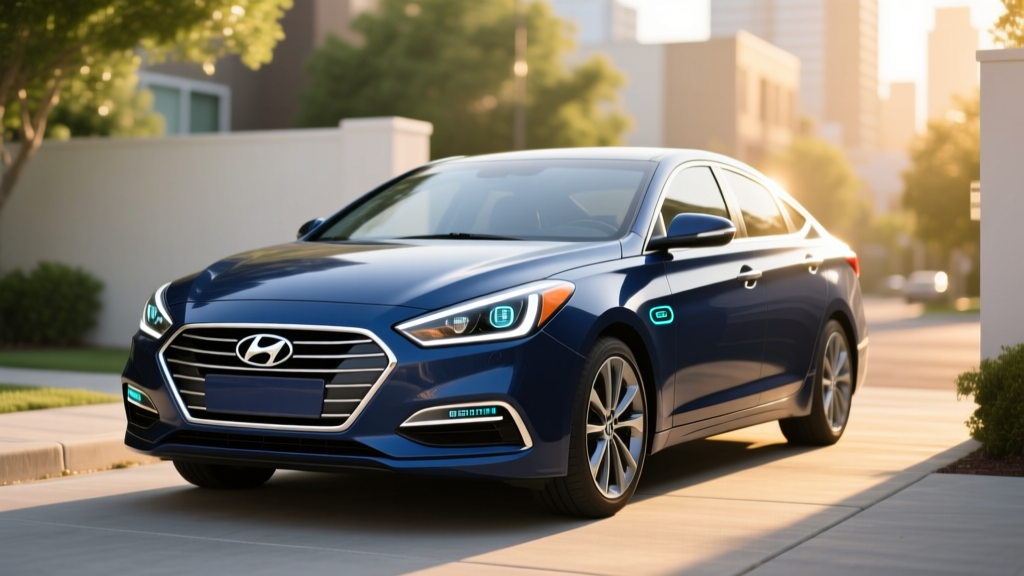
The 2015 Hyundai Sonata Hybrid sedan occupies a specific niche in today's used-car market: a conventional hybrid (HEV) that delivers strong city fuel economy without requiring any plug-in infrastructure. With an EPA-estimated 38 MPG combined, a 2.0-liter four-cylinder paired with a 38 kW electric motor, and Hyundai's generous 10-year/100,000-mile hybrid battery warranty (transferable on some models), it remains a pragmatic choice for drivers who want hybrid efficiency without the complexity of a plug-in hybrid or full EV.
But in 2026, with used EV prices dropping and newer hybrids offering 50+ MPG, where does a decade-old Sonata Hybrid stand? This guide covers every number that matters — real-world MPG, battery longevity, replacement costs, and whether this sedan still makes financial sense.
| Spec | Value |
|---|---|
| Powertrain Type | Conventional Hybrid (HEV) — no plug-in |
| Engine | 2.0L GDI 4-cylinder (154 hp) + 38 kW electric motor |
| Combined System Output | 199 hp |
| Transmission | 6-speed automatic |
| Hybrid Battery | 1.4 kWh lithium-polymer (Li-Po) |
| EPA MPG (City / Hwy / Combined) | 36 / 40 / 38 |
| Fuel Tank | 18.5 gallons |
| Total Range | ~703 miles |
| 0–60 mph | ~8.2 seconds |
| Cargo Volume | 16.3 cu ft (trunk; battery intrudes slightly) |
| Original MSRP (Base) | $26,825 |
| Typical 2026 Used Price | $7,500–$12,000 (depending on mileage/condition) |
| Hybrid Battery Warranty (Original) | 10 years / 100,000 miles |
How Many MPG Does the 2015 Sonata Hybrid Actually Get?
The EPA rates the 2015 Hyundai Sonata Hybrid at 36 MPG city, 40 MPG highway, and 38 MPG combined. These figures apply to the standard trim; the Limited trim, with its additional weight from features like panoramic sunroof and upgraded wheels, carries identical EPA ratings.
| Driving Condition | EPA Estimate | Real-World Expectation |
|---|---|---|
| City | 36 MPG | 37–42 MPG (hybrids excel in stop-and-go) |
| Highway | 40 MPG | 35–38 MPG (sustained 70+ mph reduces regen benefit) |
| Combined | 38 MPG | 36–40 MPG (varies with driving mix) |
| Cold Weather (below 32°F) | — | 30–34 MPG (engine runs more for cabin heat) |
Real-world note: Like most conventional hybrids, the Sonata Hybrid tends to exceed its EPA city rating in actual urban driving. Regenerative braking recaptures energy at every stoplight, and the electric motor handles low-speed acceleration without engaging the gas engine. On fueleconomy.gov, owners report averages clustering around 37–41 MPG combined. However, sustained highway driving at 75+ MPH and cold-weather operation reduce efficiency noticeably — the engine must run continuously for cabin heating since there's no electric heat pump.
Hybrid vs Plug-In Hybrid: What the 2015 Sonata Is (and Isn't)
A critical distinction for shoppers: the 2015 Hyundai Sonata Hybrid is a conventional HEV, not a plug-in hybrid (PHEV). It does not have a charge port, cannot be plugged in, and has no electric-only driving range beyond brief low-speed EV mode bursts (typically under 1 mile at speeds below 25 mph). The 1.4 kWh battery recharges exclusively through regenerative braking and the gas engine.
Hyundai did not offer a Sonata Plug-In Hybrid until the 2016 model year, which featured a 9.8 kWh battery and approximately 27 miles of electric-only range. If you need plug-in capability, the 2015 model year is not the right choice.
| Feature | 2015 Sonata Hybrid (HEV) | 2016 Sonata Plug-In (PHEV) |
|---|---|---|
| Battery Capacity | 1.4 kWh | 9.8 kWh |
| Plug-In Charging | No | Yes (Level 1/Level 2) |
| Electric-Only Range | ~0.5 mi at low speed | ~27 mi (EPA) |
| Combined MPG / MPGe | 38 MPG | 99 MPGe (electric) / 39 MPG (gas) |
| DC Fast Charging | N/A | No (Level 2 max, ~2.5 hours) |
| Federal Tax Credit (Original) | None | Up to $4,543 (expired for new purchases) |
Powertrain Deep Dive: 199 HP from a 2.0L + Electric Motor
The 2015 Sonata Hybrid uses Hyundai's TMED (Transmission-Mounted Electric Device) architecture. The 2.0-liter GDI four-cylinder produces 154 hp and 140 lb-ft of torque on its own, while the 38 kW (51 hp) electric motor is sandwiched between the engine and the 6-speed automatic transmission. Combined system output is 199 hp.
Unlike some competitors that used continuously variable transmissions (CVTs) — such as the Toyota Camry Hybrid — Hyundai opted for a traditional 6-speed automatic. This gives the Sonata Hybrid a more conventional driving feel with distinct shift points, though it sacrifices some efficiency compared to CVT-based systems. The 0–60 mph time of approximately 8.2 seconds is adequate for merging and passing but won't feel quick by 2026 standards.
The electric motor handles initial launch from a stop, engine restarts at speed, and torque-fill during upshifts. Transition between electric and gas power is generally smooth, though you'll notice the engine engage audibly under hard acceleration or when the battery state of charge drops low.
Battery Longevity, Warranty, and Replacement Costs
For any used hybrid buyer, battery health is the primary concern. The 2015 Sonata Hybrid's 1.4 kWh lithium-polymer battery is relatively small compared to EV packs, which actually works in its favor — shallow charge/discharge cycles and conservative state-of-charge windows reduce degradation stress.
Hyundai Hybrid Battery Warranty
- Original coverage: 10 years / 100,000 miles (whichever comes first)
- Transferability: Hyundai's hybrid battery warranty transfers to subsequent owners on most model years, but coverage may reduce to 5 years/60,000 miles for second owners — verify with a Hyundai dealer using the VIN
- Capacity threshold: Hyundai typically covers batteries that fall below ~60–70% of original capacity or develop faults
- For a 2015 model: Original 10-year warranty expired in 2025; any remaining coverage would depend on mileage and transferability terms
Battery replacement cost: If the hybrid battery fails outside warranty, expect to pay $2,000–$3,500 for a new OEM replacement pack at a dealership, including labor. Independent hybrid specialists and refurbished battery options can reduce this to $1,200–$2,000. Given the battery's small size (1.4 kWh) compared to an EV pack (60–100 kWh), replacement is far less expensive than a full EV battery swap.
Real-world longevity data: Hyundai's lithium-polymer hybrid batteries from this era have proven durable. Many 2011–2015 Sonata Hybrids have surpassed 150,000 miles on the original pack. The battery is located behind the rear seat, which provides some thermal buffering from the cabin HVAC system. That said, examples in extreme-heat climates (Arizona, Texas) may show slightly more degradation due to sustained high ambient temperatures.
Who Should Buy the 2015 Sonata Hybrid — and Who Shouldn't
With used prices in the $7,500–$12,000 range in 2026, the Sonata Hybrid appeals to a specific buyer profile. Here's a practical decision framework:
Choose the 2015 Sonata Hybrid If:
- You drive 10,000–15,000 miles per year, mostly in city or mixed suburban commuting
- You cannot install a home charger (apartment, no garage) and need a vehicle that requires zero plug-in infrastructure
- You want lower fuel costs than a gas-only midsize sedan (38 MPG vs ~28 MPG for the gas Sonata) without EV range planning
- Your budget is under $12,000 and you want proven hybrid reliability
- You value a large trunk (16.3 cu ft) and comfortable rear seat over sporty driving dynamics
Look Elsewhere If:
- You want electric-only driving for short commutes — consider a PHEV like the Toyota Prius Prime or a used Chevrolet Volt
- You primarily drive highway miles at 75+ MPH — the hybrid advantage shrinks, and a modern turbo-diesel or efficient gas car may match it
- You want the latest safety tech — the 2015 Sonata lacks standard automatic emergency braking, lane-keeping assist, and adaptive cruise control (available only on higher trims or not at all)
- You want to eliminate gas entirely — a used EV like the Nissan Leaf (30–40k miles, ~$10,000) may suit you better if you have home charging
Tax Credits and Incentives: What Applies in 2026
The 2015 Hyundai Sonata Hybrid does not qualify for the federal §30D clean vehicle tax credit. That credit applies only to plug-in electric vehicles (BEVs and PHEVs) with sufficient battery capacity. Conventional hybrids like this Sonata are excluded regardless of purchase year.
When new, no federal incentive existed for conventional hybrids either. Some states offered rebates or HOV lane access for hybrids at the time of purchase, but these have largely expired or been redirected toward plug-in vehicles.
Used-buyer note: The IRS previously offered a used clean vehicle credit (up to $4,000 or 30% of sale price) for qualifying used EVs and PHEVs purchased from a dealer. Conventional hybrids like the 2015 Sonata Hybrid are not eligible for this credit. Always verify current rules with a tax professional before assuming any incentive applies.
Pros
- 38 MPG combined EPA; often exceeds in city driving (40+ MPG)
- No plug-in required — works with existing gas infrastructure
- Spacious trunk and rear seat for a midsize sedan
- Proven lithium-polymer battery with strong longevity track record
- Affordable used pricing ($7,500–$12,000 in 2026)
- Smooth 6-speed automatic (no CVT drone)
Cons
- No electric-only driving range (not a PHEV)
- No federal tax credit eligibility (new or used)
- Highway MPG drops noticeably above 70 mph
- Cold-weather efficiency loss (no heat pump; engine runs for cabin heat)
- Dated infotainment by 2026 standards (no wireless CarPlay/Android Auto on most trims)
- Advanced driver-assist features (AEB, lane-keeping) not standard
Hybrid vs PHEV vs EV: Which Powertrain Fits You?
The 2015 Sonata Hybrid sits at one end of the electrification spectrum. Here's how it compares to the alternatives for a 2026 buyer:
| Factor | HEV (This Sonata) | PHEV (e.g., Prius Prime) | BEV (e.g., Used Bolt EV) |
|---|---|---|---|
| Plug-In Required | No | Optional (maximizes savings) | Yes (mandatory) |
| Electric-Only Range | ~0.5 mi | 25–44 mi | 200–260 mi |
| Fuel Cost (Annual, 12k mi) | ~$1,050 (gas) | ~$450–$750 (mix) | ~$480 (electric, home charging) |
| Used Price Range (2026) | $7,500–$12,000 | $18,000–$28,000 | $10,000–$18,000 |
| Maintenance Complexity | Low (gas + small hybrid system) | Medium (gas + larger battery) | Lowest (no gas engine) |
| Best For | No home charging, budget buyers | Short commutes + road trips | Home charging access, daily driving |
Frequently Asked Questions
How many MPG does the 2015 Hyundai Sonata Hybrid get in real-world driving?
Owners typically report 37–41 MPG combined, often exceeding the EPA's 38 MPG combined estimate in city-heavy driving. Highway-only driving at 75+ MPH may drop to 33–36 MPG. Cold weather (below freezing) can reduce efficiency to 30–34 MPG due to increased engine runtime for cabin heating.
Is the 2015 Sonata Hybrid a plug-in vehicle?
No. The 2015 Sonata Hybrid is a conventional hybrid (HEV). It has no charge port and cannot be plugged in. The 1.4 kWh battery charges solely through regenerative braking and the gas engine. Hyundai introduced the Sonata Plug-In Hybrid (PHEV) for the 2016 model year.
Is the hybrid battery reliable, and what does replacement cost?
Yes — Hyundai's lithium-polymer hybrid batteries from this generation have a strong reliability record, with many examples exceeding 150,000 miles on the original pack. If replacement is needed outside warranty, expect $2,000–$3,500 at a dealer or $1,200–$2,000 through an independent hybrid specialist. The original 10-year/100,000-mile warranty has expired for most 2015 models as of 2025.
Does the 2015 Sonata Hybrid qualify for any tax credit?
No. Conventional hybrids are not eligible for the federal §30D clean vehicle tax credit, which applies only to plug-in vehicles (BEVs and PHEVs). The used clean vehicle credit also excludes conventional hybrids. Some states may offer minimal registration or inspection fee benefits, but no significant purchase incentives apply. Consult a tax professional for your specific situation.
How does the 2015 Sonata Hybrid compare to the Toyota Camry Hybrid of the same year?
The 2015 Camry Hybrid LE achieves a higher EPA combined rating of 41 MPG (vs. 38 MPG) thanks to its CVT and more optimized hybrid system. However, the Sonata Hybrid offers a more conventional driving feel with its 6-speed automatic, a slightly larger trunk, and comparable interior space. Both have strong reliability records. The Camry Hybrid typically commands a higher used price ($9,000–$14,000) reflecting its fuel-economy advantage.
What should I check before buying a used 2015 Sonata Hybrid?
Prioritize a pre-purchase inspection that includes hybrid battery health (state of health / SoH readout via OBD-II scanner), inverter coolant level, and regenerative braking function. Check for any open recalls on NHTSA.gov using the VIN. Verify maintenance records — the 2.0L GDI engine benefits from regular oil changes to prevent carbon buildup on intake valves, a known issue with direct-injection engines of this era.