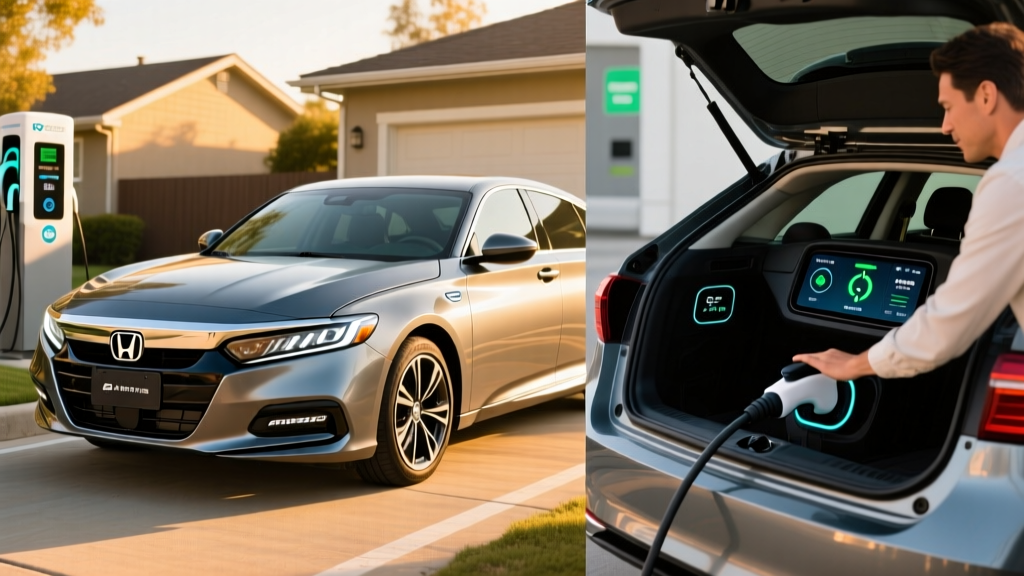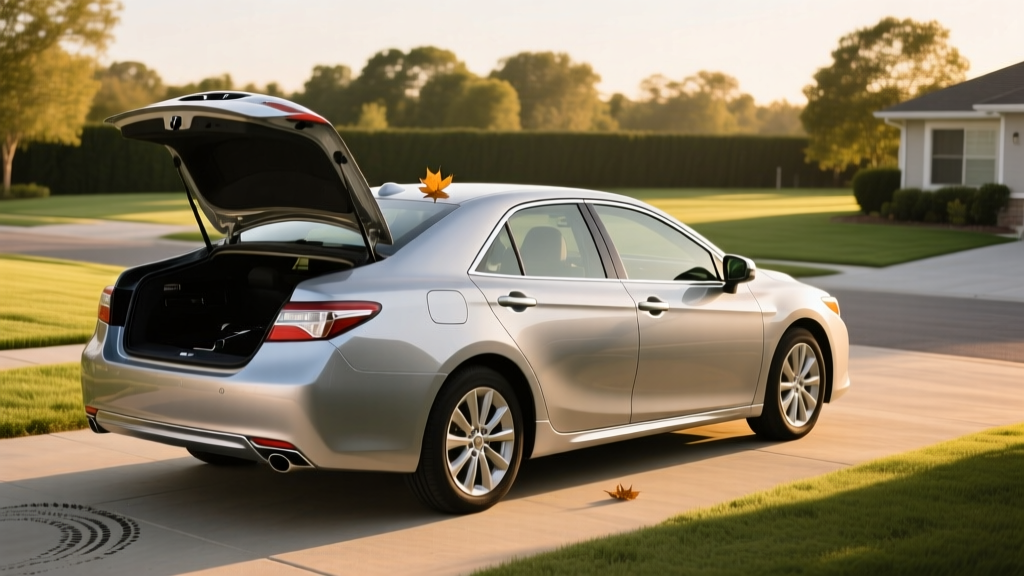
Quick Verdict: A Proven Hybrid Workhorse
The 2014 Toyota Camry Hybrid LE remains one of the most fuel-efficient midsize sedans ever sold in the United States, and over a decade after its debut, it continues to deliver exceptional real-world economy for second- and third-owner buyers. With an EPA-rated 41 MPG combined, a bulletproof 2.5-liter Atkinson-cycle powertrain, and Toyota's hybrid synergy drive system, this generation Camry Hybrid is a benchmark for conventional hybrid (HEV) reliability.
This is not a plug-in hybrid (PHEV) and not an electric vehicle. The 2014 Camry Hybrid LE requires no plug, no charging station, and no behavioral change from a standard gas car — it simply uses less fuel. For buyers evaluating whether a used HEV, a newer PHEV, or a full BEV is the right move in 2026, this profile provides the hard data to decide.
| Specification | 2014 Toyota Camry Hybrid LE |
|---|---|
| Powertrain Type | Conventional Hybrid (HEV) — no plug |
| Engine | 2.5L 4-cyl Atkinson-cycle (156 hp) |
| Electric Motor | Permanent-magnet AC synchronous (105 kW / 141 hp) |
| Combined System Output | 200 hp (net) |
| Transmission | eCVT (planetary gearset, not belt-driven) |
| Hybrid Battery | 1.6 kWh nickel-metal hydride (NiMH) |
| EPA MPG (City / Hwy / Combined) | 43 / 39 / 41 |
| Fuel Tank | 17.2 gallons |
| Total Range | ~705 miles |
| 0–60 mph | ~7.6 seconds |
| Drivetrain | Front-wheel drive |
| Curb Weight | ~3,435 lbs |
| Original MSRP (2014) | $26,950 |
| Current Used Price (2026 est.) | $8,000–$13,000 |
Fuel Economy: EPA vs. Real-World MPG
The EPA rates the 2014 Camry Hybrid LE at 43 city / 39 highway / 41 combined MPG. These figures come from fueleconomy.gov, the official source for EPA test-cycle data.
Like most Toyota hybrids using the Atkinson-cycle engine and aggressive regenerative braking, the Camry Hybrid LE tends to exceed its EPA city rating in stop-and-go traffic. The electric motor handles low-speed propulsion where internal combustion engines are least efficient, and regenerative braking recaptures energy that would otherwise be lost as heat. Owners on Fuelly and in long-term tests regularly report 42–46 MPG in urban and suburban driving.
Highway MPG tells a different story. At sustained 70–80 mph speeds, aerodynamic drag dominates, and the relatively small 1.6 kWh battery provides minimal electric assist. Expect 36–39 MPG on the highway, sometimes dipping to 34–35 MPG in cold weather or at high altitude. This city-better-than-highway characteristic is a hallmark of conventional hybrids and the opposite of what you see with most gas-only vehicles.
| Driving Scenario | Expected MPG | Notes |
|---|---|---|
| City / stop-and-go | 42–46 | Often exceeds EPA; regen braking shines |
| Suburban mixed | 40–43 | Close to EPA combined |
| Highway (65 mph) | 38–40 | Near EPA highway rating |
| Highway (75+ mph) | 34–37 | Aero drag reduces efficiency |
| Cold weather (below 32°F) | 35–39 | Engine runs more for cabin heat |
For context, the average 2026 gasoline midsize sedan achieves roughly 28–32 MPG combined. The Camry Hybrid LE delivers approximately 30–40% better fuel economy without any plug-in infrastructure or range compromises.
HEV vs. PHEV vs. EV: Where the Camry Hybrid Fits
The 2014 Camry Hybrid LE is a conventional hybrid electric vehicle (HEV). It cannot be plugged in. Its 1.6 kWh nickel-metal hydride battery charges exclusively through regenerative braking and the gasoline engine. This is fundamentally different from a plug-in hybrid (PHEV) like the Toyota Prius Prime or a full battery-electric vehicle (BEV) like the Tesla Model 3.
| Feature | HEV (Camry Hybrid LE) | PHEV (e.g., Prius Prime) | BEV (e.g., Model 3) |
|---|---|---|---|
| Plug-in Required? | No | Yes (Level 1 or 2) | |
| Electric-Only Range | ~1 mile at low speed | 25–44 miles (2026 models) | |
| Battery Size | 1.6 kWh (NiMH) | 13.6 kWh (Li-ion) | |
| Total Range | ~705 miles | ~400+ miles (gas + electric) | |
| Fuel/Charging Cost | Gas only (~$0.10/mi) | Gas + electricity (~$0.06–0.10/mi) | |
| Federal Tax Credit | None | Up to $7,500 (§30D, if eligible) | |
| Home Charging Needed? | No | Recommended | |
| Best For | No charging access, high mileage | Short commutes + home charging |
The Camry Hybrid LE is ideal for drivers who lack access to home or workplace charging, who drive high annual mileage (15,000+ miles/year), or who want maximum simplicity. There is no charging cable, no preconditioning routine, no dependency on public charging networks. You fuel it at any gas station and drive.
If you have reliable Level 2 home charging and a commute under 40 miles, a modern PHEV like the 2026 Prius Prime (44 miles electric-only) can eliminate gasoline use on most weekday driving. If your commute is short, you have home charging, and you want zero tailpipe emissions, a BEV is the more forward-looking choice. But for pure cost-per-mile with zero infrastructure requirements, the 2014 Camry Hybrid LE remains difficult to beat — especially at its current used-car pricing.
Powertrain and Driving Experience
Toyota's Hybrid Synergy Drive pairs a 2.5-liter four-cylinder Atkinson-cycle engine (156 hp, 156 lb-ft torque) with a 105 kW permanent-magnet electric motor. Combined net output is 200 horsepower. The Atkinson cycle sacrifices some low-RPM torque for higher thermal efficiency — the electric motor compensates for this at launch, delivering smooth, torque-rich acceleration from a stop.
The eCVT transmission is not a traditional belt-and-cone continuously variable transmission. It uses a planetary gearset that seamlessly blends engine and motor power with no belts, no clutches, and minimal friction losses. This design has proven extraordinarily durable — there are no belts to replace and far fewer wear components than a conventional automatic or dual-clutch transmission.
The 0–60 mph time of approximately 7.6 seconds is adequate for merging and passing but not sporty. The LE trim prioritizes comfort: soft suspension tuning, light steering effort, and a quiet cabin at city speeds. Road noise becomes noticeable above 70 mph, and the 3,435-lb curb weight (about 200 lbs more than the gas Camry LE) is perceptible in corners. This is a commuter appliance in the best sense — optimized for efficiency and comfort over engagement.
Hybrid Battery: Lifespan, Warranty, and Replacement Cost
The 2014 Camry Hybrid LE uses a 1.6 kWh nickel-metal hydride (NiMH) battery pack located behind the rear seat. NiMH chemistry is less energy-dense than modern lithium-ion but has a well-documented longevity profile. Toyota's hybrid battery management system keeps the pack in a narrow state-of-charge window (roughly 40–80%), which dramatically reduces degradation.
Original Hybrid Battery Warranty: 8 years / 100,000 miles (10 years / 150,000 miles in California and states adopting CARB emissions standards).
Current Status (2026): A 2014 model is now 12 years old. The original factory battery warranty has expired for most vehicles, regardless of mileage.
Despite warranty expiration, real-world data shows that Toyota's NiMH hybrid batteries from this era frequently last 150,000–200,000+ miles before requiring replacement. Taxis and fleet vehicles running Camry and Prius hybrids have logged 300,000+ miles on original packs, though with measurable capacity loss. The battery does not typically fail catastrophically; instead, individual modules degrade, reducing electric-assist capability and fuel economy by 2–5 MPG.
Replacement costs in 2026:
- Toyota dealer (new OEM pack): $3,000–$4,000 installed
- Refurbished/reconditioned pack: $1,500–$2,500 installed
- Individual module replacement (independent shop): $800–$1,500, depending on how many modules are degraded
Before purchasing a used 2014 Camry Hybrid LE, request a hybrid battery health check from a Toyota dealer or a hybrid-specialist shop. A scan tool can read individual module voltages and internal resistance — a spread of more than 0.2V between modules indicates impending degradation. Also check for the battery cooling fan intake vent (behind the rear seat on the passenger side) and ensure it is not blocked by debris or cargo, as overheating accelerates NiMH degradation.
Reliability, Safety, and Long-Term Ownership
The 2014 Camry Hybrid LE benefits from one of the most thoroughly validated hybrid powertrains in automotive history. Toyota's hybrid system, introduced with the original Prius in 1997, had been through multiple generations by 2014. Common failure points on gas-only Camrys of this era (water pump, ignition coils) are present but no more frequent than average. The hybrid-specific components — the inverter, the motor-generators, the eCVT planetary gearset — have exceptionally low failure rates.
The NHTSA awarded the 2014 Camry Hybrid a 5-star overall safety rating. The IIHS rated it Good in most crashworthiness categories, though it received a Marginal rating in the small-overlap front test (a common weakness for vehicles designed before that test was introduced in 2012).
Maintenance advantages over gas-only vehicles:
- Regenerative braking significantly extends brake pad life — 80,000–100,000+ miles on original pads is common
- No starter motor (the hybrid motor-generator starts the engine)
- No alternator (the DC-DC converter charges the 12V battery)
- No traditional transmission fluid to change (the eCVT uses ATF but at longer intervals)
Maintenance items that still apply:
- Engine oil changes (0W-20 synthetic, every 10,000 miles)
- Engine air filter and cabin air filter
- Coolant service (engine and inverter coolant are separate systems)
- 12V auxiliary battery replacement every 4–6 years (a standard 12V battery, not the hybrid traction pack)
Tax Credits and Incentives
The 2014 Toyota Camry Hybrid LE is a conventional hybrid (HEV), not a plug-in hybrid or electric vehicle. It does not qualify for the federal §30D new clean vehicle tax credit (up to $7,500), which applies only to plug-in vehicles meeting battery sourcing and MSRP requirements under current IRS rules.
It also does not qualify for the §25E used clean vehicle credit (up to $4,000), which similarly requires a plug-in vehicle with a minimum 7 kWh battery capacity.
Some states historically offered rebates for conventional hybrids, but most of these programs have been retired or redirected toward PHEVs and BEVs. Check your state's energy office or department of environmental quality for any remaining hybrid incentive programs, but do not expect meaningful financial incentives for purchasing a used HEV in 2026.
The economic case for the 2014 Camry Hybrid LE rests entirely on its low purchase price and fuel savings. At $8,000–$13,000 on the used market and 41+ MPG, the total cost of ownership is among the lowest of any midsize sedan.
5-Year Ownership Cost Estimate
| Cost Category | 2014 Camry Hybrid LE | 2014 Camry Gas (4-cyl) |
|---|---|---|
| Purchase Price (avg.) | $10,500 | $9,500 |
| Fuel (15k mi/yr, 5 yrs, $3.40/gal) | $6,220 | $8,500 |
| Insurance (avg.) | $5,500 | $5,500 |
| Maintenance & Repairs | $2,800 | $3,200 |
| Depreciation (est. 5-yr) | $4,000 | $4,000 |
| Total 5-Year Cost | $29,020 | $30,700 |
| Cost Per Mile | $0.39 | $0.41 |
The hybrid's fuel savings of approximately $2,280 over five years more than offset its slightly higher used-car purchase premium. If gas prices rise above $4.00/gallon, the savings widen further. Brake savings (fewer pad replacements due to regenerative braking) add another $200–$400 over the period.
Pros
- 41 MPG combined EPA; often 42–46 in city driving
- 700+ mile total range on a single tank
- No plug required — zero infrastructure dependency
- Proven hybrid system with 200k+ mile battery lifespan
- Low maintenance costs (extended brake life, no starter/alternator)
- 5-star NHTSA safety rating
- Comfortable ride, quiet at city speeds
Cons
- Highway MPG drops to 34–37 at 75+ mph
- Hybrid battery warranty expired; replacement is $1,500–$4,000
- No federal or state tax credits available
- Marginal IIHS small-overlap crash test rating
- Dated infotainment (no Apple CarPlay/Android Auto natively)
- Modest 200 hp; not a performance-oriented sedan
- Road noise at highway speeds
Who Should Buy the 2014 Camry Hybrid LE?
Choose the 2014 Camry Hybrid LE if:
- You drive 15,000+ miles per year, primarily in city or suburban conditions
- You lack access to home or workplace EV/PHEV charging
- You want a sub-$13,000 vehicle with the lowest possible cost-per-mile
- You prioritize reliability and low maintenance over technology features
- You need a midsize sedan with comfortable rear seating and a large trunk
Look elsewhere if:
- You want electric-only driving (consider a PHEV like the Prius Prime or RAV4 Prime)
- You want zero tailpipe emissions (consider a BEV like the Chevy Bolt or Model 3)
- You need modern infotainment with wireless CarPlay/Android Auto
- You primarily drive long highway routes at 80+ mph (the highway MPG advantage narrows)
- You want the latest ADAS features (the 2014 model lacks Toyota Safety Sense, introduced on the Camry in 2018)
Frequently Asked Questions
How many MPG does the 2014 Toyota Camry Hybrid LE get?
The EPA rates it at 43 city / 39 highway / 41 combined MPG. In real-world city driving, owners frequently report 42–46 MPG thanks to regenerative braking and electric-assist at low speeds. Highway driving at 75+ mph typically yields 34–37 MPG.
Is the 2014 Camry Hybrid a plug-in vehicle?
No. It is a conventional hybrid (HEV). The 1.6 kWh battery charges through regenerative braking and the gasoline engine. There is no plug, no charging port, and no electric-only driving mode beyond brief low-speed maneuvers.
How long does the hybrid battery last, and what does replacement cost?
Toyota's NiMH hybrid batteries from this era commonly last 150,000–200,000+ miles. A new OEM replacement pack costs $3,000–$4,000 installed at a dealer. Refurbished packs run $1,500–$2,500, and individual module replacement at an independent hybrid shop can be as low as $800–$1,500.
Does the 2014 Camry Hybrid qualify for any tax credit?
No. Federal §30D and §25E tax credits apply only to plug-in vehicles (PHEVs and BEVs) meeting battery capacity and sourcing requirements. Conventional hybrids like the Camry Hybrid LE do not qualify. Check your state energy office for any remaining hybrid-specific incentives, though most have been discontinued.
Is the 2014 Camry Hybrid LE reliable?
Yes. Toyota's hybrid powertrain from this generation is among the most reliable in the industry. The eCVT planetary gearset has no belts or clutches to fail, regenerative braking extends brake life dramatically, and the hybrid system eliminates the starter motor and alternator. The primary long-term cost risk is hybrid battery replacement after 150,000+ miles.
How does it compare to a modern PHEV or EV in 2026?
A 2026 PHEV like the Prius Prime offers 44 miles of electric-only range and up to $7,500 in federal tax credits (if eligible), but costs $33,000+ new. A BEV like the Chevy Equus EV or Tesla Model 3 eliminates gasoline entirely but requires home charging and costs $35,000+. The 2014 Camry Hybrid LE at $8,000–$13,000 offers the lowest total cost of ownership for high-mileage drivers without charging access.
What should I check before buying a used 2014 Camry Hybrid?
Request a hybrid battery health scan showing individual module voltages. Check the battery cooling fan vent behind the rear seat for blockage. Verify maintenance records for inverter coolant service. Test-drive for any hesitation during the engine-to-electric transition, which should be seamless. Confirm the 12V auxiliary battery age — it should be replaced every 4–6 years.