Quick Verdict: The 2014 Lexus CT 200h Hybrid in 2026
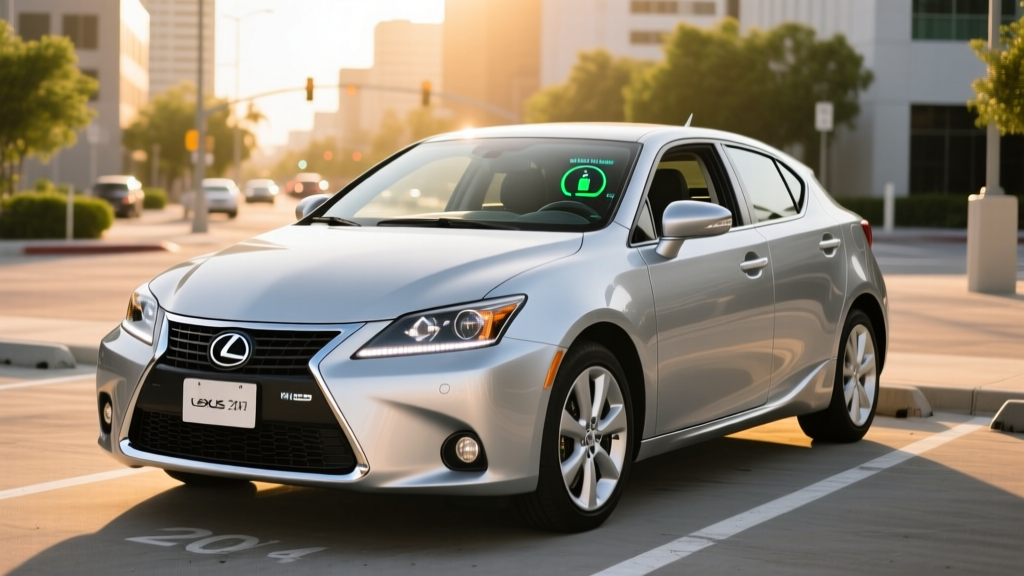
The 2014 Lexus CT 200h remains one of the most fuel-efficient luxury compacts ever sold in the United States, and more than a decade after its debut, it continues to deliver real-world value as a used hybrid. Built on Toyota's proven third-generation Prius powertrain, the CT 200h pairs a 1.8-liter Atkinson-cycle four-cylinder with an electric motor for a combined 134 horsepower and an EPA-estimated 42 MPG combined. For buyers shopping the used hybrid market in 2026, it represents an accessible entry point into electrified driving — no plug required, no range anxiety, and Toyota-Lexus reliability backing the hybrid battery.
This guide covers everything a prospective used buyer needs: exact fuel economy data, powertrain specifications, battery longevity and replacement costs, how the CT 200h stacks up against modern PHEVs and BEVs, and whether any tax incentives still apply to a 2014 model.
2014 Lexus CT 200h Hybrid Specs at a Glance
| Specification | Value |
|---|---|
| Powertrain Type | Conventional Hybrid (HEV) — no plug-in |
| Engine | 1.8L Atkinson-cycle inline-4 |
| Electric Motor | Permanent-magnet synchronous (60 kW / 80 hp) |
| Combined System Output | 134 hp |
| Transmission | ECVT (electronically controlled CVT) |
| Hybrid Battery | 1.3 kWh nickel-metal hydride (NiMH) |
| 0–60 mph | 9.8 seconds |
| Drivetrain | Front-wheel drive |
| EPA Fuel Economy (City) | 43 MPG |
| EPA Fuel Economy (Highway) | 40 MPG |
| EPA Fuel Economy (Combined) | 42 MPG |
| Fuel Tank Capacity | 11.9 gallons |
| Total Range | ~499 miles |
| Original MSRP (Base) | $32,050 |
| 2026 Used Price Range | $9,000–$15,000 (depending on mileage/condition) |
| Hybrid Battery Warranty (Original) | 8 years / 100,000 miles (10 yr / 150,000 mi in CARB states) |
Fuel Economy: EPA Ratings vs. Real-World MPG
| Driving Scenario | EPA Estimate | Real-World Expectation |
|---|---|---|
| City | 43 MPG | 44–48 MPG (hybrids excel in stop-and-go) |
| Highway (70 mph) | 40 MPG | 37–40 MPG (aero drag, less regen benefit) |
| Combined | 42 MPG | 40–45 MPG (mixed driving) |
| Cold Weather (below 30°F) | N/A | 35–38 MPG (engine runs more for cabin heat) |
The CT 200h's hybrid system recaptures energy during braking and deceleration, which means city driving — with frequent stops — actually yields better mileage than highway cruising. Many owners report exceeding the EPA city estimate in warm-weather urban commuting, with some seeing 46–48 MPG on flat terrain at moderate speeds.
However, cold weather erodes these gains. Below freezing, the gasoline engine runs more frequently to provide cabin heat and maintain battery temperature, dropping real-world economy to the mid-30s. If your commute is mostly highway at 75+ mph, expect numbers closer to 37–38 MPG rather than the EPA's 40.
According to fueleconomy.gov, the 2014 CT 200h's combined 42 MPG places it among the most efficient non-plug-in luxury vehicles ever rated by the EPA. For context, that's roughly $1,100–$1,300 per year in fuel costs at 15,000 miles driven annually and $3.40/gallon regular unleaded — about $600–$800 less per year than a comparable 28 MPG gasoline compact.
HEV vs. PHEV vs. BEV: Where the CT 200h Fits
Understanding the distinction matters before you buy:
- HEV (Conventional Hybrid) — CT 200h: Charges its own small battery through regenerative braking and the gasoline engine. You never plug it in. There is no meaningful electric-only driving range; the electric motor assists the gas engine and enables brief low-speed electric-only movement, but the car is fundamentally gasoline-powered with electric assist.
- PHEV (Plug-in Hybrid): Has a larger battery (typically 8–20 kWh) that charges from a wall outlet or charger, giving 20–50 miles of electric-only range before the gas engine takes over. Examples: Toyota RAV4 Prime, Jeep Wrangler 4xe.
- BEV (Battery Electric Vehicle): Runs entirely on electricity with no gasoline engine. Range from 200–400+ miles depending on battery size. Examples: Tesla Model 3, Hyundai Ioniq 5.
The 2014 CT 200h is strictly an HEV. It does not plug in, has no usable electric-only range beyond parking-lot speeds, and carries a small 1.3 kWh NiMH battery that serves as a buffer for regenerative energy — not as a primary energy source. This is a feature, not a limitation, for buyers who lack home charging access or who want electrified efficiency without changing their fueling habits.
| Factor | 2014 CT 200h (HEV) | Modern PHEV (e.g., RAV4 Prime) | Modern BEV (e.g., Model 3) |
|---|---|---|---|
| Plug-in Required? | No | Yes (for EV range) | Yes |
| Electric-Only Range | ~1 mi at low speed | 42 miles | 272–363 miles |
| Fuel/Energy Cost per Mile | ~$0.08 | ~$0.04 (electric) / $0.09 (gas) | ~$0.04 |
| Used Price (2026) | $9,000–$15,000 | $28,000–$40,000 | $22,000–$38,000 |
| Home Charging Needed? | No | Recommended | Essential |
| Maintenance Complexity | Low (proven Toyota hybrid) | Moderate (dual systems) | Low (fewer moving parts) |
Hybrid Battery Longevity, Warranty, and Replacement Cost
Original Hybrid Battery Warranty: 8 years / 100,000 miles nationwide. In California Air Resources Board (CARB) states — including CA, NY, MA, NJ, CT, RI, VT, ME, MD, OR, WA, CO, and others — the warranty extends to 10 years / 150,000 miles under emissions warranty rules.
2026 Status: A 2014 CT 200h's original factory hybrid battery warranty has expired regardless of mileage (12 years have elapsed). Battery condition is now an owner responsibility.
The CT 200h uses a 1.3 kWh nickel-metal hydride (NiMH) battery pack — the same chemistry and basic architecture as the third-generation Toyota Prius. This is significant because it means the battery is among the most thoroughly documented hybrid packs in existence, with millions of miles of real-world data.
Expected Lifespan: Toyota/Lexus NiMH hybrid batteries typically last 150,000–200,000 miles or 12–18 years before significant degradation forces replacement. Many Prius and CT 200h examples have exceeded 200,000 miles on the original pack. However, at 12 years old, a 2014 CT 200h's battery is entering the window where failure becomes increasingly probable.
Replacement Costs (2026 estimates):
- New OEM Lexus battery: $2,500–$3,500 (parts) + $500–$800 (labor) = $3,000–$4,300 total
- Refurbished/remanufactured battery: $1,200–$2,000 installed
- Individual cell replacement (hybrid specialist): $600–$1,200 if only specific modules have failed
Before purchasing a used 2014 CT 200h, request a hybrid battery health check from a Lexus dealer or qualified hybrid technician. The diagnostic will show battery state of health (SoH), internal resistance readings, and whether any individual modules are weak. Budget $2,000–$4,000 as a contingency for battery replacement within your first few years of ownership unless the previous owner has already replaced it with documentation.
Powertrain Deep Dive: How the CT 200h Hybrid System Works
The CT 200h shares Toyota's Hybrid Synergy Drive system with the third-generation Prius (2010–2015). Here's the breakdown:
- 2ZR-FXE Engine: A 1.8-liter four-cylinder running the Atkinson cycle, producing 98 hp and 105 lb-ft of torque. The Atkinson cycle sacrifices low-end torque for higher thermal efficiency (~38%), which is offset by the electric motor's instant torque.
- Electric Motor (1JM): A 60 kW (80 hp) permanent-magnet synchronous motor integrated into the transaxle. It provides instant torque from 0 RPM, enabling the combined system to feel more responsive than the 134 hp figure alone suggests in city driving.
- ECVT: Not a belt-and-cone CVT but a planetary gearset that blends engine and motor power seamlessly. This design is extremely durable — ECVT failures in this generation are rare.
- Drive Modes: Normal, Eco, Sport, and EV. The EV mode forces electric-only operation but only at speeds below ~25 mph, for roughly one mile, and only when the battery has sufficient charge. It's useful for creeping through a parking garage, not for actual commuting.
Performance is adequate, not exciting. The 9.8-second 0–60 mph time means highway merging requires planning, and the engine becomes vocal under hard acceleration as the ECVT holds high RPMs. This is a car optimized for efficiency and refinement in urban and suburban driving, not for performance.
Pricing, Tax Credits, and Incentives
Used Market Pricing (2026): The 2014 Lexus CT 200h trades between $9,000 and $15,000 depending on mileage, condition, trim level, and whether the hybrid battery has been replaced. The Premium trim (which added features like a sunroof and navigation) commands a $1,000–$2,000 premium over the base model.
Federal Tax Credits: The 2014 CT 200h does not qualify for the federal §30D new clean vehicle credit, as that credit applies only to new vehicle purchases. Under current IRS rules, the Used Clean Vehicle Credit (up to $4,000 or 30% of sale price, whichever is less) applies only to battery electric vehicles and plug-in hybrids — not conventional hybrids like the CT 200h. So there is no federal tax incentive for purchasing this vehicle in 2026.
State Incentives: Most state-level EV incentives also target plug-in vehicles. A few states offer minimal hybrid incentives or HOV lane access for hybrids, but these programs have largely sunset for non-plug-in vehicles. Check your state's DMV and energy office for current rules.
Total Cost of Ownership Advantage: The CT 200h's value proposition isn't tax credits — it's low running costs. At 42 MPG combined with regular unleaded fuel, annual fuel costs run $1,100–$1,300 for a typical driver. Lexus reliability means lower-than-average maintenance costs, and insurance premiums for a 12-year-old compact hybrid are generally modest.
Who Should Buy the 2014 CT 200h — And Who Shouldn't
Pros
- Proven 42 MPG combined — real-world city driving often exceeds EPA
- Toyota/Lexus hybrid reliability with massive parts/service network
- No plug-in required — works with any lifestyle or housing situation
- Luxury-brand interior quality and quietness at a used-economy-car price
- Low annual fuel cost (~$1,100–$1,300/yr)
- Hatchback practicality (14.3 cu ft cargo behind rear seats)
Cons
- Modest 134 hp — slow acceleration (9.8 sec 0–60)
- Hybrid battery is 12 years old — replacement likely within ownership window
- Firm ride quality and numb steering feel
- Dated infotainment with no Apple CarPlay or Android Auto
- Rear seat space is tight for adults on longer trips
- No federal or state tax incentives for this HEV
Choose the 2014 CT 200h if: You want a fuel-efficient, reliable daily driver under $15,000, you lack access to home or workplace charging, your commute is primarily city/suburban, and you value low running costs over acceleration and modern tech.
Look at a PHEV or BEV instead if: You have home charging access, you want meaningful electric-only driving, you qualify for tax credits on newer plug-in vehicles, or you need modern infotainment and driver-assistance features.
Consider a newer HEV instead if: You want hybrid efficiency without the battery-age risk — a 2020+ Toyota Corolla Hybrid (52 MPG combined) or 2021+ Lexus UX 250h (42 MPG) offers a fresher battery and modern safety tech, albeit at $20,000–$30,000.
Frequently Asked Questions
How many MPG does the 2014 Lexus CT 200h hybrid get?
The EPA rates the 2014 CT 200h at 43 MPG city, 40 MPG highway, and 42 MPG combined. In real-world driving, owners commonly see 44–48 MPG in city conditions and 37–40 MPG on the highway. Cold weather and aggressive driving can reduce these figures by 10–15%.
Does the 2014 Lexus CT 200h need to be plugged in?
No. The CT 200h is a conventional hybrid (HEV), not a plug-in hybrid (PHEV). It charges its own battery through regenerative braking and the gasoline engine. You fuel it with regular unleaded gasoline like any other car.
How far can the CT 200h drive on electric power alone?
Approximately one mile at speeds below 25 mph in EV mode, provided the battery is sufficiently charged. This is not a meaningful electric-only driving range — the CT 200h is a gasoline-powered car with electric assist for efficiency, not a plug-in electric vehicle.
Is the 2014 CT 200h reliable, and what does battery replacement cost?
The CT 200h is among the most reliable vehicles in its class, sharing its powertrain with the Toyota Prius, which has extensive long-term durability data. The hybrid battery typically lasts 150,000–200,000 miles. A replacement OEM battery costs $3,000–$4,300 installed; refurbished options run $1,200–$2,000. At 12 years old, budget for a potential battery replacement.
Does the 2014 Lexus CT 200h qualify for any tax credit?
No. The federal Used Clean Vehicle Credit (up to $4,000) applies only to battery electric vehicles and plug-in hybrids — not conventional hybrids. The CT 200h does not qualify for any current federal tax incentive. Most state incentives similarly exclude non-plug-in hybrids. Consult a tax professional or the IRS for your specific situation.
What should I check before buying a used 2014 CT 200h?
Prioritize a hybrid battery health diagnostic from a Lexus dealer or hybrid specialist. Also check: maintenance records (especially transaxle fluid and inverter coolant service), brake actuator function (a known wear item on this platform), and the condition of the ECU/inverter cooling fan. A pre-purchase inspection by a technician familiar with Toyota hybrids is strongly recommended.
How does the CT 200h compare to a modern hybrid like the Toyota Corolla Hybrid?
The current Toyota Corolla Hybrid achieves 52 MPG combined — 10 MPG better than the CT 200h — with a newer powertrain, modern safety features (Toyota Safety Sense), and Apple CarPlay/Android Auto. However, a used Corolla Hybrid costs $18,000–$24,000 versus $9,000–$15,000 for the CT 200h. If budget is the priority and you accept the older tech and battery risk, the CT 200h delivers excellent value per dollar.