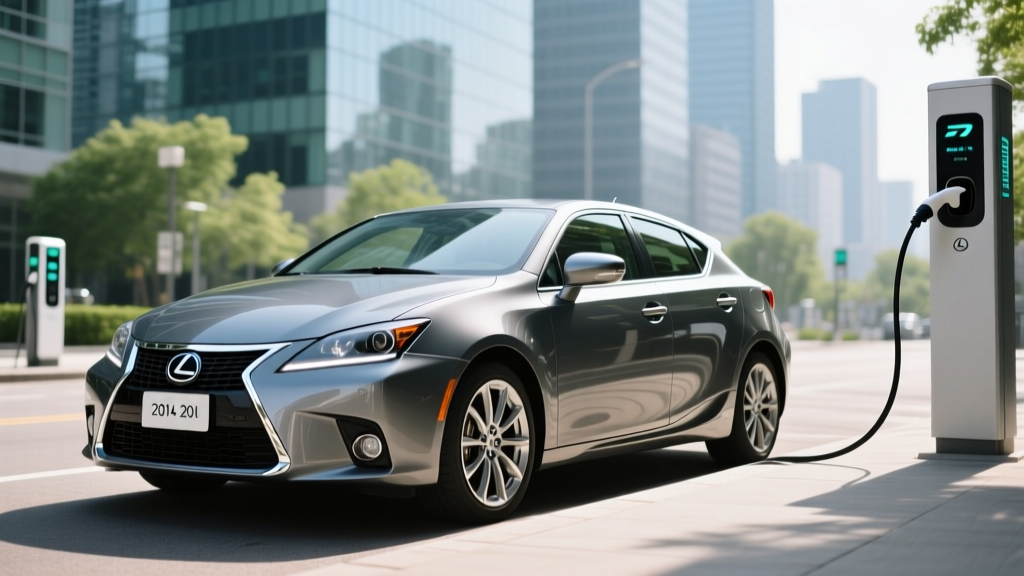
The 2014 Lexus CT 200h occupies a specific niche in the used-hybrid market: a luxury-branded compact hatchback that delivers Prius-grade efficiency with a premium badge, refined cabin materials, and Lexus reliability. If you're researching this model today, you likely already know it shares its powertrain with the Toyota Prius of the same era. What you need to know is whether that formula still holds up in 2026 — what real-world MPG looks like after a decade of use, what a hybrid battery replacement actually costs, and how the CT 200h stacks up against modern hybrids, PHEVs, and EVs.
This guide breaks down the 2014 Lexus CT 200h hybrid with the precision of a buyer's inspection: exact EPA figures, real-world fuel economy expectations, powertrain specs, battery longevity data, and a clear decision framework for whether this car — or a newer alternative — is the right move.
What Exactly Is the 2014 Lexus CT 200h? (HEV vs PHEV Clarified)
The 2014 Lexus CT 200h is a conventional hybrid electric vehicle (HEV). It is not a plug-in hybrid (PHEV), and it does not have an electric-only driving mode of any meaningful distance. You never plug it in. The car recovers energy through regenerative braking and its gasoline engine to keep a small nickel-metal hydride (NiMH) traction battery charged. That battery assists the gasoline engine during acceleration and enables brief, low-speed electric-only creeping — typically under 1 mile at speeds below 25 mph — but this is incidental, not a feature you plan around.
HEV vs PHEV: Key Differences for CT 200h Buyers
| Feature | HEV (CT 200h) | PHEV (e.g., Prius Prime) |
|---|---|---|
| Plug-in charging | No — never plugs in | Yes — Level 1/2 charging |
| Electric-only range | ~0.5 mi at low speed | 25–44 mi (modern PHEVs) |
| Battery size | ~1.3 kWh NiMH | 8.8–13.6 kWh lithium-ion |
| Federal tax credit (§30D) | Not eligible | Up to $7,500 (if eligible) |
| Gasoline required | Always | Only after EV range depletes |
This distinction matters because buyers sometimes confuse the "h" badge with plug-in capability. The CT 200h operates exactly like a Prius: fill it with gas, drive it, and the hybrid system handles the rest automatically.
2014 Lexus CT 200h Fuel Economy: EPA Numbers and Real-World MPG
The EPA rated the 2014 CT 200h at 51 MPG city / 48 MPG highway / 50 MPG combined when equipped with the standard 15-inch wheels. Models with the optional 17-inch sport wheels were rated slightly lower: 50/47/49 MPG. These figures come directly from fueleconomy.gov, the official EPA database.
| Configuration | City MPG | Highway MPG | Combined MPG |
|---|---|---|---|
| 15-inch wheels (base) | 51 | 48 | 50 |
| 17-inch wheels (F Sport/Sport) | 50 | 47 | 49 |
Real-World MPG: What Owners Actually Report
The CT 200h's real-world fuel economy generally tracks close to its EPA sticker — and in city driving, many owners report exceeding it. Hybrid systems thrive in stop-and-go traffic where regenerative braking is constant and the engine shuts off frequently. Based on aggregated owner data from Fuelly and hybrid forums, expect these real-world ranges:
- City driving: 48–54 MPG (often exceeds EPA)
- Highway driving (70–80 mph): 42–46 MPG (below EPA, as with most hybrids)
- Mixed commuting: 46–50 MPG
- Cold weather (below 35°F): 40–44 MPG (engine runs more for cabin heat)
Highway fuel economy falls short of the EPA estimate because the CT 200h's aerodynamic profile and continuously variable transmission (CVT) are optimized for urban efficiency, not sustained high-speed cruising. Cold weather reduces MPG in any hybrid because the gasoline engine must run longer to generate cabin heat and bring the catalytic converter to operating temperature.
At 12,000 miles per year and $3.40/gallon regular unleaded (the CT 200h takes regular 87-octane), annual fuel cost runs approximately $816–$887 — roughly $400–$600 less than a comparable non-hybrid luxury compact.
Powertrain Specs: Engine, Motor, and Combined Output
The CT 200h uses Toyota's well-proven Hybrid Synergy Drive system — the same architecture found in the third-generation Prius (2010–2015). Here are the exact specifications:
| Gasoline engine | 1.8L inline-4 (2ZR-FXE), Atkinson cycle |
| Engine horsepower | 98 hp @ 5,200 rpm |
| Engine torque | 105 lb-ft @ 4,000 rpm |
| Electric motor | Permanent-magnet synchronous (60 kW / 80 hp) |
| Combined net horsepower | 134 hp |
| Transmission | ECVT (electronically controlled CVT) |
| Drivetrain | Front-wheel drive |
| Traction battery | ~1.3 kWh NiMH (nickel-metal hydride) |
| 0–60 mph | ~9.8 seconds |
| Fuel type | Regular unleaded (87 octane) |
| Fuel tank | 11.9 gallons |
| Total range (est.) | ~595 miles (at 50 MPG combined) |
The 134 combined horsepower figure is modest by modern standards. The CT 200h is not a performance car — its 0–60 time of roughly 9.8 seconds places it firmly in the "adequate for commuting" category. Merging onto fast-moving highways requires planning. Where the powertrain excels is low-speed responsiveness: the electric motor delivers instant torque from a stoplight, making the car feel peppier in city driving than the horsepower number suggests.
The Atkinson-cycle engine sacrifices peak power for thermal efficiency — it extracts more energy from each drop of fuel by keeping the intake valve open longer during the compression stroke. This is standard practice in Toyota/Lexus hybrids and a key reason the CT 200h achieves 50 MPG combined.
Battery Longevity, Warranty, and Replacement Cost
Hybrid Battery Warranty (Original)
Coverage: 8 years / 100,000 miles (10 years / 150,000 miles in CARB states including CA, NY, MA, and others that follow California emissions standards).
What's covered: Defects and capacity loss below a functional threshold. For a 2014 model, original factory warranty coverage has expired for nearly all vehicles unless the car was extremely low-mileage and registered in a CARB state.
How Long Do CT 200h Hybrid Batteries Last?
The NiMH battery pack in the CT 200h has proven durable. Toyota/Lexus NiMH hybrid batteries from this era commonly reach 150,000–200,000 miles before requiring replacement, and many exceed that. The key factors affecting longevity:
- Heat exposure: Vehicles in hot climates (AZ, TX, FL) see faster degradation. The battery is located in the cargo area and has its own cooling fan — keeping that fan filter clean matters.
- Usage pattern: Hybrids that are driven regularly tend to last longer than those that sit for weeks. The battery management system performs best with consistent charge/discharge cycling.
- Age: Even low-mileage examples from 2014 are now 12 years old. NiMH chemistry degrades with calendar age, not just mileage. Expect some capacity loss regardless of odometer reading.
Hybrid Battery Replacement Cost in 2026
If the traction battery does fail, here's what to budget:
- New OEM battery (Lexus dealer): $2,500–$3,800 installed
- Refurbished/remanufactured battery: $1,200–$2,200 installed
- Used/salvage battery: $600–$1,200 (shorter expected remaining life)
- Individual cell/module replacement: $400–$900 if only specific modules have failed (a hybrid specialist can test individual modules)
The good news: because the CT 200h shares its hybrid system with the third-generation Prius (one of the most-produced hybrids in history), parts availability is excellent and independent hybrid specialists are widely available. This is not a proprietary or rare system.
Does the 2014 CT 200h Qualify for Any Tax Credit?
No. The 2014 Lexus CT 200h does not qualify for the federal §30D clean vehicle tax credit. That credit applies only to plug-in electric vehicles (BEVs and PHEVs) with sufficient battery capacity and meeting current-year sourcing, MSRP, and buyer income requirements as defined by the IRS. Conventional hybrids like the CT 200h have not qualified for any federal purchase incentive since the early Hybrid Tax Credit expired for Toyota/Lexus vehicles in 2007.
Some states or local utilities offer small rebates for used hybrid purchases or for registering any efficient vehicle, but these vary by jurisdiction and change frequently. Check your state energy office or utility provider for current programs.
Used Pricing and What to Expect in 2026
The 2014 CT 200h was originally priced from approximately $32,050 MSRP (base) to over $40,000 with Premium/F Sport packages. In the 2026 used market:
- Private party (80k–120k miles, good condition): $9,000–$13,000
- Dealer retail (under 100k miles, clean title): $11,000–$16,000
- Low-mileage examples (under 60k miles): $14,000–$18,000
Prices vary significantly by region, condition, service history, and whether the hybrid battery has been tested or replaced. A pre-purchase inspection that includes a hybrid battery health check is essential — ask the technician to pull the battery's internal resistance readings and State of Health (SoH) data via an OBD-II scanner compatible with Toyota hybrid systems.
CT 200h vs Modern Alternatives: Hybrid, PHEV, or EV?
Pros: 2014 CT 200h
- 50 MPG combined on regular unleaded — excellent efficiency
- Lexus build quality and reliability record
- Prius-shared powertrain = cheap, widely available parts
- Premium interior materials for the price point
- Low annual fuel cost (~$820–$890/year)
- No charging infrastructure needed
Cons: 2014 CT 200h
- 134 hp feels sluggish by 2026 standards
- Original hybrid battery warranty has expired
- No electric-only driving mode
- Infotainment is dated (no Apple CarPlay/Android Auto natively)
- Rear seat and cargo space are tight for the class
- No federal or state EV/PHEV tax credits
Decision Framework: Which Powertrain Type Fits You?
Choose the 2014 CT 200h (HEV) if: You want a reliable, efficient daily driver under $15K, you lack access to home or workplace charging, you primarily drive in the city, and you don't need modern infotainment or strong acceleration.
Choose a modern PHEV (e.g., 2024–2026 Prius Prime, RAV4 Prime) if: You can charge at home (even a standard 120V outlet works), you want 25–44 miles of electric-only range for daily commuting, you want the option of gas for road trips, and you may qualify for the §30D federal tax credit (up to $7,500, subject to MSRP caps, income limits, and battery sourcing requirements — verify at irs.gov).
Choose a full EV (BEV) if: You have reliable home Level 2 charging, your daily driving is under 250 miles, you want zero tailpipe emissions and minimal maintenance (no oil changes, no engine), and you want access to the full federal tax credit on eligible models.
Reliability Record and Common Issues
The 2014 CT 200h benefits from one of the strongest reliability reputations in the compact luxury segment. The 1.8L 2ZR-FXE engine and Hybrid Synergy Drive system have been in continuous production since 2009 across millions of Toyota and Lexus vehicles. Major mechanical failures are uncommon when the vehicle has been maintained.
Known issues to check during a pre-purchase inspection:
- Hybrid battery cooling fan: Located in the cargo area behind the rear seat. The filter can clog with dust and pet hair, causing the battery to overheat and degrade faster. Easy to clean or replace (~$30 part).
- Brake actuator recall: Some 2014 CT 200h vehicles were included in Toyota's brake booster assembly recall. Verify recall status at nhtsa.gov/recalls using the VIN.
- Water pump: The engine water pump on the 2ZR-FXE can develop leaks around 100,000–130,000 miles. Replacement is straightforward (~$300–$500 at an independent shop).
- 12V auxiliary battery: Like all hybrids, the CT 200h has a standard 12V battery (located in the cargo area) that can fail independently of the hybrid battery. A dead 12V battery will prevent the car from starting even if the traction battery is full.
- CVT/transaxle: The ECVT is generally bulletproof, but the transmission fluid should be drained and filled around 60,000–100,000 miles (Lexus doesn't always specify this interval — do it anyway).
Frequently Asked Questions
How many MPG does the 2014 Lexus CT 200h hybrid get?
The EPA rates the 2014 CT 200h at 51 city / 48 highway / 50 combined MPG on 15-inch wheels, or 50/47/49 on 17-inch wheels. Real-world city driving often exceeds the EPA estimate (48–54 MPG), while sustained highway driving at 75+ mph typically yields 42–46 MPG.
Is the 2014 CT 200h a plug-in hybrid?
No. The CT 200h is a conventional hybrid (HEV). It never plugs in. The hybrid battery charges through regenerative braking and the gasoline engine. If you want plug-in capability with a similar footprint, look at the Toyota Prius Prime (PHEV), which offers 25–44 miles of electric-only range depending on model year.
How far can the CT 200h drive on electric only?
Effectively less than one mile, at speeds under 25 mph, under ideal conditions. The CT 200h does not have a meaningful electric-only mode. The hybrid system uses the electric motor to assist the gasoline engine and to enable engine-off coasting and low-speed creeping, but you cannot plan trips around electric-only range.
What does it cost to replace the hybrid battery?
A new OEM replacement runs $2,500–$3,800 installed at a Lexus dealer. Refurbished batteries cost $1,200–$2,200 installed at a hybrid specialist. Individual module replacement (if only some cells have failed) can be as low as $400–$900. Most 2014 CT 200h batteries reach 150,000–200,000 miles before needing replacement.
Does the 2014 CT 200h qualify for any federal tax credit?
No. The federal §30D clean vehicle credit applies only to plug-in vehicles (BEVs and PHEVs). Conventional hybrids have not qualified for federal purchase incentives since the original hybrid credit expired for Toyota/Lexus in 2007. Check your state and local utility for any current efficiency rebates.
Is the 2014 CT 200h reliable?
Yes. The CT 200h shares its powertrain with the third-generation Toyota Prius, one of the most reliable and widely produced hybrid systems in history. With regular maintenance — including hybrid battery cooling fan cleaning, transmission fluid service, and standard engine upkeep — these vehicles commonly exceed 200,000 miles. Check for open recalls at nhtsa.gov before purchasing.
What should I check before buying a used 2014 CT 200h?
Request a hybrid battery health report (State of Health / internal resistance readings via OBD-II scan), verify recall completion (especially the brake actuator), check service records for transmission fluid changes, inspect the battery cooling fan filter in the cargo area, and confirm the 12V auxiliary battery is in good condition. A pre-purchase inspection at a Toyota/Lexus dealer or hybrid specialist is strongly recommended.