Quick Verdict: The 2014 Infiniti QX60 Hybrid at a Glance
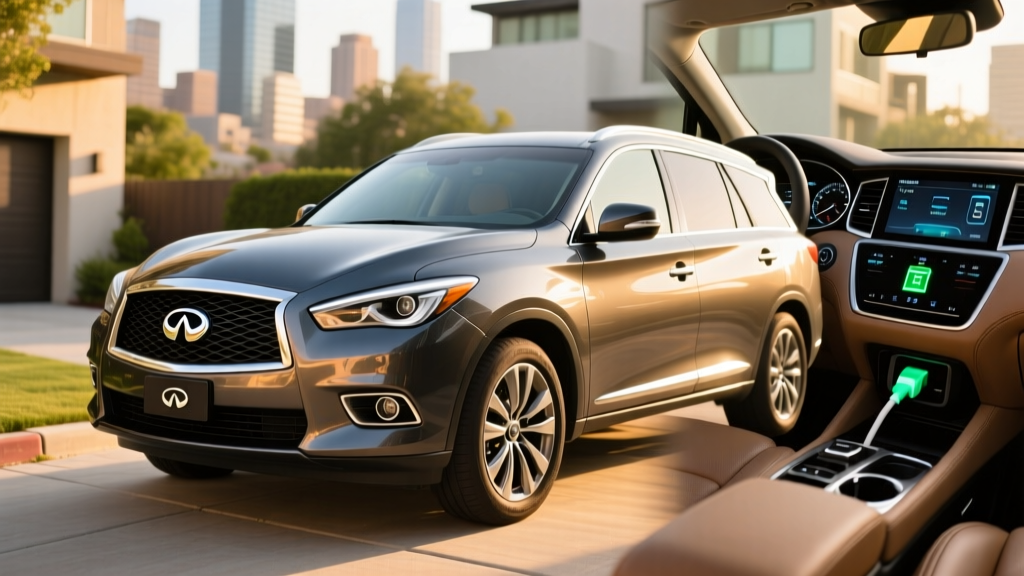
If you're searching for a 2014 Infiniti SUV hybrid, you're looking at exactly one model: the 2014 Infiniti QX60 Hybrid. This three-row luxury crossover was Infiniti's first foray into hybrid SUV territory, pairing a supercharged 2.5-liter four-cylinder with an electric motor and a compact lithium-ion battery pack. It's a conventional hybrid (HEV), meaning it never plugs in — the battery recharges through regenerative braking and the gasoline engine.
More than a decade later, the QX60 Hybrid remains a niche find on the used market. It offers modest fuel-economy gains over its gas-only sibling, a premium cabin, and three-row practicality. But its hybrid system adds complexity, and real-world efficiency gains are smaller than some buyers expect. Here's every number you need to decide if this used hybrid SUV is worth your money in 2026.
| Specification | 2014 Infiniti QX60 Hybrid |
|---|---|
| Powertrain | 2.5L supercharged I-4 + electric motor (HEV) |
| Combined Horsepower | 250 hp |
| Combined Torque | 243 lb-ft |
| Transmission | CVT (continuously variable) |
| EPA MPG (City / Hwy / Combined) | 26 / 28 / 25 (FWD); 25 / 28 / 25 (AWD) |
| Hybrid Battery | ~0.6 kWh lithium-ion (non-plug-in) |
| Drivetrain | FWD standard; AWD optional |
| 0-60 mph | ~7.8 seconds (est.) |
| Seating | 7 passengers |
| Cargo (behind 3rd row) | 15.8 cu ft |
| Original MSRP (2014) | ~$49,700 (base, FWD) |
| Typical Used Price (2026) | $9,000–$15,000 depending on mileage |
HEV vs PHEV: Understanding What the QX60 Hybrid Actually Is
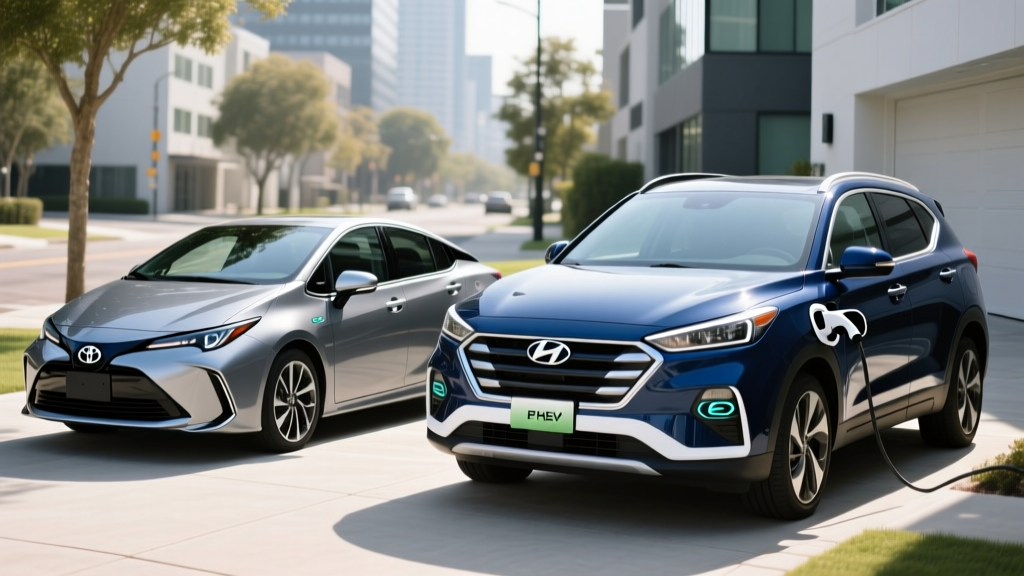
The 2014 QX60 Hybrid is a conventional hybrid electric vehicle (HEV). It is not a plug-in hybrid (PHEV) and cannot be charged from a wall outlet or public charger. Here's the critical distinction:
| Feature | HEV (QX60 Hybrid) | PHEV (e.g., Toyota RAV4 Prime) | BEV (e.g., Tesla Model Y) |
|---|---|---|---|
| Plugs in? | No | Yes | Yes |
| Electric-only range | 0 miles (motor assists only) | 25–42 miles typical | 250–330 miles typical |
| Battery size | ~0.6 kWh | 14–20 kWh | 60–100 kWh |
| Gas engine? | Yes (primary) | Yes (backup) | No |
| Home charging needed? | No | Recommended (Level 2) | Required |
| Federal tax credit (new) | None | Up to $7,500 (§30D) | Up to $7,500 (§30D) |
The QX60's small lithium-ion pack stores energy captured during braking and deceleration. The electric motor assists the gas engine during acceleration and enables brief engine-off coasting at low speeds, but it cannot propel the vehicle on electricity alone for any meaningful distance. You fuel it exactly like a conventional car — no charging cables, no home charger installation, no public charging apps.
Fuel Economy: EPA Ratings vs Real-World MPG
The headline question for any hybrid buyer: how many MPG does it actually get?
| Driving Condition | EPA Estimate (FWD) | Real-World Expectation |
|---|---|---|
| City | 26 MPG | 24–27 MPG |
| Highway | 28 MPG | 25–27 MPG |
| Combined | 25 MPG | 23–26 MPG |
According to fueleconomy.gov, the 2014 QX60 Hybrid with front-wheel drive earns EPA ratings of 26 city / 28 highway / 25 combined MPG. The AWD variant is rated at 25/28/25 MPG.
For context, the conventional gas-only 2014 QX60 (3.5L V6, CVT) is rated at 20 city / 26 highway / 22 combined (FWD). The hybrid's advantage is roughly 3 MPG combined — a 14% improvement. That translates to about 40–50 fewer gallons per year at 15,000 miles of driving, or roughly $120–$170 in annual fuel savings at $3.50/gallon.
Real-world results vary. Hybrid systems tend to shine in stop-and-go city driving where regenerative braking is frequent. On sustained highway cruises at 75+ mph, the supercharged four-cylinder works harder and the hybrid advantage narrows. Owners on fuel-tracking platforms report combined averages in the 23–26 MPG range, which aligns closely with EPA estimates. Cold weather, aggressive acceleration, and heavy cargo loads can push figures toward the low end of that range.
Powertrain Deep Dive: Supercharged Four + Electric Assist
The 2014 QX60 Hybrid's powertrain is unconventional for a luxury SUV. Instead of the standard 3.5L V6 (265 hp), Infiniti fitted a 2.5-liter supercharged inline-four producing 230 hp on its own, paired with a 15 kW (20 hp) electric motor integrated into the transmission housing. Combined system output is 250 horsepower and 243 lb-ft of torque.
The electric motor fills in the torque gap at low RPMs where a four-cylinder typically feels sluggish, and the supercharger provides top-end pull. The result is acceleration that feels adequate but not particularly quick — the 0-60 mph time of approximately 7.8 seconds trails the V6 model. The CVT transmission keeps the engine in its most efficient range but produces the characteristic drone under hard acceleration that CVT critics often cite.
Towing capacity drops slightly with the hybrid: 3,500 lbs compared to 5,000 lbs for the V6. If you plan to tow a boat or camper, the conventional V6 is the stronger choice.
Hybrid Battery Longevity, Warranty, and Replacement Cost
2014 QX60 Hybrid Battery Warranty (Original)
- Hybrid battery warranty: 8 years / 100,000 miles (federal emissions requirement)
- Battery chemistry: Lithium-ion (~0.6 kWh)
- Estimated replacement cost (2026): $2,500–$4,500 (aftermarket/refurbished); $5,000–$7,000 (OEM dealer)
Is this hybrid reliable, and what does battery replacement cost? The QX60 Hybrid's lithium-ion pack is small and operates within a narrow state-of-charge window (typically 40–80%), which reduces degradation stress compared to a PHEV or BEV that cycles through deeper charge ranges. Nissan/Infiniti's hybrid systems from this era have proven reasonably durable, with many units exceeding 120,000–150,000 miles without battery failure.
However, the 2014 model is now 12 years old. The original 8-year/100,000-mile hybrid battery warranty has expired for nearly every example on the road. If you're buying one today, you are purchasing a vehicle with an aging high-voltage battery that is no longer under warranty coverage.
Replacement costs are lower than full EV battery packs because the unit is small. A refurbished or aftermarket hybrid battery typically runs $2,500–$4,500 installed, while a new OEM unit from an Infiniti dealer can reach $5,000–$7,000. Independent hybrid specialists in major metro areas often offer the best value. Before buying, request a hybrid battery health report from the seller or have an independent shop perform a diagnostic scan to assess remaining capacity.
Beyond the battery, the QX60 Hybrid's CVT transmission is a known maintenance consideration. Nissan/Infiniti CVTs from this generation have a mixed reliability record, and replacement costs range from $3,000–$5,000. A pre-purchase inspection by a technician familiar with Infiniti hybrids is strongly recommended.
Tax Credits and Incentives: What Applies in 2026?
Because the 2014 QX60 Hybrid is a conventional HEV (not a plug-in), it does not qualify for the federal §30D new clean vehicle credit, which is reserved for BEVs and PHEVs with plug-in charging capability. When sold new in 2014, it also did not qualify for the now-expired Alternative Fuel Vehicle credit for conventional hybrids.
As a used vehicle purchase in 2026, the Used Clean Vehicle Credit (§25E) — which offers up to $4,000 or 30% of the sale price (whichever is less) — also does not apply, as it covers only used BEVs and PHEVs, not conventional hybrids.
Some states offer their own incentives for used hybrid purchases, but these are uncommon and vary by jurisdiction. Check your state's department of revenue or energy office for any current programs. For federal credit rules, refer to IRS.gov §30D guidance.
Who Should Buy the 2014 QX60 Hybrid vs a Full EV or Gas SUV?
Choose the 2014 QX60 Hybrid If:
- You want a three-row luxury SUV on a budget ($10K–$15K)
- You cannot install a home charger or lack reliable public charging access
- Your driving is primarily city/suburban with moderate annual mileage (10K–15K miles)
- You want slightly better fuel economy than a V6 without changing your refueling habits
Choose a Gas-Only Used SUV If:
- You tow regularly (the V6 QX60 handles 5,000 lbs vs the hybrid's 3,500 lbs)
- You drive mostly highway miles where the hybrid's MPG advantage is minimal
- You want lower maintenance complexity and wider mechanic availability
Choose a Used PHEV or BEV If:
- You can charge at home (Level 2) and want meaningful electric-only driving
- You want to qualify for the used-EV tax credit (up to $4,000 under §25E)
- You're willing to spend $20K–$35K for a newer, more efficient vehicle
The 2014 QX60 Hybrid occupies a narrow lane. Its 3 MPG combined advantage over the V6 model saves roughly $150 per year in fuel — meaning the hybrid premium (typically $1,000–$3,000 on the used market) takes 7–20 years to recoup. The real value proposition is the premium cabin, three-row seating, and Infiniti's luxury amenities at a depreciated price, with hybrid efficiency as a modest bonus rather than the primary reason to buy.
Pros and Cons
Pros
- No plug-in charging required — fuel at any gas station
- Three-row seating with luxury appointments at a used price
- Modest MPG improvement over the V6 (25 vs 22 combined)
- Smooth, quiet ride quality typical of Infiniti
- Hybrid battery stress is low due to small pack and narrow SoC window
Cons
- Only 3 MPG combined improvement — minimal fuel savings
- Reduced towing capacity (3,500 lbs vs 5,000 lbs for V6)
- CVT drone under hard acceleration
- No federal or state tax credit eligibility
- Original hybrid battery warranty has expired on all examples
- Slower 0-60 time than the V6 model
Frequently Asked Questions
How many MPG does the 2014 Infiniti QX60 Hybrid get?
The EPA rates the FWD model at 26 city / 28 highway / 25 combined MPG. Real-world driving typically yields 23–26 MPG combined depending on driving style and conditions. The AWD variant is rated at 25/28/25 MPG.
Can the 2014 QX60 Hybrid drive on electric power only?
Not in any practical sense. The electric motor assists the gas engine during acceleration and allows brief engine-off coasting at very low speeds, but it cannot propel the SUV on electricity alone for any measurable distance. This is a conventional HEV, not a PHEV or EV.
Is the 2014 QX60 Hybrid reliable?
The hybrid system itself is reasonably reliable, with the small lithium-ion battery experiencing minimal degradation due to its narrow operating range. The larger concern is the CVT transmission, which has a mixed reliability history for this generation. A pre-purchase inspection is essential, and budgeting for potential CVT or hybrid battery service is prudent for a 12-year-old vehicle.
How much does it cost to replace the hybrid battery?
Expect to pay $2,500–$4,500 for a refurbished or aftermarket replacement battery, or $5,000–$7,000 for a new OEM unit from a dealer. The original 8-year/100,000-mile warranty has expired on all 2014 models.
Does the 2014 Infiniti QX60 Hybrid qualify for any tax credit?
No. As a conventional hybrid (HEV), it does not qualify for the federal §30D new vehicle credit or the §25E used clean vehicle credit. Both programs require plug-in capability (BEV or PHEV). Check your state for any local hybrid incentives, though these are rare.
Should I buy the hybrid or the V6 version?
If you tow, drive mostly highway miles, or want maximum power, choose the V6. If you drive primarily in the city and value the slight MPG improvement, the hybrid is acceptable — but the fuel savings alone rarely justify a price premium. Base your decision on overall vehicle condition, mileage, and price rather than the hybrid badge.
Sources: U.S. EPA / fueleconomy.gov, IRS Clean Vehicle Credits, NHTSA