Quick Verdict: The 2014 Fusion Hybrid Titanium in 2026
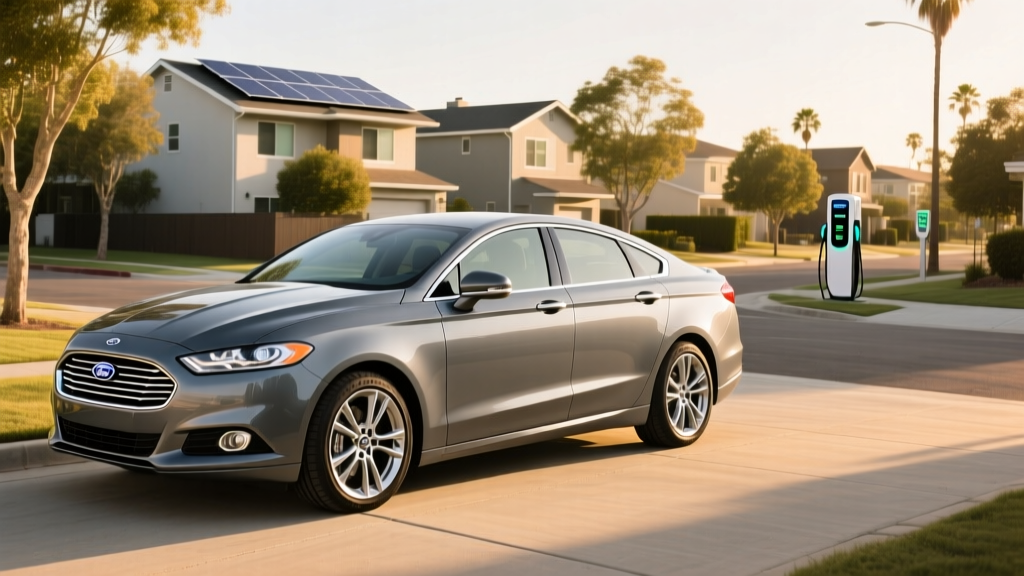
The 2014 Ford Fusion Hybrid Titanium was Ford's flagship midsize hybrid sedan — loaded with leather, Sync infotainment, and a 2.0-liter Atkinson-cycle four-cylinder paired with an electric motor for a combined 188 horsepower. More than a decade later, it remains one of the more affordable entries into hybrid ownership on the used market, typically priced between $6,500 and $10,500 depending on mileage and condition.
But does a 12-year-old hybrid still make financial sense in 2026? The answer depends heavily on battery health, your commute profile, and whether you need plug-in capability. This guide breaks down the real numbers.
Fuel Economy: EPA Ratings vs Real-World MPG
The EPA rated the 2014 Fusion Hybrid at 44 MPG city / 41 MPG highway / 44 MPG combined, according to fueleconomy.gov. Those were class-leading numbers in 2014 and remain competitive today against newer hybrids like the Toyota Camry Hybrid (44–52 MPG combined depending on trim).
| Metric | City | Highway | Combined |
|---|---|---|---|
| EPA Rating | 44 MPG | 41 MPG | 44 MPG |
| Real-World Expectation | 40–48 MPG | 36–42 MPG | 38–45 MPG |
Real-world reality check: Hybrids typically exceed their EPA city rating in stop-and-go traffic because regenerative braking recovers energy that a gas car wastes as heat. On the highway, where regen opportunities are minimal and aerodynamic drag dominates, expect numbers closer to 36–42 MPG. Owner reports on forums and fueleconomy.gov's user data cluster around 38–45 MPG combined, with some drivers consistently hitting 48 MPG in warm-weather city driving.
Cold weather reduces fuel economy by 5–15% in hybrids, just as it reduces range in full EVs. The engine runs more frequently in winter to provide cabin heat (this car lacks a heat pump), and the battery is less efficient at low temperatures. Expect 35–40 MPG combined in freezing conditions.
Powertrain and Performance Specs
The 2014 Fusion Hybrid uses Ford's second-generation hybrid system, pairing a 2.0-liter Atkinson-cycle inline-four (141 hp, 129 lb-ft torque) with a 118 hp electric motor integrated into the eCVT transaxle. Total system output is 188 horsepower.
| Specification | Value |
|---|---|
| Engine | 2.0L Atkinson-cycle I4 (141 hp) |
| Electric Motor | 118 hp permanent-magnet AC |
| Combined Output | 188 hp |
| Transmission | eCVT (planetary gearset) |
| Battery | 1.4 kWh lithium-ion (NMC chemistry) |
| 0–60 mph | ~8.0 seconds |
| Drivetrain | Front-wheel drive |
| Fuel Tank | 13.5 gallons |
| Total Range | ~590 miles |
The eCVT is not a belt-driven CVT like those in some Nissan or Subaru models — it uses a planetary gearset (similar to Toyota's Hybrid Synergy Drive) that seamlessly blends engine and motor power. This design has proven extremely durable, with few reported transmission failures.
Acceleration is adequate for merging and passing but not sporty. The electric motor provides instant torque off the line, making the car feel quicker in city driving than the 8-second 0–60 time suggests. Above 62 mph, the gasoline engine is always engaged.
Battery Health, Warranty, and Replacement Costs
The 1.4 kWh lithium-ion pack in the Fusion Hybrid is small by modern standards, but its modest size actually works in its favor for longevity. The battery management system keeps the pack within a narrow state-of-charge window — typically between 30% and 70% actual SoC — which dramatically reduces degradation compared to a full EV battery that cycles through a wider range.
Degradation reality: Most 2014 Fusion Hybrids on the road in 2026 show minimal noticeable battery degradation. The small pack was over-engineered for its task (providing assist and regen buffering, not driving the car independently for long distances). That said, some high-mileage examples (150,000+ miles) report slightly reduced electric-only assist at low speeds and marginally lower fuel economy — signs of moderate capacity loss.
Battery replacement cost: If the hybrid battery fails out of warranty, expect to pay:
- New OEM battery from Ford: $2,500–$3,500 (parts only; installed $3,500–$4,500)
- Remanufactured/reconditioned battery: $1,200–$2,000 installed
- Individual cell/module replacement: $400–$800 at a hybrid specialist shop
The good news: complete battery failure is relatively rare on this generation. More commonly, individual modules degrade unevenly, and a hybrid specialist can replace just the weak modules for a fraction of a full pack swap.
Titanium Trim: What You Get
The Titanium was the top-tier trim for the 2014 Fusion Hybrid, and it remains well-equipped by 2026 standards. Standard features included:
- Leather-trimmed heated front seats
- Sony audio system (12 speakers)
- Sync with MyFord Touch (8-inch touchscreen)
- Rearview camera
- Push-button start with intelligent access
- 17-inch aluminum wheels
- Auto-dimming rearview mirror
- Ambient interior lighting
Available options on the Titanium included adaptive cruise control, BLIS (blind-spot monitoring) with cross-traffic alert, lane-keeping assist, a moonroof, and the Driver Assist Package. Note that MyFord Touch was widely criticized for lag and unresponsiveness — many owners have upgraded the head unit to an aftermarket Apple CarPlay/Android Auto system, which is worth checking for on any used example.
Pricing and Tax Credit Eligibility in 2026
As of early 2026, used 2014 Ford Fusion Hybrid Titanium models typically sell for:
- 80,000–100,000 miles: $8,000–$10,500
- 100,000–140,000 miles: $6,500–$8,500
- 140,000+ miles: $5,000–$7,000
This is a critical distinction: the standard Fusion Hybrid's small battery disqualifies it from the federal used-clean-vehicle credit. If tax incentives are a priority, the Fusion Energi PHEV or a newer hybrid with a larger battery pack may be a better financial move.
Fusion Hybrid vs Fusion Energi vs Full EV: Which Fits You?
| Factor | Fusion Hybrid (HEV) | Fusion Energi (PHEV) | Full EV (e.g., 2026 Bolt) |
|---|---|---|---|
| Plug-in Required? | No | Yes (Level 1/2) | Yes (Level 2/DC) |
| Electric-Only Range | ~1 mile (low speed) | ~19 miles | 200–300+ miles |
| Combined MPG/MPGe | 44 MPG | 88 MPGe / 38 MPG gas | 110+ MPGe |
| Home Charging Needed | No | Recommended | Essential |
| Used Price (2026) | $6,500–$10,500 | $7,500–$12,000 | $18,000+ |
| Federal Tax Credit | Not eligible | Up to $4,000 (§25E) | Up to $4,000 (§25E) |
Choose the Fusion Energi if: You have home charging (even a 120V outlet works for its 7.6 kWh pack — roughly 7 hours for a full charge), your daily commute is under 20 miles, and you want the option of electric-only driving while keeping gas for road trips.
Choose a full EV if: You have reliable home Level 2 charging, want to eliminate gasoline entirely, and are willing to plan for road-trip DC fast charging stops.
Reliability and Common Issues
The 2014 Fusion Hybrid has a generally strong reliability record, particularly compared to its conventional gasoline sibling (which had more reported issues with the 1.5L EcoBoost engine). The hybrid powertrain's eCVT eliminates the traditional automatic transmission — a common failure point in gas cars — and the Atkinson-cycle engine runs under less stress.
Common issues to watch for on a used 2014 model:
- MyFord Touch glitches: The infotainment system was a known frustration. Check for responsiveness and whether a previous owner installed an aftermarket unit.
- 12V battery drain: Like many hybrids, the Fusion can drain its 12V auxiliary battery if left sitting for extended periods. A dead 12V battery prevents the car from starting, even if the hybrid pack is full.
- Brake actuator recalls: Ford issued a recall for the regenerative brake system on certain 2013–2014 Fusion Hybrids. Verify recall work was completed via NHTSA.gov using the VIN.
- Coolant intrusion (rare): Some owners report coolant leaks at the hybrid battery cooling system — inspect for corrosion or crusty residue around the battery vent area in the trunk.
Frequently Asked Questions
How many MPG does the 2014 Fusion Hybrid actually get?
The EPA rates it at 44 city / 41 highway / 44 combined. In real-world driving, most owners report 38–45 MPG combined, with city driving often exceeding the EPA estimate (thanks to regenerative braking) and highway driving falling slightly short. Cold weather and aggressive driving can drop combined numbers to 35–38 MPG.
Does the 2014 Fusion Hybrid need to be plugged in?
No. The standard Fusion Hybrid is a conventional HEV — it charges its small 1.4 kWh battery entirely through regenerative braking and the gasoline engine. There is no plug and no electric-only driving mode beyond very low-speed maneuvering. If you want plug-in capability, look at the Fusion Energi PHEV variant.
Is the 2014 Fusion Hybrid reliable, and what does a battery replacement cost?
Reliability is above average for its age. The hybrid powertrain has fewer moving parts than a conventional automatic, and the eCVT is notably durable. Hybrid battery replacement runs $1,200–$4,500 depending on whether you choose reconditioned or OEM, but complete failure is uncommon. Many examples exceed 200,000 miles on the original pack.
Does it qualify for any tax credit in 2026?
The standard Fusion Hybrid does not qualify for the federal used clean vehicle credit (§25E) because its 1.4 kWh battery falls below the 7 kWh minimum threshold. The Fusion Energi PHEV (7.6 kWh) does qualify for up to $4,000 or 30% of sale price, subject to income caps and dealer-sale requirements. Always verify current rules at IRS.gov before purchasing.
How does the Fusion Hybrid compare to a Toyota Camry Hybrid of the same year?
The 2014 Camry Hybrid is rated at 41 city / 38 highway / 40 combined — slightly lower than the Fusion Hybrid on paper. However, the Camry has a stronger long-term reliability reputation and typically commands higher used prices. The Fusion offers more premium features in the Titanium trim (leather, Sony audio, available adaptive cruise) at a lower entry price, but may carry slightly higher maintenance costs as it ages.
What should I check before buying a used 2014 Fusion Hybrid?
Run the VIN through NHTSA's recall database to confirm the brake actuator recall was addressed. Check hybrid battery health — some Ford dealers can pull a battery health report showing capacity vs. original spec. Inspect the 12V battery age (replace proactively if over 4 years old). Test the regenerative braking feel, which should be smooth, not grabby. And verify the MyFord Touch system is responsive or has been replaced with an aftermarket unit.