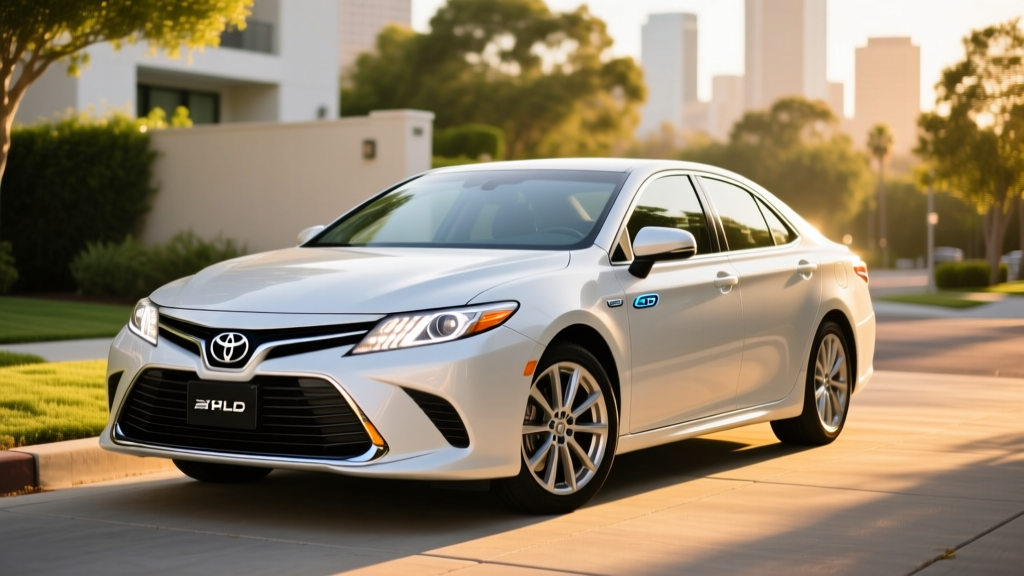
The 2013 Toyota Camry XLE Hybrid sits in an unusual spot in the used-car market: it's old enough to be affordable, yet engineered around a hybrid powertrain that remains remarkably relevant. With an EPA-rated 40 MPG combined, a proven nickel-metal hydride (NiMH) battery pack, and Toyota's hybrid reliability reputation, this sedan continues to attract buyers who want electrified efficiency without plugging in. But how does a 13-year-old hybrid hold up in 2026, and what should you budget for battery replacement? This guide breaks down every number that matters.
HEV vs PHEV vs EV: Where the 2013 Camry Hybrid Fits
Before diving into specs, it's critical to understand what the 2013 Camry Hybrid is — and what it isn't. This is a conventional hybrid electric vehicle (HEV), not a plug-in hybrid (PHEV) and not a battery electric vehicle (BEV).
| Feature | HEV (2013 Camry Hybrid) | PHEV (e.g., Prius Prime) | BEV (e.g., Tesla Model 3) |
|---|---|---|---|
| Plugs in to charge? | No — self-charging via engine & regen | Yes — Level 1/2 AC charging | Yes — Level 1/2/DC fast charging |
| Electric-only range | ~1 mile at low speed | 25–44 miles (typical) | 250–400+ miles |
| Total range | ~580 miles (15.6-gal tank) | ~400–600 miles combined | 250–400+ miles |
| Federal tax credit (new) | None (expired long ago) | Up to $7,500 (§30D, if eligible) | Up to $7,500 (§30D, if eligible) |
| Home charging needed? | No | Recommended for EV range | Essential |
The 2013 Camry XLE Hybrid does not plug in. It recovers energy through regenerative braking and its gasoline engine, storing it in a small 1.6 kWh NiMH traction battery. If you want electric-only commuting, you need a PHEV or BEV. If you want set-it-and-forget-it fuel savings with zero lifestyle change, this HEV delivers.
2013 Camry XLE Hybrid: Powertrain and Performance Specs
| Specification | 2013 Toyota Camry XLE Hybrid |
|---|---|
| Engine | 2.5L inline-4 Atkinson-cycle (156 hp) |
| Electric Motor | Permanent-magnet AC synchronous (105 kW / 141 hp) |
| Net Combined Horsepower | 200 hp |
| Transmission | eCVT (planetary gearset, no fixed gears) |
| 0–60 mph | ~7.6 seconds |
| Drivetrain | Front-wheel drive |
| Traction Battery | 1.6 kWh NiMH (nickel-metal hydride) |
| Fuel Tank | 15.6 gallons |
| Curb Weight | ~3,435 lbs |
| Cargo Volume | 13.1 cu ft (battery reduces trunk space) |
The 200-hp combined output feels adequate for merging and highway passing. The eCVT is a Toyota Hybrid Synergy Drive hallmark — it uses a planetary gearset to blend engine and motor power seamlessly, with none of the rubber-band feel of a belt-driven CVT. Acceleration is linear and predictable.
Fuel Economy: EPA Ratings and Real-World MPG
| Driving Cycle | EPA Rating | Real-World Expectation |
|---|---|---|
| City | 40 MPG | 42–46 MPG (hybrids excel in stop-and-go) |
| Highway | 38 MPG | 34–37 MPG (aero drag, higher sustained speed) |
| Combined | 40 MPG | 38–42 MPG (varies by driving mix) |
Source: fueleconomy.gov — 2013 Toyota Camry Hybrid
One of the defining traits of Toyota's hybrid system is that city MPG often exceeds highway MPG. The electric motor handles low-speed driving, regenerative braking recaptures energy at every stoplight, and the Atkinson-cycle engine only fires when needed. Owners who drive predominantly in urban or suburban traffic frequently report 43–46 MPG on the trip computer.
Highway driving tells a different story. At 70+ mph, aerodynamic drag dominates, the electric motor contributes less, and the gasoline engine carries most of the load. Expect 34–37 MPG on sustained interstate trips. Cold weather further reduces efficiency — a 10–15% drop in winter is normal as the engine runs more frequently to heat the cabin.
Battery Longevity, Warranty, and Replacement Cost
For any used hybrid buyer, the traction battery is the single biggest unknown. Here's what you need to know about the 2013 Camry's NiMH pack:
Original Warranty: Toyota covered the hybrid battery for 8 years / 100,000 miles (10 years / 150,000 miles in CARB states including California, New York, Massachusetts, and others that adopted California emissions standards). For a 2013 model, the original factory warranty has expired in all cases as of 2023 at the latest.
Expected Lifespan: Toyota's NiMH batteries in the Camry Hybrid have demonstrated strong longevity. Data from fleet operators and long-term owners suggests these packs commonly reach 150,000–200,000 miles before significant degradation. Some exceed 250,000 miles. Unlike NMC lithium-ion packs in modern EVs, NiMH chemistry degrades more gradually — you'll notice reduced electric-assist contribution and slightly lower MPG before the pack fails outright.
Replacement Cost (2026):
- New OEM Toyota battery: $3,000–$4,000 (installed at a dealership)
- Refurbished/remanufactured battery: $1,500–$2,500 (installed at an independent hybrid specialist)
- Used salvage battery: $500–$1,200 (risky — unknown remaining life)
- DIY reconditioning (individual cell replacement): $200–$600 in parts, but requires technical skill
The good news: the 2013 Camry Hybrid's NiMH pack is one of the most affordable hybrid batteries to replace in the industry. Compare this to $10,000–$20,000+ for lithium-ion packs in early EVs, and the risk profile looks manageable.
Pricing, Tax Credits, and Used Market Value
As of early 2026, the 2013 Toyota Camry XLE Hybrid trades on the used market in these approximate ranges:
- 80,000–110,000 miles, clean title: $9,500–$12,500
- 110,000–150,000 miles, clean title: $7,000–$9,500
- 150,000+ miles: $5,000–$7,500
The XLE trim commands a $500–$1,000 premium over the LE Hybrid due to leather seats, dual-zone climate control, and upgraded audio.
Does It Qualify for a Tax Credit?
No. The 2013 Camry Hybrid does not qualify for any federal tax credit in 2026. The original hybrid vehicle tax credit under the Energy Policy Act expired for Toyota vehicles in 2007 after the manufacturer hit the 60,000-unit cap. The current IRS §30D Clean Vehicle Credit applies only to new plug-in EVs and PHEVs meeting battery sourcing, MSRP, and buyer income requirements — conventional HEVs have never qualified under §30D.
Some states offer used-EV rebates that include PHEVs but almost never include conventional hybrids. Check your state's energy office for specifics, but plan your purchase assuming no incentives.
Reliability and Ownership Costs
The 2013 Camry Hybrid carries forward Toyota's strong reliability reputation. The Hybrid Synergy Drive system has fewer moving parts than a conventional automatic transmission — no torque converter, no clutch packs, no traditional brake pads wearing quickly (regenerative braking extends pad life to 80,000–100,000+ miles in many cases).
Common issues to watch for at this age:
- Hybrid battery degradation — check for dashboard warnings or reduced MPG
- 12V auxiliary battery — a separate, conventional lead-acid battery that powers electronics; replacement every 4–6 years (~$200)
- Brake actuator assembly — some 2012–2014 Camry Hybrids had complaints about the regenerative brake transition feeling abrupt; not a recall item but worth a test-drive check
- Water pump (engine) — standard maintenance item around 100,000 miles ($300–$500)
- Inverter coolant pump — should be inspected; failure can overheat the hybrid system
According to NHTSA records, the 2013 Camry Hybrid has minimal safety recalls — check the VIN at nhtsa.gov/recalls before purchasing.
Who Should Buy the 2013 Camry XLE Hybrid in 2026?
Pros
- 40+ MPG real-world in city driving
- 620-mile range per tank — no charging needed
- Affordable battery replacement ($1,500–$4,000)
- Strong Toyota reliability and parts availability
- Comfortable XLE interior with leather
- Low maintenance (long brake pad life, no transmission fluid changes like conventional automatics)
Cons
- Expired hybrid battery warranty — replacement risk is on you
- Highway MPG drops to 34–37 at 70+ mph
- Reduced trunk space (13.1 cu ft vs 15.4 in gas Camry)
- No plug-in capability — cannot access HOV lanes or EV incentives
- Dated infotainment (no Apple CarPlay/Android Auto)
- NiMH battery is heavier and less energy-dense than modern Li-ion
Decision Framework: Hybrid vs PHEV vs EV for Your Situation
Choose the 2013 Camry XLE Hybrid if:
- You lack access to home or workplace charging (apartment, street parking)
- Your budget is under $13,000 and you want maximum fuel savings per dollar
- You drive a mix of city and highway and want 600+ mile range without planning
- You want the lowest-risk entry into electrified driving — no charging apps, no adapter compatibility issues
Choose a PHEV (e.g., 2024+ Prius Prime, RAV4 Prime) if:
- You can install a Level 2 charger at home and have a short commute (under 40 miles)
- You want electric-only daily driving with gas-engine backup for road trips
- You qualify for the §30D federal tax credit (income and sourcing requirements apply)
Choose a BEV (e.g., Model 3, Ioniq 5, Equinox EV) if:
- You have reliable home charging (Level 2, 240V)
- Your daily driving is under 250 miles and you're comfortable with road-trip charging planning
- You want zero tailpipe emissions and minimal maintenance (no oil changes, no engine)
- You can absorb a higher upfront cost ($30,000–$50,000+) offset by tax credits and fuel savings
Frequently Asked Questions
How many MPG does the 2013 Toyota Camry XLE Hybrid get?
The EPA rates it at 40 city / 38 highway / 40 combined MPG. In real-world city driving, many owners see 42–46 MPG. Highway driving at 70+ mph typically yields 34–37 MPG. Cold weather can reduce these figures by 10–15%.
Does the 2013 Camry Hybrid need to be plugged in?
No. This is a conventional hybrid (HEV). It charges its own 1.6 kWh battery through regenerative braking and the gasoline engine. You never plug it in — just fill the 15.6-gallon gas tank and drive.
How far can it go on electric power alone?
Less than 1 mile, at very low speeds (under 25 mph), in EV mode. The electric motor primarily assists the gas engine rather than powering the car independently. For meaningful electric-only range, you need a PHEV or BEV.
Is the 2013 Camry Hybrid reliable, and what does a battery replacement cost?
Yes, it's widely regarded as one of the most reliable midsize hybrids of its era. The NiMH traction battery typically lasts 150,000–200,000 miles. A new OEM replacement costs $3,000–$4,000 installed; a refurbished pack runs $1,500–$2,500. The original 8-year/100,000-mile hybrid warranty has expired on all 2013 models.
Does the 2013 Camry Hybrid qualify for any federal tax credit?
No. Conventional hybrids have never qualified for the §30D Clean Vehicle Credit, which requires plug-in capability and minimum battery capacity. The original Toyota hybrid credit expired in 2007. No federal incentives apply to this vehicle in 2026.
What should I check before buying a used 2013 Camry Hybrid?
Request a hybrid battery health check (a Toyota dealer can read the battery's internal resistance and state-of-health data). Verify the 12V auxiliary battery age. Check for NHTSA recalls using the VIN. Test-drive for smooth transitions between electric and gas power, and confirm no hybrid system warning lights appear on the dash.
How does the 2013 Camry Hybrid compare to a 2026 Camry Hybrid?
The current-generation Camry Hybrid (2025+) uses a more efficient 2.5L Dynamic Force engine with a lithium-ion battery, achieving an EPA-rated 52 MPG combined — a significant improvement. However, a new 2026 Camry Hybrid starts around $30,000+, making the 2013 model a compelling budget alternative at roughly one-third the price, assuming you accept the battery replacement risk and older technology.
The 2013 Toyota Camry XLE Hybrid remains a pragmatic, numbers-driven choice for buyers who want proven hybrid efficiency without the complexity or cost of a plug-in vehicle. At under $13,000 and with 40+ MPG in real-world city driving, the math works — as long as you budget for the eventual battery replacement and understand that this is a bridge to electrification, not the final destination.