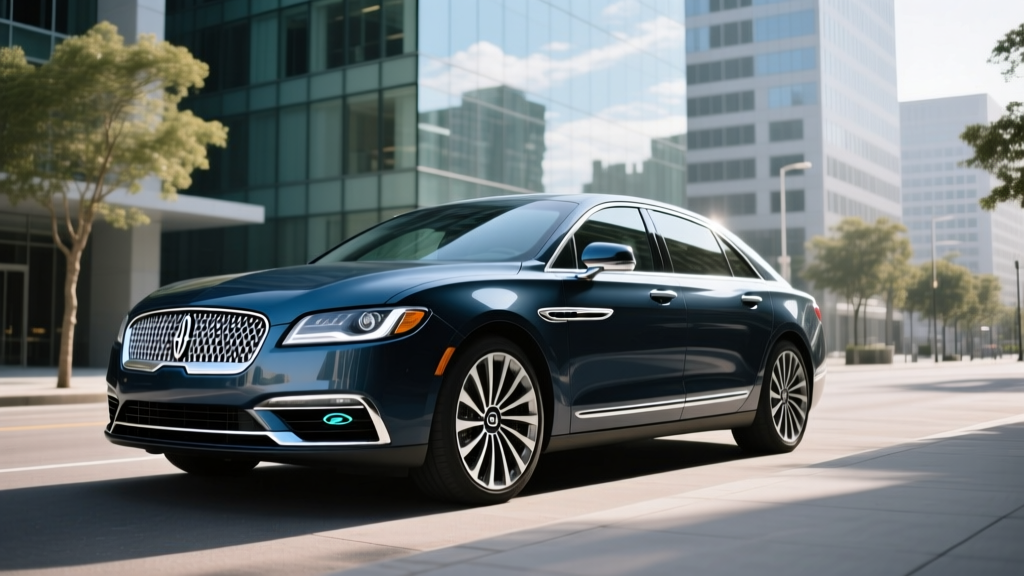
The 2013 Lincoln MKZ Hybrid was Ford Motor Company's attempt to bring premium fuel efficiency to the luxury midsize sedan segment. Built on the same platform as the Ford Fusion Hybrid, the MKZ Hybrid paired a 2.0-liter Atkinson-cycle four-cylinder engine with an electric motor and a lithium-ion battery pack — delivering an EPA-estimated 45 MPG combined at a time when most luxury sedans struggled to break 25 MPG. Now, over a decade later, the 2013 Lincoln Hybrid remains a popular used-car search for buyers seeking luxury-badge efficiency on a budget. Here's everything you need to know about owning one in 2026.
2013 Lincoln MKZ Hybrid: Fuel Economy & Real-World MPG
The headline number for the 2013 Lincoln MKZ Hybrid is its EPA-rated fuel economy. According to fueleconomy.gov, the 2013 MKZ Hybrid achieves:
| Metric | Value |
|---|---|
| City MPG | 45 |
| Highway MPG | 45 |
| Combined MPG | 45 |
| Fuel Tank Capacity | 16.5 gallons |
| Total Range (est.) | ~742 miles |
| Annual Fuel Cost (est.) | ~$1,350 (15,000 mi/yr at $3.20/gal) |
The symmetrical 45/45/45 rating is a hallmark of the Ford hybrid system of this era, which uses an eCVT planetary gearset rather than a traditional belt-driven CVT. This setup allows the electric motor to handle low-speed city driving efficiently while the gasoline engine kicks in seamlessly for highway cruising.
Real-World MPG vs. EPA Estimates
Based on owner-reported data from Fuelly and real-world testing archives, most 2013 MKZ Hybrid owners report averaging 39–43 MPG combined in mixed driving. City driving tends to match or slightly exceed the EPA's 45 MPG figure thanks to heavy regenerative braking and electric-motor propulsion at low speeds. Highway driving at 75+ MPH typically yields 37–40 MPG due to aerodynamic drag and reduced regenerative opportunities.
Powertrain & Performance Specifications
The 2013 MKZ Hybrid uses Ford's second-generation hybrid synergy system. Unlike a plug-in hybrid (PHEV), this is a conventional hybrid electric vehicle (HEV) — it cannot be plugged in and has no electric-only driving range beyond very low-speed, short-distance creep mode. The battery recharges exclusively through regenerative braking and the gasoline engine.
| Specification | Value |
|---|---|
| Engine | 2.0L Atkinson-cycle inline-4 |
| Engine Horsepower | 141 hp @ 6,000 rpm |
| Engine Torque | 129 lb-ft @ 4,000 rpm |
| Electric Motor Output | 118 hp (88 kW) |
| Combined System Horsepower | 188 hp |
| Transmission | eCVT (planetary gearset) |
| Drivetrain | Front-wheel drive |
| Hybrid Battery Type | Lithium-ion (Li-ion) |
| Hybrid Battery Capacity | 1.4 kWh (gross) |
| 0–60 MPH (est.) | ~8.5 seconds |
| Curb Weight | ~3,820 lbs |
The 188 combined horsepower provides adequate acceleration for daily driving, though it won't feel quick by modern luxury sedan standards. The eCVT operates without the rubber-band effect of belt-driven CVTs — the planetary gearset creates a direct mechanical link between the engine, motor, and wheels. This is the same fundamental architecture Toyota has used in the Prius for decades, though Ford's implementation differs in packaging and software calibration.
HEV vs. PHEV: What the 2013 MKZ Hybrid Is (and Isn't)
A common source of confusion among used-car shoppers is whether the 2013 Lincoln Hybrid can be plugged in. It cannot. Here's the distinction:
Conventional Hybrid (HEV) — This Car
- No plug-in charging required or possible
- Battery: ~1.4 kWh (small)
- Electric-only range: ~0.5–1 mile at very low speeds
- Refuels at any gas station
- Regenerative braking recharges battery
- No federal tax credit (new or used)
Plug-In Hybrid (PHEV) — Different Vehicle
- Plugs into Level 1 or Level 2 charger
- Battery: 8–25+ kWh (large)
- Electric-only range: 20–50 miles typical
- Can drive gas-free for daily commutes
- May qualify for federal/state incentives
- Heavier, more expensive upfront
Lincoln did offer a plug-in variant in later years — the Lincoln Aviator Grand Touring PHEV (2020+) and the Lincoln Corsair Grand Touring PHEV (2021–2023) — but the 2013 MKZ was strictly a conventional hybrid. If you need plug-in electric-only range, this isn't the vehicle.
Hybrid Battery Life, Reliability & Replacement Cost
Battery longevity is the single biggest concern for used hybrid buyers. The 2013 MKZ Hybrid uses a 1.4 kWh lithium-ion pack — significantly smaller than a full EV battery, which means lower replacement costs and less degradation risk in absolute terms.
How Long Do These Batteries Last?
Ford's hybrid system from this era has proven remarkably durable. Taxi fleet data from the Fusion Hybrid (mechanically identical) showed many units surpassing 200,000 miles on the original battery pack with less than 15% capacity loss. The 1.4 kWh battery in the MKZ Hybrid is conservatively sized and rarely cycled to full charge or full discharge — the hybrid control system keeps the state of charge (SoC) between roughly 40% and 80%, which minimizes lithium-ion degradation.
That said, a 2013 model in 2026 is 13 years old. Lithium-ion batteries degrade with time (calendar aging) as well as use. Expect some capacity loss, which manifests as slightly reduced fuel economy and more frequent engine engagement — not a sudden failure.
Battery Replacement Cost
If the hybrid battery does fail or degrade beyond usefulness:
- New OEM battery (Lincoln dealer): $2,500–$3,500 (part) + $500–$800 (labor) = $3,000–$4,300 total
- Remanufactured/aftermarket battery: $1,200–$2,000 (part) + $500–$800 (labor) = $1,700–$2,800 total
- Individual cell module replacement (specialist shop): $600–$1,200 total
Compared to a full EV battery replacement ($8,000–$20,000+), the hybrid battery replacement cost is manageable — and most owners will never need one.
General Reliability
The 2013 MKZ Hybrid received average to above-average reliability ratings from major trackers. The hybrid powertrain itself — the eCVT, electric motor, and battery — has been one of Ford's most reliable systems. Common non-hybrid complaints for the 2013 MKZ include:
- MyLincoln Touch infotainment system glitches (slow response, freezing)
- Premature brake wear on some early-build units
- Minor electrical gremlins (power seat modules, ambient lighting)
- Transmission shudder at low speeds (rare, usually resolved by software update)
According to NHTSA, the 2013 MKZ Hybrid had a small number of recalls unrelated to the hybrid system, primarily for seat restraint and power steering concerns. Always run the VIN through NHTSA's recall lookup before purchasing.
2013 Lincoln MKZ Hybrid Pricing & Tax Credit Eligibility
Current Used Market Pricing (2026)
The 2013 MKZ Hybrid originally started at an MSRP of approximately $36,940. In the 2026 used market, values have depreciated substantially:
| Condition / Mileage | Price Range |
|---|---|
| Excellent, under 80,000 mi | $9,000–$12,000 |
| Good, 80,000–130,000 mi | $6,500–$9,000 |
| Fair, 130,000–180,000 mi | $4,500–$6,500 |
| High mileage / needs work | $3,000–$4,500 |
Does the 2013 Lincoln Hybrid Qualify for Any Tax Credit?
No. The 2013 MKZ Hybrid does not qualify for any federal tax credit — neither the new-vehicle §30D credit (which only applies to new plug-in vehicles with sufficient battery capacity) nor the used-EV credit (which requires a plug-in battery of at least 7 kWh; the MKZ Hybrid's 1.4 kWh battery does not meet this threshold). Conventional hybrids (HEVs) are not eligible for federal purchase incentives under current IRS rules.
Some states may offer minor registration or HOV-lane perks for hybrids, but these vary by jurisdiction and many have expired or been restricted to PHEVs and BEVs. Check your state's DMV or energy office for current programs.
Who Should Buy the 2013 Lincoln MKZ Hybrid?
Decision Framework
Choose the 2013 MKZ Hybrid if:
- You want a luxury-badged sedan with 40+ MPG for under $10,000
- You cannot install a home charger and need a vehicle that refuels only at gas stations
- Your commute is city-heavy, where hybrid efficiency shines
- You want proven, low-risk hybrid technology with affordable battery replacement
Choose a PHEV or full EV instead if:
- You have home charging access and want to drive gas-free for 25–50 miles daily
- You want federal tax credits ($4,000 used-EV credit or $7,500 new-vehicle credit)
- You prioritize modern safety tech (AEB, lane-keeping, blind-spot monitoring) — unavailable on the 2013 MKZ
- You want current infotainment (Apple CarPlay, Android Auto, OTA updates)
Pros & Cons of the 2013 Lincoln MKZ Hybrid
Pros
- 45 MPG EPA combined — still competitive with 2026 hybrids
- Comfortable, quiet ride with premium interior materials
- Proven Ford hybrid system with strong reliability record
- Affordable battery replacement ($1,700–$4,300)
- No charging infrastructure needed — just gas up and go
- Strong city MPG from regenerative braking
Cons
- No plug-in capability — cannot drive on electric power alone
- Outdated MyLincoln Touch infotainment (no CarPlay/Android Auto)
- Lacks modern ADAS features (no automatic emergency braking, no lane-keep assist)
- 8.5-second 0–60 time feels sluggish by 2026 standards
- No federal or state tax credit eligibility
- Calendar-aged battery may show reduced efficiency at 13+ years old
- Highway MPG drops to ~37–40 at 75+ MPH
2013 Lincoln Hybrid vs. Alternatives in 2026
If you're cross-shopping the 2013 MKZ Hybrid, here's how it compares to other used options in the $6,000–$12,000 range:
| Vehicle | EPA Combined MPG | System HP | Type | Used Price Range |
|---|---|---|---|---|
| 2013 Lincoln MKZ Hybrid | 45 | 188 | HEV | $5,000–$12,000 |
| 2013 Toyota Camry Hybrid | 41 | 200 | HEV | $7,000–$13,000 |
| 2014 Honda Accord Hybrid | 47 | 196 | HEV | $7,500–$13,500 |
| 2013 Ford Fusion Hybrid | 44 | 188 | HEV | $5,000–$10,000 |
| 2015 Toyota Prius | 50 | 134 | HEV | $7,000–$12,000 |
The MKZ Hybrid offers the best combination of luxury, power, and fuel economy in this group. The Fusion Hybrid is mechanically identical but lacks the Lincoln's premium interior and sound insulation. The Camry Hybrid and Accord Hybrid are strong competitors with excellent reliability but less upscale cabins. The Prius delivers better MPG but significantly less power and a non-luxury experience.
Frequently Asked Questions
How many MPG does the 2013 Lincoln MKZ Hybrid get?
The EPA rates the 2013 MKZ Hybrid at 45 MPG city, 45 MPG highway, and 45 MPG combined. Real-world owner data shows 39–43 MPG combined in mixed driving, with city driving often matching or exceeding the EPA figure and highway driving at 75+ MPH yielding 37–40 MPG.
Can you plug in the 2013 Lincoln MKZ Hybrid?
No. The 2013 MKZ Hybrid is a conventional hybrid (HEV), not a plug-in hybrid (PHEV). It has no charging port and cannot be plugged in. The small 1.4 kWh lithium-ion battery recharges exclusively through regenerative braking and the gasoline engine. You refuel it at a gas station like any conventional car.
How far can the 2013 MKZ Hybrid drive on electric power alone?
Effectively zero miles at meaningful speeds. The hybrid system can propel the car on electric-only power for roughly 0.5–1 mile at speeds below 25 MPH in ideal conditions — enough to creep through a parking lot or a stoplight. This is not a plug-in hybrid with usable electric-only range.
Is the 2013 Lincoln MKZ Hybrid reliable?
Yes, the hybrid powertrain is one of Ford's most reliable systems. The eCVT planetary gearset, electric motor, and battery management system have proven durable well past 200,000 miles in fleet use. Non-hybrid components (infotainment, power accessories) have more reported issues. The hybrid battery warranty has expired on all 2013 models as of 2026, but replacement costs are reasonable ($1,700–$4,300).
What does it cost to replace the hybrid battery in a 2013 MKZ?
A new OEM battery from a Lincoln dealer costs approximately $3,000–$4,300 installed. A remanufactured or aftermarket battery costs $1,700–$2,800 installed. Individual cell module replacement at a hybrid specialist shop can cost as little as $600–$1,200. Most owners never need a replacement.
Does the 2013 Lincoln Hybrid qualify for a federal tax credit?
No. The 2013 MKZ Hybrid does not qualify for any federal tax credit. The IRS §30D new clean vehicle credit applies only to new plug-in vehicles (BEVs and PHEVs). The used clean vehicle credit (up to $4,000) requires a battery capacity of at least 7 kWh; the MKZ Hybrid's 1.4 kWh battery does not qualify. Conventional hybrids are not eligible for federal purchase incentives.
Hybrid vs. PHEV vs. EV — which should I choose in 2026?
A conventional hybrid (HEV) like the 2013 MKZ is best if you have no home charging access, drive long distances frequently, or want the lowest purchase price with maximum fuel flexibility. A plug-in hybrid (PHEV) is ideal if you can charge at home and want 25–50 miles of gas-free daily commuting with a gas engine for longer trips. A full EV (BEV) makes sense if you want zero tailpipe emissions, the lowest per-mile fuel cost, and have reliable charging access. For a budget under $10,000 with no charger, the HEV remains the pragmatic choice.
How does the 2013 MKZ Hybrid compare to the Ford Fusion Hybrid?
The 2013 MKZ Hybrid and 2013 Fusion Hybrid share the same 2.0L Atkinson-cycle engine, electric motor, eCVT, 188 combined horsepower, and 1.4 kWh lithium-ion battery. EPA fuel economy is nearly identical (45 vs. 44 MPG combined). The MKZ adds Lincoln-specific sound insulation, premium leather, a more luxurious interior, and a slightly softer ride. The Fusion Hybrid typically costs $1,000–$3,000 less on the used market.
Final Verdict: Is the 2013 Lincoln MKZ Hybrid Worth It in 2026?
The 2013 Lincoln MKZ Hybrid occupies a specific niche: budget-conscious buyers who want a comfortable, efficient sedan with a luxury badge and no charging requirements. At $5,000–$12,000 on the used market, it delivers 45 MPG EPA combined, a proven powertrain, and reasonable long-term ownership costs.
The trade-offs are real: outdated infotainment, no modern driver-assistance features, no plug-in capability, and no tax credit eligibility. If you can charge at home and your budget stretches to $15,000–$25,000, a used PHEV like the Toyota Prius Prime or Chrysler Pacifica Hybrid offers more versatility and potential incentive eligibility.
But if your priority is simple, reliable, 40+ MPG transportation with a quiet cabin and premium seats — and you don't want to think about charging — the 2013 Lincoln MKZ Hybrid remains a solid, data-backed choice. Just have a pre-purchase inspection check the hybrid battery's state of health before signing.