Quick Verdict: A Luxury Hybrid That Still Punches Above Its Weight
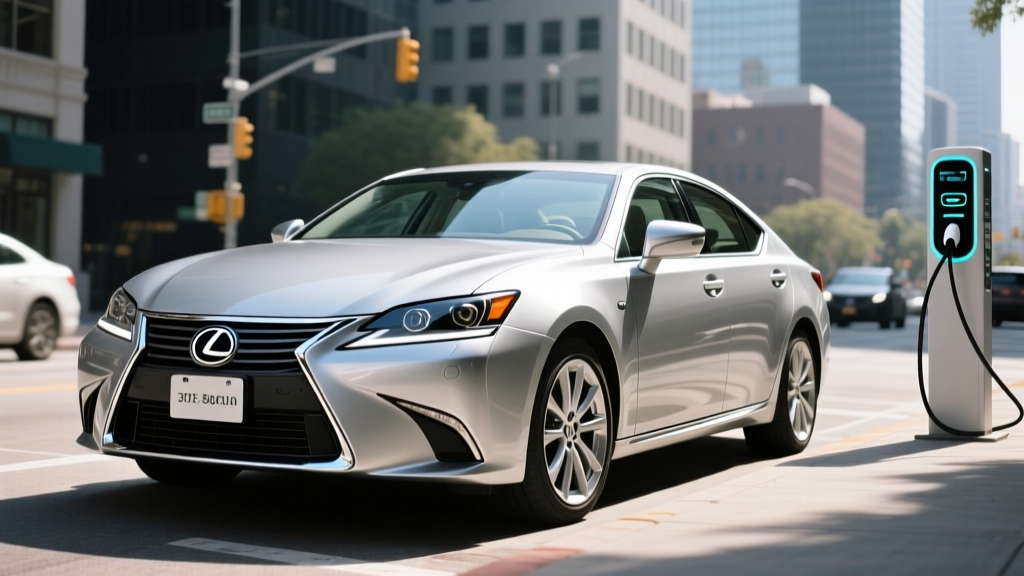
The 2013 Lexus ES 300h was the first hybrid variant of Lexus's midsize luxury sedan, pairing a 2.5-liter four-cylinder engine with an electric motor for EPA-estimated 40 MPG combined — a figure that still impresses over a decade later. As a conventional hybrid (HEV), it never needs to be plugged in, capturing energy through regenerative braking and the gasoline engine. In 2026, with used examples trading between $11,000 and $17,000 depending on mileage and condition, the ES 300h remains a compelling entry point into luxury hybrid ownership — provided you understand what a 13-year-old hybrid battery entails.
This guide breaks down the real-world fuel economy, powertrain specs, battery longevity, and ownership economics you need before buying a 2013 ES 300h today.
2013 Lexus ES 300h: Powertrain and Key Specifications
| Specification | Value |
|---|---|
| Powertrain Type | Conventional Hybrid (HEV) — no plug-in |
| Engine | 2.5L inline-4 Atkinson-cycle (156 hp, 156 lb-ft) |
| Electric Motor | Permanent-magnet synchronous (105 kW / 141 hp) |
| Combined System Output | 200 hp |
| Transmission | eCVT (electronically controlled continuously variable) |
| Hybrid Battery | 1.6 kWh nominal (NiMH), ~0.9 kWh usable |
| Drivetrain | Front-wheel drive |
| 0–60 mph | ~8.1 seconds |
| EPA Fuel Economy | 40 city / 39 highway / 40 combined MPG |
| Fuel Tank | 17.2 gallons |
| Total Range (est.) | ~688 miles per tank |
| Cargo Volume | 12.1 cu ft (battery reduces trunk vs gas ES 350) |
| Original MSRP (2013) | ~$38,850 base |
| 2026 Used Price Range | ~$11,000–$17,000 |
The ES 300h shares its hybrid powertrain with the contemporary Toyota Camry Hybrid and Avalon Hybrid, which means parts availability and mechanic familiarity remain strong. The 200 combined horsepower is adequate for highway merging and city driving, though it won't feel sporty. The eCVT delivers smooth, linear acceleration without the shift shock of a traditional automatic.
Fuel Economy: EPA Sticker vs. Real-World MPG
| Driving Scenario | EPA Estimate | Real-World Expectation |
|---|---|---|
| City | 40 MPG | 38–44 MPG |
| Highway | 39 MPG | 35–40 MPG |
| Combined | 40 MPG | 37–42 MPG |
| Cold Weather (below 30°F) | — | 33–37 MPG |
Like most conventional hybrids, the ES 300h tends to exceed its EPA city estimate in warm-weather stop-and-go traffic, where regenerative braking is most effective. Drivers in cities like Los Angeles or Houston regularly report 42–44 MPG on the trip computer during summer commutes. Highway driving at sustained 70–80 mph speeds yields closer to 36–38 MPG, since the electric motor assists less at high velocity and aerodynamic drag dominates.
Cold weather is the main efficiency penalty. Below freezing, the engine runs more frequently to heat the cabin and maintain battery temperature, dropping observed economy to the low-to-mid 30s. This is typical for all hybrids and is not a sign of battery degradation.
HEV vs. PHEV vs. EV: Where Does the ES 300h Fit?
The 2013 ES 300h is a conventional hybrid (HEV). It has no plug, no electric-only driving mode of meaningful distance, and no external charging capability. The small 1.6 kWh NiMH battery assists the gas engine during acceleration and captures braking energy — that's it. You fuel it like any other car at a gas station.
| Factor | HEV (e.g., ES 300h) | PHEV (e.g., modern RAV4 Prime) | BEV (e.g., Tesla Model 3) |
|---|---|---|---|
| Plug-in Required? | No | Yes, for EV range | Yes, always |
| Electric-Only Range | ~1 mile at low speed | 25–42 miles typical | 250–370+ miles |
| Fuel/Energy Cost per Mile | ~$0.09–$0.11 | ~$0.04 (EV mode) / ~$0.10 (gas) | ~$0.03–$0.05 |
| Home Charging Needed? | No | Recommended (Level 2) | Essential |
| Upfront Cost (2026) | Low (used market) | Moderate–High | Moderate–High |
| Federal Tax Credit (New) | None | Up to $7,500 (§30D) | Up to $7,500 (§30D) |
| Best For | No home charging, budget buyers, high-mile commuters | Home chargers with moderate daily commutes | Home chargers, low per-mile cost priority |
The ES 300h is the right choice if you cannot install a home charger (apartment living, street parking) but still want meaningful fuel savings. It's also ideal for buyers who want a luxury badge at a budget price point and don't want to think about charging logistics. If you have Level 2 charging access and a commute under 35 miles, a modern PHEV or BEV will deliver lower per-mile operating costs — but at a significantly higher purchase price.
Hybrid Battery Lifespan, Warranty, and Replacement Cost
The nickel-metal hydride (NiMH) battery in the ES 300h is proven technology shared across Toyota's hybrid lineup. Real-world longevity data from Camry Hybrid and Prius owners shows these packs commonly last 150,000–200,000 miles before significant degradation, with many exceeding 200,000 miles. However, at 13 years old, age is as much a factor as mileage — calendar degradation and heat exposure gradually reduce capacity.
Signs of hybrid battery decline include:
- Noticeably reduced fuel economy (dropping below 33–34 MPG consistently)
- More frequent engine cycling at stops
- Dashboard warning lights (check engine, hybrid system warning)
- Reduced regenerative braking feel
Hybrid Battery Replacement Cost
If the hybrid battery fails, you have three options:
| Option | Cost Range (2026) | Notes |
|---|---|---|
| New OEM Lexus battery | $3,500–$4,800 | Dealer-installed; full warranty; longest life expectancy |
| Refurbished/remanufactured battery | $1,500–$2,800 | Aftermarket suppliers; 1–3 year warranty typical |
| Individual cell replacement | $500–$1,200 | Independent hybrid shops; requires diagnostic to identify bad cells |
The ES 300h's battery is serviceable by independent hybrid specialists — you are not locked into a Lexus dealer. Many owners of high-mileage examples have successfully extended the car's life with a refurbished pack at roughly half the OEM cost. Before purchasing any used 2013 ES 300h, request a hybrid battery health check (state-of-health percentage) from a qualified technician.
Reliability, Safety, and Ownership Costs
The 2013 ES 300h benefits from Lexus's reputation for long-term reliability, and its powertrain components are shared with high-volume Toyota models. The 2AR-FXE engine is a well-understood Atkinson-cycle design with minimal failure points. The eCVT transmission has no traditional clutch packs or bands to wear out and is among the most durable transmission types in the industry.
Key reliability considerations for a 2026 purchase:
- Hybrid battery age: Even with low mileage, a 13-year-old NiMH pack is near or past its statistical lifespan. Budget $2,000–$4,000 for a potential replacement within your ownership window.
- Standard maintenance: Oil changes, brake fluid, coolant, and cabin filters follow Toyota/Lexus intervals. Expect ~$400–$600/year in routine maintenance.
- Brake life: Regenerative braking significantly reduces pad wear. Original brake pads lasting 80,000–100,000 miles are common in hybrid driving.
- 12V auxiliary battery: Like all hybrids, the ES 300h has a standard 12V battery that powers electronics. This typically needs replacement every 4–6 years and costs $150–$250.
For safety, the 2013 ES earned a Top Safety Pick rating from the IIHS, with Good ratings in moderate overlap front, side, roof strength, and head restraint tests. It includes 10 standard airbags, stability control, and available blind-spot monitoring.
According to fueleconomy.gov, the 2013 ES 300h's estimated annual fuel cost is approximately $1,550 (based on 15,000 miles/year at $3.50/gallon premium). That's roughly $600–$800 less per year than the non-hybrid ES 350 (EPA 24 MPG combined) under the same assumptions.
Tax Credits and Incentives: What Applies in 2026?
Because the 2013 Lexus ES 300h is a conventional hybrid (HEV), it does not qualify for the federal §30D clean vehicle tax credit (up to $7,500), which is reserved for plug-in electric vehicles (PHEVs and BEVs) meeting battery-sourcing and MSRP requirements under current IRS guidelines.
The conventional hybrid tax credit that existed pre-2010 (under the Energy Policy Act of 2005) has long since expired for all Toyota/Lexus models. There are no remaining federal incentives for purchasing a used conventional hybrid.
Some states and municipalities offer minor incentives for hybrid ownership — such as HOV lane access or reduced registration fees — but these vary widely by jurisdiction and many have sunset. Check your state's DMV or energy office for current programs.
- ❌ Not a plug-in vehicle — §30D credit does not apply
- ❌ Conventional hybrid credit expired for Lexus/Toyota models after 2007–2008 phase-out
- ❌ Used EV credit (§25E, up to $4,000) also requires a plug-in vehicle
- ✅ No special incentive needed — low used-market price is the value proposition
Pros and Cons: Buying a 2013 ES 300h in 2026
Pros
- 40 MPG combined still competitive with new hybrids in 2026
- No plug-in charging required — ideal for apartment/street parking
- Lexus build quality, quiet cabin, smooth ride
- Proven Toyota hybrid powertrain with wide parts availability
- Low used-market price ($11K–$17K) vs. new hybrid sedans ($30K+)
- Regenerative braking extends brake pad life significantly
- ~688-mile total range reduces fuel stop frequency
Cons
- Hybrid battery is 13 years old — replacement likely during ownership ($2K–$5K)
- No federal or state tax credits available
- Trunk space reduced to 12.1 cu ft (vs. 16.7 cu ft in gas ES 350)
- eCVT acceleration is adequate but uninspiring (8.1s to 60 mph)
- Infotainment and safety tech dated by 2026 standards
- No Apple CarPlay / Android Auto (added in later model years)
- Requires premium fuel for best performance (though runs on regular)
Who Should Buy the 2013 Lexus ES 300h?
This hybrid makes the most sense for a specific buyer profile:
Choose the 2013 ES 300h if:
- You want a reliable, fuel-efficient luxury sedan under $18,000
- You lack access to home or workplace charging (no plug needed)
- Your commute is city-heavy, where hybrid efficiency peaks
- You drive 12,000–20,000 miles per year and want to minimize fuel costs
- You value a quiet, comfortable ride over sporty performance
Look elsewhere if:
- You want electric-only driving — consider a PHEV like the Toyota Prius Prime or a used Chevrolet Volt
- You want the lowest possible per-mile energy cost — a used BEV (Leaf, Model 3) running on home solar or cheap utility rates costs $0.03–$0.05/mile vs. the ES 300h's ~$0.10/mile
- You need modern infotainment, driver-assistance features, or fast-charging road-trip capability
- You're uncomfortable budgeting $2,000–$4,000 for a potential hybrid battery replacement
Frequently Asked Questions
How many MPG does the 2013 Lexus ES 300h hybrid get?
The EPA rates the 2013 ES 300h at 40 MPG city, 39 MPG highway, and 40 MPG combined. In real-world driving, owners report 38–44 MPG in the city (hybrids excel in stop-and-go) and 35–40 MPG on the highway. Cold weather can reduce combined economy to the low-to-mid 30s.
Does the 2013 Lexus ES 300h need to be plugged in?
No. The ES 300h is a conventional hybrid (HEV), not a plug-in hybrid (PHEV). It charges its small hybrid battery through regenerative braking and the gasoline engine. You simply fill it at a gas station like any other car.
How far can the 2013 ES 300h drive on electric power alone?
Effectively about 1 mile at very low speeds (under 25 mph) under light load. The 1.6 kWh NiMH battery is not designed for meaningful electric-only driving. Its role is to assist the gas engine during acceleration and smooth out stop-start traffic — not to replace it.
Is the 2013 Lexus ES 300h hybrid reliable?
Yes, with a caveat. The powertrain (2AR-FXE engine, eCVT, hybrid system) is proven and shared with high-volume Toyota models. With proper maintenance, 200,000+ mile examples are common. The main reliability risk in 2026 is the age of the hybrid battery — at 13 years old, replacement may be needed if it hasn't already been done.
What does it cost to replace the hybrid battery in a 2013 ES 300h?
A new OEM battery from Lexus costs $3,500–$4,800 installed. Refurbished aftermarket packs run $1,500–$2,800. Individual cell repair at a hybrid specialist can cost $500–$1,200. Most owners find the refurbished option offers the best value for a used vehicle.
Does the 2013 Lexus ES 300h qualify for any tax credit?
No. As a conventional hybrid, it does not qualify for the federal §30D new clean vehicle credit or the §25E used clean vehicle credit. Those programs require plug-in vehicles (PHEVs or BEVs). The ES 300h's value proposition is its low used-market price and strong fuel economy, not tax incentives.
How does the 2013 ES 300h compare to newer Lexus hybrids?
The current-generation Lexus ES 300h (2026 model year) achieves EPA 44 MPG combined, has a more refined interior, modern safety tech (Lexus Safety System+ 3.0), and Apple CarPlay/Android Auto. However, a new ES 300h starts around $44,000 — roughly three times the cost of a used 2013 example. The fuel economy gap (40 vs. 44 MPG) saves only about $100–$150 per year at typical mileage, making the used 2013 model a strong value play.
What should I check before buying a used 2013 ES 300h?
Prioritize a hybrid battery health check (state-of-health percentage via OBD-II scan), review maintenance records for regular oil changes and inverter coolant service, and check for any outstanding recalls. A pre-purchase inspection by a hybrid-experienced mechanic is worth the $150–$250 investment.