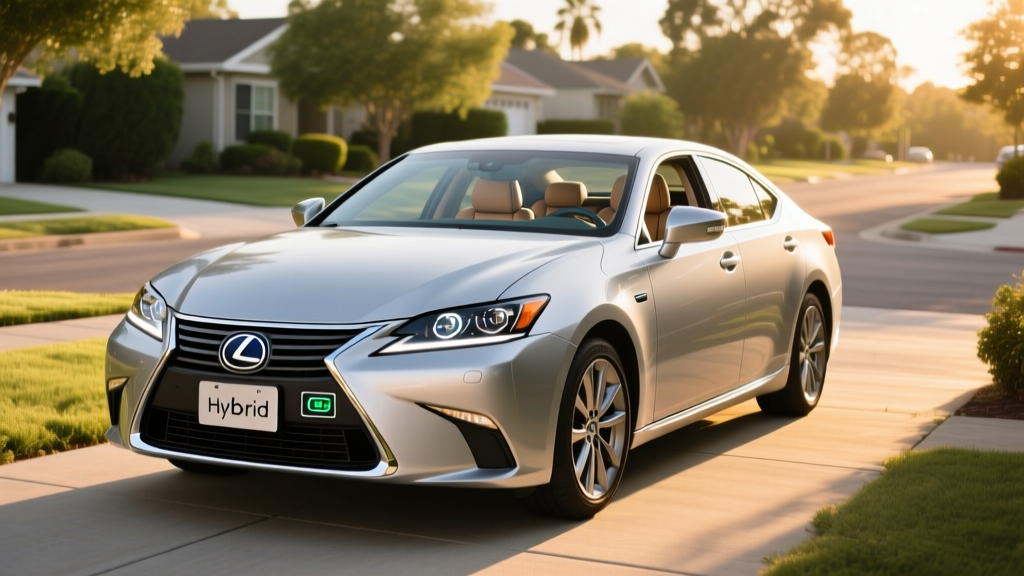
The 2013 Lexus ES 300h marked the debut of Lexus's hybrid midsize luxury sedan, slotting a proven Toyota Hybrid Synergy Drive system into the newly redesigned sixth-generation ES. More than a decade later, it remains one of the most popular used hybrid sedans on the market — and for good reason. With an EPA-rated 40 MPG combined, a reputation for bulletproof reliability, and Lexus's signature ride comfort, the ES 300h continues to attract buyers who want luxury-sedan efficiency without plug-in complexity.
This guide covers everything a prospective used buyer needs to know: real-world fuel economy, powertrain specs, hybrid battery longevity, replacement costs, and how the 2013 ES 300h stacks up against modern hybrids, PHEVs, and full EVs in 2026.
2013 Lexus ES 300h: Key Specifications at a Glance
| Specification | Value |
|---|---|
| Powertrain Type | Conventional Hybrid (HEV) — no plug-in required |
| Engine | 2.5L inline-4 Atkinson-cycle |
| Engine Horsepower | 156 HP @ 5,700 RPM |
| Electric Motor Output | 105 kW (141 HP) |
| Net Combined System HP | 200 HP |
| Transmission | eCVT (planetary gearset) |
| Hybrid Battery | 1.6 kWh Nickel-Metal Hydride (NiMH) |
| EPA City MPG | 40 MPG |
| EPA Highway MPG | 39 MPG |
| EPA Combined MPG | 40 MPG |
| 0–60 MPH | 8.1 seconds |
| Drivetrain | Front-wheel drive |
| Curb Weight | 3,682 lbs |
| Cargo Volume | 12.1 cu ft (trunk) |
| Original MSRP (2013) | $38,850 (base) |
| Used Price Range (2026) | $12,000–$19,000 depending on mileage/condition |
Sources: EPA Fuel Economy, Lexus USA press archives.
Fuel Economy: EPA Ratings vs. Real-World MPG
The headline number for the 2013 ES 300h is its EPA rating: 40 MPG city / 39 highway / 40 combined. That was exceptional for a luxury sedan in 2013, and it still holds up well today against newer competitors.
| Driving Scenario | MPG |
|---|---|
| EPA City | 40 MPG |
| EPA Highway | 39 MPG |
| EPA Combined | 40 MPG |
| Real-World City (owner-reported) | 41–45 MPG |
| Real-World Highway (70–80 mph) | 35–38 MPG |
| Real-World Combined (mixed driving) | 38–42 MPG |
| Cold Weather (below 32°F, short trips) | 33–37 MPG |
Like most Toyota/Lexus hybrids, the ES 300h tends to exceed its EPA city rating in stop-and-go traffic because regenerative braking recovers energy that a conventional car wastes as heat. Highway efficiency drops slightly because the electric motor provides less assist at sustained high speeds and the Atkinson-cycle 2.5L engine operates outside its optimal efficiency band.
In cold weather, expect a 5–10% fuel economy penalty. The engine runs more frequently to provide cabin heat (there is no electric heater in this generation), and the NiMH battery operates less efficiently at low temperatures. Owners in northern climates commonly report 33–37 MPG during winter months on short trips.
HEV vs. PHEV vs. EV: Understanding the ES 300h's Place
The 2013 Lexus ES 300h is a conventional hybrid electric vehicle (HEV). It charges its small battery entirely through regenerative braking and the gasoline engine. There is no plug, no charging cable, and no electric-only driving range to manage. You simply fill up with gasoline and drive.
| Feature | HEV (ES 300h) | PHEV (e.g., Toyota Prius Prime) | BEV (e.g., Tesla Model 3) |
|---|---|---|---|
| Plug-in Required? | No | Yes | Yes |
| Electric-Only Range | ~1 mile at low speed | 25–45 miles (typical) | 250–360+ miles |
| Fuel/Charging | Gasoline only | Gasoline + electricity | Electricity only |
| Home Charging Needed? | No | Recommended (Level 2) | Essential (Level 2) |
| Tailpipe Emissions | Yes (reduced) | Yes (when engine runs) | None |
| Federal Tax Credit (2026) | None | Up to $7,500 (§30D) | Up to $7,500 (§30D) |
The ES 300h's electric motor can propel the car at very low speeds (parking lots, creeping in traffic) for roughly one mile on battery alone, but this is not meaningful electric-only range. If you want substantial electric commuting, a modern PHEV like the 2026 Toyota Prius Prime (44 miles EV range) or a full BEV would be a better fit — but both require home charging infrastructure.
Who Should Choose the ES 300h Over a PHEV or EV?
The 2013 ES 300h is the right choice if you:
- Cannot install a home charger (apartment living, no garage, street parking)
- Want a luxury sedan experience at a used-car budget ($12K–$19K)
- Prioritize proven reliability and low maintenance over cutting-edge tech
- Drive a mix of city and highway and want consistent 38–42 MPG without behavioral changes
- Don't want to think about charging, range, or battery preconditioning
Consider a PHEV or BEV instead if you have home charging access, want to eliminate most gasoline use on daily commutes, or are shopping for a new vehicle and can take advantage of the federal §30D clean vehicle credit.
Powertrain Deep Dive: How the Hybrid System Works
The 2013 ES 300h uses Toyota's third-generation Hybrid Synergy Drive, the same architecture found in the contemporary Camry Hybrid. Here's how the components break down:
- 2.5L 2AR-FXE inline-4: An Atkinson-cycle engine producing 156 HP and 156 lb-ft of torque. The Atkinson cycle delays intake valve closing to improve thermal efficiency at the cost of peak power — ideal for hybrid applications where the electric motor fills in the torque gap.
- Permanent-magnet electric motor (105 kW / 141 HP): Integrated into the transaxle, this motor provides instant torque from 0 RPM, enabling smooth acceleration and regenerative braking.
- Net system output — 200 HP: The combined output isn't a simple sum of engine + motor because peak outputs occur at different RPMs. The 200 HP figure represents maximum combined output under full acceleration.
- eCVT (planetary gearset): Unlike a belt-driven CVT, this is a power-split device that seamlessly blends engine and motor power. There are no belts, cones, or traditional gear shifts — it's one of the most durable transmission designs in the industry.
- 1.6 kWh NiMH battery pack: Located behind the rear seats (slightly reducing trunk pass-through). This is a small buffer — the system never fully charges or depletes it, cycling only the middle ~40% of capacity to maximize longevity.
The result is a 0–60 MPH time of 8.1 seconds — adequate for merging and passing but not sporty. The ES 300h was tuned for refinement, not performance. The cabin is exceptionally quiet under electric-only low-speed driving, and the transition between engine-off and engine-on is among the smoothest in the hybrid segment.
Hybrid Battery Longevity, Warranty & Replacement Costs
Lexus warranted the 2013 ES 300h hybrid battery for 8 years / 100,000 miles (10 years / 150,000 miles in California and states adopting CARB emissions standards). For most 2013 models, original factory warranty coverage has expired as of 2021–2023.
The nickel-metal hydride (NiMH) battery in the ES 300h has proven remarkably durable. Toyota/Lexus hybrid battery packs from this era commonly last 150,000–200,000+ miles before significant degradation. Unlike the lithium-ion packs in early BEVs, NiMH chemistry degrades gradually rather than experiencing sudden capacity cliffs.
Signs of Hybrid Battery Degradation
As the battery ages, you may notice:
- More frequent engine cycling (the engine starts and stops more often to recharge the battery)
- Slightly reduced fuel economy (2–5 MPG drop in advanced stages)
- A "Check Hybrid System" dashboard warning if a cell fails
- Reduced regenerative braking effectiveness
Battery Replacement Cost (2026)
| Option | Estimated Cost | Warranty |
|---|---|---|
| New OEM Lexus battery (dealer) | $3,500–$5,000 (parts + labor) | 3 years / unlimited miles |
| Refurbished/remanufactured battery | $1,500–$2,800 | 1–3 years (varies by supplier) |
| Individual cell module replacement | $500–$1,200 (specialist shop) | Varies |
| Used battery from salvage yard | $600–$1,200 | 30–90 days typically |
The most cost-effective approach for a high-mileage ES 300h is often a refurbished battery from a reputable hybrid specialist. Individual cell module replacement is viable when only one or two modules have failed — a common pattern with NiMH packs. Several independent hybrid shops nationwide offer this service.
Reliability, Maintenance & Long-Term Ownership
The 2013 ES 300h benefits from one of the most thoroughly proven hybrid powertrains ever built. The Toyota Hybrid Synergy Drive has been in continuous production since 1997, and by 2013, it was in its third generation with millions of units on the road.
Maintenance Advantages Over Gas-Only Sedans
Hybrid ownership actually reduces several routine maintenance items:
- Brake pads last longer: Regenerative braking handles much of the deceleration, so friction brakes see less wear. Many owners report original brake pads lasting 80,000–100,000+ miles.
- No traditional starter motor: The electric motor starts the engine, eliminating a common failure point.
- No alternator: The hybrid system handles all electrical generation.
- Engine runs less: The gas engine shuts off at stops and during low-speed driving, reducing total engine hours and oil degradation.
Known Issues to Watch For
- Water pump (electric): The electric coolant pump can fail around 100,000–130,000 miles. Replacement runs $400–$700.
- Brake actuator recall: Some 2013 ES 300h vehicles were subject to a brake actuator recall. Verify recall status via NHTSA's VIN lookup.
- Dashboard/interior materials: Early sixth-gen ES models had some reports of dashboard cracking in hot climates — cosmetic but worth inspecting.
- 12V auxiliary battery: Like all hybrids, the ES 300h has a conventional 12V battery for accessories. If it dies, the car won't start even if the hybrid battery is full. Replace every 4–5 years.
Pricing, Tax Credits & Value in 2026
As a used 2013 model, the ES 300h does not qualify for the federal §30D new clean vehicle tax credit (which applies only to new PHEVs and BEVs meeting battery-sourcing, MSRP, and buyer income requirements). It also does not qualify for the used clean vehicle credit (up to $4,000), because that credit requires the vehicle to be a plug-in EV or fuel cell vehicle — conventional HEVs are excluded.
However, the ES 300h's value proposition in 2026 is strong on pure economics:
| Mileage Range | Condition | Typical Price |
|---|---|---|
| 60,000–90,000 miles | Excellent | $16,000–$19,000 |
| 90,000–130,000 miles | Good | $13,500–$16,000 |
| 130,000–180,000 miles | Fair | $10,500–$13,500 |
| 180,000+ miles | High mileage | $8,000–$11,000 |
Annual Fuel Cost Estimate
At 40 MPG combined and 12,000 miles driven per year, with gas at $3.30/gallon (2026 national average), annual fuel cost is approximately:
12,000 ÷ 40 × $3.30 = ~$990/year
Compare that to a 2013 Lexus ES 350 (gas-only V6, rated at 24 MPG combined): 12,000 ÷ 24 × $3.30 = ~$1,650/year. The hybrid saves roughly $660 per year in fuel — about $3,300 over five years — which partially offsets its higher original purchase price.
Pros and Cons: The Honest Verdict
Pros
- 40 MPG combined — still competitive in 2026
- Exceptional reliability record (proven Toyota hybrid system)
- Smooth, quiet ride quality befitting a luxury sedan
- No plug-in required — zero lifestyle change from a gas car
- Low maintenance costs (long brake life, no starter/alternator)
- Strong resale value relative to non-hybrid luxury sedans
Cons
- No electric-only commuting capability
- Trunk slightly smaller than gas ES 350 (battery placement)
- 8.1-second 0–60 — leisurely acceleration
- 2013 infotainment is dated (no Apple CarPlay/Android Auto)
- No federal tax credit eligibility (HEV, not PHEV/BEV)
- Original hybrid battery warranty has expired on all examples
Frequently Asked Questions
How many MPG does the 2013 Lexus ES 300h hybrid get?
The EPA rates the 2013 ES 300h at 40 MPG city, 39 MPG highway, and 40 MPG combined. Real-world owners typically report 38–42 MPG in mixed driving, with city MPG sometimes exceeding 43 thanks to regenerative braking. Highway-only driving at 75+ MPH drops to 35–38 MPG.
Does the 2013 Lexus ES 300h need to be plugged in?
No. The ES 300h is a conventional hybrid (HEV), not a plug-in hybrid (PHEV). It charges its battery entirely through regenerative braking and the gasoline engine. You never plug it in — just fill up at a gas station like any other car.
How long does the hybrid battery last in the ES 300h?
Toyota/Lexus NiMH hybrid batteries from this generation commonly last 150,000–200,000+ miles. Many original batteries are still in service. When replacement is needed, options range from $500 (individual cell repair) to $5,000 (new OEM battery at a dealer).
Is the 2013 Lexus ES 300h reliable?
Yes — it is widely considered one of the most reliable luxury sedans of its era. The hybrid powertrain has fewer wear components than a conventional car, and the eCVT transmission is essentially bulletproof. The main risk for high-mileage buyers is eventual hybrid battery replacement.
Does the 2013 ES 300h qualify for any tax credit?
No. The federal §30D new vehicle credit and the used clean vehicle credit both require plug-in capability (PHEV or BEV). As a conventional HEV, the ES 300h does not qualify for any federal tax credit. Some states may have offered hybrid incentives at the time of original purchase, but these are no longer available for used purchases.
How does the ES 300h compare to the gas-only ES 350?
The 2013 ES 350 (3.5L V6, 268 HP) gets 24 MPG combined vs. the ES 300h's 40 MPG — a 40% improvement. The trade-off is performance: the ES 350 hits 60 MPH in 6.8 seconds vs. 8.1 for the hybrid. The ES 300h also has slightly less trunk space due to battery placement. For most buyers prioritizing cost of ownership, the ES 300h is the smarter pick.
Hybrid vs. PHEV vs. EV — which should I buy?
Choose a conventional hybrid (HEV) like the ES 300h if you lack home charging and want zero lifestyle change. Choose a PHEV if you have home charging and want 25–45 miles of electric commuting with a gas backup for road trips. Choose a full EV (BEV) if you have reliable home charging, want the lowest per-mile fuel cost, and are comfortable with 250+ mile range and DC fast charging for road trips.
For current federal tax credit rules on new PHEVs and BEVs, consult the IRS §30D guidance. Eligibility depends on vehicle MSRP caps, buyer income limits, and battery critical-mineral sourcing requirements that change annually.