Quick Verdict: A Solid Used Hybrid Sedan With Proven Efficiency
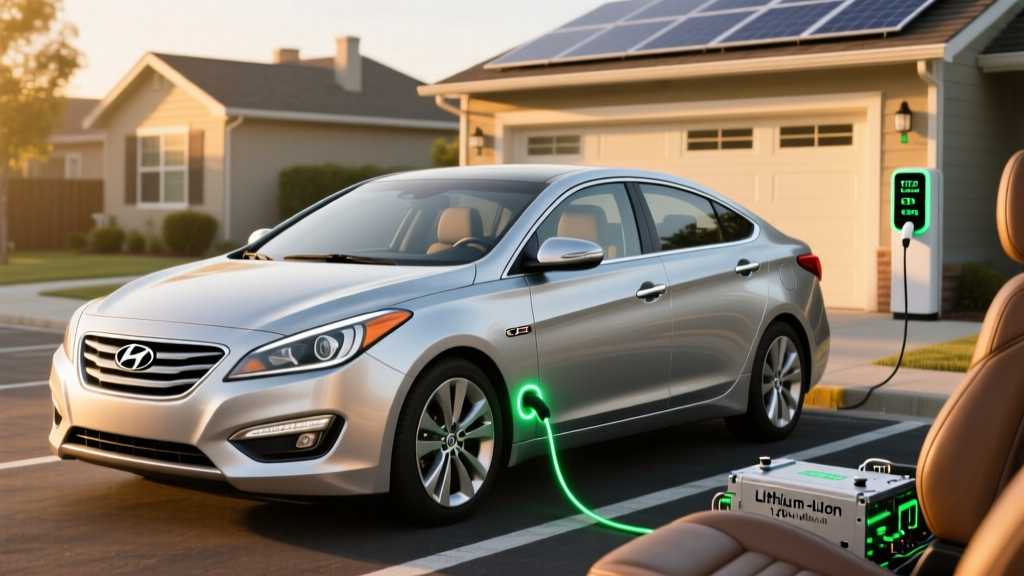
The 2013 Hyundai Sonata Hybrid remains one of the most practical midsize hybrid sedans on the used market. With an EPA-rated 35 MPG combined, a conventional hybrid powertrain that requires no plug-in charging, and Hyundai's generous original battery warranty, it appeals to buyers who want fuel savings without range anxiety or charging infrastructure dependence. In 2026, well-maintained examples trade between $6,500 and $10,000 depending on mileage and condition — making it a compelling budget-friendly alternative to newer hybrids or entry-level EVs.
This is a conventional hybrid electric vehicle (HEV), not a plug-in hybrid. It charges its battery exclusively through regenerative braking and the gasoline engine. You never plug it in. If you're looking for electric-only driving or plug-in capability, you'll want to explore Hyundai's later PHEV offerings or a full BEV.
| Specification | 2013 Sonata Hybrid |
|---|---|
| EPA Combined MPG | 35 MPG |
| EPA City MPG | 36 MPG |
| EPA Highway MPG | 40 MPG |
| Combined Horsepower | 206 HP (engine + motor) |
| Gasoline Engine | 2.4L 4-cylinder, 159 HP |
| Electric Motor | 35 kW (47 HP) |
| Hybrid Battery | 1.4 kWh lithium-polymer (LiPB) |
| Transmission | 6-speed automatic |
| 0–60 MPH | ~8.0 seconds |
| Fuel Tank Capacity | 18.5 gallons |
| Total Range (est.) | ~647 miles |
| Original MSRP (2013) | $26,000 (base) |
| Typical Used Price (2026) | $6,500–$10,000 |
| Original Battery Warranty | 10 years / 100,000 miles |
Fuel Economy: EPA Ratings vs. Real-World MPG
The 2013 Sonata Hybrid's EPA fuel economy ratings are straightforward:
| Driving Condition | EPA Rating | Real-World Expectation |
|---|---|---|
| City | 36 MPG | 34–40 MPG (hybrids excel in stop-and-go) |
| Highway | 40 MPG | 36–42 MPG (steady cruising, minimal hills) |
| Combined | 35 MPG | 33–38 MPG (mixed driving) |
Hybrids typically outperform their EPA city ratings in real-world stop-and-go traffic because regenerative braking recovers energy that conventional cars waste as heat. The Sonata Hybrid is no exception. Drivers who do mostly city commuting often report 37–40 MPG. Highway-heavy drivers should expect closer to 36–38 MPG, as the electric motor contributes less at sustained high speeds.
A few factors affect real-world efficiency in a 13-year-old hybrid: tire condition (underinflated tires reduce MPG by 3–5%), battery state of health (degraded batteries force the engine to run more frequently), and climate. Cold weather reduces MPG by roughly 5–10% as the engine runs longer to reach operating temperature and cabin heating demands energy.
Source: fueleconomy.gov — 2013 Hyundai Sonata Hybrid
HEV vs. PHEV vs. EV: Understanding What You're Buying
The 2013 Sonata Hybrid is a conventional hybrid (HEV). It is critical to understand what this means compared to plug-in hybrids and full electric vehicles:
| Feature | HEV (This Car) | PHEV | BEV (Full Electric) |
|---|---|---|---|
| Plug-in Charging Required? | No | Yes (for EV range) | Yes (always) |
| Electric-Only Range | ~1 mile at low speed | 20–45 miles typical | 200–400+ miles |
| Gasoline Engine? | Yes (primary) | Yes (backup) | No |
| Battery Size | 1–2 kWh | 10–20 kWh | 60–100+ kWh |
| Fuel Cost per Mile | ~$0.10–$0.12 | ~$0.04–$0.10 | ~$0.03–$0.06 |
| Tax Credit (Federal) | None | Up to $7,500 (new) | Up to $7,500 (new) |
| Home Charging Needed? | No | Recommended | Essential |
Choose the HEV (2013 Sonata Hybrid) if: You want better fuel economy without changing your driving habits, lack access to home or workplace charging, or want the lowest possible purchase price.
Choose a PHEV if: You have home charging, commute under 30 miles round-trip, and want to drive mostly on electricity while keeping a gas engine for longer trips.
Choose a BEV if: You have reliable home charging, want the lowest per-mile operating cost, and are comfortable with 200+ miles of range for most trips.
Powertrain Deep Dive: How the Hybrid System Works
The 2013 Sonata Hybrid uses Hyundai's proprietary parallel hybrid architecture, which differs from the power-split systems used by Toyota and Ford. Here's what's under the hood:
- 2.4L Theta II 4-cylinder engine: Produces 159 HP and 154 lb-ft of torque. This is a naturally aspirated gasoline engine running on the Atkinson cycle for improved thermal efficiency.
- 35 kW electric motor: Generates 47 HP and 151 lb-ft of torque, positioned between the engine and transmission.
- Combined system output: 206 HP — available when both the engine and motor contribute simultaneously.
- 6-speed automatic transmission: Unlike the CVT-style e-CVT in a Toyota Camry Hybrid, the Sonata uses a traditional 6-speed automatic with an electric motor integrated into the torque converter housing. This gives it a more familiar driving feel but slightly less seamless power blending.
- 1.4 kWh lithium-polymer (LiPB) battery: Located behind the rear seats, reducing trunk space by about 2 cubic feet compared to the gas-only Sonata. This small battery handles regenerative energy capture and short electric-only assist bursts.
The system operates in several modes: EV mode (electric-only at low speeds up to ~25 MPH for very short distances), hybrid mode (engine and motor blending), engine-only mode (cruising), and regenerative braking (capturing kinetic energy during deceleration). The transitions between modes are managed automatically — the driver simply presses the accelerator and brakes normally.
Battery Life, Warranty, and Replacement Costs
For any used hybrid buyer, battery longevity is the top concern. Here's what you need to know about the 2013 Sonata Hybrid's battery:
Original Battery Warranty: 10 years / 100,000 miles (original owner), 5 years / 60,000 miles (second owner). This warranty covered defects and capacity loss below a defined threshold.
Warranty Status in 2026: The original 10-year warranty has expired for all 2013 models. Any remaining coverage would only apply if the vehicle had exceptionally low mileage and was still within the second-owner 5-year/60,000-mile window from a certified battery replacement.
Real-World Battery Longevity
Hyundai's lithium-polymer battery chemistry in the 2013 Sonata Hybrid has proven reasonably durable. Most owner reports and mechanic data suggest these batteries maintain adequate capacity through 120,000–160,000 miles. Some units have exceeded 200,000 miles with gradual capacity loss, while others have required replacement around 100,000–130,000 miles, particularly in hot climates where thermal stress accelerates degradation.
Unlike a full EV battery (60–100 kWh), the Sonata Hybrid's 1.4 kWh pack is small and operates within a narrow state-of-charge window — typically between 30% and 80% SoC — which reduces stress on the cells. The hybrid control system manages this buffer automatically.
Battery Replacement Cost
If the hybrid battery fails or degrades significantly, replacement costs in 2026 break down as follows:
- OEM new battery from Hyundai: $2,500–$3,500 (parts) + $500–$800 labor = $3,000–$4,300 total
- Refurbished/remanufactured battery: $1,200–$2,000 (parts) + $500–$800 labor = $1,700–$2,800 total
- Individual cell replacement (specialist shops): $800–$1,500 total, if only a few cells are degraded
Given that a 2013 Sonata Hybrid with 120,000+ miles has a market value of roughly $7,000–$9,000, a full OEM battery replacement can consume 40–50% of the vehicle's value. This is a key factor in the purchase decision. We recommend budgeting $2,000–$3,000 for a potential battery replacement if the vehicle has over 100,000 miles and no recent battery service history.
Signs of Battery Degradation to Watch For
- Noticeably reduced fuel economy (dropping below 30 MPG combined)
- The gasoline engine running more frequently at stops or low speeds
- Reduced regenerative braking feel
- Dashboard warning lights related to the hybrid system
- Rapid state-of-charge fluctuations on the energy display
Reliability and Common Issues
The 2013 Sonata Hybrid received mixed reliability ratings. The hybrid system itself — battery, motor, and power electronics — has proven more reliable than many buyers expect. However, the model year carries some known concerns:
- Theta II engine recall: Hyundai issued recalls for certain 2.4L Theta II engines (including some in the Sonata Hybrid) due to manufacturing defects that could cause engine seizure. Check the NHTSA recall database using the VIN before purchasing. Source: NHTSA Recalls Lookup
- Hybrid system cooling: The electric motor and inverter have dedicated cooling systems. Coolant leaks or pump failures can trigger hybrid system warnings.
- 12V auxiliary battery: Like all hybrids, the Sonata has a conventional 12V battery for accessories and starting the hybrid system. These typically need replacement every 4–5 years and cost $150–$250.
- Brake actuator: Some owners report premature wear on the regenerative brake actuator, which can cost $800–$1,200 to replace.
For a used purchase, prioritize vehicles with complete service records, especially evidence of regular coolant changes and any recall-related engine inspections or replacements.
Who Should Buy This Hybrid — And Who Shouldn't
Pros
- 35 MPG combined with no plug-in charging required
- Comfortable midsize sedan with good trunk space (14.4 cu ft, minus battery)
- Smooth, conventional 6-speed automatic — no CVT drone
- Low purchase price ($6,500–$10,000 used in 2026)
- No range anxiety or charging dependency
- Strong city MPG from regenerative braking
Cons
- Original hybrid battery warranty has expired on all 2013 models
- Battery replacement cost ($1,700–$4,300) is significant relative to car value
- Theta II engine recall risk — must verify VIN status
- No electric-only driving range beyond very low-speed creeping
- Trunk space reduced by battery placement
- No federal tax credit available on used purchases
This Hybrid Is Right For You If:
- You commute in stop-and-go city traffic where hybrid efficiency shines
- You don't have access to home or workplace charging
- You want a reliable, fuel-efficient sedan under $10,000
- You're willing to budget for a potential hybrid battery replacement
- You prefer a conventional driving experience with no plug-in routine
Look Elsewhere If:
- You want to drive on electricity alone (consider a PHEV or BEV)
- You're uncomfortable with potential $2,000–$4,000 battery repair costs
- You want the latest safety tech (2013 models lack automatic emergency braking, lane-keeping, etc.)
- You need maximum trunk space (the battery intrusion costs ~2 cu ft)
Pricing, Tax Credits, and Ownership Costs
The 2013 Hyundai Sonata Hybrid originally carried an MSRP of approximately $26,000 for the base trim and $30,000+ for the Limited trim. In 2026, used-market pricing looks like this:
- 80,000–100,000 miles: $8,500–$10,000
- 100,000–130,000 miles: $7,000–$9,000
- 130,000–160,000+ miles: $5,500–$7,500
Tax Credit Eligibility
The 2013 Sonata Hybrid does not qualify for any federal tax credit in 2026. The IRS §30D new clean vehicle credit applies only to new plug-in vehicles (PHEVs and BEVs), not conventional hybrids. The used EV credit (§25E) provides up to $4,000 for pre-owned plug-in vehicles priced under $25,000, but conventional HEVs are excluded. Source: IRS Clean Vehicle Credits
Some states may offer minimal incentives for used fuel-efficient vehicles, but these are rare and vary by jurisdiction. Check your state's energy or environmental agency for current programs.
Annual Operating Cost Estimate
Based on 15,000 miles/year, $3.50/gallon regular gasoline, and 35 MPG combined:
- Annual fuel cost: ~$1,500 (428 gallons × $3.50)
- Comparison — gas-only 2013 Sonata (28 MPG combined): ~$1,875/year
- Annual fuel savings vs. gas model: ~$375/year
- Comparison — 2026 EV at $0.14/kWh and 3.5 mi/kWh: ~$600/year
The hybrid saves roughly $375 annually over its gas-only counterpart, but a modern EV would save approximately $900/year in fuel. Over 5 years, the Sonata Hybrid saves about $1,875 in fuel compared to the gas model — which may or may not offset a potential battery replacement.
Frequently Asked Questions
How many MPG does the 2013 Hyundai Sonata Hybrid get?
The EPA rates it at 36 MPG city, 40 MPG highway, and 35 MPG combined. Real-world driving typically yields 33–40 MPG depending on driving style, climate, and battery condition. City-heavy commuters often see the highest numbers thanks to regenerative braking.
Does the 2013 Sonata Hybrid need to be plugged in?
No. This is a conventional hybrid (HEV). The battery charges through regenerative braking and the gasoline engine. There is no plug, no charging cable, and no electric-only driving range beyond very low-speed creeping. You fuel it like any other gasoline car.
How long does the hybrid battery last?
Most 2013 Sonata Hybrid batteries last 120,000–160,000 miles, though some have exceeded 200,000 miles and others have degraded earlier, especially in hot climates. The original 10-year/100,000-mile warranty has expired for all 2013 models. Budget $1,700–$4,300 for a potential replacement.
Is the 2013 Sonata Hybrid reliable?
The hybrid system (battery, motor, electronics) has proven reasonably reliable. However, the 2.4L Theta II engine was subject to recalls for potential seizure due to manufacturing defects. Always check the NHTSA recall database with the specific VIN and confirm any recall work was completed before purchasing.
Does this car qualify for any tax credit?
No. The federal §30D new vehicle credit and §25E used vehicle credit apply only to plug-in vehicles (PHEVs and BEVs). Conventional hybrids like the 2013 Sonata Hybrid are not eligible for federal tax credits. State incentives for used hybrids are rare and vary by jurisdiction.
How does the 2013 Sonata Hybrid compare to a Toyota Camry Hybrid of the same year?
The 2013 Camry Hybrid LE rates at 41 MPG combined (EPA) — 6 MPG better than the Sonata Hybrid. The Camry uses Toyota's proven power-split e-CVT system, which tends to deliver smoother hybrid operation and has a longer track record of battery reliability. The Sonata Hybrid counters with a more conventional 6-speed automatic feel, slightly more power (206 HP vs. 200 HP), and often lower used pricing. If pure fuel economy is the priority, the Camry Hybrid wins. If you prefer a traditional transmission feel and a lower purchase price, the Sonata Hybrid is worth considering.
What is the total driving range on a full tank?
With an 18.5-gallon fuel tank and 35 MPG combined, the estimated total range is approximately 647 miles. Highway-heavy driving at 40 MPG could push that to 740 miles. This is comparable to or better than most gas-only midsize sedans and eliminates any range anxiety for long trips.