Quick Verdict: A Capable Hybrid With a Contested Past
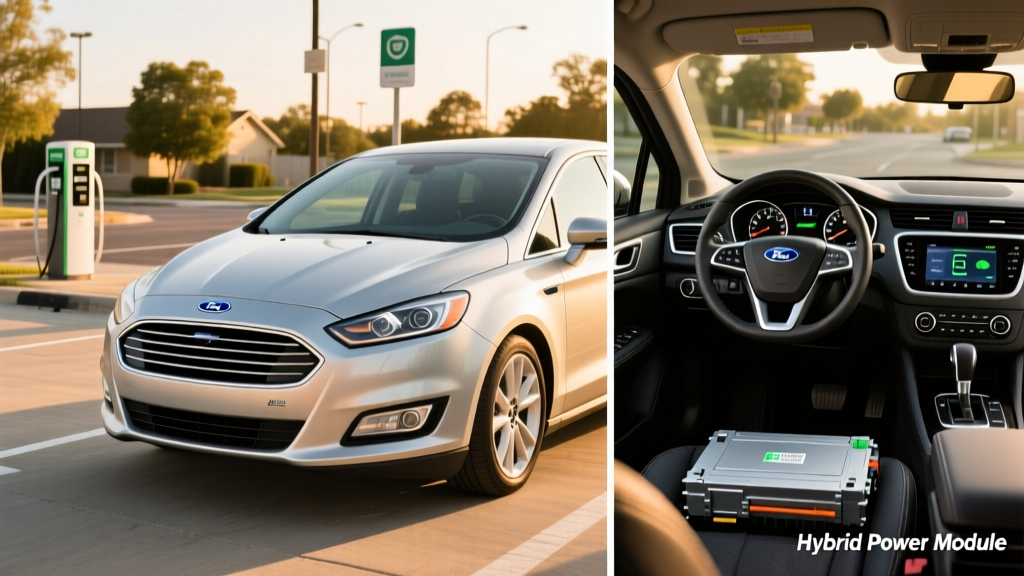
The 2013 Ford C-Max Hybrid occupies an unusual space in the used-hybrid market. It offers a spacious wagon-hatchback body, a refined Atkinson-cycle powertrain, and competitive fuel economy — but it arrived with one of the most publicized EPA-label controversies in hybrid history. Ford initially advertised 47 MPG combined, only to issue a corrected label of 43 MPG combined after real-world owners reported significantly lower numbers. For buyers evaluating 2013 Ford C-Max Hybrid reliability in 2026, that history matters less than the mechanical track record, which is broadly solid with a few specific caveats around the high-voltage battery and early-model-year software.
| Specification | 2013 Ford C-Max Hybrid (SE/SEL) |
|---|---|
| Powertrain | 2.0L Atkinson-cycle I4 + electric motor (188 hp combined) |
| Transmission | eCVT (planetary gearset, no belts) |
| EPA MPG (City / Hwy / Combined) | 42 / 38 / 40 (corrected label) |
| High-Voltage Battery | 1.4 kWh NiMH (nominal), ~0.5 kWh usable |
| 0-60 mph | ~8.1 seconds |
| Drivetrain | Front-wheel drive |
| Cargo Volume (rear seats up/down) | 24.5 / 52.6 cu ft |
| Original MSRP (2013) | $25,200 (SE) – $28,200 (SEL) |
| Typical 2026 Used Price | $6,000 – $10,500 depending on mileage |
| Hybrid Battery Warranty (original) | 8 years / 100,000 miles (federal emissions) |
Real MPG vs. the EPA Sticker: What Owners Actually See
The C-Max Hybrid's fuel economy story is inseparable from the 2013 label controversy. Ford originally rated the car at 47 MPG across the board — city, highway, and combined — a figure that proved optimistic for most drivers. After a class-action settlement and voluntary relabeling, the EPA adjusted the official numbers downward. Here is what the corrected data shows:
| Driving Condition | EPA Corrected MPG | Real-World Owner Reports |
|---|---|---|
| City | 42 MPG | 38 – 45 MPG (hybrids often exceed EPA in stop-and-go) |
| Highway | 38 MPG | 34 – 40 MPG (aerodynamic drag reduces regen benefit) |
| Combined | 40 MPG | 36 – 43 MPG (varies heavily with driving style and climate) |
| Cold Weather (below 32°F) | N/A (not EPA-rated separately) | 30 – 36 MPG (engine runs more to heat cabin and battery) |
Like most conventional hybrids (HEVs), the C-Max benefits most from city driving, where regenerative braking recovers energy and the engine shuts off at stops. Highway-heavy commuters will see numbers closer to 34-38 MPG. Cold weather further reduces efficiency because the gasoline engine must run longer to warm the cabin and bring the NiMH battery to optimal operating temperature. Drivers who pre-condition the cabin while plugged into a 120V outlet (using the block heater, if equipped) can partially mitigate winter losses.
HEV vs. PHEV: The C-Max Came in Both Flavors
Ford sold the C-Max in two electrified variants for 2013, and confusing them is a common buyer mistake:
| Feature | C-Max Hybrid (HEV) | C-Max Energi (PHEV) |
|---|---|---|
| Plug-in Charging Required? | No — charges via regen and engine | Yes — Level 1 (120V) or Level 2 (240V) |
| Battery Capacity | 1.4 kWh NiMH | 7.6 kWh Li-ion (usable ~5.5 kWh) |
| Electric-Only Range | ~0.5 miles at low speed | 19 miles (EPA) |
| Total Range (gas + electric) | ~570 miles | ~550 miles |
| Combined MPGe (charge-depleting) | N/A (gasoline only) | 88 MPGe |
| Combined MPG (charge-sustaining) | 40 MPG | 38 MPG |
| DC Fast Charging | No | No (Level 2 max, ~2.5 hours for full charge) |
| Cargo Volume | 24.5 cu ft | 19.2 cu ft (battery intrudes) |
The conventional C-Max Hybrid never needs to be plugged in. Its small NiMH battery captures energy from braking and the gasoline engine, making it a drop-in replacement for a gas car with no charging infrastructure required. The C-Max Energi, by contrast, offers genuine electric-only commuting for short trips but sacrifices cargo space and requires access to a plug to realize its efficiency advantage. If you cannot charge at home or work, the HEV is the better choice.
Powertrain and Driving Impressions
The 2013 C-Max Hybrid pairs a 2.0-liter Atkinson-cycle four-cylinder engine (141 hp on its own) with a 118-hp permanent-magnet electric motor, for a combined system output of 188 horsepower. That figure was class-leading in 2013, outmuscling the Toyota Prius v (134 hp) and giving the C-Max confident highway merging and passing ability.
The eCVT transmission is not a traditional continuously variable transmission with a steel belt. It uses a planetary gearset that seamlessly blends engine and motor power — a design Toyota pioneered and Ford licensed. This system has proven mechanically robust, with no belts to wear and fewer moving parts than a conventional automatic. Acceleration from 0-60 mph takes approximately 8.1 seconds, adequate for daily driving if not sporty.
Ride quality is a standout. The C-Max rides on the Ford Focus platform with a multilink rear suspension, delivering a more composed and car-like feel than the Prius. Steering is well-weighted, and cabin noise is lower than many 2013-era hybrids thanks to additional sound insulation. The trade-off is weight: at roughly 3,600 pounds, the C-Max is heavier than some competitors, which contributes to the slightly lower highway MPG.
2013 Ford C-Max Hybrid Reliability: What the Data Shows
Overall, the 2013 C-Max Hybrid has landed in the average-to-slightly-above-average range in long-term reliability surveys. The powertrain itself — the Atkinson-cycle engine and eCVT — has proven durable, with many examples surpassing 150,000 miles without major mechanical issues. However, several specific areas deserve attention for used buyers in 2026:
High-Voltage Battery Longevity
The NiMH battery pack in the C-Max Hybrid is smaller and less stressed than the larger packs in full EVs, which generally works in its favor for longevity. NiMH chemistry is well-understood and tolerant of the shallow charge-discharge cycles that hybrids use. Most 2013 C-Max Hybrids still on the road have their original battery packs at 130,000+ miles. That said, capacity loss is inevitable after 10-12 years. Symptoms of a degrading hybrid battery include:
- Noticeably reduced MPG (engine running more frequently to compensate)
- More frequent engine cycling at stops
- Reduced electric-only creep distance
- Dashboard warning lights (check engine or hybrid system warning)
Battery Replacement Cost
If the high-voltage battery does fail or degrade significantly, replacement options in 2026 include:
- New OEM pack from Ford: $2,500 – $3,500 (parts) plus $500 – $800 labor
- Refurbished/remanufactured pack: $1,200 – $2,000 installed (available from hybrid-specialty shops)
- Individual cell module replacement: $300 – $600 if only one or two modules are weak (requires diagnostic scan to identify)
The refurbished market has matured considerably, and many hybrid-specialist shops can replace a C-Max battery for under $2,000 total. Given the vehicle's current used value of $6,000-$10,500, a full OEM replacement may not be economically justified — a refurbished pack is the pragmatic choice.
Other Common Issues
- 12V auxiliary battery: Like all hybrids, the C-Max has a standard 12V battery that powers electronics. These typically last 3-5 years and cost $150-$250 to replace. A dead 12V battery can prevent the car from starting even though the high-voltage pack is full.
- Door latch recalls: Ford issued recalls for door latch assemblies on 2013-2014 C-Max models. Verify recall completion via NHTSA's recall lookup.
- Transmission fluid: The eCVT uses a specific Mercon LV fluid. While Ford initially called it "lifetime," most hybrid mechanics recommend a drain-and-fill at 60,000-100,000 miles for longevity ($150-$250 at an independent shop).
- Brake feel: The regenerative braking system transitions to friction brakes at low speeds. Some owners report a slightly grabby feel, which is normal for the system but can be more pronounced if brake fluid has not been flushed (recommended every 3 years).
Who Should Buy This Hybrid — and Who Should Look Elsewhere
Pros
- Spacious hatchback cargo area (24.5 cu ft) rivals small SUVs
- Strong 188 hp powertrain outperforms most 2013-era hybrids
- No plug-in charging needed — true drop-in hybrid
- Comfortable ride quality with multilink rear suspension
- Low used prices ($6K-$10K) make it an accessible entry to hybrid ownership
- eCVT planetary gearset has proven mechanically durable
Cons
- EPA MPG (40 combined) trails the Prius (50 combined) by 10 MPG
- Original EPA label controversy eroded consumer trust
- Hybrid battery warranty has expired for most 2013 examples
- Heavier than competitors, affecting highway efficiency
- Infotainment (SYNC with MyFord Touch) is dated and slow by 2026 standards
- No DC fast charging (irrelevant for HEV, but limits Energi PHEV variant)
The Decision Framework
Choose the 2013 C-Max Hybrid if: You need a spacious hatchback with better fuel economy than a gas car, you drive a mix of city and highway miles, you cannot install a home charger, and you want a low-cost entry into hybrid ownership without range anxiety.
Choose a Toyota Prius (2012-2015) instead if: Maximum MPG is your top priority (50 combined), and you can accept a smaller, lower-riding hatchback with less cargo height.
Choose a full EV (e.g., used Chevrolet Bolt, Nissan Leaf) if: You have reliable home Level 2 charging, your daily commute is under 150 miles round-trip, and you want to eliminate gasoline costs entirely while benefiting from lower maintenance (no oil changes, minimal brake wear from regen).
Choose a newer PHEV (e.g., Toyota RAV4 Prime, Hyundai Tucson PHEV) if: You want 30-40 miles of electric-only range for daily commuting with the gas engine as a road-trip backup, and you have access to a Level 2 charger at home or work.
Tax Credits and Incentives for a Used 2013 Hybrid
As a conventional hybrid (HEV), the 2013 Ford C-Max Hybrid does not qualify for the federal §30D Clean Vehicle Credit. That credit applies only to battery-electric vehicles (BEVs) and plug-in hybrids (PHEVs) meeting specific battery-sourcing, MSRP, and buyer-income requirements. Conventional hybrids are excluded.
There is also no federal used-EV credit (the §25E credit of up to $4,000) applicable here, as that credit requires the vehicle to be a BEV or PHEV.
Some states and local utilities offer rebates or HOV-lane access for hybrids, but these programs vary widely by jurisdiction and many have sunset for conventional hybrids. Check your state's energy office or utility provider for current programs. For the C-Max Energi (PHEV variant), original purchasers could claim a federal credit of up to $3,750, but that credit is no longer available for used purchases of this model year.
Ownership Costs at a Glance
At 40 MPG combined, the C-Max Hybrid's fuel costs are meaningfully lower than a comparable gas-only compact car averaging 28 MPG. Here is a practical comparison:
| Annual Fuel Cost (12,000 miles/year, $3.40/gallon) | Amount |
|---|---|
| 2013 C-Max Hybrid (40 MPG) | $1,020 |
| 2013 Ford Focus (gas, 28 MPG combined) | $1,457 |
| 2013 Toyota Prius (50 MPG) | $816 |
| Annual Savings vs. Gas Focus | ~$437 |
Over five years of ownership, that translates to roughly $2,185 in fuel savings versus a gas compact — enough to offset the typical cost of a refurbished hybrid battery replacement if needed. Insurance rates for the C-Max Hybrid are generally in line with compact hatchbacks, often $100-$140/month depending on driver profile and state. Maintenance is straightforward: oil changes every 7,500-10,000 miles, cabin air filter annually, and brake pad replacement intervals extended by regenerative braking (many owners report 60,000+ miles on original pads).
Frequently Asked Questions
How many MPG does the 2013 Ford C-Max Hybrid actually get?
The corrected EPA rating is 42 city / 38 highway / 40 combined. Real-world owners typically report 36-43 MPG combined depending on driving mix. City-heavy drivers often see numbers at or above the EPA city rating, while highway-dominant commutes trend toward 34-38 MPG. Cold weather can drop efficiency to 30-36 MPG in freezing conditions.
Is the 2013 C-Max Hybrid reliable after 10+ years?
Mechanically, yes. The 2.0L Atkinson-cycle engine and eCVT planetary gearset have proven durable well past 150,000 miles. The main concern is high-voltage battery degradation, which is age-related and expected after 12+ years. Most batteries still function but with reduced capacity. Budget $1,200-$2,000 for a refurbished replacement if needed. Verify recall completion for door latches via NHTSA.
Does the 2013 C-Max Hybrid need to be plugged in?
No. The conventional C-Max Hybrid (HEV) charges its small NiMH battery entirely through regenerative braking and the gasoline engine. You simply fill it with gas like any other car. Only the C-Max Energi (PHEV) variant requires plug-in charging to access its 19-mile electric-only range.
What is the battery replacement cost for the C-Max Hybrid?
A new OEM battery pack runs $3,000-$4,300 installed at a Ford dealer. Refurbished packs from hybrid specialists cost $1,200-$2,000 installed. Individual cell module replacement (if only one or two modules are weak) can be as low as $300-$600. Given the vehicle's used value, a refurbished pack is the most cost-effective option.
Does the 2013 C-Max Hybrid qualify for any tax credit in 2026?
No. As a conventional hybrid (HEV), it is ineligible for the federal §30D Clean Vehicle Credit or the §25E used-EV credit. These credits apply only to plug-in vehicles (BEVs and PHEVs). Some state or utility programs may offer minor incentives, but most hybrid-specific programs have ended. Check your state energy office for details.
How does the C-Max Hybrid compare to the Prius for reliability?
Both have strong long-term reliability records. The Prius benefits from a longer track record and a larger support network of hybrid-specialist mechanics, which can make battery service slightly cheaper. The C-Max offers more cargo space and a more comfortable ride but returns about 10 fewer MPG combined. For pure efficiency and lowest cost of ownership, the Prius wins. For space and driving refinement, the C-Max has the edge.
Should I buy the C-Max Hybrid or the C-Max Energi PHEV?
Choose the Hybrid if you lack home charging access and want simplicity. Choose the Energi if you can charge at home or work and your daily commute is under 19 miles round-trip — you could drive months between fill-ups. The Energi sacrifices 5.3 cubic feet of cargo space to its larger lithium-ion battery, so factor in your hauling needs.