The 2013 Escalade Hybrid: A Two-Mode Pioneer Worth Buying Used?
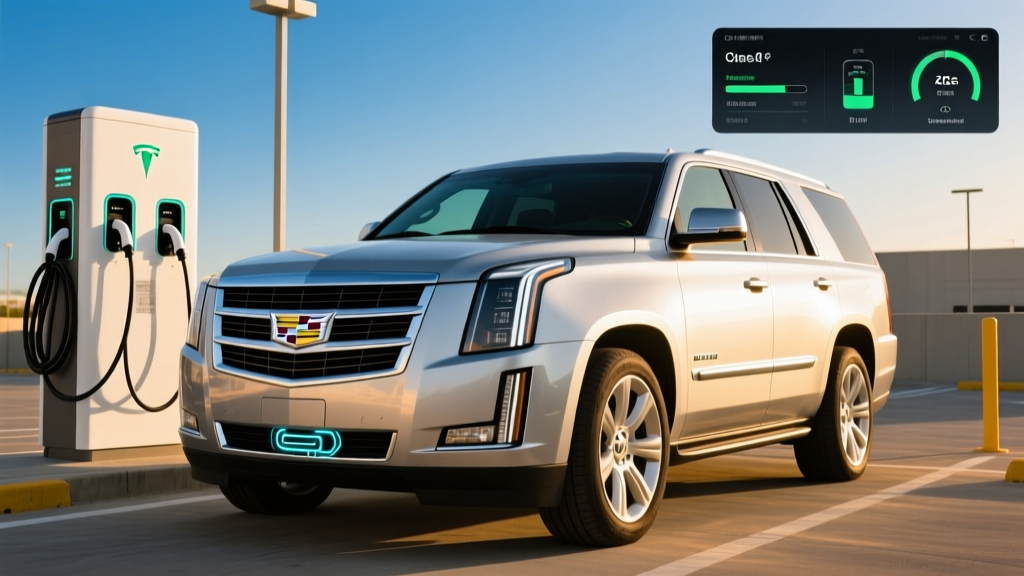
The 2013 Cadillac Escalade Hybrid paired GM's 6.0-liter V8 with a two-mode hybrid transmission to deliver a luxury SUV with modest fuel-economy gains over its gas-only sibling. As a conventional hybrid (HEV) — not a plug-in — it required no charging infrastructure and operated seamlessly on gasoline alone. Now well into its second decade on the road, the question for 2026 buyers is whether the aging hybrid battery and discontinued parts support make this full-size luxury SUV a smart used buy or a money pit waiting to happen.
This guide covers the exact EPA fuel economy figures, real-world MPG expectations, powertrain specs, battery reliability data, replacement costs, and how the 2013 Escalade Hybrid stacks up against modern electrified alternatives.
HEV vs PHEV: What the 2013 Escalade Hybrid Actually Is
The 2013 Escalade Hybrid is a conventional hybrid (HEV). It uses a small battery pack (approximately 1.4 kWh of nickel-metal hydride) that recharges exclusively through regenerative braking and the gasoline engine. There is no plug, no electric-only driving mode, and no external charging capability.
| Feature | HEV (2013 Escalade Hybrid) | PHEV (Modern Equivalent) | Full EV (BEV) |
|---|---|---|---|
| Plug-in charging | No | Yes | Yes |
| Electric-only range | 0 miles | 20–45 miles typical | 250–400+ miles |
| Battery size | ~1.4 kWh (NiMH) | 12–25 kWh (Li-ion) | 75–130 kWh (Li-ion) |
| Fuel type | Gasoline only | Gasoline + electricity | Electricity only |
| Federal tax credit (new) | None | Up to $7,500 (§30D) | Up to $7,500 (§30D) |
This distinction matters because some buyers confuse the Escalade Hybrid with a plug-in hybrid like the modern BMW X5 xDrive50e or Volvo XC90 Recharge. The Escalade Hybrid never offered plug-in capability. GM did not produce a plug-in Escalade variant in any model year — the closest successor is the 2025+ Cadillac Escalade IQ, which is a fully electric BEV.
Fuel Economy: EPA Numbers and Real-World MPG
The EPA rated the 2013 Cadillac Escalade Hybrid at 20 MPG city / 23 MPG highway / 21 MPG combined. For comparison, the standard gas-only 2013 Escalade with the 6.2L V8 was rated at 14 city / 18 highway / 15 combined — a meaningful gap.
| Metric | 2013 Escalade Hybrid | 2013 Escalade (Gas 6.2L V8) | Difference |
|---|---|---|---|
| City MPG | 20 | 14 | +6 MPG (+43%) |
| Highway MPG | 23 | 18 | +5 MPG (+28%) |
| Combined MPG | 21 | 15 | +6 MPG (+40%) |
| Fuel type | Premium unleaded | Premium unleaded | — |
| Fuel tank | 26 gal | 26 gal | — |
| Estimated total range | ~546 miles | ~390 miles | +156 miles |
Real-World MPG Expectations
Conventional hybrids tend to perform close to or slightly above their EPA city ratings in stop-and-go traffic, where regenerative braking recovers the most energy. Highway driving at 70+ MPH reduces the hybrid system's advantage, as the V8 operates under sustained load with less regen opportunity.
- City driving: 19–22 MPG — the two-mode system excels here, shutting off the engine at stops and using electric assist at low speeds.
- Highway driving: 20–23 MPG — the hybrid benefit narrows at sustained speed.
- Cold weather (below 30°F): Expect a 1–3 MPG drop as the engine runs longer to maintain cabin heat and battery temperature.
- Heavy towing (up to 5,800 lb capacity): Fuel economy drops significantly to 12–15 MPG under load.
Owner-reported data on Fuelly and similar platforms clusters around 19–21 MPG combined for drivers who mix city and highway use, which aligns closely with the EPA estimate. The hybrid system's city advantage is its strongest selling point — a 43% improvement over the gas model in urban traffic is substantial for a 5,800-pound SUV.
Powertrain: The Two-Mode Hybrid System Explained
| Specification | 2013 Cadillac Escalade Hybrid |
|---|---|
| Engine | 6.0L V8 (Vortec V8 with Active Fuel Management) |
| Engine horsepower | 332 HP @ 5,100 RPM |
| Engine torque | 367 lb-ft @ 4,100 RPM |
| Electric motors | Two 60 kW motors (integrated into 2-mode transmission) |
| Combined system output | 379 HP |
| Transmission | 2-mode CVT (electrically variable) |
| Drivetrain | 4WD (standard on Hybrid trim) |
| 0–60 MPH | ~8.0 seconds (est.) |
| Towing capacity | 5,800 lbs |
| Curb weight | ~6,035 lbs |
| Battery type | NiMH (nickel-metal hydride), ~1.4 kWh |
| Battery location | Under rear cargo floor |
GM's two-mode hybrid system was co-developed with BMW and Chrysler (the "Global Hybrid Cooperation"). Unlike Toyota's single-mode power-split system, GM's design uses two distinct operating modes:
- Mode 1 (low speed): One electric motor assists at launch and low speeds. The engine can shut off entirely at stops, and the vehicle can creep on electric power alone at very low speeds (under ~25 MPH for short distances).
- Mode 2 (high speed): Both electric motors work with the engine for highway passing and towing, providing a combined 379 HP. This mode is optimized for heavy-load scenarios where a single-mode system would struggle.
Active Fuel Management (AFM) also deactivates four of the eight cylinders under light-load cruising, further improving efficiency. The net result is a full-size luxury SUV that can tow a boat and still return 20+ MPG in mixed driving — a rare combination in 2013 and still competitive with many modern V8 SUVs.
Battery Lifespan, Warranty, and Replacement Cost
Original Battery Warranty
When new, GM covered the 2013 Escalade Hybrid's battery pack for 8 years / 100,000 miles (whichever came first) against defects and excessive capacity loss. This warranty was standard for hybrid components across GM's lineup and aligned with California Air Resources Board (CARB) requirements for emissions-related hybrid components.
As of 2026, all original battery warranties have expired — the last 8-year coverage window closed in 2021.
Battery Longevity in Practice
The NiMH battery in the Escalade Hybrid is a relatively low-capacity pack (~1.4 kWh) that operates within a narrow state-of-charge window. GM's battery management system avoids deep discharge and full charge cycles, which significantly extends cell life. NiMH chemistry is also inherently more tolerant of partial cycling than early lithium-ion packs.
Based on owner reports and hybrid battery shop data:
- Typical lifespan: 120,000–180,000 miles before significant degradation or cell failure.
- Age-related degradation: At 13 years old (2013 to 2026), most original packs are near end-of-life regardless of mileage. Calendar aging degrades NiMH cells even in low-mileage vehicles.
- Failure symptoms: Reduced fuel economy (2–4 MPG drop), check engine light with hybrid system codes, inability to enter electric-assist mode, or complete hybrid system shutdown.
Battery Replacement Cost
If the hybrid battery fails, owners face several options:
- OEM replacement from GM: Discontinued. GM no longer produces new OEM NiMH packs for the two-mode Escalade Hybrid, making this option essentially unavailable through dealer channels.
- Remanufactured pack: $3,000–$4,500 installed. Specialty hybrid shops (such as those servicing Prius and Tahoe Hybrid batteries) can install reconditioned NiMH packs with 1–3 year warranties.
- Used/salvage pack: $1,500–$2,500 installed. Risky due to unknown remaining lifespan of the donor cells.
- Cell-level repair: $1,200–$2,500. Some hybrid specialists replace individual failed cells within the pack rather than the entire assembly.
For a vehicle with a used-market value of roughly $10,000–$18,000 in 2026 (depending on mileage and condition), a $3,500+ battery replacement represents a significant percentage of the car's worth. Buyers should verify battery health before purchase — ask for a hybrid system diagnostic scan showing battery voltage spread across modules.
Pricing, Tax Credits, and Used Market Value
The 2013 Cadillac Escalade Hybrid had an original MSRP of approximately $73,850 (including destination). Only one trim level was offered — the Hybrid was positioned as a premium variant above the standard Luxury and Premium trims.
As of early 2026, used-market pricing clusters around:
- High mileage (130,000+ miles): $8,000–$12,000
- Average mileage (80,000–130,000 miles): $12,000–$16,000
- Low mileage (under 80,000 miles): $16,000–$20,000
Tax Credit Eligibility
The 2013 Escalade Hybrid does not qualify for any current federal tax credit. Under IRS §30D rules, the federal clean vehicle credit applies only to new vehicles purchased new in 2023 or later that meet battery sourcing, MSRP cap, and buyer income requirements. The used-EV credit (§25E, up to $4,000) applies only to used battery-electric and plug-in hybrid vehicles — not conventional hybrids.
Some states offer modest used-hybrid incentives or reduced registration fees, but these vary by jurisdiction and change frequently. Check your state's DMV or energy office for current programs.
Reliability: What Owners Report at 13+ Years
The 2013 Escalade Hybrid shares its platform with the Chevrolet Tahoe Hybrid and GMC Yukon Hybrid, giving it a reasonably large parts-sharing network. However, the two-mode hybrid transmission is complex, and not all independent mechanics are equipped to diagnose or repair it.
Key reliability considerations:
- Two-mode transmission: Generally robust when maintained (fluid changes per schedule), but repairs are expensive ($4,000–$7,000 for a rebuild) and require a specialist. The transmission integrates the electric motors, so a transmission failure can also affect hybrid system function.
- Active Fuel Management (AFM): GM's cylinder-deactivation system has a known history of lifter failure on high-mileage V8 engines. Listen for ticking or knocking on cold starts.
- Electrical gremlins: The Escalade's premium electronics (CUE infotainment, magnetic ride control, power-folding mirrors) add failure points unrelated to the hybrid system but common to the platform.
- Rust: Frame and underbody corrosion is a concern in salt-belt states, particularly around the rear battery enclosure.
The hybrid-specific components (battery, inverter, electric motors) have proven reasonably durable, but age is now the primary risk factor. A 2013 model with a recently replaced or verified-healthy hybrid battery is a much safer purchase than one with the original 13-year-old pack.
Who Should Buy the 2013 Escalade Hybrid vs. Alternatives
Pros
- 21 MPG combined is strong for a 6,000-lb luxury SUV
- No plug-in charging needed — fuel anywhere
- 379 HP combined provides confident passing and towing
- Premium Cadillac interior with Bose audio, leather, navigation
- Significantly lower fuel cost than gas-only Escalade (~$800–$1,000/year savings at 15,000 miles)
Cons
- Original hybrid battery warranty expired; replacement is $3,000–$4,500
- No electric-only driving capability
- OEM battery parts discontinued
- Two-mode transmission repairs require a specialist
- No federal or state tax credits available
- Dated infotainment and driver-assistance technology
Decision Framework
Choose the 2013 Escalade Hybrid if:
- You need a full-size luxury SUV with three rows and towing capability
- You drive mostly in city/stop-and-go traffic where the hybrid system shines
- You cannot install a home charger or lack reliable public charging access
- You find a well-maintained example with a recently replaced hybrid battery
- Your budget is $12,000–$18,000 and you accept the risk of aging hybrid components
Choose a modern PHEV (e.g., Volvo XC90 Recharge, BMW X5 xDrive50e) if:
- You want 25–40 miles of electric-only range for daily commuting
- You can charge at home (Level 2) and want to minimize gasoline use
- You want current warranty coverage and modern safety/driver-assist tech
- Your budget allows $55,000+ (new or certified pre-owned)
Choose a full EV (e.g., Cadillac Escalade IQ, Rivian R1S) if:
- You want zero gasoline and the lowest per-mile operating cost
- You can charge at home and your typical trips fit within 250–400 miles of range
- You want the latest technology, warranty coverage, and available tax credits
Hybrid vs PHEV vs EV: Which Fits Your Driving Pattern?
The 2013 Escalade Hybrid occupies a specific niche: a large SUV that reduces fuel consumption without requiring any change in fueling behavior. It's ideal for buyers who want better MPG but can't or won't plug in. However, the electrified landscape has shifted dramatically since 2013.
| Factor | 2013 Escalade Hybrid (HEV) | Modern PHEV SUV | Modern BEV SUV |
|---|---|---|---|
| Daily commute (under 30 mi) | Gasoline, 20 MPG city | Mostly electric, 0 gas | 100% electric |
| Road trips (300+ mi) | Gasoline, 23 MPG hwy | Gasoline after battery depleted | DC fast charging stops needed |
| Home charging needed? | No | Recommended (Level 2) | Required (Level 2) |
| Annual fuel cost (15K mi) | ~$3,200 | ~$1,800–$2,400 | ~$700–$1,200 |
| Maintenance cost | Higher (V8 + hybrid) | Moderate | Lowest (no engine) |
| Tax credit (new purchase) | None | Up to $7,500 | Up to $7,500 |
For a buyer in 2026 who already owns a 2013 Escalade Hybrid, the math is straightforward: if the hybrid battery is healthy, keep driving it and enjoy the fuel savings. If the battery fails, weigh the $3,000–$4,500 replacement against trading up to a modern PHEV or BEV.
For a buyer shopping the used market, prioritize examples with documented hybrid battery replacements or a clean diagnostic scan. A dead-battery example priced $3,000–$4,000 below market can still be a good deal if you budget for immediate battery service.
Frequently Asked Questions
How many MPG does the 2013 Escalade Hybrid get?
The EPA rates it at 20 city / 23 highway / 21 combined MPG. Real-world results cluster around 19–22 MPG combined, with city driving delivering the best results thanks to regenerative braking and engine shut-off at stops.
Does the 2013 Escalade Hybrid need to be plugged in?
No. It is a conventional hybrid (HEV) that charges its battery exclusively through regenerative braking and the gasoline engine. There is no plug, no charging port, and no electric-only driving range.
How far can it go on electric power alone?
The 2013 Escalade Hybrid cannot drive on electric power alone at meaningful speeds. The electric motors assist the gasoline engine and enable engine-off creeping at very low speeds (parking lots, stop-and-go traffic), but sustained electric-only driving is not possible. If you want electric-only range, look at a PHEV or BEV.
Is the 2013 Escalade Hybrid reliable?
The powertrain is generally durable with proper maintenance, but at 13+ years old, the hybrid battery is the primary concern. Original NiMH packs typically last 120,000–180,000 miles, and calendar aging degrades cells regardless of mileage. The two-mode transmission is robust but expensive to repair. Verify hybrid battery health before purchasing.
What does it cost to replace the hybrid battery?
A remanufactured NiMH battery pack costs $3,000–$4,500 installed at a hybrid specialist shop. OEM packs from GM are discontinued. Used/salvage packs are $1,500–$2,500 but carry unknown remaining life. Cell-level repairs can cost $1,200–$2,500.
Does the 2013 Escalade Hybrid qualify for any tax credit?
No. Federal tax credits under IRS §30D apply only to new plug-in vehicles purchased in 2023 or later. The used-EV credit (§25E) covers only used BEVs and PHEVs, not conventional hybrids. No federal or state tax credit is available for purchasing a used 2013 Escalade Hybrid.
What is the towing capacity?
The 2013 Escalade Hybrid is rated to tow up to 5,800 pounds when properly equipped. Towing significantly reduces fuel economy, typically to 12–15 MPG depending on trailer weight and terrain.
Can I still get parts for the hybrid system?
GM has discontinued new OEM hybrid battery packs and some hybrid-specific components. However, aftermarket and remanufactured batteries are available through hybrid specialty shops. Standard Escalade parts (brakes, suspension, interior, engine components) remain widely available since the platform shares parts with the Tahoe and Yukon.