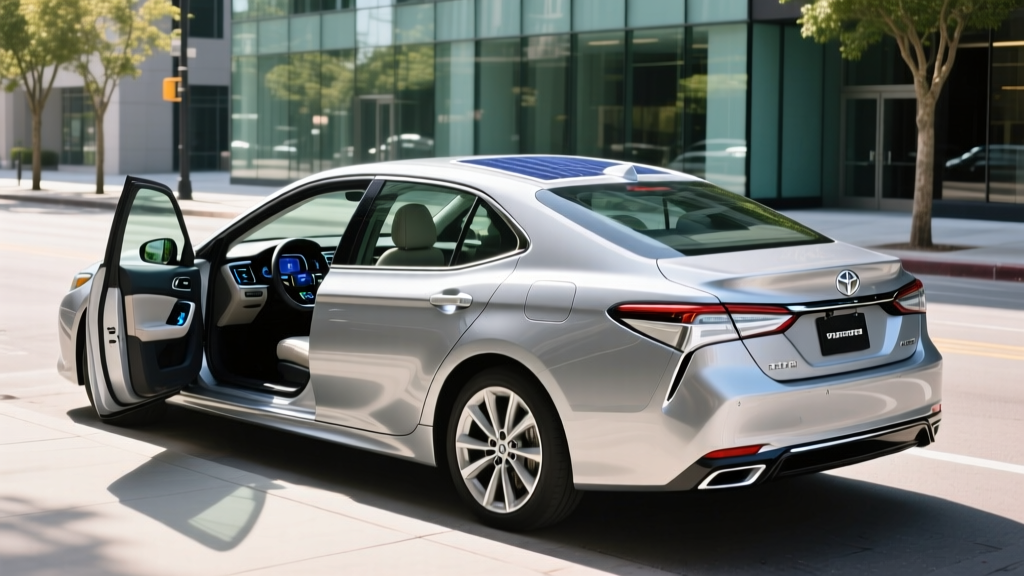
The 2012 Toyota Camry Hybrid occupies a unique space in the used-car market. More than a decade after its debut, it remains one of the most-searched hybrid sedans — and for good reason. With an EPA-rated 40 MPG combined, a bulletproof powertrain, and used prices that have settled into the $8,000–$14,000 range in 2026, it's a pragmatic choice for budget-conscious drivers who want hybrid efficiency without plug-in complexity. But with a 13-year-old hybrid battery lurking under the trunk, buyers need clear data on what they're actually signing up for.
This review covers the 2012 Camry Hybrid's real-world fuel economy, battery lifespan and replacement costs, powertrain specs, and how it stacks up against modern hybrids and EVs. We'll also clarify a common point of confusion: this is a conventional hybrid (HEV), not a plug-in hybrid (PHEV).
HEV vs. PHEV: Where the 2012 Camry Hybrid Fits
Conventional Hybrid (HEV): The 2012 Camry Hybrid is an HEV. It uses a small battery (1.6 kWh nickel-metal hydride) that charges exclusively through regenerative braking and the gas engine. You never plug it in. The electric motor assists the gasoline engine and enables brief low-speed electric-only driving, but the car cannot operate on electricity alone for meaningful distances.
Plug-in Hybrid (PHEV): A PHEV like the Toyota Prius Prime or RAV4 Prime has a much larger battery (13–18 kWh), can be plugged into a wall outlet or Level 2 charger, and delivers 25–42 miles of pure electric range before the gas engine kicks in. The 2012 Camry Hybrid does none of this.
Bottom line: If you're looking for electric-only commuting, this isn't it. If you want set-it-and-forget-it hybrid efficiency with zero charging infrastructure, the Camry HEV delivers.
2012 Toyota Camry Hybrid: Fuel Economy and Real-World MPG
The EPA rated the 2012 Camry Hybrid at 43 MPG city, 39 MPG highway, and 40 MPG combined. For a midsize sedan in 2012, those numbers were exceptional — and they still hold up today against many current-model hybrids.
| Metric | EPA Rating | Real-World Expectation |
|---|---|---|
| City | 43 MPG | 40–46 MPG |
| Highway | 39 MPG | 35–41 MPG |
| Combined | 40 MPG | 37–43 MPG |
Source: EPA Fuel Economy Guide — 2012 Toyota Camry Hybrid
Why Hybrids Often Beat EPA City Estimates
Unlike gas-only cars, conventional hybrids thrive in stop-and-go traffic. Every brake application regenerates energy back into the battery, and the electric motor handles low-speed propulsion where gasoline engines are least efficient. In real-world city driving, many owners report 43–46 MPG — sometimes exceeding the EPA city sticker. Highway driving, where the gas engine runs continuously and aerodynamic drag dominates, typically yields 35–40 MPG.
Cold-weather impact: Expect a 5–10% MPG reduction in winter. The engine runs longer to heat the cabin and keep the catalytic converter warm, reducing electric-motor assist time. In our experience with Toyota's Hybrid Synergy Drive system, winter combined MPG drops to roughly 36–38 in northern climates.
Powertrain Specs: Engine, Motor, and Combined Output
| Gasoline Engine | 2.5L inline-4 (2AR-FXE), Atkinson cycle |
| Engine Horsepower | 156 HP @ 5,700 RPM |
| Electric Motor | Permanent-magnet synchronous (105 kW / 141 HP) |
| Net Combined System HP | 200 HP |
| Transmission | eCVT (planetary gearset, not a belt CVT) |
| Hybrid Battery | 1.6 kWh Nickel-Metal Hydride (NiMH), 204V nominal |
| Drivetrain | Front-wheel drive |
| 0–60 MPH | 7.6 seconds |
| Curb Weight | ~3,435 lbs |
The 2012 model year was significant because it introduced Toyota's revised Hybrid Synergy Drive with a 2.5-liter Atkinson-cycle four-cylinder — a step up from the 2.4-liter in the 2007–2011 Camry Hybrid. The Atkinson cycle sacrifices some low-end torque for greater thermal efficiency, and the 200 HP combined output gives this sedan adequate passing power without sacrificing fuel economy.
The eCVT here is not a conventional continuously variable transmission with a rubber belt and pulleys. It's a planetary gearset that seamlessly blends power from the engine and electric motor. This design has proven extraordinarily reliable — there are no belts to wear, no clutches to burn, and far fewer moving parts than a traditional automatic.
Hybrid Battery Life, Warranty, and Replacement Cost
2012 Camry Hybrid — Battery Warranty (Original)
Original coverage: 8 years / 100,000 miles (10 years / 150,000 miles in CARB states including California, New York, Massachusetts, and others that follow California emissions standards).
Status in 2026: All original battery warranties have expired. The 2012 model is now 14 years old. If the battery hasn't been replaced, it's operating on borrowed time — but many NiMH packs in Toyota hybrids last 150,000–200,000+ miles with gradual capacity loss rather than sudden failure.
Real-World Battery Longevity
Toyota's NiMH hybrid batteries are among the most durable in the industry. Unlike the lithium-ion packs in modern EVs and PHEVs, NiMH chemistry degrades slowly and predictably. Data from owner communities and fleet operators shows:
- 100,000–150,000 miles: Most packs show minimal degradation — perhaps 5–8% capacity loss, barely noticeable in daily driving.
- 150,000–200,000 miles: Some packs begin showing individual cell imbalance. MPG may drop by 2–4 MPG as the system relies more on the gas engine.
- 200,000+ miles: Failure becomes more likely, though many packs exceed this mark. Taxis and high-mileage drivers regularly report 250,000+ miles on original batteries.
The key factor is usage pattern. NiMH batteries degrade faster when left at extreme states of charge or when the vehicle sits unused for weeks. Regular daily driving — which keeps the battery cycling between roughly 40% and 80% state of charge — is actually ideal for longevity.
Battery Replacement Cost in 2026
| Option | Cost Range | Warranty |
|---|---|---|
| New OEM Toyota battery | $3,000–$4,000 (installed) | 3 yr / unlimited miles |
| Remanufactured battery (e.g., Green Bean, Dorman) | $1,500–$2,500 (installed) | Lifetime / limited |
| Individual cell module replacement (specialist shops) | $500–$1,200 | Varies (30–90 days typical) |
| Used/salvage yard battery | $400–$800 (parts only) | 30–90 days |
For a used 2012 Camry Hybrid worth $8,000–$14,000, a remanufactured battery at $1,500–$2,500 is the sweet spot. It restores full hybrid function at a fraction of the vehicle's value, making it economically justifiable even on a high-mileage example.
How Does the 2012 Camry Hybrid Drive?
The 2012 Camry Hybrid prioritizes comfort over sportiness — and that's exactly what its target buyer wants. The ride is compliant, cabin noise is well-managed for its class, and the eCVT delivers seamless acceleration without the rubber-band sensation of belt-driven CVTs.
At low speeds (under ~25 MPH), the car frequently operates in EV mode on electric power alone, producing near-silent operation in parking lots and residential streets. Above that threshold or under hard acceleration, the 2.5L engine engages with a noticeable but not intrusive hum.
Regenerative braking feels more natural than early Toyota hybrids. The transition between regenerative and friction braking is well-blended — a common complaint in 2007–2011 models that Toyota largely resolved for this generation. The brake pedal still has a slightly different feel than a conventional gas car, but it's easy to adapt to within a few days.
Handling is competent but unremarkable. The 3,435-lb curb weight (about 200 lbs heavier than the gas Camry) and comfort-tuned suspension mean this car is best enjoyed at a relaxed pace. For a daily commuter or family sedan, that's perfectly appropriate.
Hybrid vs. PHEV vs. EV: Which Should You Choose?
Which Powertrain Fits Your Situation?
Choose the 2012 Camry Hybrid (HEV) if:
- You can't charge at home (apartment, street parking, no garage)
- Your budget is under $15,000
- You want maximum simplicity — no plugs, no charging apps, no range planning
- You drive 10,000–15,000 miles/year and want to minimize fuel costs
- You plan to keep the car 3–5 years and want reliable, predictable ownership
Choose a PHEV (e.g., Prius Prime, RAV4 Prime) if:
- You can install a Level 2 home charger
- Your daily commute is under 40 miles round-trip
- You want electric-only commuting with gas-engine backup for road trips
- You qualify for the §30D federal tax credit (up to $7,500 for new PHEVs meeting battery-sourcing and income requirements)
Choose a full EV (BEV) if:
- You have reliable home Level 2 charging
- You want zero tailpipe emissions and minimal maintenance
- Your daily driving is under 250 miles and you're comfortable planning DC fast-charge stops on road trips
- You want the lowest per-mile fuel cost (electricity is typically $0.04–$0.08/mile vs. $0.10–$0.15/mile for a 40 MPG hybrid)
Does the 2012 Camry Hybrid Qualify for Any Tax Credits?
No. The 2012 Toyota Camry Hybrid does not qualify for any federal tax credit in 2026. Here's why:
- Federal §30D New Clean Vehicle Credit: Only applies to new vehicles. The Camry Hybrid is long out of production and doesn't meet current battery-sourcing, critical-mineral, or MSRP-cap requirements.
- Federal Used Clean Vehicle Credit (§25E): Provides up to $4,000 (30% of sale price) for qualifying used EVs and PHEVs purchased from a dealer for $25,000 or less. However, conventional hybrids (HEVs) are not eligible — only BEVs and PHEVs qualify.
- State incentives: Most state-level hybrid incentives expired years ago. A handful of states may offer small rebates for used hybrids, but these are rare and typically targeted at PHEVs or BEVs. Check your state's energy office or Alternative Fuels Data Center for current programs.
The absence of tax credits is offset by the low purchase price. At $8,000–$14,000 on the used market, the total cost of ownership remains compelling even without incentives.
Ownership Costs: What to Budget in 2026
| Category | Annual Cost |
|---|---|
| Fuel (40 MPG avg, $3.30/gal) | ~$990 |
| Insurance (national avg, used sedan) | $1,100–$1,600 |
| Maintenance (oil, filters, brakes) | $400–$700 |
| Depreciation | $500–$1,000 (minimal at this age) |
| Estimated Total | $3,000–$4,300/yr |
For comparison, a gas-only 2012 Camry (26 MPG combined) would cost approximately $1,520/year in fuel — over $500 more annually. Over five years, the hybrid saves roughly $2,600 in fuel alone, which more than covers a potential battery replacement.
Is the 2012 Camry Hybrid Reliable?
Yes — this is one of the most reliable vehicles Toyota has ever built. The 2AR-FXE engine, eCVT transaxle, and Hybrid Synergy Drive system have an extensive track record spanning millions of vehicles (the same basic powertrain architecture underpins the Prius, Highlander Hybrid, and Lexus ES 300h).
Common issues to watch for on high-mileage examples:
- Hybrid battery degradation: The most expensive potential repair. See battery section above.
- Hybrid battery cooling fan: Located behind the rear seat, the fan filter can clog with dust and pet hair. A clogged filter causes the battery to overheat and degrade faster. Clean it every 15,000 miles. Replacement fan: ~$200.
- Brake actuator: The electro-hydraulic brake actuator can fail on high-mileage examples (150,000+ miles). Symptoms include a hard brake pedal and warning lights. Replacement: $1,200–$1,800. This is a known issue across Toyota hybrids of this era.
- 12V auxiliary battery: Like any car, the standard 12V battery needs replacement every 4–6 years. The hybrid system uses a smaller-than-normal 12V battery (located in the trunk), which costs $150–$250.
- Water pump (electric): The engine's electric water pump can fail around 100,000–130,000 miles. Replacement: $300–$500.
Safety ratings remain respectable. The 2012 Camry earned a Top Safety Pick rating from IIHS and a 5-star overall rating from NHTSA.
2012 Camry Hybrid: Pros and Cons
Pros
- 40 MPG combined — excellent for a midsize sedan
- Extremely reliable powertrain with proven track record
- No plug-in charging required — zero infrastructure needed
- Comfortable ride, quiet cabin
- Low used-car prices ($8,000–$14,000)
- Strong safety ratings (5-star NHTSA)
- Minimal maintenance costs (regenerative braking extends pad life)
- Smooth eCVT with no belt or pulley to fail
Cons
- Hybrid battery is 14 years old — replacement likely if original
- No federal or state tax credits available
- Dated interior technology (no Apple CarPlay/Android Auto, small screen)
- Only 200 HP — adequate but not quick by 2026 standards
- Trunk space reduced by battery pack placement
- No electric-only range beyond a few blocks at low speed
- Higher mileage examples may need brake actuator replacement
- NiMH battery less energy-dense than modern lithium-ion packs
Frequently Asked Questions
How many MPG does the 2012 Toyota Camry Hybrid get?
The EPA rates it at 43 city / 39 highway / 40 combined MPG. In real-world driving, most owners see 37–43 MPG combined depending on driving style, climate, and route. City driving often exceeds the EPA estimate thanks to heavy regenerative braking and electric-motor assist at low speeds.
Does the 2012 Camry Hybrid need to be plugged in?
No. This is a conventional hybrid (HEV), not a plug-in hybrid (PHEV). The battery charges entirely through regenerative braking and the gasoline engine. You fuel it like any other car — just with fewer fill-ups.
How much does it cost to replace the hybrid battery?
A remanufactured battery costs $1,500–$2,500 installed, which is the most common and cost-effective choice for a vehicle in this price range. A new OEM Toyota battery runs $3,000–$4,000 installed. Individual cell module repair is possible for $500–$1,200 at specialist shops.
How long do Toyota hybrid batteries last?
Toyota's NiMH hybrid batteries typically last 150,000–200,000+ miles with gradual capacity loss rather than sudden failure. Many Prius and Camry Hybrid taxis exceed 250,000 miles on original batteries. Regular driving (keeping the battery cycling) and a clean battery cooling fan filter are the two best ways to maximize lifespan.
Is the 2012 Camry Hybrid a good buy in 2026?
For budget-conscious buyers who need a reliable, efficient daily driver without plug-in charging, yes. At $8,000–$14,000 with 40 MPG combined, the total cost of ownership is among the lowest of any midsize sedan. Budget an additional $1,500–$2,500 for a potential battery replacement if the original pack hasn't been changed.
How does it compare to a modern hybrid like the 2026 Camry Hybrid?
The current-generation Camry Hybrid (2025+) achieves 51 MPG combined with a lithium-ion battery and more refined powertrain — but starts at roughly $30,000 new. The 2012 model delivers about 80% of the efficiency at 30–40% of the price. If you're buying used on a tight budget, the 2012 remains a strong value proposition.
Does the 2012 Camry Hybrid qualify for any tax credit?
No. Federal tax credits (§30D for new vehicles, §25E for used) only apply to plug-in electric vehicles (BEVs and PHEVs). Conventional hybrids are not eligible. Some state programs may offer minor incentives, but most have expired or shifted to PHEV/BEV focus. Check the Alternative Fuels Data Center for your state.