Quick Verdict: The PHEV That Started It All for Toyota
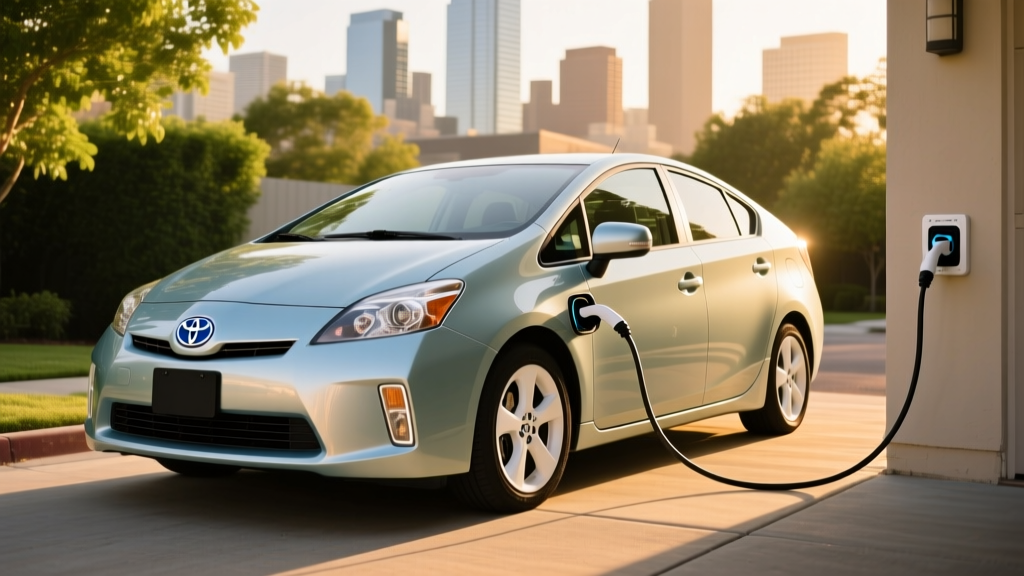
The 2012 Toyota Prius Plug-In Hybrid was Toyota's first production plug-in, a bridge vehicle that added a modest electric-only mode to the already-proven Prius hybrid formula. With just 11 miles of EPA-rated electric range and a 4.4 kWh lithium-ion battery, it was never meant to replace a full EV. Instead, it offered commuters a short zero-emission window for school runs and grocery trips, then reverted to a highly efficient hybrid once the battery depleted.
In 2026, this model exists exclusively on the used market — Toyota discontinued the Plug-In after the 2015 model year and replaced it with the Prius Prime in 2017. If you're shopping for a budget-friendly entry into plug-in ownership, the 2012 Prius Plug-In can still deliver strong fuel economy, but buyers need realistic expectations about its aging battery, limited electric range, and lack of DC fast charging.
A conventional hybrid (HEV) like the standard Prius recharges its small battery entirely through regenerative braking and the gasoline engine. You never plug it in. A plug-in hybrid (PHEV) like the 2012 Prius Plug-In has a larger battery that you can charge from a wall outlet or Level 2 charger, giving it a short electric-only driving range before the gas engine kicks in. Once that electric range is used up, a PHEV operates exactly like a regular hybrid.
2012 Prius Plug-In: Full Specifications
| Specification | Value |
|---|---|
| EPA Electric Range | 11 miles |
| EPA Combined MPGe (EV mode) | 95 MPGe |
| EPA MPG (hybrid mode, combined) | 50 MPG |
| EPA MPG City / Highway | 51 city / 49 highway |
| Battery Capacity | 4.4 kWh (lithium-ion) |
| Level 1 Charge Time (120V) | ~3 hours (full) |
| Level 2 Charge Time (240V) | ~1.5 hours (full) |
| DC Fast Charging | Not supported |
| Combined Horsepower | 134 hp (net system) |
| Engine | 1.8L 4-cylinder Atkinson cycle (98 hp) |
| Electric Motor | 60 kW (80 hp) |
| 0–60 mph | ~9.1 seconds |
| Total Combined Range | ~540 miles |
| Original MSRP (2012) | $32,000 – $39,520 |
| Used Price Range (2026 est.) | $6,000 – $10,000 |
Sources: fueleconomy.gov, Toyota Motor Corporation
Fuel Economy: EPA Numbers vs Real-World MPG
How many MPG does the 2012 Prius Plug-In get? According to the EPA, the answer depends on whether you're driving in electric mode or hybrid mode:
| Mode | City | Highway | Combined |
|---|---|---|---|
| EV Mode (MPGe) | — | — | 95 MPGe |
| Hybrid Mode (MPG) | 51 | 49 | 50 |
MPGe explained: MPGe (miles per gallon equivalent) converts the energy in electricity to a gasoline-equivalent number so you can compare EV-mode efficiency against gas vehicles. The 95 MPGe figure applies only while the battery has charge and you're driving under ~62 mph in EV mode.
Real-World MPG Expectations
Toyota hybrids are famous for exceeding their EPA city ratings in stop-and-go traffic, where regenerative braking recaptures energy constantly. Owners consistently report 48–54 MPG in mixed city driving in hybrid mode. Highway driving at 75+ mph typically drops to 42–46 MPG, as aerodynamic drag overwhelms the hybrid system's efficiency advantages.
For the 11-mile electric range, expect 8–10 miles in real-world conditions — especially in cold weather, where lithium-ion batteries lose capacity and cabin heating draws additional power. In summer with moderate speeds, you might squeeze out 12–13 miles.
EPA electric range: 11 miles
Real-world expectation: 8–10 miles (summer), 6–8 miles (winter/freezing temps)
Hybrid mode total range: ~540 miles on a full 11.9-gallon tank
Powertrain and Driving Experience
The 2012 Prius Plug-In shares the third-generation Prius powertrain: a 1.8-liter Atkinson-cycle four-cylinder engine producing 98 hp, paired with a 60 kW (80 hp) electric motor. The combined net system output is 134 hp, routed through Toyota's eCVT (electronically controlled continuously variable transmission).
The Plug-In's key mechanical difference from the standard Prius is its 4.4 kWh lithium-ion battery pack — roughly triple the capacity of the standard Prius's 1.3 kWh nickel-metal hydride pack. This larger battery enables the electric-only mode, activated by an EV button on the center console. In EV mode, the car can travel up to about 62 mph before the engine is forced on, though aggressive acceleration will engage the gas engine sooner.
Acceleration to 60 mph takes approximately 9.1 seconds — adequate for merging but not brisk. The ride quality is comfortable and quiet at city speeds, with the typical Prius numbness in steering feel. The Plug-In variant is slightly heavier than the standard Prius due to the larger battery, but the difference is negligible in everyday driving.
Charging: What You Need to Know
The 2012 Prius Plug-In uses a standard J1772 connector for AC charging. It does not support DC fast charging — there is no CCS, CHAdeMO, or NACS port on this vehicle. This is a common point of confusion for first-time PHEV buyers.
| Charging Level | Power (kW) | Full Charge Time | Cost (Full Charge)* |
|---|---|---|---|
| Level 1 (120V household) | ~1.4 kW | ~3 hours | $0.50–$0.70 |
| Level 2 (240V home/public) | ~3.3 kW | ~1.5 hours | $0.50–$0.70 |
| DC Fast Charge | N/A | N/A | N/A |
*Cost estimates based on $0.13–$0.16/kWh national average residential electricity rate. Actual cost varies by utility and region.
kW vs kWh reminder: kW (kilowatts) measures the rate of power flow — how fast you're charging. kWh (kilowatt-hours) measures total energy stored — the battery's capacity. The Prius Plug-In charges at up to 3.3 kW into a 4.4 kWh battery.
Because the battery is so small, even a standard 120V household outlet fully recharges it in about 3 hours. Many owners find Level 1 charging sufficient — plug in when you get home from work, and it's full by bedtime. A Level 2 home charger cuts that to roughly 90 minutes, which matters if you make multiple short trips per day and want to recharge between them.
Battery Health, Warranty, and Replacement Cost
This is the single most important consideration for anyone buying a 2012 Prius Plug-In in 2026. The vehicle is now 14 years old, and lithium-ion batteries degrade over time regardless of mileage.
Original warranty: 8 years / 100,000 miles (10 years / 150,000 miles in CARB states)
Current status for 2012 models: Warranty expired — all 2012 models are now out of factory hybrid battery coverage
Expected battery lifespan: 10–15 years typical; many third-gen Prius batteries reach 150,000+ miles before significant degradation
Battery replacement cost: $2,000–$4,000 for a refurbished/remanufactured pack; $5,000–$7,000+ for a new OEM pack from Toyota
Toyota's hybrid battery track record is among the best in the industry. The third-generation Prius (2010–2015) platform has demonstrated strong battery longevity, with many examples exceeding 200,000 miles on the original pack. However, calendar aging is a real factor — a 2012 battery in 2026 has experienced 14 years of chemical degradation even if the odometer reads low.
How to Check Battery Health Before Buying
- OBD-II scan with Dr. Prius or Techstream app: These tools read individual battery block voltages and calculate remaining capacity. Look for less than 0.20V variance between blocks.
- EV range test: Fully charge the battery and drive in EV mode at moderate speed. If you get fewer than 7 miles, significant degradation has occurred.
- Hybrid system diagnostic at a Toyota dealer: Typically $100–$150 for a full health report.
- Check for prior battery replacement: Some owners have already replaced the pack — ask for receipts and check the battery serial number date code.
Tax Credits and Purchase Economics
When new, the 2012 Prius Plug-In qualified for a $2,500 federal tax credit under the original IRS §30D program (based on its 4.4 kWh battery — the credit scaled with battery capacity). That credit is long expired for the original purchasers.
Does It Qualify for Any Tax Credit Today?
No. The current federal EV tax credit (up to $7,500 under revised §30D rules) applies only to new qualified plug-in electric vehicles purchased new from a dealer. The used-EV credit (§25E, up to $4,000) applies only to used vehicles with a sale price of $25,000 or less that are at least two model years old — however, the vehicle must be purchased from a licensed dealer and meet battery sourcing requirements that effectively exclude most older PHEVs with small batteries. The 2012 Prius Plug-In's 4.4 kWh battery does not meet the critical mineral and battery component sourcing thresholds established by the Inflation Reduction Act.
Bottom line: Expect to pay full used-market price with no federal tax credit assistance. Some states may offer rebates for used PHEV purchases — check your state energy office or AFDC state incentive database for current programs.
Ownership Cost Snapshot
At a used price of $6,000–$10,000, the 2012 Prius Plug-In is one of the cheapest ways to get into a plug-in vehicle. Running costs are minimal:
- Electricity cost (EV mode): ~$0.04–$0.06 per mile at residential rates
- Gasoline cost (hybrid mode): ~$0.07–$0.09 per mile at $3.50/gallon and 50 MPG
- Insurance: Typically $80–$120/month for a 14-year-old Prius (varies by state, driver, coverage)
- Maintenance: Low — no timing belt (chain-driven), regenerative braking extends pad life, no transmission fluid changes needed on eCVT
Who Should Buy the 2012 Prius Plug-In (And Who Shouldn't)
✓ Pros
- Extremely low used price ($6K–$10K)
- 50 MPG hybrid mode — excellent even by 2026 standards
- Proven Toyota reliability and parts availability
- Plug-in capability for short commutes (under 10 miles)
- Cheap to charge — full charge under $1
- No range anxiety — 540-mile total range
✗ Cons
- Only 11 miles EPA electric range (8–10 real-world)
- No DC fast charging
- Battery warranty expired — replacement risk of $2K–$7K
- Dated interior tech (no Apple CarPlay/Android Auto)
- Slow acceleration (9.1 sec 0–60)
- No federal tax credit available
- EV mode limited to ~62 mph
Hybrid vs PHEV vs EV: Which Is Right for You?
Choosing between a conventional hybrid, a plug-in hybrid like this Prius, and a full battery-electric vehicle depends on your driving patterns and charging access:
| Factor | HEV (Standard Prius) | PHEV (Prius Plug-In) | BEV (Full EV) |
|---|---|---|---|
| Plug in required? | No | Optional (but recommended) | Yes |
| Electric-only range | ~1 mile | 8–11 miles | 200–400 miles |
| Home charging needed? | No | Helpful, not essential | Essential |
| Best for | No plug access, long trips | Short commute + plug access | Home charging + <300 mi trips |
| Fuel cost per mile | ~$0.08 | $0.04 (EV) / $0.08 (gas) | ~$0.04 |
Choose the 2012 Prius Plug-In if: You have a short commute (under 10 miles each way), access to a standard 120V outlet at home or work, want to experiment with plug-in driving without committing to a full EV, and need a cheap, reliable daily driver with no range anxiety for longer trips.
Choose a standard used Prius HEV if: You have no access to any plug, drive more than 30 miles daily, or want the simplest possible ownership experience with zero plug-in hassle.
Choose a used full EV (like a 2018+ Leaf or Bolt) if: You have reliable Level 2 home charging, your daily driving is under 150 miles, and you want to eliminate gasoline entirely.
Frequently Asked Questions
Is the 2012 Prius Plug-In reliable?
Yes. The third-generation Prius platform is one of Toyota's most reliable vehicles. The hybrid system has few wear items — no traditional transmission, no starter motor, no alternator, and regenerative braking extends brake pad life significantly. The main risk on a 2012 model is hybrid battery degradation due to age. Budget $2,000–$4,000 for a potential battery replacement within your ownership period.
How much does it cost to replace the hybrid battery?
A refurbished or remanufactured 4.4 kWh lithium-ion pack for the 2012 Prius Plug-In typically costs $2,000–$4,000 installed through independent hybrid specialists. A brand-new OEM battery from Toyota runs $5,000–$7,000+. Many owners opt for refurbished units from reputable shops like Green Bean Battery or Project Recell, which often include their own 1–3 year warranties.
Can I drive the 2012 Prius Plug-In without ever plugging it in?
Yes. If you never plug it in, the car operates as a standard Prius hybrid and still delivers approximately 50 MPG combined. However, you lose the entire benefit of the Plug-In's larger battery and electric-only mode — effectively paying a weight penalty for battery capacity you're not using. If you have no plug access, a standard used Prius is a lighter, cheaper choice.
Does the 2012 Prius Plug-In qualify for the $7,500 federal tax credit?
No. The current federal EV tax credit under IRS §30D applies only to new vehicles. The used-EV credit (§25E, up to $4,000) has battery sourcing requirements that older PHEVs like the 2012 Prius Plug-In cannot meet. Check your state's incentive programs for any local rebates on used PHEV purchases.
What is the top speed in electric-only mode?
The 2012 Prius Plug-In can maintain electric-only driving up to approximately 62 mph under gentle acceleration. Above that speed, or under hard throttle at any speed, the gasoline engine engages automatically. This makes EV mode best suited for neighborhood driving, parking lots, and low-speed urban commutes.
How does the 2012 Prius Plug-In compare to the newer Prius Prime?
The 2023+ Prius Prime offers 44 miles of electric range (vs. 11), a 13.6 kWh battery (vs. 4.4), 220 combined horsepower (vs. 134), and modern infotainment with wireless CarPlay. It's a dramatically more capable vehicle in every measurable way. However, a new Prius Prime starts around $33,000, while a used 2012 Plug-In costs $6,000–$10,000. If your budget allows, the newer Prime is the clear winner — but the 2012 remains a functional budget option.