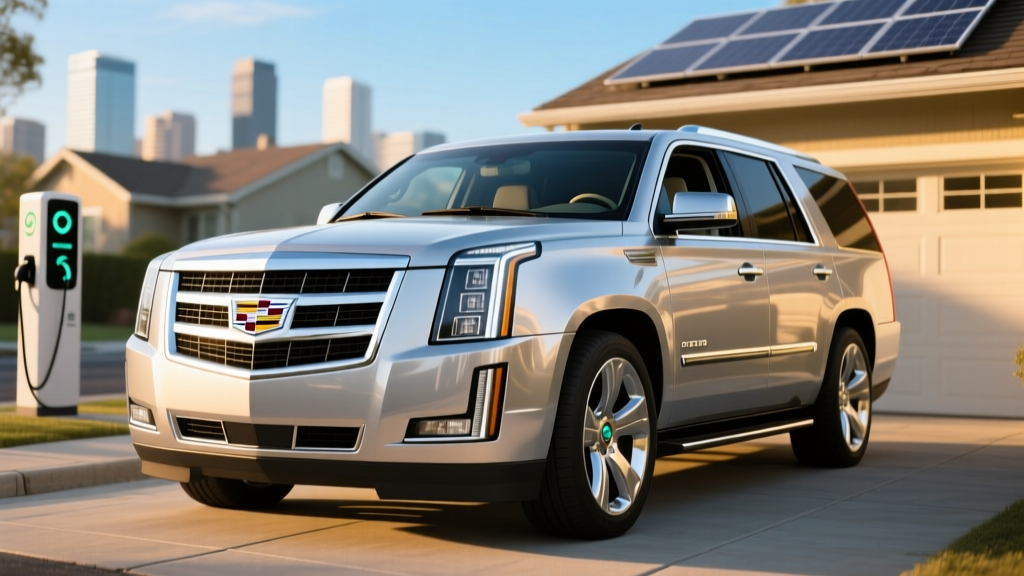
The 2012 Cadillac Escalade Hybrid was an ambitious experiment: a full-size luxury SUV with a two-mode hybrid powertrain that promised V8 power with V6-like fuel economy. More than a decade later, it remains one of the most unusual hybrid vehicles on the used market. For buyers searching for a 2012 Cadillac hybrid, the Escalade Hybrid is the only option — Cadillac never offered a hybrid sedan or crossover that year. Here's everything you need to know about its efficiency, battery longevity, reliability, and whether it still makes sense as a used purchase in 2026.
2012 Cadillac Escalade Hybrid: Powertrain and Specs at a Glance
The 2012 Escalade Hybrid used GM's two-mode hybrid system, pairing a 6.0-liter Vortec V8 with two electric motors inside a specialized transmission. This was not a mild hybrid or a plug-in — it was a full parallel hybrid (HEV) that required no plug-in charging. The system could propel the SUV on electric power alone at low speeds, shut off the engine at stops, and use regenerative braking to recharge the battery.
| Specification | Value |
|---|---|
| Engine | 6.0L Vortec V8 (332 hp) |
| Electric Motors | Two AC synchronous motors (60 kW each) |
| Combined System Output | 379 hp |
| Transmission | Two-mode hybrid CVT (Electrically Variable Transmission) |
| Battery Pack | NiMH (Nickel-Metal Hydride), ~1.8 kWh |
| Drivetrain | RWD (2WD) or AWD (4WD) |
| 0–60 mph | ~8.0 seconds |
| Towing Capacity | 5,600 lbs (2WD) / 5,400 lbs (4WD) |
| Curb Weight | ~5,800 lbs |
| Original MSRP | $73,850 (2WD) / $76,550 (4WD) |
| Used Price Range (2026) | $8,000 – $18,000 |
Fuel Economy: EPA MPG and Real-World Efficiency
The headline reason anyone considered the Escalade Hybrid was fuel economy. For a 5,800-pound luxury SUV, the numbers were genuinely impressive at launch — and remain competitive among body-on-frame SUVs today.
| Drivetrain | City MPG | Highway MPG | Combined MPG |
|---|---|---|---|
| 2WD | 20 | 23 | 21 |
| 4WD | 20 | 22 | 21 |
For comparison, the conventional 2012 Escalade with the 6.2L V8 was rated at 14 city / 18 highway / 15 combined MPG. The hybrid delivered a 40% improvement in combined fuel economy — a massive gap in a vehicle that burns through a lot of fuel regardless.
At current fuel prices (~$3.40/gallon national average in early 2026), the hybrid saves roughly $900–$1,100 per year in fuel costs versus the standard V8 Escalade for a driver covering 15,000 miles annually. Over five years of ownership, that's $4,500–$5,500 in fuel savings — a meaningful offset against the higher maintenance risk of an aging hybrid system.
HEV vs. PHEV: What Kind of Hybrid Is the 2012 Escalade?
This is a critical distinction that trips up many used-car shoppers. The 2012 Escalade Hybrid is a conventional hybrid (HEV), not a plug-in hybrid (PHEV). You never plug it in. The battery charges exclusively through regenerative braking and the gasoline engine.
- HEV (this vehicle): Small battery (~1.8 kWh NiMH), charges via regen/engine, no plug, no electric-only highway driving, no federal tax credit for new purchases.
- PHEV: Larger battery (typically 10–30 kWh), plugs into a wall outlet or charger, offers 20–50 miles of electric-only range, may qualify for tax credits when new.
- BEV (full electric): No gasoline engine, 100% electric, requires charging infrastructure.
The Escalade Hybrid can creep on electric power alone at very low speeds (under ~25 mph, for short distances), but it cannot sustain highway speeds on electricity. Think of the hybrid system as an efficiency multiplier for the V8, not a replacement for it.
Hybrid Battery: Lifespan, Warranty, and Replacement Cost
The nickel-metal hydride (NiMH) battery pack in the 2012 Escalade Hybrid was covered by GM's hybrid component warranty: 8 years or 100,000 miles, whichever came first. In 2026, that factory warranty has expired for every example on the road. This makes battery condition the single most important factor when evaluating a used 2012 Escalade Hybrid.
NiMH batteries degrade differently than the lithium-ion packs in modern EVs and PHEVs. They lose capacity gradually and are sensitive to heat and deep discharge cycles. Most 2012 examples that have been driven regularly (hybrid batteries prefer use over sitting) still retain functional capacity, but any vehicle sitting for extended periods with a depleted hybrid battery is at risk of cell failure.
Pre-purchase advice: Have a qualified hybrid technician perform a battery health check. Scan tools can read individual cell voltages and identify weak modules before they cause a dashboard warning. Budget $3,000–$5,000 as a contingency if the battery hasn't been replaced and the vehicle has over 120,000 miles.
Reliability and Common Issues
The two-mode hybrid transmission (GM's EVT) is an engineering marvel but a maintenance concern at this age. The system was co-developed with BMW and Chrysler (used in the BMW X6 ActiveHybrid and Chrysler Aspen Hybrid) and was built in relatively low volumes. Parts availability and technician familiarity are real challenges in 2026.
Known problem areas for the 2012 Escalade Hybrid:
- Hybrid battery degradation: Expected at 12+ years; see cost section above.
- EVT transmission cooling: The two-mode transmission runs hot under heavy towing or sustained mountain driving. Fluid changes at proper intervals were critical — neglected examples may have transmission damage.
- Active Fuel Management (AFM) lifter issues: The 6.0L V8 uses cylinder deactivation, which has known lifter failure modes on high-mileage GM V8s of this era.
- Air suspension (if equipped): Rear air springs on higher trims leak and require replacement ($800–$1,500 per corner).
- Standard Escalade issues: Power-folding mirror motors, HVAC actuator gears, and dashboard pixel degradation carry over from the conventional model.
According to NHTSA records, the 2012 Escalade Hybrid had relatively few safety recalls, but check any specific VIN against the NHTSA database before purchasing.
Tax Credits and Incentives in 2026
The 2012 Escalade Hybrid originally qualified for a $2,200 federal tax credit under the Energy Policy Act when new — far less than the $7,500 maximum available for some competitors. That credit is long expired and does not apply to used purchases.
Under current 2026 IRS rules (IRS §30D), the federal clean vehicle credit applies only to new qualifying EVs and PHEVs — not conventional HEVs like this Escalade. The used clean vehicle credit (up to $4,000 or 30% of sale price) also requires the vehicle to be a qualifying plug-in EV or fuel cell vehicle with a minimum battery capacity of 7 kWh. The Escalade Hybrid's ~1.8 kWh NiMH pack does not meet this threshold.
Bottom line: No federal tax credits are available for purchasing a used 2012 Cadillac Escalade Hybrid in 2026. Some states may offer minimal incentives for hybrid used-car purchases, but these vary widely — check your state's energy office for current programs.
Who Should Buy the 2012 Escalade Hybrid?
Choose It If:
- You need a full-size luxury SUV with three rows and real towing capability
- You drive primarily in city/suburban traffic where the hybrid system shines
- You want to reduce fuel costs vs. a standard V8 Escalade without needing charging infrastructure
- You can budget for potential hybrid battery replacement
- You find a well-maintained example under $15,000 with service records
Skip It If:
- You want plug-in electric range or qualify for EV tax credits
- You plan to keep the vehicle 5+ years and can't absorb a $3,000–$5,000 battery replacement
- You live in a rural area with limited access to hybrid-savvy mechanics
- You primarily drive highway miles (less hybrid benefit)
- You want modern safety tech (blind-spot monitoring, automatic emergency braking — not available on the 2012 model)
Hybrid vs. PHEV vs. EV: What Fits Your Needs?
If you're researching a 2012 Cadillac hybrid, you may also be considering modern alternatives. Here's how the decision framework breaks down:
| Factor | HEV (Escalade Hybrid) | PHEV (e.g., modern plug-in SUV) | BEV (e.g., Cadillac Lyriq) |
|---|---|---|---|
| Plug-in Required? | No | Yes (for EV range) | Yes (always) |
| Electric-Only Range | ~1 mile at low speed | 20–50 miles | 250–320+ miles |
| Fuel Cost (15k mi/yr) | ~$2,400 | ~$1,200–$1,800 | ~$500–$900 |
| Tax Credit (new) | None | Up to $7,500 | Up to $7,500 |
| Maintenance Risk (used) | Moderate–High | Low–Moderate | Low |
| Home Charging Needed? | No | Recommended | Essential |
For buyers who want a Cadillac hybrid experience with modern reliability, plug-in capability, and potential tax credit eligibility, a newer PHEV like the Cadillac ELR (2014–2016, limited production) or a current-generation luxury PHEV SUV would be a lower-risk choice. If your budget is strictly under $20,000 and you need full-size SUV space, the 2012 Escalade Hybrid remains a unique option — just go in with eyes open about the battery.
Frequently Asked Questions
How many MPG does the 2012 Cadillac Escalade Hybrid get?
The EPA rates the 2012 Escalade Hybrid at 20 city / 23 highway / 21 combined MPG (2WD). The 4WD version is rated 20/22/21. Real-world results typically fall between 18–22 MPG combined, with city driving delivering the best results thanks to electric assist at low speeds and regenerative braking.
Does the 2012 Cadillac Escalade Hybrid need to be plugged in?
No. This is a conventional hybrid (HEV), not a plug-in hybrid. The battery charges through regenerative braking and the gasoline engine. There is no charging port and no electric-only driving beyond very low-speed creep.
What does it cost to replace the hybrid battery?
Expect to pay $3,000–$5,000 for a replacement NiMH hybrid battery pack (parts and labor) at an independent hybrid shop. GM dealer pricing can exceed $6,000. Refurbished packs may be available for $2,000–$3,500.
Is the 2012 Escalade Hybrid reliable?
Mechanically, the V8 engine and conventional drivetrain components are proven GM hardware. The hybrid-specific components — the EVT transmission and NiMH battery — are the reliability wild cards at this age. Low production volumes mean parts and experienced technicians are harder to find than for mainstream hybrids like the Toyota Prius or Camry Hybrid.
Does the 2012 Cadillac Escalade Hybrid qualify for any tax credit?
No. The original $2,200 federal credit expired when the vehicle was new. Under current 2026 IRS rules, neither the new clean vehicle credit (§30D) nor the used clean vehicle credit (§25E) applies to this vehicle — it is a conventional HEV with a battery too small to qualify.
What other 2012 Cadillac hybrid models exist?
None. The Escalade Hybrid was the only hybrid Cadillac offered in the 2012 model year. Cadillac also briefly offered the Escalade Hybrid in 2009–2013 model years. No Cadillac sedan, coupe, or crossover was available as a hybrid in 2012.