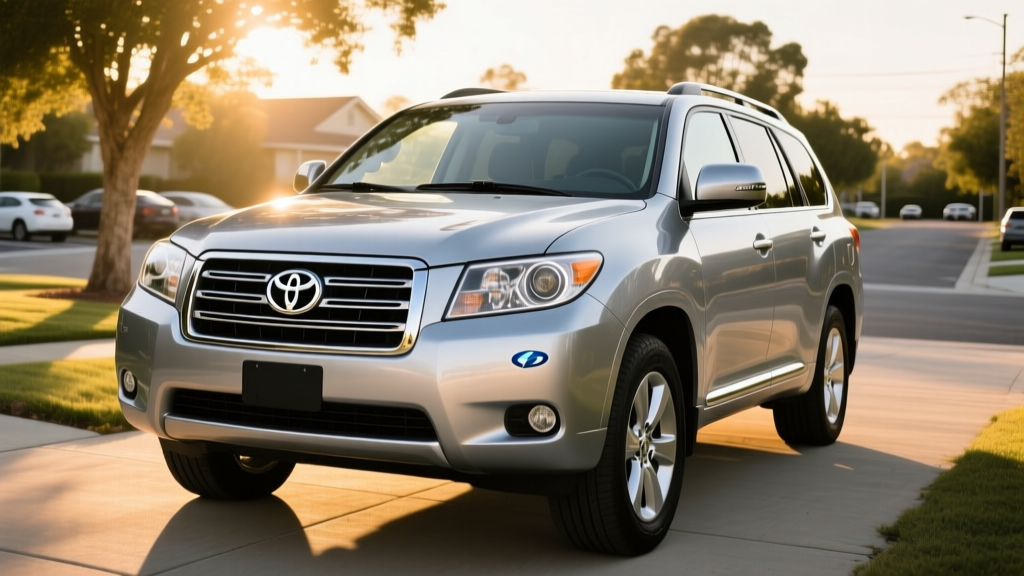
If you've been searching for a 2011 Toyota hybrid SUV, you've likely landed on one specific model: the Toyota Highlander Hybrid. In 2011, Toyota did not offer a RAV4 Hybrid (that arrived in 2016) or a Venza Hybrid in the US market. The Highlander Hybrid was Toyota's sole hybrid SUV offering that year — a three-row, seven-passenger family hauler that paired a 3.5-liter V6 with Toyota's Hybrid Synergy Drive system.
Fifteen years later, the 2011 Highlander Hybrid remains one of the most reliable used hybrid SUVs on the market. But with battery age, evolving fuel-economy standards, and a flood of newer electrified options, does this aging hybrid still earn its keep? Here's a data-driven breakdown.
2011 Highlander Hybrid: The Only 2011 Toyota Hybrid SUV
Let's clear up a common misconception right away: Toyota's 2011 US lineup included exactly one hybrid SUV. The RAV4 was gas-only in 2011. The 4Runner had no hybrid variant. The Highlander Hybrid was it — and it arrived with a significant powertrain redesign for the 2011 model year, moving from the previous 3.3L V6 to a more powerful and efficient 3.5L V6 hybrid system.
| Specification | Value |
|---|---|
| Powertrain | 3.5L V6 + 2 electric motors (Hybrid Synergy Drive) |
| Combined Horsepower | 280 hp (net system output) |
| Transmission | eCVT (electronically controlled continuously variable) |
| Drivetrain | AWD (AWD-i with rear electric motor) |
| EPA Fuel Economy | 28 city / 28 highway / 28 combined MPG |
| Seating | 7 passengers |
| Cargo Volume | 10.3 cu ft (behind 3rd row) / 95.4 cu ft (max) |
| Towing Capacity | 3,500 lbs |
| Original MSRP | $38,940 (Base) / $44,740 (Limited) |
| Hybrid Battery | Nickel-Metal Hydride (NiMH), ~1.87 kWh |
Fuel Economy: EPA Numbers vs. Real-World MPG
The EPA rates the 2011 Highlander Hybrid at 28 MPG city, 28 highway, and 28 combined — a flat rating that reflects the balanced nature of Toyota's hybrid system at the time. For a three-row AWD SUV weighing over 4,500 pounds, that figure was impressive in 2011 and remains respectable today.
| Driving Condition | EPA MPG | Real-World Expectation |
|---|---|---|
| City | 28 MPG | 27–30 MPG (hybrids often match or beat EPA in city) |
| Highway | 28 MPG | 25–27 MPG (sustained 70+ mph reduces regen benefit) |
| Combined | 28 MPG | 26–28 MPG |
| Cold Weather (below 32°F) | — | 22–25 MPG (engine runs more for cabin heat) |
How many MPG does this hybrid get? In mixed real-world driving, owners typically report 25–28 MPG combined, per data aggregated on fueleconomy.gov. City-heavy commutes can push toward 30 MPG thanks to frequent regenerative braking. Highway-dominant driving drops efficiency to the mid-20s — the hybrid system's electric assist matters less at sustained high speeds.
For context, the gas-only 2011 Highlander V6 AWD was rated at 17 city / 22 highway / 19 combined. The hybrid's 47% combined improvement was substantial — and it still outperforms many non-hybrid three-row SUVs sold today.
Hybrid vs. Plug-In Hybrid vs. Full EV: Which Fits You?
The 2011 Highlander Hybrid is a conventional hybrid (HEV) — it does not plug in. This is a critical distinction that buyers sometimes miss.
| Feature | HEV (e.g., 2011 Highlander Hybrid) | PHEV (e.g., 2026 RAV4 Prime) | BEV (e.g., 2026 Highlander-class EV) |
|---|---|---|---|
| Plugs in? | No — charges via engine + regen | Yes — Level 1 or Level 2 | Yes — Level 1, 2, or DC fast |
| Electric-only range | None (EV mode ~1 mile at low speed) | 30–42 miles typical | 250–400+ miles |
| Gas engine? | Yes (always available) | Yes (kicks in after battery depletes) | No |
| Home charging needed? | No | Recommended for max benefit | Essential |
| Federal tax credit? | No (expired long ago) | Up to $7,500 (§30D, if eligible) | Up to $7,500 (§30D, if eligible) |
| Best for | No charging access, simple ownership | Short commutes + road trip flexibility | Home charging + lower running costs |
Who should choose the 2011 Highlander Hybrid? This HEV makes sense if you lack access to home or workplace charging, want a proven three-row family vehicle, and prioritize low running costs without any plug-in logistics. It's also ideal as a budget-conscious used purchase — you can find examples in the $8,000–$14,000 range depending on mileage and condition.
If you have Level 2 home charging and a commute under 40 miles, a newer PHEV like the RAV4 Prime or the current-generation Highlander Hybrid (which is still an HEV, not a PHEV) may deliver better daily efficiency. And if you're ready to eliminate gas entirely, a full EV like the Kia EV9 or Tesla Model X offers three rows with 300+ miles of range — but at a significantly higher purchase price.
Powertrain Deep Dive: 280 HP and AWD-i
The 2011 Highlander Hybrid's powertrain was a technological showcase for its era. The 3.5-liter 2GR-FXE V6 produces 245 hp on its own, supplemented by a front electric motor (167 hp) and a rear electric motor (68 hp) that provides electric AWD. Total system output is 280 net horsepower — more than the gas V6 Highlander's 270 hp.
The AWD-i system is worth noting: unlike mechanical AWD with a driveshaft, the rear wheels are powered entirely by the rear electric motor. This means AWD engagement is instantaneous and seamless, but it also means the rear motor draws from the hybrid battery. In practice, the system works well in rain and light snow, though it's not designed for serious off-road use.
The eCVT transmission is a hallmark of Toyota's hybrid system. Unlike belt-driven CVTs found in some competitors, Toyota's eCVT uses a planetary gearset — there's no belt to wear out, which contributes significantly to the drivetrain's legendary reliability.
Hybrid Battery Health, Warranty, and Replacement Cost
This is the single biggest concern for anyone considering a 15-year-old hybrid. The 2011 Highlander Hybrid uses a Nickel-Metal Hydride (NiMH) battery pack rated at approximately 1.87 kWh. Unlike modern lithium-ion packs, NiMH batteries degrade more gradually but are also more sensitive to heat and deep discharge cycles.
Original Battery Warranty
Toyota originally warranted the hybrid battery for 8 years / 100,000 miles (10 years / 150,000 miles in California and states that follow CARB emissions standards). For a 2011 model, this factory warranty has expired for virtually all examples on the road today.
Is this hybrid reliable and what is battery replacement cost? Toyota's hybrid systems are among the most reliable in the industry. Many Highlander Hybrids have surpassed 200,000 miles on the original battery pack. However, at 15 years old, battery degradation is a real factor. Expect a used 2011 example to have lost 15–30% of its original battery capacity, which manifests as slightly reduced fuel economy and more frequent engine engagement — not a catastrophic failure.
If the battery does need replacement, here's what to budget:
- New OEM Toyota battery: $3,000–$4,500 (installed at a dealer)
- Refurbished/remanufactured battery: $1,500–$2,500 (installed at an independent hybrid specialist)
- Individual module replacement: $500–$1,200 (a specialist can replace only the failed cells within the pack — this is the most cost-effective option for older vehicles)
Before purchasing, ask for a hybrid battery health check — many Toyota dealers and independent hybrid shops can read the battery's State of Health (SoH) via OBD-II diagnostics. A pack showing above 70% SoH is generally a safe buy for several more years of service.
Tax Credits and Incentives: What Applies in 2026?
Does it qualify for any tax credit? The short answer: no federal tax credit applies to the 2011 Highlander Hybrid as a new purchase — it's been out of production for over a decade. When new, the Highlander Hybrid qualified for a federal hybrid tax credit under the Energy Policy Act of 2005, but that credit phased out for Toyota after the company hit its 60,000-unit cap back in 2007–2008.
For used hybrid purchases in 2026, the IRS §25E Used Clean Vehicle Credit offers up to $4,000 (or 30% of the sale price, whichever is lower) — but only for plug-in hybrids and full EVs with a minimum battery capacity of 7 kWh. The Highlander Hybrid's 1.87 kWh NiMH pack does not meet this threshold. Conventional HEVs like this one do not qualify for any current federal purchase incentive.
Some states and utilities offer modest rebates for purchasing any used fuel-efficient vehicle, but these vary by jurisdiction. Check your state energy office or local utility for current programs.
Ownership Costs and Who Should Buy
Here's a realistic snapshot of what owning a 2011 Highlander Hybrid looks like in 2026:
| Category | Estimated Cost |
|---|---|
| Purchase Price (used, 120k–160k miles) | $8,000–$14,000 |
| Fuel (15,000 mi/yr at 27 MPG, $3.30/gal) | ~$1,833/year |
| Insurance (national avg. for older SUV) | ~$1,100–$1,500/year |
| Maintenance (Toyota reliability, annual) | ~$600–$900/year |
| Potential battery replacement (amortized) | $300–$500/year (budget reserve) |
Compared to a gas-only 2011 Highlander V6 (19 MPG combined), the hybrid saves roughly $550–$650 per year in fuel at current gas prices. That savings compounds meaningfully over several years of ownership and largely offsets any premium paid over the gas model at purchase.
Pros
- Proven Toyota hybrid reliability — eCVT planetary gearset has no wear belt
- 28 MPG combined in a 7-passenger AWD SUV remains competitive
- 280 hp provides confident highway merging and passing
- No plug-in charging required — works with any lifestyle
- Low used-market pricing ($8k–$14k) with strong parts availability
- 3,500-lb towing capacity adequate for small trailers and boats
Cons
- NiMH battery is 15 years old — replacement is a real budgeting concern
- No federal or state tax credits apply to this used HEV
- Dated infotainment — no Apple CarPlay, Android Auto, or modern safety tech
- Third row is tight for adults (best for children)
- Highway MPG drops to 25–27 in real-world driving
- No DC fast charging or plug-in capability of any kind
How It Compares to Modern Alternatives
If you're cross-shopping, here's how the 2011 Highlander Hybrid stacks up against newer options you might consider:
| Vehicle | Type | Combined MPG / Range | Used Price Range (2026) | Rows |
|---|---|---|---|---|
| 2011 Toyota Highlander Hybrid | HEV | 28 MPG | $8,000–$14,000 | 3 |
| 2020–2023 Toyota Highlander Hybrid | HEV | 35–36 MPG | $28,000–$42,000 | 3 |
| 2022–2026 Toyota RAV4 Prime | PHEV | 94 MPGe / 42 mi EV + 38 MPG | $35,000–$48,000 | 2 |
| 2024–2026 Kia EV9 | BEV | 270–304 mi EPA range | $45,000–$65,000 | 3 |
The 2011 model's advantage is pure economics: it's the cheapest way to get a three-row hybrid SUV. The trade-off is older technology, no modern driver-assist features (no Toyota Safety Sense on the 2011), and battery age risk. If your budget allows $30,000+, a newer Highlander Hybrid delivers 35+ MPG with current safety tech and remaining factory warranty.
Frequently Asked Questions
Is the 2011 Toyota Highlander Hybrid the only 2011 Toyota hybrid SUV?
Yes. In 2011, the Highlander Hybrid was Toyota's only hybrid SUV in the US market. The RAV4 Hybrid didn't arrive until 2016, and the Venza was not offered as a hybrid in the US that year. If you see listings for a "2011 RAV4 Hybrid," verify carefully — they are almost certainly mislabeled.
How many MPG does the 2011 Highlander Hybrid actually get?
The EPA rates it at 28 MPG city, 28 highway, and 28 combined. Real-world owners report 25–28 MPG combined depending on driving mix. City-heavy routes favor the hybrid system (up to 30 MPG), while sustained highway driving at 75+ mph drops to 25–26 MPG. Cold weather reduces efficiency by 10–15% due to increased engine runtime for cabin heating.
Does the 2011 Highlander Hybrid need to be plugged in?
No. This is a conventional hybrid (HEV). The battery charges through regenerative braking and the gasoline engine. There is no plug, no charging port, and no electric-only driving range to speak of (EV mode allows roughly 1 mile at very low speeds, which is not practical for daily use).
What does it cost to replace the hybrid battery?
A new OEM battery from Toyota runs $3,000–$4,500 installed. Refurbished packs cost $1,500–$2,500, and individual cell module replacement at a hybrid specialist can be as low as $500–$1,200. Many 2011 Highlander Hybrids are still running on their original packs at 150,000+ miles, but budgeting for eventual replacement is wise.
Does the 2011 Highlander Hybrid qualify for any tax credits in 2026?
No. The original federal hybrid tax credit for Toyota phased out in 2007–2008. The current IRS §25E used clean vehicle credit requires a plug-in vehicle with at least 7 kWh of battery capacity — the Highlander Hybrid's 1.87 kWh NiMH pack does not qualify. No federal incentive is available for purchasing this conventional hybrid.
Is the 2011 Highlander Hybrid reliable?
Toyota's Hybrid Synergy Drive is one of the most proven hybrid systems ever built. The eCVT uses a planetary gearset with no wear-prone belts. The 2GR-FXE V6 engine is well-regarded for longevity. The main reliability variable at this age is the NiMH hybrid battery — it will eventually need service or replacement. Beyond that, expect typical Toyota durability with standard maintenance. NHTSA records show no major systemic issues beyond standard recalls.
Should I buy a 2011 Highlander Hybrid or a newer used hybrid?
If your budget is under $15,000 and you need three rows, the 2011 Highlander Hybrid is one of the best options available. If you can spend $25,000+, a 2018–2020 Highlander Hybrid gives you Toyota Safety Sense, better infotainment, improved MPG (29–30 combined), and remaining battery warranty. For two-row needs, a used RAV4 Hybrid (2016+) offers 32–34 MPG in a smaller package.
Sources: fueleconomy.gov — 2011 Toyota Highlander Hybrid, IRS §25E Used Clean Vehicle Credit, NHTSA 2011 Toyota Highlander Hybrid.