Quick Verdict: The 2011 Lexus RX 450h in 2026
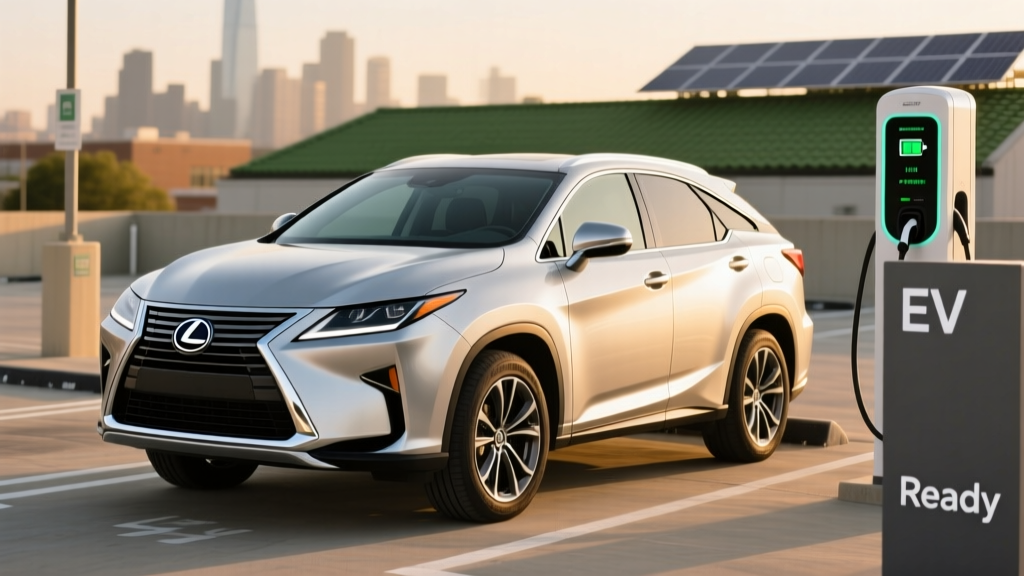
The 2011 Lexus RX 450h occupies a specific niche in the used market: a luxury midsize crossover that delivers genuine hybrid fuel savings without requiring any plug-in infrastructure. With an EPA-rated 30 MPG combined and a reputation for Toyota/Lexus powertrain durability, this second-generation RX hybrid remains a pragmatic choice for buyers who want electrified efficiency but aren't ready—or able—to commit to a full battery-electric vehicle (BEV) or a plug-in hybrid (PHEV).
At current used-car pricing (roughly $9,000–$14,500 depending on mileage and condition), the RX 450h undercuts newer PHEVs and EVs on upfront cost while still meaningfully reducing fuel spend versus its gas-only RX 350 sibling. The critical question for any 15-year-old hybrid, however, is battery health. We break that down in detail below.
| Spec | Value |
|---|---|
| Powertrain | 3.5L V6 + 2 electric motors (AWD) / 1 motor (FWD) |
| Combined Horsepower | 295 hp (net system output) |
| Hybrid Battery | NiMH (Nickel-Metal Hydride), ~1.9 kWh (nominal) |
| EPA MPG (AWD) | 30 combined / 30 city / 28 highway |
| EPA MPG (FWD) | 32 combined / 32 city / 28 highway |
| 0–60 mph | ~7.4 seconds (AWD) |
| Drivetrain | CVT automatic, FWD or AWD (E- Four) |
| Cargo Volume | 40.0 cu ft (behind 2nd row) |
| Towing Capacity | 3,500 lbs |
| Plug-In Required? | No — self-charging HEV |
| Original MSRP (2011) | $44,500 (FWD base) / $45,900 (AWD base) |
| Current Used Range (2026) | ~$9,000–$14,500 |
Hybrid (HEV) vs. Plug-In Hybrid (PHEV): Where the RX 450h Fits
It's essential to distinguish between hybrid types before shopping, because the differences affect your daily routine, fuel costs, and tax-credit eligibility.
| Feature | HEV (e.g., RX 450h) | PHEV (e.g., current RAV4 Prime) | BEV (e.g., Tesla Model Y) |
|---|---|---|---|
| Plug-In Charging? | No | Yes (Level 1/2) | Yes (Level 1/2/DC) |
| Electric-Only Range | ~1–2 mi at low speed | 35–42 mi typical | 250–330 mi typical |
| Battery Size | ~1–2 kWh (NiMH) | ~14–20 kWh (Li-ion) | ~60–100 kWh (Li-ion) |
| Fuel Source | Gasoline only | Gasoline + grid electricity | Grid electricity only |
| Federal Tax Credit (§30D) | Not eligible | Up to $7,500 (new, if eligible) | Up to $7,500 (new, if eligible) |
| Used EV Credit (§25E) | Not eligible | Up to $4,000 (if eligible) | Up to $4,000 (if eligible) |
The 2011 RX 450h is a conventional hybrid (HEV). It charges its own small nickel-metal hydride (NiMH) battery through regenerative braking and the gasoline engine. You never plug it in. The electric motors assist the V6 during acceleration and enable brief electric-only creeping at very low speeds (typically under 25 mph, for roughly a mile or less on a full charge). This is fundamentally different from a PHEV, which carries a much larger lithium-ion battery, offers 30–40+ miles of genuine electric-only driving, and requires plug-in access to realize its efficiency advantage.
Fuel Economy: EPA Ratings and Real-World MPG
| Configuration | City | Highway | Combined |
|---|---|---|---|
| FWD | 32 MPG | 28 MPG | 32 MPG |
| AWD (E-Four) | 30 MPG | 28 MPG | 30 MPG |
| RX 350 AWD (gas, for comparison) | 18 MPG | 24 MPG | 20 MPG |
Source: EPA fueleconomy.gov
Real-World MPG: What Owners Actually See
Hybrids like the RX 450h tend to exceed their EPA city ratings in stop-and-go traffic, where regenerative braking and electric-motor assist do the most work. Many owners report 31–34 MPG in mixed suburban driving with the AWD model. Highway-only driving at 70+ mph is where the RX 450h falls slightly short of its sticker—expect 26–28 MPG on the interstate, since aerodynamic drag dominates and the hybrid system contributes less at sustained high speed.
In cold weather (below 30°F), expect a 5–10% fuel-economy reduction, primarily because the engine runs more frequently to provide cabin heat and because the NiMH battery operates less efficiently at low temperatures. This is a smaller penalty than what full EVs experience (which can lose 20–30% of range in deep cold), but it's real.
The bottom line: the RX 450h delivers roughly 50% better fuel economy than the gas-only RX 350 in typical driving. At $3.25/gallon and 12,000 miles/year, that translates to approximately $780 in annual fuel savings over the RX 350 AWD.
Powertrain: How the Hybrid System Works
The 2011 RX 450h pairs a 3.5-liter V6 engine (245 hp on its own) with Lexus's Hybrid Synergy Drive system. In AWD models, two electric motor-generators work through a planetary-gear continuously variable transmission (CVT):
- MG1 (Motor Generator 1): Primarily acts as a generator and engine starter. It controls the CVT ratio by varying its rotational speed.
- MG2 (Motor Generator 2): The primary drive motor, providing electric torque to the front wheels and recovering energy during regenerative braking.
- Rear electric motor (AWD only): A separate motor drives the rear axle on demand—there is no mechanical driveshaft connecting the engine to the rear wheels. This "E-Four" system engages during acceleration, low-traction conditions, and certain braking scenarios.
The combined net system output is 295 horsepower, which is notably more than the RX 350's 275 hp. The electric motors provide instant torque fill at low RPMs, making the RX 450h feel quicker off the line than its EPA 0–60 time of ~7.4 seconds might suggest. The CVT is smooth but can produce the characteristic "rubber-band" drone under hard acceleration—a common trait of Toyota/Lexus hybrids of this era.
Battery Health, Lifespan, and Replacement Cost
How Long Do These Batteries Actually Last?
The NiMH battery pack in the 2011 RX 450h has proven to be one of the more durable hybrid batteries Toyota/Lexus has produced. Based on owner data and repair-industry reporting:
- Typical lifespan: 12–16 years or 150,000–200,000+ miles before significant degradation or cell failure
- Failure mode: Usually individual cell modules weaken rather than the entire pack dying simultaneously. This causes the system to limit hybrid-assist functionality and trigger a check-engine light (common codes: P0A80, P0A7F).
- Climate factor: Hot climates (Arizona, Texas, Southern California) accelerate NiMH degradation. Vehicles in moderate climates tend to see longer battery life.
Battery Replacement Costs (2026 Pricing)
| Option | Cost Range | Notes |
|---|---|---|
| New OEM Lexus battery | $3,500–$5,000+ | Dealer-installed; full new pack with warranty |
| Remanufactured/reconditioned pack | $1,500–$2,800 | Aftermarket suppliers; typically 1–3 year warranty |
| Individual cell module replacement | $400–$900 | Independent hybrid specialist; replaces only failed modules |
| Used/salvage yard pack | $500–$1,200 | Lowest cost but uncertain remaining life; gamble |
Before purchasing any 2011 RX 450h, request a hybrid battery health check from a Lexus dealer or qualified hybrid specialist. A scan tool can read individual module voltages and internal resistance—key indicators of remaining life. If the pack is original with 150,000+ miles, budget $1,500–$3,000 for eventual reconditioning or replacement.
Tax Credits and Incentives: What Applies in 2026
Because the 2011 RX 450h is a conventional hybrid (HEV) and not a plug-in vehicle, it is not eligible for the federal §30D Clean Vehicle Credit (which requires plug-in capability and a minimum battery capacity of 7 kWh for new vehicles). It also does not qualify for the §25E Used Clean Vehicle Credit, which similarly requires a plug-in vehicle.
- Federal §30D (new EV/PHEV credit): Not eligible — HEV, no plug-in capability
- Federal §25E (used EV/PHEV credit): Not eligible — HEV, no plug-in capability
- State hybrid incentives: A handful of states or local utilities have historically offered modest rebates for hybrids, but most incentive programs in 2026 focus exclusively on PHEVs and BEVs. Check your state energy office for current programs.
- Insurance discounts: Some insurers offer minor hybrid/EV discounts; check with your provider.
The absence of tax-credit eligibility is offset by the RX 450h's low purchase price in the used market and its ongoing fuel savings. For buyers who cannot install a home charger or lack reliable public-charging access, the HEV's zero-infrastructure requirement is a genuine advantage.
Who Should Buy the 2011 RX 450h — And Who Shouldn't
- You want hybrid fuel savings without plugging in
- You lack access to home or workplace charging
- You need a comfortable, quiet luxury crossover on a budget under $15K
- You prioritize reliability and proven powertrain longevity
- You drive a mix of city and suburban routes where hybrid efficiency shines
- You want electric-only driving range (consider a PHEV like the RAV4 Prime or a BEV)
- You want federal tax credits (only PHEVs and BEVs qualify)
- You primarily drive long highway stretches (hybrid advantage diminishes at sustained 70+ mph)
- You want modern ADAS features (2011 RX lacks automatic emergency braking, lane-keeping assist)
- You need a new-vehicle warranty for peace of mind
Hybrid vs. PHEV vs. EV: Which Fits Your Situation?
The decision between an older HEV like the RX 450h, a newer PHEV, or a full EV depends primarily on your charging access, budget, and daily driving pattern:
| Your Situation | Best Fit | Why |
|---|---|---|
| No home/work charging; budget under $15K | Used HEV (RX 450h) | No plug needed; low upfront cost; 30 MPG |
| Home Level 2 charging available; commute under 40 mi | PHEV (e.g., RAV4 Prime, RX 500h+) | Most commutes on electricity; gas backup for trips |
| Home charging + road-trip flexibility desired | PHEV or long-range BEV | PHEV eliminates range anxiety; BEV with 300+ mi range + DC fast charging also works |
| Home charging; mostly under 250 mi/day; lowest operating cost | Full BEV (e.g., Model Y, Ioniq 5) | Lowest cost per mile; minimal maintenance; tax credits available on new/used |
Frequently Asked Questions
How many MPG does the 2011 Lexus RX 450h hybrid get?
The EPA rates the AWD RX 450h at 30 MPG combined (30 city / 28 highway). The FWD version is rated at 32 combined. Real-world owners commonly report 29–34 MPG depending on driving mix, with city-heavy routes yielding the best numbers thanks to regenerative braking.
Does the 2011 RX 450h need to be plugged in?
No. The RX 450h is a conventional self-charging hybrid (HEV). Its small NiMH battery recharges through regenerative braking and the gasoline engine. There is no plug and no electric-only range beyond very low-speed creeping (under ~1 mile).
Is the 2011 RX 450h reliable, and what does a hybrid battery replacement cost?
The 2011 RX 450h is generally reliable, benefiting from Toyota/Lexus engineering and a proven Hybrid Synergy Drive system. The main long-term cost risk is the hybrid battery. Original NiMH packs typically last 12–16 years. If replacement is needed, expect $1,500–$2,800 for a reconditioned pack or $3,500–$5,000+ for a new OEM unit. Individual cell-module repair by a hybrid specialist can cost as little as $400–$900.
Does the 2011 Lexus RX 450h qualify for any tax credit?
No. Federal tax credits (§30D for new vehicles, §25E for used) require plug-in capability and minimum battery capacity thresholds. The RX 450h is a conventional HEV with no plug and a ~1.9 kWh NiMH battery, making it ineligible. State-level hybrid incentives are rare in 2026 but worth checking with your local energy office.
How does the RX 450h compare to the current Lexus RX 500h or RX 450h+?
The current-generation RX 500h (HEV, ~36 MPG combined) and RX 450h+ (PHEV, ~37 miles electric-only range) represent significant advances in efficiency, technology, and safety features. However, they start at $53,000–$63,000+ new. The 2011 RX 450h at $9,000–$14,500 used delivers about 80% of the fuel savings at a fraction of the cost—ideal for budget-conscious buyers who don't need the latest ADAS or infotainment.
What should I check before buying a used 2011 RX 450h?
Prioritize a hybrid battery health scan (individual module voltage spread and internal resistance), a full service history, and a pre-purchase inspection by a Lexus-qualified technician. Check for any outstanding recalls via NHTSA's recall lookup. Also verify that the inverter coolant pump has been serviced or replaced, as this is a known maintenance item on this generation.