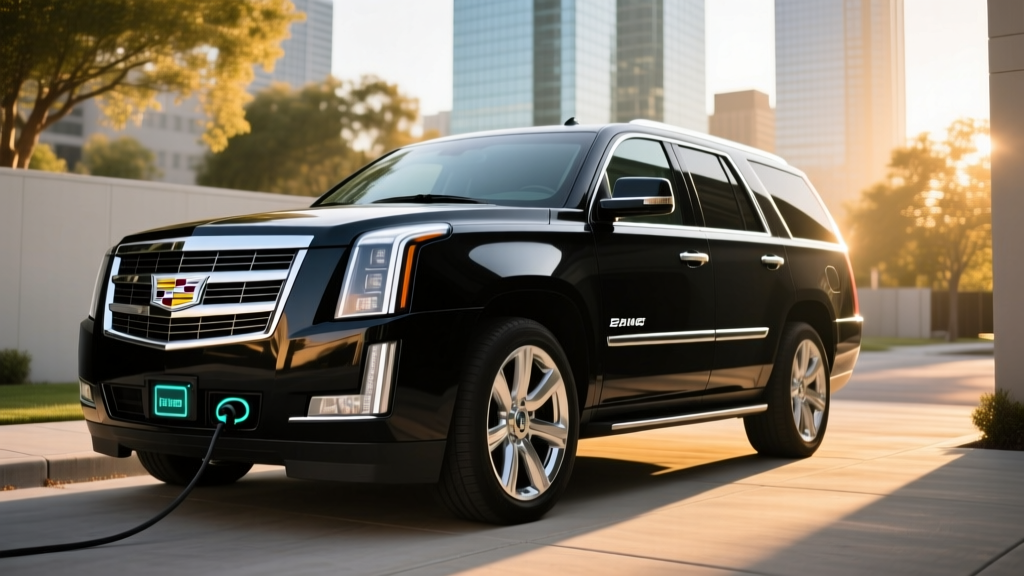
The 2011 Cadillac Escalade Hybrid at a Glance
The 2011 Cadillac Escalade Hybrid was a rare experiment: a full-size luxury SUV that used GM's two-mode hybrid powertrain to shave fuel consumption without sacrificing towing or presence. In 2026, it exists exclusively on the used market — Cadillac discontinued the Escalade Hybrid after the 2013 model year. For buyers considering a used example, the value proposition hinges on whether the hybrid system's fuel savings justify potential battery replacement costs and the complexity of a 15-year-old electrified powertrain.
This is a conventional hybrid (HEV), not a plug-in hybrid (PHEV). It never plugs into a wall or charger. The 1.8 kWh nickel-metal hydride (NiMH) battery recharges exclusively through regenerative braking and the 6.0-liter V8 engine. There is no electric-only driving mode of any meaningful distance — the electric motors assist the engine at low speeds and during stop-start, but the gas engine is always the primary propulsion source.
| Spec | Value |
|---|---|
| Powertrain | 6.0L V8 (Vortec) + 2 electric motors (two-mode hybrid) |
| Combined Horsepower | 332 hp (engine) + electric assist |
| Transmission | 2-mode CVT (electrically variable) |
| Battery Chemistry | Nickel-Metal Hydride (NiMH) |
| Battery Capacity | ~1.8 kWh (not plug-in capable) |
| EPA MPG (City / Hwy / Combined) | 20 / 23 / 21 |
| Fuel Tank | 26.0 gallons |
| Total Range | ~546 miles |
| 0-60 mph | ~8.1 seconds |
| Towing Capacity | 5,800 lbs (2WD) / 5,600 lbs (4WD) |
| Drivetrain | RWD or AWD |
| Original MSRP (2011) | ~$72,895 (base) |
| Used Price Range (2026) | $8,000 – $18,000 depending on mileage/condition |
How Many MPG Does the 2011 Escalade Hybrid Get?
The EPA rated the 2011 Escalade Hybrid at 20 mpg city, 23 mpg highway, and 21 mpg combined for the 2WD model. The AWD variant drops slightly to 20/22/20. For a 5,800-pound luxury SUV, these figures were notable in 2011 — the conventional gas-only Escalade of the same year managed just 14 city / 18 highway / 15 combined, according to fueleconomy.gov.
| Model | City MPG | Highway MPG | Combined MPG |
|---|---|---|---|
| 2011 Escalade Hybrid (2WD) | 20 | 23 | 21 |
| 2011 Escalade Hybrid (AWD) | 20 | 22 | 20 |
| 2011 Escalade Gas (6.2L V8, 2WD) | 14 | 18 | 15 |
| 2011 Escalade Gas (6.2L V8, AWD) | 13 | 18 | 15 |
Real-World MPG vs. EPA Sticker
Conventional hybrids like the Escalade Hybrid tend to meet or slightly exceed EPA city ratings because stop-and-go traffic maximizes regenerative braking and electric motor assist. Owners on forums and fuel-tracking sites commonly report 19–22 mpg combined in mixed driving. Highway-only trips at 75+ mph tend to fall to 18–20 mpg, since the aerodynamic penalty of a boxy full-size SUV overwhelms the hybrid system's benefits at sustained speed.
Cold weather reduces fuel economy by 5–10% as the engine runs longer to reach operating temperature and cabin heating demands increase. Expect roughly 18–19 mpg combined in winter conditions for northern-climate owners.
How GM's Two-Mode Hybrid Powertrain Works
The 2011 Escalade Hybrid uses GM's two-mode hybrid system — the same architecture found in the Chevrolet Tahoe Hybrid, GMC Yukon Hybrid, and GMC Sierra Hybrid of the era. This is fundamentally different from the single-mode systems in a Toyota Prius or the plug-in architectures in modern PHEVs.
The 6.0-liter Vortec V8 produces 332 horsepower and 367 lb-ft of torque on its own. It features cylinder deactivation (Active Fuel Management), which shuts down four cylinders under light-load cruising. Two electric motor-generators are integrated into the transmission housing, providing:
- Electric assist at launch: The motors provide torque fill from 0–30 mph, allowing the engine to operate in its most efficient range or remain off at stops
- Regenerative braking: Kinetic energy recaptured during deceleration charges the NiMH battery pack
- Engine stop-start: The engine shuts off at complete stops and restarts seamlessly when the brake is released
- Two fixed-gear modes: One optimized for low-speed/city driving, one for highway cruising and towing
The battery pack is a 1.8 kWh (approximate) NiMH unit located under the second-row seats. It is small by modern standards — contemporary PHEVs carry 15–30 kWh packs, and full EVs carry 60–130+ kWh. This battery exists solely to buffer energy for short electric assist bursts, not to drive the vehicle independently.
| Feature | 2011 Escalade Hybrid (HEV) | Modern PHEV (e.g., 2026 RAV4 Prime) |
|---|---|---|
| Plugs in? | No — never | Yes — Level 1 or Level 2 |
| Electric-only range | 0 miles (motor assist only) | 30–50 miles typical |
| Battery size | ~1.8 kWh (NiMH) | 15–20 kWh (NMC/LFP lithium) |
| Gas engine | 6.0L V8 — always primary | Smaller engine — backup after EV range |
| Tax credit eligible? | No (discontinued, HEV) | Up to $7,500 if new & §30D eligible |
Battery Lifespan, Reliability, and Replacement Cost
This is the single biggest risk factor for anyone buying a 2011 Escalade Hybrid in 2026. The NiMH battery pack is now 15 years old. While NiMH chemistry is known for longevity — Toyota Prius packs routinely exceed 150,000 miles — the Escalade's larger, harder-working pack in a heavier vehicle faces greater thermal and cycling stress.
What Owners Report
Based on owner forums, NHTSA complaint data, and repair databases, the two-mode hybrid system in GM's full-size SUVs has a mixed reliability record:
- Battery failures typically surface between 100,000–160,000 miles. Some units exceed 200,000 miles with the original pack, but this is increasingly rare at the vehicle's age.
- Transmission issues with the two-mode CVT are documented — the electrically variable transmission is complex, and repairs can exceed $4,000–$6,000.
- Active Fuel Management (cylinder deactivation) on the 6.0L V8 has known issues with lifter failure, which can lead to catastrophic engine damage if not addressed.
- Electrical gremlins common to GM luxury vehicles of this era (power accessories, infotainment, BCM modules) add to ownership cost.
Battery Replacement Cost
A replacement NiMH battery pack for the 2011 Escalade Hybrid typically runs $3,000–$5,000 including parts and labor from a hybrid-specialist shop. GM dealership pricing can exceed $6,000. Refurbished or reconditioned packs are available for $2,000–$3,500, though longevity is less certain. Given that a clean 2011 Escalade Hybrid sells for $8,000–$18,000 in 2026, a battery replacement can consume 20–40% of the vehicle's value — a critical factor in the buy/no-buy decision.
Overall Reliability Verdict
The 2011 Escalade Hybrid rates below average for long-term reliability. The hybrid system adds failure points that the conventional gas Escalade does not have, and at 15 years old, rubber components, seals, electronics, and the hybrid battery are all near or past their design life. Buyers should insist on a pre-purchase inspection by a shop familiar with GM two-mode hybrids, and specifically request a hybrid battery state-of-health test.
Does the 2011 Escalade Hybrid Qualify for Any Tax Credit?
No. The 2011 Cadillac Escalade Hybrid does not qualify for any federal tax credit in 2026, for several reasons:
- It is a conventional hybrid (HEV), not a plug-in hybrid or battery electric vehicle. The federal §30D credit under current IRS rules applies only to plug-in vehicles with a battery capacity of at least 7 kWh that can be recharged from an external power source.
- Even if it were a PHEV, the credit applies to new vehicle purchases only. There is no federal credit for purchasing a used hybrid (the separate used clean vehicle credit under §25E applies only to used EVs and PHEVs priced under $25,000, not conventional HEVs).
- The original hybrid tax credit available when this vehicle was new (up to $2,200 under the pre-2010 Energy Policy Act structure) expired long ago and was claimed by the original purchaser.
- No state currently offers incentives for purchasing a used conventional hybrid.
The bottom line: budget for the full purchase price plus anticipated maintenance. There is no government incentive offset available.
Who Should Buy the 2011 Escalade Hybrid — And Who Shouldn't
At this point in its lifecycle, the 2011 Escalade Hybrid occupies a narrow niche. Here's a practical decision framework:
- You want a full-size luxury SUV with modestly better fuel economy than the gas version and accept the reliability trade-offs
- You find a well-maintained example under $12,000 with documented hybrid battery health
- You drive primarily in city/suburban stop-and-go traffic where the hybrid system's benefits are maximized
- You can budget $2,000–$5,000 for a potential battery replacement within the first two years of ownership
- Reliability and low maintenance cost are your top priorities
- You drive mostly highway miles (the hybrid advantage shrinks significantly at sustained speed)
- You want plug-in electric range — look at a used 2019+ Chrysler Pacifica Hybrid or 2021+ Toyota RAV4 Prime instead
- You want a warranty — any remaining coverage is extremely unlikely at this age
- You plan to tow near the 5,800-lb maximum regularly (hybrid system adds heat stress under heavy towing)
Alternatives to Consider
If the 2011 Escalade Hybrid's profile doesn't fit, here are alternatives at various price points:
- 2011 Escalade (gas, 6.2L V8): Simpler powertrain, fewer failure points, 15 mpg combined. Better if highway driving dominates.
- 2010–2013 Lexus LX 570: Similar size and luxury, conventional gas V8, Toyota-level reliability. Gets 13–14 mpg combined but lasts longer.
- 2016+ Lexus RX 450h (used): Smaller but far more reliable hybrid SUV. EPA 30 mpg combined. Proven hybrid system.
- 2021+ Toyota RAV4 Prime (PHEV, used): 42 miles electric-only, 94 MPGe, plug-in capable, and still potentially under factory warranty.
Pros and Cons of the 2011 Escalade Hybrid
- 40% better city MPG than the gas Escalade (20 vs. 14 mpg city)
- Smooth stop-start and low-speed electric assist
- Retains full towing capacity (5,800 lbs)
- Strong road presence and luxury features at a low used price
- No plug-in charging required — fuel it like a gas car
- Hybrid battery is 15 years old — replacement likely imminent ($3,000–$5,000)
- Complex two-mode transmission with expensive failure modes
- Active Fuel Management lifter issues on the 6.0L V8
- Still only 21 mpg combined — poor by modern hybrid standards
- No tax credits, no warranty, limited parts availability for hybrid components
- Depreciation has been steep — poor resale value trajectory
Frequently Asked Questions
How many MPG does the 2011 Cadillac Escalade Hybrid get?
The EPA rates it at 20 mpg city, 23 mpg highway, and 21 mpg combined for the 2WD model (20/22/20 for AWD). Real-world owners typically see 19–22 mpg combined in mixed driving, with highway-only trips dropping to 18–20 mpg.
Can you plug in the 2011 Escalade Hybrid?
No. This is a conventional hybrid (HEV), not a plug-in hybrid. It has no charging port and no electric-only driving range. The small NiMH battery recharges exclusively through regenerative braking and the gas engine.
How far can the 2011 Escalade Hybrid drive on electric power alone?
Effectively zero miles. The electric motors assist the V8 at low speeds and during stop-start, but the vehicle cannot propel itself on electric power alone at any meaningful speed or distance. This is fundamentally different from a modern PHEV, which can drive 30–50 miles on electricity before the gas engine activates.
Is the 2011 Escalade Hybrid reliable?
Below average for long-term ownership. The two-mode hybrid transmission, aging NiMH battery, and Active Fuel Management system on the 6.0L V8 all present expensive failure points at this vehicle's age. A pre-purchase inspection by a hybrid-experienced mechanic is essential.
How much does it cost to replace the hybrid battery?
Expect $3,000–$5,000 for a replacement or reconditioned NiMH battery pack including labor. Given the vehicle's used value of $8,000–$18,000, this represents a significant percentage of the car's worth.
Does the 2011 Escalade Hybrid qualify for any tax credit in 2026?
No. Federal §30D clean vehicle credits apply only to new plug-in vehicles (PHEVs and EVs). Conventional hybrids are not eligible, and the credit does not apply to used vehicle purchases. No state incentives currently cover used conventional hybrids either.
Hybrid vs. PHEV vs. EV — which should I choose?
It depends on your driving pattern and charging access. A conventional hybrid (HEV) like this Escalade is best for drivers who want modest fuel savings without changing refueling habits — no plug, no range anxiety, just better MPG. A plug-in hybrid (PHEV) suits drivers with home charging who want 30–50 miles of daily electric commuting plus a gas engine for road trips. A full battery EV makes sense for drivers with reliable charging access who want the lowest per-mile fuel cost and zero tailpipe emissions. For 2026 buyers, a used PHEV or EV will deliver far greater efficiency and modern technology than this 15-year-old HEV.
What is the towing capacity of the 2011 Escalade Hybrid?
5,800 lbs for the 2WD model and 5,600 lbs for AWD. The hybrid system does not reduce towing capacity compared to the gas model, though sustained heavy towing increases thermal stress on the hybrid components.
Should I buy a 2011 Escalade Hybrid in 2026?
Only if you find an exceptionally well-maintained example at a low price ($10,000 or under), you primarily drive in city conditions, and you can budget for a potential $3,000–$5,000 hybrid battery replacement. For most buyers, a conventional gas Escalade, a used Lexus hybrid, or a modern PHEV will offer better reliability and lower total cost of ownership.