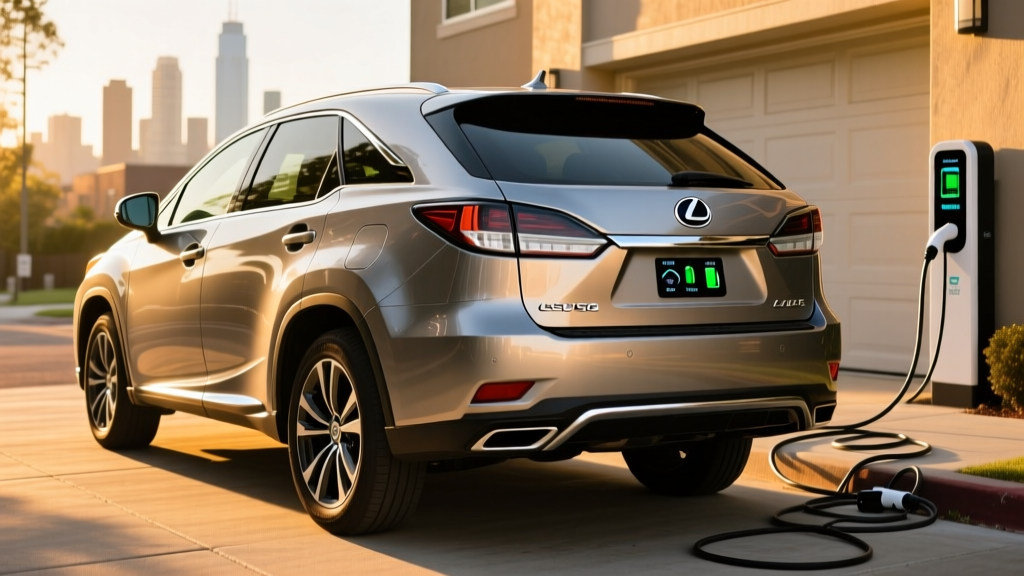
The 2010 Lexus RX 450h was the second-generation RX hybrid and one of the first luxury crossover SUVs to pair a V6 engine with a full hybrid system. More than 15 years after its debut, the 2010 RX hybrid remains a popular used-vehicle search — and for good reason. It delivers genuine fuel savings over its gas-only sibling, Lexus's reputation for reliability, and a practical luxury package that still holds up. But buying a 16-year-old hybrid in 2026 requires careful evaluation of battery health, replacement costs, and whether modern alternatives make more sense.
This guide breaks down the real-world ownership picture: EPA and observed MPG, hybrid battery longevity and replacement cost, powertrain specs, and how the 2010 RX 450h stacks up against newer hybrids, PHEVs, and full EVs.
2010 Lexus RX 450h Powertrain & Hybrid System Specs
The 2010 RX 450h uses Lexus's Hybrid Synergy Drive — a series-parallel full hybrid system (conventional HEV, not a plug-in hybrid). It combines a 3.5-liter V6 Atkinson-cycle gasoline engine with two front-mounted electric motor-generators and, on AWD models, a third rear electric motor that provides electric all-wheel drive without a mechanical driveshaft.
| Specification | Value |
|---|---|
| Engine | 3.5L V6 Atkinson-cycle (2GR-FXE) |
| Gas Engine Output | 245 hp / 234 lb-ft torque |
| Front Electric Motor | 123 kW (165 hp) |
| Rear Electric Motor (AWD) | 50 kW (67 hp) |
| Combined System Horsepower | 295 hp |
| Hybrid Battery | ~1.9 kWh (nominal), NiMH, 288V |
| Transmission | eCVT (planetary gearset) |
| Drivetrain | FWD or AWD (electric rear axle) |
| 0-60 mph | ~7.4 seconds (FWD) |
| Curb Weight | ~4,610 lbs (AWD) |
| Cargo Volume (behind rear seats) | 32.6 cu ft |
The hybrid battery pack is a nickel-metal hydride (NiMH) unit located under the rear cargo area. At roughly 1.9 kWh nominal, it's tiny compared to modern PHEV or EV batteries — but it's not designed for electric-only driving. Its job is to buffer energy captured from regenerative braking and engine excess, enabling electric assist during acceleration and brief EV-mode crawling at low speeds (typically under 25 mph for short distances).
Fuel Economy: EPA Ratings vs. Real-World MPG
The EPA rates the 2010 Lexus RX 450h as follows, per fueleconomy.gov:
| Drivetrain | City MPG | Highway MPG | Combined MPG |
|---|---|---|---|
| FWD | 32 | 28 | 30 |
| AWD | 30 | 28 | 29 |
For comparison, the gas-only 2010 RX 350 AWD is EPA-rated at 18 city / 24 highway / 20 combined. That's a 45% improvement in combined fuel economy from the hybrid system — a substantial gap, especially in stop-and-go driving where the hybrid's electric assist and regenerative braking shine.
Real-World MPG Observations
Hybrid vehicles, including the RX 450h, tend to exceed their EPA city rating in real-world urban driving because frequent stops generate more regenerative braking energy. Many owners report 31-34 MPG in mixed city driving. Highway fuel economy, however, often falls slightly below the EPA sticker — expect 26-28 MPG at sustained 70-75 mph speeds, where aerodynamic drag dominates and the hybrid system provides less benefit.
Cold weather reduces MPG by roughly 10-15% due to longer engine warm-up cycles (the engine must run to provide cabin heat and reach operating temperature) and reduced battery efficiency. In winter conditions, plan for 25-27 MPG combined in the AWD model.
HEV vs. PHEV: What the 2010 RX 450h Is (and Isn't)
The 2010 RX 450h is a conventional hybrid (HEV), not a plug-in hybrid (PHEV). This distinction matters for buyers evaluating it against modern alternatives:
| Feature | HEV (e.g., 2010 RX 450h) | PHEV (e.g., 2026 RAV4 Prime) | BEV (e.g., 2026 Tesla Model Y) |
|---|---|---|---|
| Plugs in? | No — gasoline only | Yes — Level 1 or Level 2 | Yes — Level 1, 2, or DC fast |
| Electric-only range | ~1 mile at low speed | 25-42 miles (typical) | 250-330+ miles |
| Battery size | ~1-2 kWh (NiMH) | ~14-19 kWh (Li-ion) | ~60-100 kWh (Li-ion/LFP) |
| Gas engine | Yes (primary) | Yes (backup) | None |
| Fuel/energy source | Gasoline | Electricity + gasoline | Electricity only |
| Federal tax credit (§30D) | No | Up to $7,500 (if eligible) | Up to $7,500 (if eligible) |
The RX 450h cannot be plugged in. It generates all its electrical energy internally through the gasoline engine and regenerative braking. There is no electric-only commute mode, no home charging, and no eligibility for federal plug-in vehicle tax credits. If you're looking for electric-only daily driving, you need a PHEV or BEV — the RX 450h simply reduces gasoline consumption.
Hybrid Battery Lifespan, Reliability & Replacement Cost
Battery longevity is the single biggest concern for used-hybrid buyers. Here's what the data shows for the 2010 RX 450h's NiMH pack:
Original Battery Warranty
Lexus warranted the 2010 RX 450h hybrid battery for 8 years / 100,000 miles (10 years / 150,000 miles in California and states adopting CARB emissions standards). As of 2026, that original warranty has expired on all 2010 models.
Expected Battery Lifespan
Toyota/Lexus NiMH hybrid batteries have proven remarkably durable. Real-world data from owner forums, repair shops, and fleet operators indicates:
- Typical lifespan: 150,000-200,000 miles before significant capacity loss or cell failure
- Age factor: NiMH batteries also degrade with time. A 2010 model in 2026 is 16 years old — even with low mileage, the battery may show reduced performance or cell imbalance
- Failure mode: Usually one or two degraded cells within the pack rather than total failure. Individual cell replacement or reconditioning is sometimes possible
Battery Replacement Cost (2026 Estimates)
- New OEM Lexus battery pack: $3,500-$5,000 (parts + dealer labor)
- Remanufactured/refurbished pack: $1,500-$2,800 (specialist hybrid shops)
- Individual cell replacement: $500-$1,200 (if only 1-2 cells are bad, performed by a hybrid specialist)
- Used/salvage pack: $600-$1,500 (risky — unknown remaining life)
If you're evaluating a 2010 RX 450h for purchase, get a hybrid battery health check from a Lexus dealer or qualified hybrid specialist. They can read individual cell voltages and internal resistance via OBD-II to assess remaining life. A pack showing more than 0.3V variance between cells is a warning sign.
Overall Reliability
Beyond the battery, the 2010 RX 450h scores well on long-term reliability. The 2GR-FXE V6 is a proven engine shared across many Toyota/Lexus models. The eCVT transmission — which uses a planetary gearset rather than belts or clutches — has virtually no wear components and is extremely reliable. Common non-hybrid issues include water pump leaks (around 100k-130k miles), suspension bushing wear, and standard aging of electronics and interior materials.
Pricing & Tax Credit Eligibility
Used Market Pricing (2026)
The 2010 Lexus RX 450h trades on the used market in a fairly narrow range depending on mileage, condition, and battery health:
- High-mileage (150k+ miles), fair condition: $6,000-$8,000
- Average (100k-140k miles), good condition: $8,500-$12,000
- Low-mileage (under 90k miles), excellent condition: $12,000-$15,000
Tax Credit Status
The 2010 RX 450h is a conventional hybrid (HEV), not a plug-in vehicle. It does not qualify for the federal §30D Clean Vehicle Credit, which requires a plug-in EV or PHEV with a minimum battery capacity. It also does not qualify for the Used Clean Vehicle Credit (§25E), which similarly requires a plug-in vehicle. No state-level hybrid-specific incentives remain active for this model year in most jurisdictions.
The original IRS hybrid tax credit for the RX 450h (up to $2,200 under the old Energy Policy Act structure) was available only to the original purchaser in 2010 and phased out long ago. See IRS.gov clean vehicle credits for current credit rules.
Who Should Buy the 2010 RX 450h — And Who Shouldn't
Pros
- 30 MPG combined — 45% better than the gas RX 350
- Proven Lexus reliability; eCVT is nearly bulletproof
- Smooth, quiet ride with luxury amenities
- AWD without a mechanical drivetrain penalty
- Low entry price ($8k-$12k typical)
- No charging infrastructure needed
Cons
- 16-year-old hybrid battery is a financial risk
- No plug-in capability or electric-only range
- No federal or state tax credit eligibility
- Outdated infotainment (no Apple CarPlay/Android Auto)
- Safety tech is minimal (no automatic emergency braking, lane-keep)
- NiMH battery less efficient than modern Li-ion systems
Choose the 2010 RX 450h If:
- You want a reliable luxury crossover on a budget under $12,000
- You drive mostly in city/stop-and-go traffic where the hybrid system maximizes savings
- You have no access to home or workplace charging (ruling out PHEVs and EVs)
- You're comfortable budgeting $2,000-$4,000 for a potential battery replacement
- You prioritize proven mechanical reliability over modern tech features
Look Elsewhere If:
- You want electric-only commuting — consider a used PHEV like the Toyota RAV4 Prime or a new PHEV
- You want modern ADAS (automatic emergency braking, adaptive cruise) — look at 2018+ models
- You drive primarily highway miles — the hybrid advantage shrinks, and a modern turbo gas or diesel SUV may match MPG
- You want tax credit eligibility — new PHEVs and BEVs qualify for up to $7,500 under IRS §30D if income and sourcing requirements are met
2010 RX 450h vs. Modern Hybrid Alternatives
If the battery risk or dated tech gives you pause, here's how the 2010 RX 450h compares to vehicles you might consider instead:
| Vehicle | Type | Combined MPG / MPGe | EV Range | Approx. Price (2026) | Tax Credit |
|---|---|---|---|---|---|
| 2010 Lexus RX 450h | HEV | 29-30 MPG | N/A | $8,000-$15,000 (used) | None |
| 2026 Toyota RAV4 Hybrid | HEV | 39-41 MPG | N/A | $33,000-$42,000 (new) | None |
| 2026 Toyota RAV4 Prime | PHEV | 38 MPG + 94 MPGe | 42 miles | $44,000-$50,000 (new) | Up to $7,500* |
| 2026 Lexus RX 500h | HEV | ~30 MPG | N/A | $62,000+ (new) | None |
| 2026 Tesla Model Y | BEV | 122-130 MPGe | 300-330 miles | $44,000-$52,000 (new) | Up to $7,500* |
* Federal §30D credit eligibility depends on buyer income, vehicle MSRP caps, battery sourcing, and point-of-sale transfer rules. Consult IRS guidance and a tax professional.
Frequently Asked Questions
How many MPG does the 2010 Lexus RX 450h hybrid get?
The EPA rates the 2010 RX 450h at 32 city / 28 highway / 30 combined (FWD) or 30 city / 28 highway / 29 combined (AWD). In real-world city driving, many owners report 31-34 MPG thanks to regenerative braking. Highway driving typically yields 26-28 MPG.
Does the 2010 RX 450h have any electric-only range?
Effectively no. As a conventional hybrid (HEV), the RX 450h can creep at very low speeds (under ~25 mph) on electric power for roughly a mile or less. It is not designed for electric-only commuting and cannot be plugged in. For meaningful electric-only range, you need a PHEV (25-42 miles) or a full EV (250+ miles).
Is the 2010 RX 450h hybrid reliable, and what does a battery replacement cost?
Yes — the powertrain (2GR-FXE V6 + eCVT) is among the most reliable Lexus has ever built. The main risk is the 16-year-old NiMH hybrid battery. Original warranty (8yr/100k) has expired. Replacement costs range from $1,500 (remanufactured) to $5,000 (new OEM). Many examples reach 200,000+ miles on the original battery, but at this age, budgeting for replacement is prudent.
Does the 2010 RX 450h qualify for any tax credit?
No. The 2010 RX 450h is a conventional hybrid, not a plug-in vehicle. It does not qualify for the federal §30D Clean Vehicle Credit or the §25E Used Clean Vehicle Credit. Both credits require plug-in capability (PHEV or BEV). The original purchase-era hybrid credit expired over a decade ago.
Hybrid vs. PHEV vs. EV — which should I choose?
HEV (like the RX 450h): Best if you have no charging access, want simplicity, and drive in mixed/city conditions. No plug needed, lower upfront cost, but no electric-only driving.
PHEV: Best if you can charge at home and want 25-42 miles of electric commuting with a gas engine for longer trips. Eligible for tax credits when new.
BEV (full EV): Best if you have reliable charging, want zero tailpipe emissions, lower maintenance, and 250+ miles of range. Highest upfront cost but lowest per-mile energy cost and eligible for tax credits.
What should I check before buying a used 2010 RX 450h?
Request a hybrid battery health report (individual cell voltages via OBD-II scan). Check for water pump replacement history, brake actuator condition (regenerative braking system), and any hybrid system warning codes. Verify maintenance records for the engine and transmission fluid. A pre-purchase inspection at a Lexus dealer or hybrid specialist is strongly recommended given the vehicle's age.